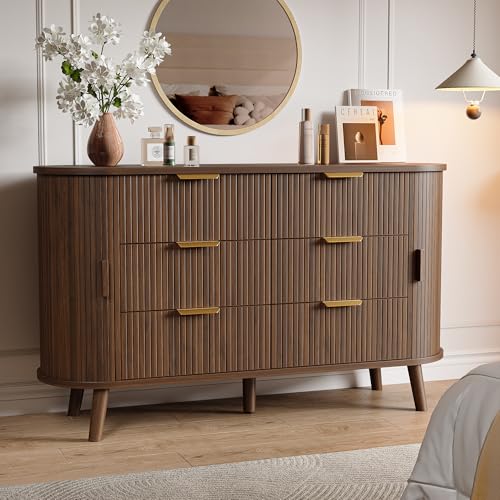
What Is a Mid Century Modern Style Dresser?
A mid century modern style dresser is a storage piece rooted in the design movement that flourished from the mid-1940s through the late 1960s. The style prioritizes clean geometry, functional form, and a seamless relationship between indoors and the natural environment. In practice, that means a dresser with a low horizontal profile, slender tapered legs, flat drawer fronts, and minimal decorative ornament.
Unlike traditional dressers that rely on carved details and heavy mouldings, mid century modern designs express character through proportion and material. Walnut and teak are the signature woods, prized for their warm grain and ability to develop a rich patina over time. Many pieces also incorporate contrasting elements such as brass pulls, cane webbing panels, or a subtle two-tone finish.
For buyers researching bedroom furniture, the appeal is practical as well as aesthetic. The low profile keeps sightlines open in compact rooms, while the horizontal orientation provides generous storage without towering over the bed. If you are comparing silhouettes, our guide to the low profile dresser explains how height affects usability and room flow.
Quick distinction: A mid century modern dresser is not simply a vintage-looking piece. Authentic design uses proportion and material honesty as its primary decorative language. Modern reproductions often replicate the silhouette but vary widely in construction quality, which is why the sections below focus on what to examine before buying.
Design Characteristics That Define the Style
Recognizing a well-executed mid century modern dresser is straightforward once you know which details to examine. The following features appear consistently across quality pieces in this category.
Tapered Legs
Legs narrow toward the floor, often with a slight splay. This lifts the case and creates visual lightness, making the piece feel less bulky in a room.
Clean Drawer Fronts
Flat fronts without raised panels or applied moulding. Hardware is either minimal, recessed, or integrated into the drawer face as a sculpted pull.
Horizontal Proportion
The case is wider than it is tall. This configuration distributes storage across the width of the room and keeps the top surface at a comfortable height.
Wood Grain as Decoration
Book-matched veneers and consistent grain direction across drawer fronts serve as the primary visual interest instead of carving or inlay.
Sculpted Pulls
Pulls are often integrated into the drawer face or made from simple brass or walnut shapes. Options like mid century modern dresser pulls can also be upgraded later.
Contrast Accents
Cane webbing, brass trim, or a darker plinth base adds visual interest while remaining consistent with the movement's restrained palette.
These design traits are not merely stylistic. They also carry functional implications. Tapered legs and a raised case improve airflow and make floor cleaning easier. Flat drawer fronts simplify cleaning and reduce the number of edges where dust collects. The horizontal shape distributes weight more evenly across the floor, which matters in older homes with uneven subfloors.
If your bedroom leans toward a more restrained palette, a minimalist dresser shares some of the same restraint but typically removes the tapered-leg detail in favor of a plinth base or floating design.
Materials and Finishes
The material palette is one of the most important factors in how a mid century modern style dresser ages. The movement favored solid wood and high-quality veneers because they allowed for precise, thin profiles and consistent grain patterns across drawer fronts.
Solid Wood Options
- Walnut: The most iconic choice. Walnut offers a rich brown tone with straight grain and occasional figure. It takes a hand-rubbed oil finish beautifully and develops a deep patina. Pieces built from this material are often positioned at the premium and luxury tiers of the market.
- Teak: Common in Scandinavian-influenced mid century designs. Teak has a warm golden-brown tone and natural oils that make it resistant to moisture. It is frequently used for the mid century modern teak dresser format.
- Oak: A durable, readily available option with prominent grain. Oak is often used in mid-tier pieces and can be finished in a range of tones.
- Maple: A lighter, tighter-grained wood that suits paler bedroom palettes. See our overview of maple dressers for context on how this material performs in bedroom furniture.
Veneers and Engineered Construction
Veneer is not inherently a sign of lower quality in this style. Many respected mid century manufacturers used veneers over plywood or particleboard cores to achieve flat, stable surfaces and consistent grain. The key distinction is the quality of the veneer and the substrate. A thick, well-bonded veneer over a stable core can outlast thin solid wood that is prone to warping.
When evaluating a piece, check whether the veneer edges are properly banded, whether the grain matches across adjacent drawer fronts, and whether the substrate feels dense rather than hollow. These signals separate well-specified mid-tier and high-end tier pieces from entry-level constructions.
Finishes and Accents
Mid century modern finishes are typically low-sheen. Oil, wax, and satin lacquer are more common than high-gloss polyurethane. This matters for maintenance: oiled finishes can be refreshed at home, while lacquered surfaces generally require professional attention. Accent materials such as cane, brass, and glass are used sparingly and should be inspected for secure attachment, especially on cane panels that can loosen with humidity changes.
Drawer Configurations and Storage Capacity
Drawer count and layout directly affect how usable a dresser is in daily life. Mid century modern designs commonly range from three to eight drawers. The right configuration depends on what you plan to store and how you fold and organize clothing.
| Configuration | Best For | Market Tier Typically Offered | Practical Notes |
|---|---|---|---|
| 3-drawer | Guest rooms, entryways, smaller bedrooms | entry-level / essential tier | Often deeper drawers; limited separation of clothing categories |
| 4-drawer | Individual adult bedrooms | mid-tier | Balanced capacity; common in mid century modern 4 drawer dresser formats |
| 6-drawer | Couples, master bedrooms | mid-tier / high-end tier | Good separation of categories; see 6 drawer options |
| 7-8 drawer | Shared rooms, larger households | high-end tier / premium | Maximum capacity; may require wider wall space, e.g. 8 drawer dresser |
Beyond count, examine the internal drawer dimensions. A wide, shallow drawer suits folded shirts and knitwear, while a deeper drawer accommodates bulky items. Many mid century designs use a mix of drawer heights, with the top drawer shallower for accessories and the lower drawers deeper for clothing. If you plan to store jewelry or small items, look for felt-lined top drawers or plan to add organizers.
Drawer glide quality is equally important. Older pieces may use wooden runners, which are durable but require periodic waxing. Modern reproductions typically use side-mounted or under-mount metal slides. Heavy-duty slides are worth prioritizing if you plan to store dense items such as denim or linens. Our guide to low profile heavy duty drawer slides explains the mechanism differences in more detail.
Construction Quality and Hardware
Construction quality determines whether a dresser remains stable and smooth-operating over years of daily use. The following checkpoints are useful whether you are evaluating a vintage piece or a new reproduction.
Joinery and Case Stability
Look for dovetail or mortise-and-tenon joinery at drawer corners and case connections. These techniques indicate a higher level of craftsmanship than stapled or nailed construction. A well-built case should not rack or wobble when you press on opposite corners. Corner blocks or brackets reinforce stability and are a positive sign.
Drawer Operation
Open and close every drawer. They should slide smoothly without binding, and the front should align evenly with the case when closed. Check that drawer bottoms are supported and not sagging under load. Soft-close mechanisms are a useful feature in modern pieces, particularly in bedrooms where quiet operation matters.
Hardware and Pulls
Hardware should be securely attached and comfortable to grip. Brass and walnut pulls are common and appropriate for the style. If you are restoring a vintage piece, replacement options such as mid century cabinet pulls can bring the look back to its original intent. Ensure any replacement hardware matches the existing hole spacing to avoid drilling new holes.
Safety and Stability
Tall or narrow dressers should include an anti-tip kit or be anchored to the wall. Even low-profile models benefit from anchoring in households with children or pets. Check that the piece meets relevant safety standards and that drawer stops prevent accidental full removal.
Construction tiers in practice: Entry-level pieces often use particleboard cores with thin veneer and stapled joints. Mid-tier pieces typically use plywood or medium-density fiberboard cores with thicker veneer and improved slides. High-end and premium pieces favor solid wood components, dovetail joinery, and hand-finished surfaces. The differences become most apparent after several years of use, particularly in drawer operation and case stability.
Choosing the Right Size for Your Room
Size selection should begin with the wall space available and the walking clearance around the bed. A mid century modern dresser is typically wider than it is tall, so width is the primary constraint. Measure the intended wall, subtract space for any adjacent furniture, and leave at least 24 inches of clearance in front of the dresser for comfortable drawer access.
Height matters for usability. A dresser top between 30 and 36 inches suits most adults for daily access and for placing a mirror or decorative objects. Lower models, often called lowboy dressers, create a more open feel and are well-suited to rooms with low windows or sloped ceilings. Our guide to the lowboy dresser format explains the trade-offs.
For compact bedrooms, narrow and low-profile configurations are the most practical. A mid century modern tall dresser offers a smaller footprint but a taller vertical profile, which can suit tight floor plans where wall height is available. Conversely, a mid century modern wide dresser maximizes storage along a long wall.
If the room is shared, consider a mid century modern double dresser, which provides two columns of drawers and allows each person their own storage zone. For rooms that need to serve multiple functions, a mid century modern lateral file configuration can double as document storage in a home office.
Matching a Dresser to Your Bedroom Decor
Mid century modern furniture is forgiving to style alongside other pieces, but a few principles help the result feel intentional rather than accidental.
- Coordinate wood tones: A walnut dresser pairs well with lighter oak or maple bed frames for contrast, while matching walnut pieces create a cohesive set. Our guide to matching dresser and bed frame options covers proportion considerations.
- Balance visual weight: A low, wide dresser anchors a room when paired with a visually lighter bed frame. Avoid placing two heavy, dark pieces directly opposite each other.
- Repeat the leg language: Tapered legs on the dresser pair naturally with tapered legs on nightstands or a bed frame. This repetition is a hallmark of cohesive mid century interiors.
- Keep the top uncluttered: The clean lines of the style are best supported by a restrained top surface. A single mirror, a lamp, and one or two objects are usually sufficient.
If you want a coordinated bedroom, a mid century dresser and nightstand set removes the guesswork around proportions and finish matching. For a more collected look, pair a vintage dresser with modern nightstands in a complementary wood tone.
Consider the mirror question early. A mid century dresser with mirror adds function for daily grooming but changes the visual height of the piece. If wall space above the dresser is limited, a standalone mirror or a wall-mounted option may work better.
Ready to Choose Your Mid Century Modern Dresser?
Use the buying criteria in this guide to compare configurations, materials, and construction quality. The recommended selection below highlights pieces across tiers so you can evaluate options against your space and storage needs.
View Recommended DressersFrequently Asked Questions
What defines a mid century modern style dresser?
A mid century modern style dresser is defined by clean lines, tapered legs, a low horizontal profile, flat drawer fronts, and minimal ornamentation. Wood grain and proportion serve as the primary visual interest, often complemented by sculpted pulls or cane accents.
Is solid wood always better than veneer for this style?
Not necessarily. Many respected mid century pieces used high-quality veneers over stable cores to achieve flat surfaces and consistent grain. The important factors are veneer thickness, bond quality, edge banding, and substrate density. A well-made veneer piece can be more stable than thin solid wood that is prone to warping.
How many drawers should I look for?
Four to six drawers suits most individual and couple bedrooms. Three drawers work for guest rooms and smaller spaces, while seven to eight drawers are appropriate for shared rooms with higher storage demand. Consider drawer height mix as well as count.
Can a mid century modern dresser work in a small bedroom?
Yes. Low-profile and narrow models are well-suited to compact bedrooms. Their horizontal orientation and tapered legs keep sightlines open. Measure wall width and walking clearance before selecting a wide configuration.
How do I maintain a wood mid century modern dresser?
Dust regularly with a soft cloth and avoid harsh chemical cleaners. Oiled finishes can be refreshed periodically with a suitable furniture oil. Keep the piece out of direct sunlight to minimize uneven fading, and maintain indoor humidity within a moderate range to reduce wood movement.
Are vintage mid century dressers a good option?
Vintage pieces can offer excellent materials and construction, but inspect drawer operation, veneer condition, and structural stability carefully. Replacement hardware and minor refinishing are often feasible. Check that the piece meets current anti-tip safety recommendations, especially in homes with children.