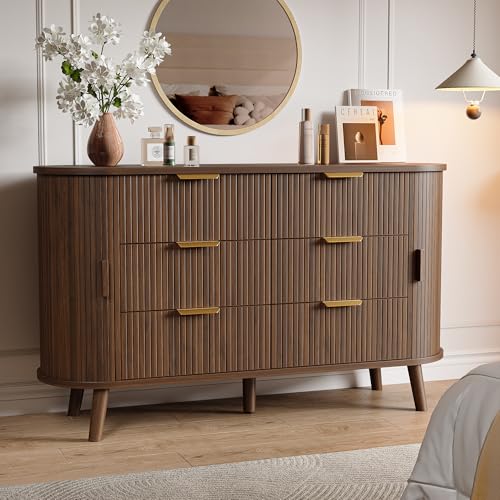
Mid-Century Modern Tallboy Dresser: The Complete Buyer's Guide
Everything you need to know about choosing a mid-century modern tallboy dresser — from design language and materials to sizing, drawer layout, and long-term care. Perfect for research-first shoppers ready to make a confident decision.
Explore Recommended PicksWhat Is a Mid-Century Modern Tallboy Dresser?
A mid-century modern tallboy dresser is a vertically oriented chest of drawers rooted in the design movement that flourished from the mid-1940s through the late 1960s. Unlike the low, wide dressers that often define bedroom sets, the tallboy trades horizontal spread for vertical storage — making it an ideal choice for rooms where floor space is limited but wall height is available.
The style is instantly recognizable: clean, uncluttered lines; tapered or splayed legs; a flat, unadorned top; and drawer fronts that emphasize proportion and function over ornamentation. The form descends from earlier tall chests and highboys, but mid-century designers reimagined those silhouettes with lighter visual weight and warmer, more organic materials — particularly walnut, teak, and oak.
If you are still weighing broader category options, our overview of the mid-century modern dresser covers the full family of forms, while this guide focuses specifically on the tallboy variant. You can also compare with the mid-century modern tall dresser and the slightly wider mid-century modern vertical dresser to see which footprint matches your room.
Why Choose a Tallboy Over Other Dresser Types?
For research-stage buyers, the critical question is not only "what looks good?" but "what fits my room and my routine?" A tallboy earns its place for several practical reasons:
- Compact footprint: A typical tallboy occupies roughly 30–40 inches of width, leaving generous room for circulation, a reading chair, or a full-length mirror.
- Vertical storage efficiency: With 5–6 stacked drawers, the tallboy separates clothing categories naturally — socks and undergarments near the top, folded shirts in the middle, and bulkier items toward the bottom.
- Ergonomic drawer access: The upper drawers sit at or near waist height, reducing the need to bend. Lower drawers handle less frequently used items.
- Style-forward presence: The tall, slender silhouette reads as sculptural and intentional — a design statement even in a minimalist bedroom.
If your room can accommodate a longer, lower piece, the mid-century modern large dresser may offer more drawer width. But for small and mid-sized bedrooms, the tallboy is often the smarter spatial answer. Our guide to the mid-century modern tall dresser explores similar trade-offs in more depth.
Design Elements That Define the Mid-Century Modern Tallboy
Mid-century modern design is often imitated but rarely nailed. When evaluating a tallboy, look for these signature traits:
Legs and Base
Tapered, splayed legs are the clearest tell. Wood legs should taper evenly and end in a clean, rounded tip or a subtle brass or metal foot. Some designs use a floating plinth base for a more contemporary read. Avoid chunky, square legs that signal a modern farmhouse or transitional piece rather than true mid-century style.
Drawer Fronts and Hardware
Drawer fronts are typically flat and flush, occasionally with a subtle bevel or recessed pull. Hardware is minimal — slim bar pulls, round knobs, or integrated finger pulls. If you plan to customize, explore the mid-century modern dresser drawer pulls and mid-century modern dresser pulls categories for period-appropriate options.
Proportions and Silhouette
A well-proportioned tallboy reads as a slender column rather than a boxy tower. The height-to-width ratio typically sits between 1.4:1 and 1.8:1. The top overhang should be minimal — enough to define the edge, not enough to look top-heavy.
Wood Grain Orientation
Quality mid-century pieces often use book-matched or sequence-matched veneer on drawer fronts, creating a continuous grain pattern across the front. This detail alone distinguishes a careful build from a mass-produced look.
Materials & Finishes: What to Look For
Material choice drives durability, visual warmth, and long-term satisfaction. Here is how the main options compare:
| Material | Typical Tier | Best For | Key Consideration |
|---|---|---|---|
| Solid walnut | Premium / high-end tier | Heirloom-quality investment pieces | Rich grain; heavy; benefits from humidity control |
| Walnut or oak veneer over engineered wood | Mid-range / balanced tier | Most bedroom settings; strong style-to-durability balance | Check edge banding quality and drawer box construction |
| Teak (solid or veneer) | Mid-range to premium | Warm, Scandinavian-leaning interiors | Naturally weather-resistant; watch for surface scratches |
| Engineered wood with laminate | Entry-level / essential tier | Dorm rooms, first apartments, staging | Lighter weight; verify weight capacity and anchoring needs |
| Painted or lacquered finish | Varies by substrate | Color-led bedrooms; modern-minimal looks | Finish quality matters more than substrate color |
For a deeper dive into wood species and their behavior over time, visit our materials and finishes hub. If you are specifically drawn to darker, richer tones, the walnut dresser collection is worth exploring, and our mid-century modern teak dresser guide covers the golden-toned alternative.
Buyer tip: Ask whether the drawer boxes are solid wood or engineered. Solid wood drawer boxes with dovetail joinery signal a higher-tier build and typically glide more smoothly over years of use. Metal ball-bearing slides are common across tiers; soft-close mechanisms appear more often in mid-range and premium models.
Sizing Guide: Height, Width & Depth
Measure twice before you commit. Tallboy dimensions vary, but the following ranges cover most mid-century modern designs:
| Dimension | Typical Range | Planning Note |
|---|---|---|
| Height | 40–56 inches | Ensure the top is reachable without a stool; allow clearance if wall art sits above |
| Width | 30–40 inches | Leave at least 24 inches of walking clearance in front of drawer extension |
| Depth | 16–20 inches | Deeper drawers fit sweaters; shallower drawers suit folded shirts and linens |
| Drawer interior height | 5–9 inches | Mix of shallow and deep drawers offers the most flexible storage |
If your wall space is tight, review our tall dresser guide for narrower options, or consider a mid-century modern 6 drawer dresser if you need more capacity without excessive height. For rooms with generous wall space, the mid-century modern double dresser offers a wider alternative.
Drawer Layout & Configuration
Tallboy dressers are defined as much by their internal organization as their exterior silhouette. The most common configurations are:
- 5-drawer tallboy: Usually two small top drawers and three full-width drawers below. A versatile all-rounder.
- 6-drawer tallboy: Often two columns of three, or a mix of two small drawers over four full-width drawers. Excellent for couples sharing a single dresser.
- 7–8 drawer tallboy: Maximizes vertical space with more granular separation — ideal for detailed clothing organization.
Consider how you fold and store clothing. If you use the file-folding method, shallower drawers with full-extension slides are preferable. If you store bulky knitwear, prioritize at least two deep lower drawers. Our mid-century modern 7 drawer dresser and mid-century modern 8 drawer dresser guides illustrate how additional drawers change the internal layout.
Quality Tiers & Build Checklist
Rather than thinking in absolute terms, it helps to place tallboy dressers into relative tiers based on construction and materials:
Entry-Level / Essential Tier
Engineered wood substrate with laminate or thin veneer, basic metal slides, and simplified joinery. These pieces can look convincing at a distance and suit temporary or secondary spaces. Verify weight ratings and anchor points carefully.
Mid-Range / Balanced Tier
Walnut or oak veneer over engineered wood, solid wood drawer fronts, dovetail or reinforced box joints, and smoother side-mount or ball-bearing slides. This tier typically delivers the strongest balance of durability, style fidelity, and long-term satisfaction for most bedrooms.
Premium / High-End Tier
Solid walnut, teak, or oak construction; book-matched veneers; hand-finished edges; soft-close undermount slides; and thoughtful details such as dust panels between drawers and adjustable levelers. These are long-term investments designed to be maintained and passed on.
Build checklist to bring to the store (or use online):
- Are drawer boxes solid wood, and are joints dovetailed or reinforced?
- Do drawers extend fully, and do they glide smoothly when loaded?
- Is the back panel rigid, and are corner blocks or braces present?
- Does the piece include an anti-tip anchoring kit?
- Are the legs solid wood or hollow? Tap them — solid sounds dull, hollow sounds resonant.
For a side-by-side comparison of solid wood versus engineered options, read our solid wood vs engineered guide. If you are comparing this tallboy against a broader luxury piece, the luxury dresser overview may help frame the decision.
Tallboy Dressers for Small Bedrooms
The tallboy is a natural fit for compact bedrooms, apartments, and guest rooms. Its narrow footprint frees floor area for a bed, a nightstand, or a small desk. To get the most from a tallboy in a small room:
- Position it on a wall where the door swing and closet access remain unobstructed.
- Use the top surface sparingly — a small tray, a lamp, and one decorative object maintain visual calm.
- Consider a mirror mounted on the wall above rather than a dresser-attached mirror, which adds visual weight.
- Keep the palette consistent with the room; a mid-century modern light wood dresser can make a small room feel airier.
For more ideas tailored to compact rooms, see our dressers for small spaces guide and the small bedroom storage ideas collection.
Safety, Assembly & Anchoring
Tall, narrow furniture requires proper anchoring. This is non-negotiable, especially in homes with children or pets. Every reputable tallboy ships with an anti-tip kit; use it. Additional safety practices:
- Anchor the dresser to a wall stud whenever possible. If studs are not accessible, use appropriate drywall anchors rated for the load.
- Distribute weight evenly and keep the heaviest items in the lowest drawers.
- Do not allow children to climb or hang on open drawers.
- Check anchoring hardware periodically, especially if the dresser is moved.
Assembly difficulty varies by tier. Entry-level flat-pack models typically require 45–90 minutes with basic tools. Mid-range and premium models often arrive partially assembled or with clearer instructions and labeled hardware. If you are assembling a flat-pack piece, work on a soft surface to avoid scratching the finish, and tighten all cam locks and bolts fully before standing the unit upright.
Care & Maintenance Tips
Mid-century modern tallboys are built to last when cared for properly. A few simple habits keep the finish and mechanics in good condition:
- Dust regularly with a soft, dry microfiber cloth. Avoid silicone-based polishes, which can build up and dull the finish.
- Control humidity. Solid wood expands and contracts with seasonal moisture changes. Keep the room between 40–60% relative humidity where possible.
- Protect from direct sunlight. Prolonged UV exposure can fade wood and veneer. Use curtains or blinds during peak sun hours.
- Lubricate slides sparingly. A dry silicone spray or a small amount of paraffin wax on wooden slides keeps drawers gliding smoothly. Avoid oily lubricants that attract dust.
- Address scratches promptly. A matching touch-up marker or a small amount of furniture wax can blend minor surface scratches before they worsen.
For a broader maintenance routine, our how to clean a dresser guide covers day-to-day and seasonal care in more detail.
Ready to Choose Your Mid-Century Modern Tallboy?
Browse recommended tallboy dressers and storage pieces selected for their build quality, design authenticity, and practical storage layout.
See Recommended OptionsFrequently Asked Questions
What is a mid-century modern tallboy dresser?
A mid-century modern tallboy dresser is a vertically oriented chest of drawers inspired by the 1940s–1960s design movement. It typically features clean lines, tapered legs, splayed feet, minimal ornamentation, and a compact footprint that maximizes vertical storage.
How tall is a mid-century modern tallboy dresser?
Most mid-century modern tallboy dressers range between 40 and 56 inches in height, with a width of 30 to 40 inches and a depth of 16 to 20 inches. Height varies by drawer count and design, so always measure your space before purchasing.
What materials are used in mid-century modern tallboy dressers?
Premium tallboys often use solid walnut, teak, oak, or mahogany. Mid-range models may use walnut or oak veneer over engineered wood. Entry-level versions typically use engineered wood with a wood-grain laminate finish.
How many drawers does a mid-century modern tallboy dresser have?
Most mid-century modern tallboy dressers have 5 to 6 drawers, though some models offer 4, 7, or even 8 drawers. The vertical stack is ideal for separating clothing categories by drawer.
Is a tallboy dresser safe for a bedroom?
Yes, provided the dresser is properly anchored to the wall. Tall, narrow furniture can tip if a drawer is overloaded or climbed on. Always use the anti-tip kit included with the dresser and avoid placing heavy items in the top drawers.
Related Mid-Century Modern Guides
Deepen your research with these closely related topics:
- Mid-Century Modern Dresser: Complete Guide
- Mid-Century Modern Tall Dresser
- Mid-Century Modern Vertical Dresser
- Mid-Century Modern 6 Drawer Dresser
- Mid-Century Modern Solid Wood Dresser
- Mid-Century Modern Light Wood Dresser
- Mid-Century Modern Teak Dresser
- Mid-Century Modern Dresser and Nightstand Pairing
- Mid-Century Dresser with Mirror
- Mid-Century Dresser: Style Overview