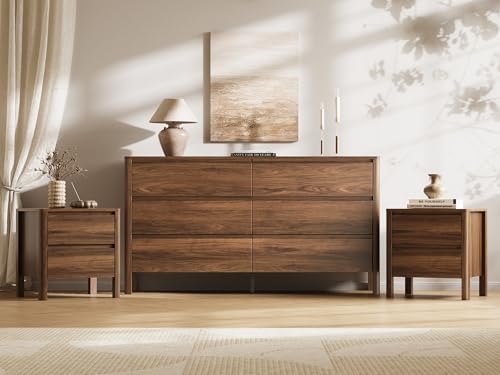
Dresser and Nightstand Set: Complete Buying Guide
Discover how to choose a coordinated dresser and nightstand set that unifies your bedroom, maximizes storage, and reflects your personal style. Everything you need to compare, evaluate, and decide with confidence.
Explore Recommended SetsWhy a dresser and nightstand set matters: A matched set creates visual harmony in the bedroom while providing complementary storage — the dresser handles folded clothing and larger items, while nightstands keep essentials within arm's reach. This guide walks you through design cohesion, size planning, material considerations, and the key features that distinguish a well-built set from a mediocre one.
What Is a Dresser and Nightstand Set?
A dresser and nightstand set is a coordinated furniture pairing that brings together two foundational bedroom storage pieces under one consistent design language. The set typically includes one dresser and one or two matching nightstands, though larger collections may add a chest of drawers or a media console in the same finish.
The appeal is straightforward: a matching set eliminates the guesswork of coordinating finishes, hardware, and proportions. Instead of hunting for individual pieces that may or may not harmonize, you receive a ready-made combination designed to look intentional. The dresser anchors the room with substantial storage, while the nightstand — placed beside the bed — delivers accessible surfaces and drawers for daily essentials.
These sets work across nearly every bedroom context. A single-nightstand configuration suits a guest room or a solo sleeper's bedroom, while a two-nightstand arrangement is standard for primary bedrooms with a double or queen bed. For a narrower pairing, explore the dresser and matching night stand concept, which emphasizes proportional consistency across both pieces.
Why Choose a Matching Dresser and Nightstand Set?
Furnishing a bedroom piece by piece can yield a curated, layered look — but it also demands time, patience, and a sharp eye for proportion. A coordinated set removes that friction entirely. The most compelling advantages include:
- Design cohesion: Consistent wood tone, finish, hardware, and edge profiles make the room feel deliberate rather than assembled.
- Proportional harmony: Manufacturers design set pieces to sit comfortably alongside one another, so the dresser does not visually overpower its smaller nightstand companion.
- Simplified shopping: One decision replaces several, reducing the risk of ordering pieces that clash in sheen or scale.
- Consistent quality: Set pieces typically share the same construction standard, drawer slide mechanism, and material grade.
- Resale and restyling ease: Cohesive furniture tends to photograph well and remain aesthetically flexible if you later change bedding or wall color.
That said, matching sets are not the only route. Some buyers prefer a dresser nightstand combo that pairs a statement dresser with understated nightstands. The key is deciding whether you want guaranteed cohesion or a more eclectic composition.
What to Look for in a Dresser Night Stand Set
Evaluating a set requires looking beyond the product photograph. The following criteria separate a set that will serve you well for years from one that merely looks good on arrival.
1. Construction and Material Quality
Solid wood frames and drawer fronts generally outperform particleboard or thin MDF in longevity and refinishability. Examine whether the dresser and nightstand use dovetail or box joints at drawer corners, and whether the drawer bottoms are reinforced rather than stapled. A well-built set should feel substantial — drawer fronts that resist flexing, corners that remain square, and backs that are properly attached rather than left loose.
Hardware is often the first component to fail. Metal drawer slides rated for frequent use, solid metal pulls rather than hollow pot-metal approximations, and properly seated knobs all signal a set built with care. For a deeper dive into construction expectations by category, see our dresser quality guide.
2. Size and Scale Planning
The most common mistake is ordering a set that fits the wall but not the room. Measure the available wall width, the depth of the walkway, and the height of your bed before committing. A dresser should leave at least 24 inches of clearance in front of it for comfortable drawer access. Nightstands should sit at or slightly below the height of the mattress top for ergonomic reach.
For compact rooms, a dresser for small spaces paired with slim nightstands keeps the layout functional. Conversely, a primary bedroom with generous square footage can accommodate a wide dresser with deep drawers and full-size nightstands with two or three drawers each. If the room includes a closet with limited storage, a dresser for closet arrangement may complement the bedroom set.
3. Drawer Count and Internal Layout
Dresser drawer count should reflect your clothing volume and folding habits. A five- or six-drawer dresser is a versatile default; narrower rooms may suit a four-drawer design. Nightstands generally offer one to three drawers — one drawer plus an open shelf is a common and practical configuration.
Consider whether you need deep drawers for bulky knitwear or shallow drawers for accessories. Internal dividers, felt-lined top drawers, and dust-proofed bottoms are worthwhile additions. If organization is a priority, our drawer organizers and drawer dividers guide offer practical companion advice.
4. Style Consistency and Finish
A set should share a coherent aesthetic — not just color, but also edge treatment, leg shape, and hardware family. Modern sets favor clean lines and minimal pulls; farmhouse sets lean on bracket feet and cup pulls; mid-century sets emphasize tapered legs and warm wood tones. Confirm that the finish description matches across both pieces, since manufacturers occasionally vary sheen between dresser and nightstand production runs.
Dresser and Nightstand Set Comparison by Category
The table below groups common set configurations by their intended use and quality positioning. It uses neutral tier descriptors rather than numeric figures, so the guidance remains relevant regardless of market conditions.
| Set Category | Tier | Best For | Key Traits |
|---|---|---|---|
| Compact one-nightstand set | Entry-level | Guest rooms, small bedrooms, first apartments | Narrow dresser, single nightstand, straightforward drawer slides |
| Standard two-nightstand set | Mid-range | Primary bedrooms with queen or king beds | Balanced drawer count, consistent finish, reinforced drawer bottoms |
| Wood solid set | Premium | Long-term ownership, refinishing plans | Dovetail joints, solid hardwood fronts, durable hardware |
| Designer collection set | Luxury | Statement bedrooms, coordinated interiors | Signature detailing, premium materials, full collection consistency |
| Small-space set | Essential tier | Tight floor plans, dorm-style rooms | Shallow depth, slim nightstands, space-efficient drawer layout |
Understanding Set Tiers Without the Guesswork
Because retail listings vary widely, it helps to translate a set's positioning into practical expectations. These three broad tiers describe what you can reasonably anticipate from construction and finish quality.
Entry-Level Sets
Typically engineered wood with laminate or veneer finishes. Drawer slides are functional but not heavy-duty. Suitable for guest rooms, temporary setups, or buyers who prioritize design over long-term durability. Expect to inspect drawer alignment on arrival and tighten hardware periodically.
Mid-Range Sets
Often combine solid wood fronts with engineered cores. Smoother drawer mechanisms, better hardware, and more consistent finishing distinguish this tier from entry-level. This is the most common category for primary bedroom sets and generally offers the strongest balance of longevity and availability.
Premium and Luxury Sets
Solid hardwood construction, dovetail joinery, full-extension slides, and refined finishes. These sets are designed to be repaired and refinished rather than replaced. They reward buyers planning a long-term investment in bedroom furnishings and who value tactile quality over trend-driven styling.
Common Configurations and How to Choose
The right configuration depends on bed size, room layout, and how much bedside storage each occupant needs. Consider these common arrangements:
- Dresser plus one nightstand: Best for single sleepers, guest rooms, or asymmetrical layouts where a second nightstand would crowd a door or window.
- Dresser plus two nightstands: The standard primary bedroom pairing for queen and king beds, providing each sleeper with personal storage.
- Dresser, nightstand, and chest: A three-piece collection suited to larger rooms or households needing additional folded-storage capacity.
- Dresser and bedside table set: A lighter alternative that pairs a dresser with a single bedside table for rooms with limited flanking space.
If you are furnishing a child's room or a nursery-adjacent space, safety anchoring is non-negotiable — secure both the dresser and nightstands to the wall regardless of configuration. Our dresser for children's room guide covers anchoring and height considerations in more detail.
Materials and Finishes for Coordinated Sets
Material choice influences both appearance and long-term behavior. Solid oak or walnut sets offer warmth and grain character; painted sets in white or grey provide a clean, adaptable backdrop; distressed finishes add texture but can vary between production batches. When ordering a set, confirm that the dresser and nightstands are produced in the same batch or finish run when possible.
For finish-specific guidance, our articles on white dresser and nightstand sets, grey dresser and nightstand sets, and wood dresser and nightstand sets break down the practical considerations for each palette. Hardware can also unify or update a set — see dresser hardware and dresser knobs for replacement options.
Buying Checklist: Before You Commit
- Measure wall width, floor depth, and walkway clearance — verify at least 24 inches of drawer-opening space.
- Check mattress height against nightstand height for comfortable reach.
- Confirm drawer construction: dovetail joints and reinforced bottoms are preferable.
- Review hardware quality and whether replacement pulls are readily available.
- Verify finish consistency between dresser and nightstands, especially on painted or distressed sets.
- Confirm delivery includes both pieces and check for assembly requirements.
- Plan wall anchoring for the dresser and any tall nightstands.
- Check return and replacement policies for set components, since partial returns can be complicated.
Common Mistakes to Avoid
Even careful buyers stumble on a few recurring pitfalls. The most frequent include:
- Buying by photograph alone: Finish sheen and scale can differ significantly from listing images. Seek out buyer photos and dimension diagrams.
- Ignoring the bed height: A nightstand that sits well below the mattress forces awkward reaching and looks visually unresolved.
- Overlooking drawer travel: Deep dressers placed in narrow rooms may not allow drawers to open fully.
- Skipping anchoring: Freestanding dressers and nightstands pose a tip-over risk, especially in homes with children or pets.
- Mixing finish runs: Ordering the dresser and nightstand separately months apart can result in subtle color differences.