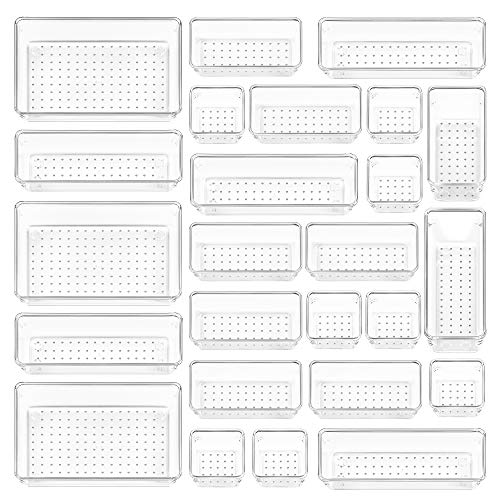
Drawer Organizers: The Complete Guide to a Clutter-Free Dresser
Transform messy drawers into a neatly arranged system. Compare trays, dividers, bins, and liners to build the perfect organization setup for your bedroom storage.
Why drawer organizers matter: A quality dresser is only as good as what happens inside its drawers. Without a system, folded clothes collapse into piles, small items disappear, and the space you thought you had shrinks fast. Drawer organizers solve this by creating defined zones for every category — socks, underwear, shirts, accessories, and more. This guide walks you through every organizer type, material, and layout strategy so you can choose a system that fits your drawer dimensions and daily routine.
What Drawer Organizers Actually Do for Your Dresser
A well-planned organizer does more than keep things tidy. It changes how you use your furniture. Here is what a proper setup delivers:
- Maximizes usable depth: Dividers and bins let you stack and file items vertically, so deep drawers stop wasting space at the back.
- Speeds up your morning routine: When every category has a fixed home, you grab what you need without digging.
- Protects clothing: A clean, separated layout reduces friction and stretching that cause wear over time.
- Extends drawer life: Even weight distribution across compartments reduces strain on drawer slides and the drawer box.
- Makes rotation easier: Seasonal clothing swaps become simple when categories stay separated.
Types of Drawer Organizers Compared
Every organizer falls into one of several functional categories. Understanding each type helps you match the right product to each drawer in your dresser.
Drawer Dividers
Adjustable or fixed partitions that split a drawer into lanes. Best for shirts, pants, and large folded items you want to file upright.
Essential tierCompartment Trays
Molded trays with fixed sections for socks, underwear, and accessories. A classic choice for top dresser drawers.
Balanced tierModular Bins
Interlocking or stackable bins you arrange freely. Highly flexible for odd-shaped drawers and changing needs.
Mid-tierDrawer Liners
Non-slip mats that protect the drawer base and stop items from sliding. Often paired with dividers.
Starter tierExpandable Organizers
Spring-loaded or telescoping dividers that grip the drawer walls. Ideal when drawer widths vary across a set.
Mid-rangeSoft Fabric Inserts
Collapsible fabric compartments that fold flat when unused. Gentle on delicate fabrics and easy to store.
Entry-levelIf you are planning a full bedroom refresh, pair your drawer setup with the guidance in our dresser organization ideas guide, which covers layout planning across an entire unit. For a deeper dive into divider sizing specifically, see the drawer dividers guide.
How to Choose Organizers by Drawer Type
Not every drawer needs the same treatment. Match the organizer to what the drawer holds and how deep it is.
| Drawer Location | Typical Contents | Recommended Organizer | Best For |
|---|---|---|---|
| Top drawer | Socks, underwear, accessories | Compartment tray | Quick-access essentials |
| Second drawer | T-shirts, sleepwear | Dividers or modular bins | Folded daily wear |
| Deep drawer | Jeans, sweaters | Deep bins or file dividers | Bulky items, vertical filing |
| Wide drawer | Mixed clothing | Expandable dividers | Flexible lane widths |
| Shallow drawer | Jewelry, ties, belts | Soft inserts or velvet trays | Delicate small items |
For dressers dedicated to small accessories, a dresser drawer jewelry organizer is worth considering as a dedicated insert. If your drawer is specifically for small garments, the guide on a dresser for socks and underwear covers layout strategy in detail.
Organizer Materials: What to Look For
Material affects durability, cleaning, and how the organizer feels against your clothing.
Bamboo
Solid build and naturally moisture-resistant. A premium material that pairs well with wood dressers.
Felt
Soft and gentle on delicates. Quiet when drawers open and close, though it needs occasional cleaning.
Plastic
Easy to wipe clean and widely available. Mid-range molded sets hold their shape well over time.
Fabric
Lightweight and collapsible. Best for seasonal or rotating storage where flexibility matters.
Metal Wire
Heavy-duty option for heavier contents. Rust-proof finish is essential for long-term use.
Acrylic
Clear compartments let you see contents instantly. A high-end tier choice for display-style drawers.
How to Measure and Fit Your Organizers
Poor fit is the most common reason organizer systems fail. Follow this sequence before you select any product:
- Measure interior width, depth, and height of each drawer — not the exterior. Measure at the front, middle, and back since some drawers taper.
- Account for drawer slide clearance: organizers should sit below the drawer's interior rim so nothing catches when closing.
- Leave a small gap at the back: about half an inch prevents jamming if the drawer shifts on its slides.
- Check the drawer base: thin drawer bottoms may bow under heavy loaded bins, so distribute weight evenly.
- Plan the layout on paper first: sketch the drawer and block out compartments before ordering.
If you are organizing a narrow or compact unit, the layout advice in our dresser for small spaces guide adapts well to tight drawer dimensions. For walk-in closet setups, see dresser for closet arrangements that combine drawer organizers with hanging storage.
A Step-by-Step Organizing Workflow
Once you have your organizers, follow this sequence for a result that lasts:
- Empty one drawer completely and wipe the interior before adding a liner.
- Sort contents into categories — keep, relocate, or remove. Be decisive.
- Place the largest compartment first, then fill smaller zones around it.
- File folded items upright so you can see every piece at a glance.
- Label zones if multiple people share the dresser.
- Reassess after two weeks — adjust compartments that are not working in daily use.
A consistent folding method matters as much as the organizers themselves. Combine this workflow with the drawer-focused techniques in our drawer organizers overview and the broader dresser organization ideas collection for a complete system.
Organizer Quality Tiers Explained
Organizers sit in clear quality bands. Understanding the tiers helps you decide where to invest and where an entry-level option is sufficient.
- Starter tier: Basic liners and simple fabric inserts. Adequate for light use and occasional rotation.
- Essential tier: Molded trays and fixed dividers with consistent dimensions. A solid choice for standard dresser drawers.
- Balanced tier: Adjustable dividers and modular bins with sturdier joints. The sweet spot for most households.
- Premium tier: Bamboo or high-grade molded sets with precise tolerances and reinforced edges.
- High-end tier: Custom-fit inserts and acrylic systems designed around specific drawer dimensions.
Mid-range and premium tiers generally hold their shape better over years of daily opening and closing, while starter-tier options serve well for guest rooms or seasonal storage. Pair your organizer choice with a quality dresser — our dresser quality guide explains how drawer construction affects what organizers will fit and last.
Common Mistakes to Avoid
- Buying before measuring: Always measure each drawer individually — sizes vary within a single dresser.
- Over-complicating the top drawer: Too many tiny compartments make daily essentials harder to grab.
- Ignoring drawer depth: Tall items need deep bins; shallow trays waste vertical space in deep drawers.
- Skipping the liner: Without a non-slip base, compartments slide every time the drawer opens.
- Forgetting weight limits: Heavy bins in thin drawers cause bowing — distribute weight and check the drawer base.
- Mixing too many systems: One consistent organizer style across the dresser looks better and works better.
Frequently Asked Questions
Do I need organizers in every drawer?
No. Prioritize the top drawer (small items) and any deep drawer (bulky items) first. Middle drawers holding uniform folded clothing often work fine with dividers alone or no organizer at all.
Are expandable dividers better than fixed trays?
Expandable dividers are more versatile because they grip the drawer walls and adapt to different widths. Fixed trays offer more consistent compartment sizes and are simpler to clean. Many households use both across different drawers.
How do I organize a very deep dresser drawer?
Use vertical filing with tall dividers or deep bins, and stack only within compartments. Avoid layering items on top of each other — you will forget what is at the bottom. Deep drawer layouts pair well with a double dresser with deep drawers.
Can drawer organizers damage clothing?
Only if edges are rough or compartments are overfilled. Choose organizers with smooth, rounded edges — bamboo and felt are gentlest. Avoid metal wire for delicate fabrics unless edges are coated.
How often should I clean drawer organizers?
Wipe plastic and acrylic compartments monthly. Felt and fabric inserts should be vacuumed every few weeks and laundered or spot-cleaned seasonally. Liners should be wiped whenever the drawer is emptied.
Ready to Build Your Drawer System?
Browse recommended drawer organizers and storage solutions below, then match them to your measured drawer dimensions for a setup that lasts.
Explore Recommended Organizers