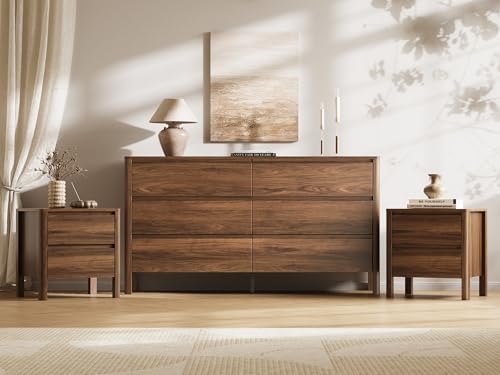
Wood Dresser and Nightstand Set: The Complete Guide
Everything you need to choose a matching wooden dresser and nightstand pair that fits your bedroom, your storage needs, and your style.
EXPLORE THE GUIDEA wood dresser and nightstand set is one of the most practical furniture investments you can make for a bedroom. Buying the two pieces together gives you a coordinated look, consistent drawer hardware, and a matched finish that is often difficult to replicate when shopping for separate items. More importantly, a well-chosen set solves two storage problems at once: the dresser handles folded clothing and linens, while the nightstand keeps everyday essentials within arm's reach of the bed.
This guide walks you through the decisions that matter most — wood species, construction quality, size and scale, drawer mechanics, and finish durability — so you can evaluate any set you find with confidence. Whether you are furnishing a main bedroom, a guest room, or a smaller apartment space, the principles below apply across the board. If you are still comparing broader options, our dresser and nightstand set overview is a good companion read, and shoppers who prefer a different tone can browse the grey finish version or the white finish version of this same pairing concept.
Why Choose a Wood Set Over Other Materials
Wood remains the default choice for bedroom storage furniture for good reasons. It is repairable, refinishable, and ages with character rather than degrading. A solid wood dresser can be sanded and re-oiled years later, while engineered boards with a veneer can often be touched up but not fully restored. Wood also holds drawer hardware and structural joints more reliably over decades of daily opening and closing.
That said, "wood" covers a wide spectrum. The sections below break down the species you will encounter most often and what each one means for durability, grain appearance, and long-term care.
Common Wood Types in Dresser and Nightstand Sets
Oak
Dense, hard-wearing, and highly resistant to dents. Oak shows a pronounced grain pattern that suits rustic, farmhouse, and traditional bedrooms. It takes stains and oils well but is heavy, so pieces are less mobile.
Premium tierWalnut
Rich, dark chocolate tones with a smooth, tight grain. Walnut is favored in mid-century and contemporary interiors. It is a softer hardwood than oak but offers excellent dimensional stability.
High-end tierMaple
Light, creamy, and fine-grained. Maple is prized for painted and natural finishes because its surface is smooth and uniform. It is hard and durable, making it a strong choice for kids' rooms and guest bedrooms.
Mid-rangePine
Softer and lighter than hardwoods, with visible knots and a warm honey tone. Pine is common in entry-level and cottage-style sets. It dents more easily but is easy to repair and refinish.
Entry-levelRubberwood
A plantation hardwood often used in mid-tier sets. It is dense enough for structural use and accepts finishes evenly, though grain character is fairly plain. Frequently paired with veneers on drawer fronts.
Balanced tierMango
An increasingly common sustainable hardwood with striking grain variation. Mango sets often lean toward rustic and boho styling. Density varies, so inspect joints and drawer bottoms carefully.
Mid-tierWhat to Look For in a Matching Wood Set
1. Drawer Box Construction
The drawer box is the part of a dresser that takes the most abuse. Look for dovetail or box joints at the corners rather than stapled butt joints. Drawer bottoms should sit in a groove rather than being stapled to the underside. A set with well-made drawer boxes will still function smoothly a decade after purchase, while a poorly built one will start to stick and sag within a few years.
2. Drawer Glides and Slides
Wood-on-wood runners are traditional and quiet but require occasional waxing. Ball-bearing metal slides are smoother and more consistent, and full-extension slides let you reach the back of the drawer. If you plan to store heavier items such as denim or bedding in the dresser, prioritize metal slides rated for higher loads. Soft-close mechanisms are a welcome upgrade on the nightstand, where drawers are opened late at night.
3. Finish Quality
A good finish should feel smooth without being plasticky. Look for consistent color across both pieces in the set, especially where the dresser and nightstand sit side by side in daylight. Matte and satin finishes hide fingerprints and small scratches better than high-gloss. If the set is painted, check the edges and drawer fronts for even coverage and no overspray on the interior.
4. Hardware Consistency
One of the main advantages of buying a set is matched hardware. Confirm that knobs or pulls on the nightstand match the dresser exactly, and that spares are available or that the hardware is a standard size you could replace later. Our dresser hardware guide explains how to evaluate pulls and knobs for long-term use.
5. Scale and Proportion
The nightstand should be roughly the same height as the top of your mattress for comfortable reach. The dresser should leave at least 24 inches of walking clearance in front of it when drawers are open. Measure your room and your bed height before ordering, and check the product dimensions for both pieces — sets are sometimes paired with a nightstand that is shorter or taller than expected.
Typical Sizes for Wood Dresser and Nightstand Sets
| Category | Dresser Size (approx.) | Nightstand Size (approx.) | Best For |
|---|---|---|---|
| Compact set | 30–40 in wide, 3–4 drawers | 18–22 in wide, 1–2 drawers | Small bedrooms, apartments, guest rooms |
| Standard set | 50–60 in wide, 5–6 drawers | 22–26 in wide, 2–3 drawers | Main bedrooms with a queen or king bed |
| Wide set | 60–72 in wide, 6–9 drawers | 24–28 in wide, 2–3 drawers | Large bedrooms, shared closets, couples |
| Tall chest pairing | 30–40 in wide, 5 drawers stacked | 20–24 in wide, 2 drawers | Narrow rooms where floor space is limited |
If your room is tight, a compact or tall pairing usually works better than a wide dresser. Our guide to dressers for small spaces covers layout tricks that apply directly to two-piece sets.
Matching the Set to Your Bedroom Style
- Mid-century modern: Look for tapered legs, walnut or teak tones, and clean horizontal lines. Sets in this style pair well with low platform beds.
- Farmhouse and rustic: Oak or pine with visible grain, distressed edges, and simple metal pulls. These sets suit shaker-style beds and neutral linens.
- Contemporary: Flat-front drawers, integrated or recessed handles, and maple or ash in light or painted finishes.
- Traditional: Cherry-toned or mahogany-finished wood, decorative molding, and classic bail or rosette pulls.
- Scandinavian: Pale wood such as birch or ash, splayed legs, and minimal hardware. Often the most space-efficient sets.
If you are still narrowing down the overall aesthetic, browse our brown wood set options and compare them with the gold-accented variants that pair warm wood tones with metallic hardware.
Room Layout and Placement Tips
Placement affects how much you actually use the set. A few practical guidelines:
- Position the dresser on a wall where the drawers can open fully without blocking a doorway or closet.
- Keep at least 24 inches of clearance in front of the dresser, and more if it sits opposite the foot of the bed.
- Anchor the dresser to the wall if it is taller than 30 inches, especially in households with children.
- Place the nightstand on the side of the bed where you naturally reach first, and consider a second matching nightstand for symmetry.
- Leave a small gap between the nightstand and the wall to avoid scuffing the finish.
For rooms where one nightstand is not enough, explore dresser and two nightstand sets or the dresser and bedside table pairing for a more flexible arrangement.
Caring for a Wood Dresser and Nightstand Set
Wood furniture benefits from simple, consistent maintenance. Dust the surfaces weekly with a soft, slightly damp cloth and dry immediately. Avoid silicone-based polishes, which can build up and dull the finish over time. For oiled finishes, reapply a furniture oil once or twice a year. For lacquered or polyurethane finishes, a damp cloth is usually sufficient. Keep the set out of direct sunlight where possible, since UV exposure will gradually shift the color of lighter woods and can cause uneven fading across the two pieces if one sits closer to a window.
Humidity matters as well. Wood expands and contracts with moisture, so keeping bedroom humidity in a moderate range helps prevent drawer binding and small cracks. If you live in a very dry climate, a humidifier in winter is a worthwhile investment for any solid wood set.
Frequently Asked Questions
Should the dresser and nightstand always be the same wood?
Not necessarily, but a matching set removes guesswork. If you buy separately, match the wood species or at least the tone and finish sheen. Two pieces in different woods can work if they share a design language, but a matched set is the safer choice for a cohesive bedroom.
Is solid wood always better than veneer?
Solid wood is more repairable and generally more durable at the joints, but quality veneer over a stable engineered core can be very durable and resists warping better in humid rooms. The critical factor is the drawer box and joint construction, not just the surface material.
What size nightstand works with a king bed?
For a king bed, a nightstand between 24 and 28 inches wide usually looks proportionate. Make sure the top is at or slightly above mattress height so you can reach items comfortably while lying down.
How many drawers should the dresser have?
For one person, a 5-drawer dresser is usually sufficient. For couples sharing a dresser, look for 6 to 9 drawers, or combine a wide dresser with a tall chest. The six-drawer wide format is a popular middle ground.
Can a wood set work in a nursery?
Yes, provided the dresser is anchored to the wall and drawers have safety stops. Natural wood finishes with low-VOC sealants are a sensible choice for a nursery. Browse our natural wood nursery dresser guide for safety considerations.
Ready to Compare Options?
Scroll down to browse curated wood dresser and nightstand sets, then use the feature checklist above to evaluate each one against your room size and storage needs.