
Double Dresser Mid Century Modern: The Complete Buying & Styling Guide
Everything you need to know about choosing a wide, low-profile mid century modern double dresser — from walnut veneers and tapered legs to drawer layouts, sizing, and bedroom styling.
If you have been searching for a double dresser mid century modern, you already know the appeal: a long, clean-lined silhouette that anchors a bedroom without dominating it, warm wood tones that feel timeless rather than trendy, and a drawer layout that is genuinely practical. This guide walks through what actually defines the style, how to size one correctly, which materials hold up over time, and how to spot a well-built piece before you commit.
The mid century modern double dresser sits at a useful intersection of form and function. It is wide enough for two people to share, shallow enough to fit along a standard bedroom wall, and visually light enough that it does not close off a room the way a tall chest or armoire can. That combination is why the format has remained in production continuously since the 1950s, and why it continues to be one of the most requested bedroom furniture categories today.
Quick orientation: A double dresser is defined by its width — typically six to eight drawers spread across two columns. The mid century modern version adds tapered or splayed legs, a flat unadorned front, integrated or minimal hardware, and usually a warm wood finish such as walnut, teak, or oak.
What Actually Makes a Double Dresser "Mid Century Modern"
The term gets used loosely, so it helps to know the design signals that separate an authentic mid century look from a generic modern dresser. The core idea is restraint: every element is reduced to what is structurally necessary, and the interest comes from proportion, grain, and joinery rather than applied decoration.
- Low, horizontal proportion. Height usually sits between 30 and 36 inches, with the width doing the visual work. This keeps sightlines open across the bedroom.
- Tapered or splayed legs. Legs angle outward slightly and narrow toward the floor, which lifts the piece visually and creates the characteristic floating impression.
- Flat, unadorned drawer fronts. No molding, no raised panels, no carved detail. Grain continuity across the front is often the only decoration.
- Recessed or integrated pulls. Many originals used routed finger pulls or slim metal bars rather than knobs. If you prefer visible hardware, slim brass or black cylindrical pulls fit the period.
- Warm wood tones. Walnut is the signature material, with teak, oak, ash, and rosewood also historically accurate. Painted versions exist but are a later interpretation.
- Considered joinery. Look for dovetailed drawer boxes, solid wood drawer sides, and center drawer guides rather than thin stapled construction.
Double Dresser Dimensions: Getting the Fit Right
Size is where most buyers run into trouble. A double dresser is wide by definition, but "wide" covers a meaningful range, and the difference between a 54-inch and a 70-inch piece can decide whether a walkway stays usable. Measure the intended wall, then subtract at least 30 inches of clearance for the walking path in front of the drawers when they are pulled open.
| Category | Typical Width | Typical Depth | Typical Height | Best For |
|---|---|---|---|---|
| Compact double | 54–58 in | 18 in | 30–32 in | Smaller bedrooms, apartments, guest rooms |
| Standard double | 60–64 in | 18–19 in | 31–34 in | Most primary bedrooms, shared use |
| Wide double | 66–72 in | 19–20 in | 32–36 in | Large bedrooms, two-person households |
Depth is the dimension buyers overlook most often. A 20-inch depth feels noticeably more imposing in a narrow room than an 18-inch depth, and it also affects how much floor space the open drawers consume. If your bedroom is tight, prioritize a shallower cabinet over a narrower one — the extra width is usually easier to accommodate than extra depth. For rooms with genuinely limited floor area, our guide to double dressers for the bedroom covers layout strategies in more detail.
Drawer Layout: Six, Seven, or Eight?
The drawer configuration matters as much as the outer dimensions, because it determines how the dresser actually gets used day to day. Mid century modern double dressers generally fall into three layouts.
Six drawers (2 × 3)
The most common configuration. Two columns of three generous drawers. Excellent for folded clothing, with each drawer deep enough for a full stack. Simple, symmetrical, and easy to organize.
Seven drawers (2 × 3 + 1 split)
Usually three full drawers per column with one column split into two shallower drawers at the top. Good compromise for separating smaller items like socks and accessories from bulkier clothing.
Eight drawers (2 × 4)
Four shallower drawers per column. Better for folded shirts, knitwear, and separates, but each drawer holds less volume. Suits households that prefer shallow, sorted storage.
Mixed layout with a split top
Some designs place two half-width drawers across the top and full-width drawers below. Useful if you want a dedicated accessory zone without losing deep storage.
Whichever layout you choose, check that the drawers extend fully. Partial-extension slides waste the back third of every drawer and make it easy to lose items. Full-extension slides with a soft-close mechanism are standard on mid-tier pieces and above, and they make a meaningful difference in daily use. If you plan to store heavier items such as denim or linens, our notes on heavy-duty full-extension drawer slides explain what to look for.
Materials and Construction: What Separates Tiers
Mid century modern double dressers are sold across a wide quality spectrum, and the price difference between tiers reflects real construction differences rather than branding alone. The classification below uses neutral quality tiers rather than any specific figure.
| Tier | Typical Construction | What You Get | Best For |
|---|---|---|---|
| Entry-level | Engineered wood with printed or thin veneer, stapled or cam-lock assembly, metal roller slides | Accurate silhouette at a low commitment level; lighter weight; limited lifespan under heavy use | Guest rooms, first apartments, temporary setups |
| Mid-range | Engineered core with thicker wood veneer, dovetailed or glued drawer boxes, ball-bearing full-extension slides | Better grain realism, smoother drawer action, more stable frame, reasonable longevity | Primary bedrooms, daily use |
| Premium | Solid wood or high-grade plywood carcass, solid wood drawer sides, dovetail joinery, soft-close undermount slides | Genuine grain, repairable surfaces, refined hardware, decades of service with care | Long-term investment, design-conscious homes |
| Luxury | Solid walnut or teak, hand-finished joinery, custom hardware, made-to-order sizing | Furniture-grade craftsmanship, unique grain matching, heirloom potential | Collectors, architect-led interiors, statement pieces |
A practical rule: at the entry-level tier, the dresser will look right but may not survive a move or two intact. At mid-range, the piece becomes genuinely repairable and the drawer action improves noticeably. At premium and luxury tiers, you are paying for grain quality and joinery that you can feel every time you open a drawer. For a deeper breakdown of what to inspect, see our dresser quality guide.
Wood species and finishes
Walnut remains the reference material for the style, prized for its chocolate-to-honey grain and tight, consistent figure. Teak offers a slightly more golden, honeyed tone and excellent stability. Oak and ash are lighter and more visually open, and they pair well with pale palettes. If you want the walnut look with better dimensional stability in a humid room, a quality walnut veneer over a stable core is a sensible choice and is standard practice even in premium furniture.
On finish, look for a low-sheen oil or matte lacquer rather than a high-gloss film. Mid century pieces were rarely glossy, and a matte finish is far more forgiving of daily wear. Avoid heavily tinted finishes that obscure the grain — they tend to look dated faster and are harder to touch up.
Hardware and Details That Signal Quality
Hardware is one of the fastest ways to judge a piece. Period-correct options include recessed finger pulls, slim brass bar pulls, and simple cylindrical knobs. Beyond aesthetics, check the following:
- Drawer box joinery. Dovetail joints at all four corners indicate a drawer built to last. Staples and glue alone do not.
- Drawer bottoms. A drawer bottom should sit in a groove, not be stapled to the underside of the box. Gaps around the bottom are a warning sign.
- Leg attachment. Tapered legs should be bolted or mortised into the frame, not simply screwed into a thin panel. Splayed legs carry real load and need proper anchoring.
- Dust panels. A thin panel between drawer rows keeps dust off clothing and stiffens the case. Its presence is a good indicator of considered construction.
- Anti-tip hardware. Any dresser over 30 inches tall should be anchored to the wall. Most reputable manufacturers now include a bracket.
If you are considering swapping hardware on a used piece, our dresser hardware guide covers hole spacing and period-appropriate options, and the drawer pulls reference is useful for matching original mounting patterns.
Styling a Mid Century Modern Double Dresser
The long, flat top surface is one of the format's best features, and it is also the easiest thing to clutter. The most successful styling approach keeps roughly two-thirds of the surface clear and groups objects in odd-numbered clusters.
- Anchor with one large piece. A single ceramic vessel, a sculptural lamp, or a framed print leaning against the wall gives the eye a starting point.
- Add height variation. Pair a low tray or stack of books with a taller lamp or vase. Flat, evenly sized objects read as clutter.
- Keep the palette warm and restrained. Walnut and teak respond well to cream, rust, olive, and muted mustard. High-saturation colors compete with the grain.
- Use a mirror deliberately. A round or arched mirror above the dresser softens the horizontal lines and bounces light into the room. Avoid rectangular mirrors that repeat the dresser's geometry.
- Leave the legs visible. Part of the appeal is the open space beneath. Avoid storing boxes or bins under the dresser if you can.
For more layout and accessory ideas, the dresser organization ideas collection covers practical top-surface setups, and the dresser color ideas guide is useful if you are considering refinishing or pairing with a specific wall palette.
Pairing With the Rest of the Bedroom
A double dresser rarely lives alone. The most common pairing is a matching nightstand set, which reinforces the horizontal lines and keeps the room visually calm. If you prefer a less matched look, choose nightstands in the same wood tone but a different form — a round side table or a smaller single-drawer unit works well. Our double dresser and nightstand set overview covers proportion rules for pairing.
In rooms where storage is tight, a double dresser can also function as a secondary surface for a mirror, a small vanity setup, or a media unit, provided the top is deep enough and the piece is properly anchored. If you are planning a multi-piece bedroom, the dresser and chest of drawers pairing guide explains how to avoid duplicating storage while keeping the room cohesive.
Buying Checklist Before You Commit
Run through this list before finalizing any double dresser purchase:
- Measure the wall, the walking clearance, and the swing of any nearby doors.
- Confirm the depth fits your room, not just the width.
- Check that drawers are full-extension and, ideally, soft-close.
- Verify dovetail joinery or at minimum glued, reinforced drawer boxes.
- Confirm the legs are bolted or mortised, not surface-screwed.
- Look for a dust panel between drawer rows.
- Confirm anti-tip hardware is included and plan to install it.
- Check whether the finish is matte or low-sheen rather than high-gloss.
- Ask about replacement parts availability for slides and hardware.
- If buying vintage, inspect for veneer lifting, water rings, and drawer bottom sag.
If you are weighing a new piece against a vintage restoration, our dresser restoration notes cover what is realistically fixable and what is not. For a broader view of the category before narrowing down, the complete dresser buying guide is the natural next read.
Frequently Asked Questions
What defines a mid century modern double dresser?
A mid century modern double dresser combines a wide, horizontal silhouette with clean lines, tapered legs, minimal ornamentation, and often warm wood tones like walnut or teak. It typically features six to eight drawers arranged in two columns, with recessed or integrated handles rather than ornate hardware.
How wide is a typical double dresser?
Most double dressers measure between 54 and 72 inches wide, with 60 to 64 inches being the most common range. Depth usually falls between 18 and 20 inches, and height ranges from 30 to 36 inches, which keeps the top surface usable as a display or staging area.
What wood is best for a mid century modern dresser?
Walnut is the most iconic choice for authentic mid century modern furniture, valued for its rich grain and warm tone. Teak, oak, and ash are also historically accurate. For a more accessible option, veneered engineered wood with a walnut or oak finish can capture the look while remaining stable and durable.
Does a mid century double dresser work in a small bedroom?
Yes, provided you measure carefully. A double dresser is wide but shallow, so it often fits along a wall better than a tall chest. In smaller rooms, choose a narrower double dresser in the 54-inch range, place it on the longest uninterrupted wall, and keep the top surface relatively clear to preserve visual space.
Where to Go Next
If you are still narrowing down the format, the double dresser mid century modern category page collects the pieces we track most closely. If you want to compare adjacent options, the double chest of drawers and double wide dresser guides explain where the silhouettes diverge. And if deep storage is your priority, the double dresser with deep drawers overview is the most relevant comparison.
For readers furnishing a full room, the dresser and nightstand sets collection and the dressers for small spaces guide cover the two most common follow-up decisions.
Recommended Double Dressers: Mid Century Modern Picks
⚠️ AFFILIATE DISCLOSURE: This website contains affiliate links. As an Amazon Associate, we earn from qualifying purchases. If you make a purchase through these links, we may receive a small commission at no additional cost to you. Read our full affiliate policy.

Bigbiglife Wood Dresser for Bedroom, 6 Drawer Double Dresser, Mid Century Modern Chest of Drawers with Deep Drawers, Large Storage Organizer for Living Room, Closet(Walnut Brown)
Check price on Amazon
DAMCROP 6 Drawer Dresser, 53.43 Inch Fluted Wood Double Dresser with Metal Handles Curved Design Wide Storage Organizer Cabinet Mid Century Modern Chest Dressers for Bedroom Living Room Entryway
Check price on Amazon
HOUROM Walnut Dresser for Bedroom,63"Wide 9 Drawer Mid Century Modern Chest | 63 inch wide dresser with 9 spacious drawers,solid wood legs and concealed handles.Large walnut storage design for bedrooms
Check price on Amazon
6 Drawer Dresser for Bedroom, Light Wood Chest of Drawers, Walnut | Modern Wood Dresser, 47" W TV Stand, Silent Glides, Scandi Minimalist Storage Cabinet for Bedroom, Living Room, Entryway
Check price on Amazon
Evolur Stilnovo Mid Century Dresser, in Sugar Cane
Check price on Amazon
Nasonet 3 Drawer Dresser for Bedroom, Mid Century Modern Chest of Drawers, Curved Dresser with Storage Drawer, Wooden Bedroom Furniture Drawer for Closet, Home Office, Walnut
Check price on Amazon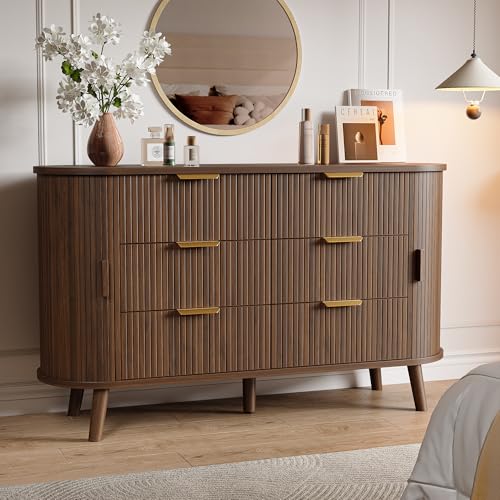
Decofy Fluted 6 Drawer Dresser, 55" Mid Century Modern Chest of Drawers | Sliding Door & Metal Handles, Curved Profile & Sturdy Legs, Wood TV Stand for Bedroom, Living Room (Walnut)
Check price on AmazonDisclaimer
The information provided on DresserAdvisor is for educational and informational purposes only. We are not furniture professionals, and our content should not replace professional advice from qualified furniture makers, interior designers, or safety experts. Some content may use AI assistance. Always check product safety standards and certifications before purchasing. If you do not agree, please do not use this website. Read the full disclaimer.