
Dresser and Side Table Set: The Complete Buying Guide
Everything you need to know before choosing a matching dresser and side table set for your bedroom — sizing, materials, drawer counts, styles, and how to build a cohesive layout that works.
Start ExploringWhat a Dresser and Side Table Set Includes
A dresser and side table set is a coordinated bedroom furniture grouping built around two core pieces: a dresser for folded clothing and a side table — often called a nightstand or bedside table — positioned next to the bed. The appeal of buying them together is consistency: the finish, wood tone, hardware, and proportions are designed to work as a single visual statement rather than as mismatched pieces acquired over time.
Most sets follow one of three configurations. The smallest configuration pairs one dresser with one side table, which suits guest rooms, small bedrooms, and one-sided bed placements. The most common configuration pairs one dresser with two side tables for symmetrical placement on either side of the bed. Larger configurations add a chest of drawers, a mirror, or both, creating a full bedroom collection.
If you are specifically looking for a one-dresser-plus-one-table arrangement, the dresser and bedside table set guide covers that pairing in detail. For sets built around two bedside tables, the dresser and 2 nightstand set page explains how symmetry affects room balance and traffic flow.
Why Buy a Matching Set Instead of Individual Pieces
Buying a coordinated set solves a problem that individual purchases create over time: visual drift. When a dresser and side table are bought separately, even small differences in wood tone, hardware finish, or leg style can make a bedroom feel assembled rather than designed. A matching set removes that risk entirely.
There are practical advantages beyond appearance as well. Sets are usually designed with consistent drawer slide quality across pieces, so the side table does not feel noticeably flimsier than the dresser it sits beside. Height relationships are also considered — a well-designed set places the side table top close to mattress height while keeping the dresser at a comfortable standing height for folding and organizing.
Visual Cohesion
Identical finish, hardware, and leg profiles create a calm, intentional bedroom rather than a patchwork of pieces.
Consistent Build Quality
Pieces in a set typically share the same drawer slide and joinery standards, so quality feels uniform across the room.
Simpler Shopping
One decision replaces several, and you avoid the trial-and-error of matching finishes from different manufacturers.
Better Resale Cohesion
Coordinated bedroom furniture is easier to pass on or repurpose as a group than orphaned mismatched pieces.
That said, coordinated sets — where pieces share a finish and hardware family but differ in size and drawer count — offer nearly the same cohesion with more flexibility. If you prefer that route, review the dresser and matching side tables approach, which explains how to pair pieces that complement rather than duplicate each other.
Sizing Your Set Correctly
Sizing is the single most common source of buyer regret in bedroom furniture. A dresser that looks proportionate in a showroom can overwhelm a small bedroom, and a side table that is too low forces an awkward reach from the mattress. Measure before you shop, and measure twice.
Dresser Dimensions
Dresser width is the dimension that most affects room flow. As a general guideline, a dresser between 48 and 60 inches wide fits comfortably in most primary bedrooms without crowding walking paths. Rooms with limited wall space do better with narrower units in the 30 to 44 inch range, while large bedrooms can accommodate wide dressers of 66 inches or more. Depth matters too: most dressers sit between 16 and 20 inches deep, and anything deeper than 20 inches can intrude on door swings and walkways.
Side Table Dimensions
The most important side table measurement is height relative to the mattress. A side table top should sit within roughly 2 inches of the mattress top — usually 24 to 28 inches from the floor for a standard bed. Width and depth of 18 to 24 inches is typical and sufficient for a lamp, a book, and a glass of water without dominating the space beside the bed.
Clearance Rules
- Leave at least 24 to 30 inches of walking clearance in front of dresser drawers when fully open.
- Keep 2 to 3 inches between the side table and the mattress edge for easy reaching and making the bed.
- Avoid placing a dresser within 6 inches of a door swing or closet opening.
- In rooms under 120 square feet, prioritize a narrower dresser over a wider one.
For rooms where space is genuinely constrained, the dresser for small spaces guide covers compact configurations that still leave room for a side table.
Materials and Build Quality
Material choice determines how a set ages, how heavy it feels in the room, and whether it can be refinished later. Rather than thinking in terms of absolute quality, it helps to classify sets by market tier: essential tier, balanced tier, and premium tier.
| Tier | Typical Construction | What to Expect |
|---|---|---|
| Essential Tier | Engineered wood with printed or thin veneer finishes; particleboard drawer boxes | Lightweight, consistent finish, good for guest rooms and short-term setups. Drawer slides are typically basic side-mounted runners. |
| Balanced Tier | Engineered wood core with quality wood veneers; some solid wood components; metal drawer slides | The most common category. Smoother drawer action, more convincing wood grain, and better hardware durability than essential tier. |
| Premium Tier | Solid hardwood frames and drawer fronts; dovetail joinery; full-extension ball-bearing slides | Heavier, more stable, and refinishable. Drawers glide smoothly even when fully loaded, and the set is a genuine long-term investment. |
Solid wood is the most durable option and the only one that can be sanded and refinished repeatedly. Engineered wood with quality veneers offers a stable, uniform surface that resists seasonal movement, which is why many balanced-tier sets use it for drawer fronts and case sides alike. Metal frames and mixed-material sets serve modern and industrial interiors particularly well.
Beyond the primary material, check the drawer slides and joinery. Side-mounted roller slides are common at the essential tier; ball-bearing and full-extension slides appear at the balanced and premium tiers. For heavy clothing storage, heavy-duty full-extension drawer slides make a noticeable difference in daily use. If you plan to upgrade hardware later, the dresser hardware guide explains how knob and pull spacing varies across set designs.
Drawer Configuration and Storage Capacity
A dresser in a two-piece set usually carries the bulk of the storage load, so drawer count and layout deserve careful thought. Three to five drawers is typical for a dresser paired with side tables; six to nine drawers suits larger households or shared bedrooms.
Drawer Count Guidance
- 3 to 4 drawers: Suitable for one person with a modest wardrobe, guest rooms, and paired-with-closet setups.
- 5 to 6 drawers: The most versatile range for primary bedrooms, allowing separate drawers for tops, bottoms, and delicates.
- 7 to 9 drawers: Best for shared bedrooms or households that store bedding, linens, and seasonal items in the dresser.
Drawer Depth and Interior Layout
Deeper drawers are useful for bulky knitwear and folded jeans, while shallower drawers are better for socks, underwear, and accessories. A mix of both is ideal. If your set includes a side table with a drawer, treat that drawer as a dedicated spot for bedside essentials rather than overflow storage.
Interior organization multiplies usable space regardless of drawer count. The drawer organizers guide and the drawer dividers guide both explain how to compartmentalize a single deep drawer into functional zones. For a dresser that must handle small items, the dresser for socks and underwear breakdown shows which drawer layouts work best.
Style Options That Work Together
The style of a dresser and side table set sets the tone for the entire bedroom. Because the two pieces sit in the same sightline, style consistency matters more here than in almost any other furniture pairing.
Modern and Contemporary
Clean lines, minimal hardware, and flat or slightly tapered fronts. Modern sets often use handleless drawers or slim bar pulls. Finishes range from matte white and charcoal to natural wood tones. These sets pair well with platform beds and low-profile lighting.
Mid-Century Modern
Tapered legs, warm wood tones, and angled drawer pulls define this style. Mid-century sets feel lighter in a room than traditional case goods because the legs lift the body off the floor. The mid-century modern dresser overview explains how these proportions translate across a full set.
Farmhouse and Rustic
Planked fronts, distressed finishes, and cup or bin pulls. Farmhouse sets often feature a two-tone finish, with a painted body and a natural wood top. If you like a weathered look, compare the distressed dresser finish options before committing, since distress levels vary widely between manufacturers.
Traditional and Transitional
Molded edges, framed drawer fronts, and classic hardware. Traditional sets anchor a bedroom visually and pair naturally with upholstered headboards. Transitional sets blend traditional silhouettes with simplified detailing for a more current feel.
Color also drives cohesion. White sets brighten small bedrooms and read as a matched pair even across different manufacturers, while wood-tone sets demand closer attention to grain and stain consistency. The dresser color ideas guide is useful if you are choosing between painted and natural finishes.
Room Layout and Placement Tips
Even a well-chosen set can underperform if placement ignores traffic patterns. The goal is a bedroom where drawers open freely, bedside items are reachable, and walking paths stay clear.
Dresser Placement
- Place the dresser on a wall that is not directly opposite a window if glare makes folding uncomfortable.
- Leave enough room in front of the dresser for drawers to open fully — usually 24 to 30 inches.
- Anchor the dresser to the wall if it is tall or if children use the room.
- If the dresser doubles as a media surface, confirm the top depth can support the screen base.
Side Table Placement
- Set the side table close enough to the bed that a lamp switch is reachable while lying down.
- Align the table top with the mattress top, or slightly below it, for the most natural reach.
- In shared beds, place a table on each side if space allows; a single table works best when one side of the bed is against a wall.
- Keep the table surface uncluttered — a lamp, a small tray, and a book are enough.
Symmetry is the default for primary bedrooms: a dresser centered on one wall and matched side tables flanking the bed. Asymmetrical layouts can work in smaller rooms, but they require more deliberate styling to avoid looking unfinished. If your room is narrow, review the dresser and matching night stand pairing for compact arrangements that keep pathways clear.
Buying Checklist
Use this checklist as a final pass before committing to a set. It captures the details that are easy to overlook when comparing listings online.
Before You Buy
- Measure wall space, door swings, and walking clearance with painter's tape on the floor.
- Confirm the side table height relative to your mattress top.
- Decide between one side table and two based on bed placement.
- Check drawer count against your actual clothing volume, not an estimate.
- Verify the finish name and hardware style match across both pieces.
- Read the assembly requirements — some sets ship flat-packed and require tools.
- Confirm the set includes anti-tip hardware for the dresser.
- Check return policy and shipping protection for large furniture.
At Delivery
- Inspect both pieces for shipping damage before signing for delivery.
- Test every drawer for smooth operation before discarding packaging.
- Install anti-tip straps on the dresser immediately.
- Confirm the side table sits level on your floor and adjust feet if needed.
If you are still weighing a dresser-only purchase versus a full set, the complete dresser buying guide covers the broader decision framework, including how storage needs change over time.
Ready to Compare Dresser and Side Table Sets?
Browse curated options below, filtered by style, drawer count, and material tier — then check availability on your preferred retailer.
Explore Set OptionsFrequently Asked Questions
What is included in a dresser and side table set?
A typical set includes one dresser and one matching side table. Many sets include two side tables for symmetrical bedroom layouts, and larger collections may add a chest of drawers or a mirror. Always confirm the exact piece count in the product listing before ordering.
How do I choose the right size set for my bedroom?
Measure your available wall space and leave at least 24 to 30 inches of clearance in front of the dresser. A dresser between 48 and 60 inches wide suits most bedrooms, while side tables should sit within about 2 inches of the mattress top height, usually 24 to 28 inches from the floor.
Should the dresser and side table match exactly?
Matching sets create the most cohesive look, but coordinated sets that share finish and hardware while differing in size work equally well. The essential factor is consistency in wood tone, finish sheen, and hardware style.
What materials are best for a dresser and side table set?
Solid wood offers the most durable construction and can be refinished over time. Engineered wood with quality veneers provides a stable finish at the balanced tier. Metal and mixed-material sets suit modern and industrial interiors.
How many drawers should the dresser have?
Three to four drawers suit one person with a modest wardrobe or a guest room. Five to six drawers is the most versatile range for primary bedrooms. Seven to nine drawers is best for shared bedrooms or households that store bedding and seasonal items in the dresser.
Can I buy the dresser and side table separately later?
Yes, but matching a finish months or years later is difficult because manufacturers change stain batches and discontinue hardware. If you think you may expand the set, buy all the pieces you need at the same time.
Recommended Dresser and Side Table Sets
⚠️ AFFILIATE DISCLOSURE: This website contains affiliate links. As an Amazon Associate, we earn from qualifying purchases. If you make a purchase through these links, we may receive a small commission at no additional cost to you. Read our full affiliate policy.

Gizoon 3PC Bedroom Furniture Set, 7 Chest of Drawers & 2 Nightstands with Charging Station, USB Type-C Outlet, Farmhouse Bedside Table Combo, Black Bedroom Set
Check price on Amazon
Ahomly 3 Piece Bedroom Set, 6 Drawer Dresser and 2 Nightstands, Black | 6-Drawer Dresser & 2-Drawer Nightstands Set for Bedroom, 3-Pcs Set with Gold Handles, Modern Wood Dresser with Ample Storage
Check price on Amazon
Tradare 3 Pcs Farmhouse Dresser and Nightstand Sets for Bedroom, 6 Drawer Dresser & Nightstand Set of 2, Rustic Wooden Chest of Drawers Wide Storage Organizer for Bedroom, White
Check price on Amazon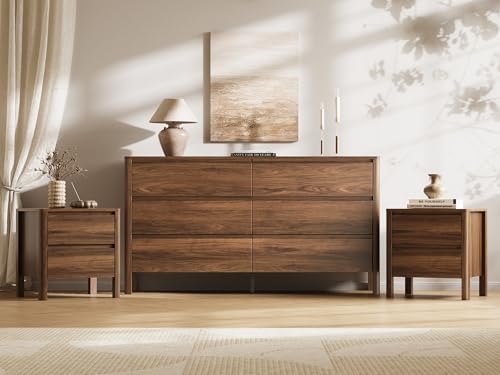
Walnut 3-Piece Bedroom Set, 6-Drawer Dresser & 2-Drawer Nightstands | Mid Century Modern Dresser and Nightstand Sets, Hidden Handles, Wood Chest of Drawers for Bedroom, Living Room, Entryway
Check price on Amazon
NEDYO 3PCS Bedroom Dresser Set, Farmhouse 6 Drawer Dresser & 2 Nightstands. | This Set Including: 6 Drawer Dresser 1PC , 2 Drawer Nightstand with USB Set of 2
Check price on Amazon
Dresser and Nightstand Sets 3 Piece, Bedroom Set with Charging Station, Large 6 Drawer Dresser for Bedroom and Night Stand Set of 2, Mid Century Modern Bedroom Furniture Set with Motion Sensor Lights
Check price on Amazon
Decofy 3-Piece Bedroom Set, 6-Drawer Dresser & 1-Drawer Nightstands Oak | Fluted Dresser & Chest of Drawers and Nightstand Set of 2, Modern Furniture Set for Bedroom, Dining Room, Entryway
Check price on Amazon