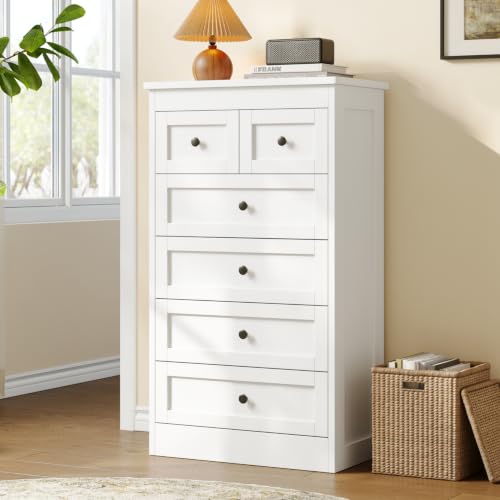
What Is a Dresser and What Is a Chest of Drawers?
The terms are often used interchangeably, but furniture makers treat them as distinct pieces. Understanding each one helps you plan storage around your room's actual dimensions and the way you live.
Dresser
Wide and low, usually with a flat top for a mirror, lamp, or decor. Dressers are long on horizontal storage and are the classic bedroom anchor. Many buyers pair a dresser and matching nightstand for a coordinated look.
Chest of Drawers
Tall and narrow, stacking four to six or more drawers vertically. A chest of drawers is efficient in tight rooms where floor space is limited, and works well alongside a dresser and bedside table set.
Dresser vs Chest of Drawers: Side-by-Side Comparison
Use this comparison to match each form to your room and routine. The right choice usually comes down to wall width, walking clearance, and how much folded clothing you store.
| Feature | Dresser | Chest of Drawers |
|---|---|---|
| Shape | Wide and low | Tall and narrow |
| Typical height | Mid-height to low | Taller than a dresser |
| Best for | Wide walls, display surface, mirrors | Small rooms, vertical storage, corners |
| Drawer layout | Often 3 to 4 wide drawers or a mix | 4 to 6 stacked drawers, sometimes more |
| Display surface | Large flat top | Smaller top surface |
| Floor footprint | Larger footprint, more wall span | Smaller footprint, more vertical |
| Typical placement | Along a long bedroom wall | Corner or narrow wall |
| Tier positioning | Entry-level to luxury | Mid-tier to premium |
How to Choose Based on Room Size and Layout
Measure before you shop. Leave at least 24 to 30 inches of walking clearance in front of any drawers you need to open fully. A double dresser for bedroom suits a long wall, while a narrow chest fits awkward corners that a wide unit cannot use.
Small bedrooms
Choose a chest of drawers or a tall, narrow dresser. Vertical storage keeps the floor clear, which makes the room feel larger. If space is very tight, consider a dresser for small spaces or a dresser for inside a small closet.
Primary bedrooms
A wide dresser paired with a dresser and nightstand set creates a balanced anchor wall. Couples typically need more capacity, so a 6-drawer or 6-drawer wide dresser is a practical middle ground.
Closets and walk-ins
Inside a closet, a double-sided dresser for walk-in closet or a dresser for closet keeps folded items accessible without taking bedroom floor space.
Drawer Count and Layout: What You Actually Need
Drawer count matters less than how the drawers are sized. Deep drawers suit bulky knitwear, while shallow drawers work for socks and underwear. Match the layout to what you fold.
- 3 to 4 drawers: entry-level capacity for one person or a guest room.
- 5 drawers: a balanced mid-tier layout for a single adult.
- 6 to 9 drawers: premium capacity for couples or families.
For internal organization, see our guide to drawer organizers and dresser organization for socks and underwear. If you are choosing between a chest and a dresser with deep drawers, compare a double dresser with deep drawers against a standard chest.
Materials and Build Quality
Build quality separates a long-term investment from a unit that sags within a year. Check the drawer glides, the joinery, and the finish before you commit.
- Solid wood: the most durable construction, with the best long-term repair potential.
- Engineered wood with quality veneer: a solid mid-range option when joinery is reinforced.
- Drawer slides: look for heavy-duty full-extension drawer slides for smooth, complete access.
- Hardware: upgrade with quality dresser handles or dresser knobs for both function and style.
For a deeper walkthrough of construction standards, read our dresser quality guide.
Style, Finish, and Room Coordination
Style affects how well the piece fits the room, not just how it looks. A distressed finish suits rustic and farmhouse spaces, while clean lines suit modern interiors.
- Explore distressed dresser and distressed chests for a lived-in look.
- Consider a dresser color ideas guide if you plan to refinish or repaint.
- Coordinate a full set with a dresser and 2 nightstand set or a dresser, chest, and nightstand set.
Practical Extras and Combinations
Modern buyers often want multi-purpose furniture. A combination piece can reduce clutter and free up floor space.
- Dresser and computer desk combo for a home office bedroom.
- Dresser and makeup vanity combo for a dedicated getting-ready station.
- Dresser and armoire combo for hanging and folded storage in one footprint.
- Dresser and shelf combo to add display and book storage.
If you are furnishing a nursery or child's room, review dresser options for a newborn and dresser options for a children's room. For a unified look, compare dresser and nightstand pairings.
Frequently Asked Questions
What is the main difference between a dresser and a chest of drawers?
A dresser is wide and low, often with a mirror and a large display surface. A chest of drawers is tall and narrow, prioritizing vertical storage. The right choice depends on your wall width and floor clearance.
Which is better for a small bedroom?
A chest of drawers is usually the better fit for small bedrooms because it uses vertical space and leaves more floor area free. A dresser for small spaces also works if you have a narrow wall.
How many drawers do I need?
For one adult, 4 to 6 drawers is a practical starting point. Couples typically prefer 6 to 9. A 5-drawer chest is a good balance of capacity and footprint.
What materials should I look for?
Solid wood offers the most durable construction. Engineered wood with quality veneers is a solid mid-range option. Always check the drawer glides and joinery, since these determine long-term performance.
Can I pair a dresser with a chest of drawers in the same room?
Yes. Many bedrooms benefit from a wide dresser plus a narrow chest. This combination handles folded clothing, accessories, and display in one coordinated layout. A dresser and chest of drawers pairing is a common solution for shared bedrooms.
Final Buying Checklist
- Measure your wall width and required walking clearance.
- Decide between a wide dresser and a tall chest based on available space.
- Match drawer layout to what you fold and store.
- Check materials, drawer slides, and joinery for build quality.
- Confirm the finish and style coordinate with the rest of the room.
- Review related sets, such as a dresser and nightstand set, if you want a unified look.
For a broader overview before you finalize your choice, read our dresser buying guide.