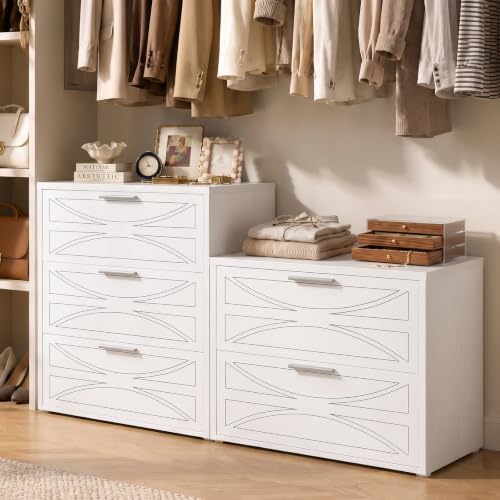
Dresser for Inside a Small Closet: The Complete Space-Smart Guide
A closet dresser can transform a cramped reach-in closet into a genuinely functional dressing area, but only if you choose the right unit. Standard bedroom dressers are simply too deep and too wide for most small closets, and forcing one into the space usually leaves you with drawers that cannot open fully and a walking path that disappears the moment a door swings inward. This guide walks through the practical decisions that matter: how to measure your closet correctly, which dimensions actually fit, how drawer configuration affects usability, and how to organize the unit once it is installed.
Whether you are outfitting a walk-in with a dedicated storage wall or squeezing extra drawer space into a narrow reach-in with sliding doors, the principles here apply to both. By the end, you will know exactly which type of unit to look for and how to verify it will work in your specific space before you commit.
Why a closet dresser makes sense: Moving folded clothing into the closet frees up bedroom floor space, keeps your daily routine in one place, and reduces visual clutter in the sleeping area. The trade-off is that closets are unforgiving of oversized furniture, so measurement discipline matters more here than anywhere else in the home.
Start With Measurement, Not With Furniture
The single most common mistake is buying a dresser first and discovering the fit problem later. Before browsing any product listings, take four measurements and write them down.
Usable Interior Width
Measure between the finished interior walls, not the exterior frame. Account for any shelving brackets, hanging rods, or electrical conduit that protrude into the space.
Usable Interior Depth
Measure from the back wall to the inside face of the closet door or door track. This is your hard ceiling on dresser depth, and it is where most closets fail the test.
Clear Height
Measure from the floor to the underside of any shelf or rod. A tall dresser may fit the floor plan but collide with a shelf you intended to keep.
Door Swing or Slide Path
For hinged doors, note how far the door intrudes when open. For sliders, note the track depth. Both eat into the clearance in front of the drawers.
Once you have those four numbers, subtract a safety margin before you shop. A practical rule is to reserve at least two inches of clearance on each side of the unit and at least 24 inches of open floor in front of the drawers so you can stand comfortably while the drawer is pulled out. If your closet cannot spare that 24 inches, a unit with shallow drawers is a better answer than a deeper unit you can barely open.
Which Dresser Dimensions Actually Fit a Small Closet
Small closets vary enormously, but a few dimensional bands cover most real-world situations. The table below maps typical closet types to workable dresser dimensions. Treat these as starting ranges to verify against your own measurements, not as universal rules.
| Closet Type | Realistic Dresser Depth | Recommended Footprint | Best For |
|---|---|---|---|
| Narrow reach-in with sliding doors | 12 to 15 inches | 24 to 30 inches wide, 40 to 55 inches tall | Socks, underwear, folded shirts, accessories |
| Standard reach-in with hinged door | 15 to 18 inches | 30 to 36 inches wide, 45 to 60 inches tall | Full folded wardrobe for one person |
| Walk-in closet, single wall | 18 to 20 inches | 36 to 48 inches wide, any height | Shared storage, off-season rotation |
| Walk-in closet, double-sided layout | 15 to 18 inches per side | 48 to 60 inches wide, low profile | His-and-hers arrangement, linens |
| Closet nook or alcove | Up to 20 inches | Fitted to alcove width minus 4 inches | Built-in look, maximum capacity |
If your closet falls between categories, err on the shallower side. A dresser that is two inches too deep is a daily annoyance; one that is two inches shallower than ideal simply holds slightly less. For closets where depth is the binding constraint, a dedicated dresser designed for closet use is worth prioritizing over a general-purpose bedroom unit.
Height Versus Width: Choosing the Right Footprint
In a small closet, vertical space is almost always underused while floor space is almost always oversubscribed. That imbalance points toward tall, narrow dressers as the default choice. A tall five-drawer unit frequently delivers the same storage volume as a wide six-drawer unit while taking up roughly half the floor area.
The practical rule
Prioritize height over width whenever the closet ceiling allows it. A 30-inch-wide, 55-inch-tall unit usually serves a small closet better than a 48-inch-wide, 32-inch-tall unit, because the tall unit keeps the floor clear for a hamper, a shoe rack, or simply the room to stand and turn around.
There are exceptions. If the closet has a low shelf or a hanging rod you intend to keep, a tall unit may not clear the overhead obstruction. In that case, a low, wide unit that slides under the rod is the better fit, and you can pair it with other compact dresser solutions for the items that will not fit. Measure the clear height before you commit to a tall design.
Drawer Configuration: The Detail That Decides Daily Usability
Two dressers with identical exterior dimensions can feel completely different to use depending on how the drawers are divided. In a closet, where you are often reaching in from a standing position with limited elbow room, drawer layout matters more than it does in an open bedroom.
- Shallow top drawers (4 to 6 inches deep) suit socks, underwear, and accessories, and they are easier to see into from a standing position.
- Mid-depth drawers (7 to 9 inches) handle folded shirts, loungewear, and knitwear without encouraging tall, unstable stacks.
- Deep bottom drawers (10 to 12 inches) work for bulky items, off-season clothing, or bedding if the closet is used for linen storage.
- Full-extension slides let you reach the back of a drawer without contorting your arm, which is a real advantage in a confined space.
- Soft-close mechanisms reduce noise and prevent drawers from slamming in a small, enclosed room.
If your closet is the only storage in the room, favor a layout with more deep drawers and fewer shallow ones. If it supplements a bedroom dresser, a mix weighted toward shallow and mid-depth drawers keeps the closet focused on daily essentials. You can find more detailed guidance on drawer hardware and slide quality in our dresser quality guide.
Material and Build Considerations for Closet Environments
Closets tend to be enclosed, poorly ventilated, and sometimes humid, especially on exterior walls or in older homes without climate control. That environment has practical implications for material choice.
Solid Wood
Durable and easy to refinish, but heavier and more sensitive to humidity swings than engineered options. Best in climate-controlled homes.
Engineered Wood with Laminate
Resists humidity better, lighter to move, and generally more stable in a sealed closet. Check that edges are sealed to prevent swelling.
Metal Frames
Resistant to moisture and easy to wipe down. Often the most practical choice for closets on exterior walls or in humid climates.
Ventilated Back Panels
A small but meaningful detail. A unit with a vented or open back allows air to move against the closet wall and reduces musty odors.
Whichever material you choose, confirm that the unit ships with an anti-tip restraint. In a closet, the dresser is often the tallest object in the room and may be climbed on or leaned against, so anchoring to a stud is non-negotiable. If the closet wall has no accessible stud at the right height, a metal frame anchored into masonry or a freestanding low-profile design is safer than an unsecured tall wooden unit.
A Step-by-Step Installation Plan
Once you have a unit that fits your measurements, installation is straightforward if you sequence it correctly. Rushing this step is how people end up with a dresser that technically fits but cannot be used comfortably.
- Empty the closet completely. Remove clothing, shelving, rods, and anything mounted to the walls. You cannot assess clearance accurately with a full closet.
- Re-measure with the closet empty. Confirm your earlier numbers, paying particular attention to skirting boards, baseboards, and any uneven flooring that could tilt the unit.
- Decide what stays and what goes. If you are keeping a hanging rod, map its position and check that the dresser top clears it. If not, remove the rod to free up height.
- Assemble the dresser outside the closet. Most flat-pack and many pre-assembled units are easier to build in open space and then slide into position.
- Anchor before loading. Attach the anti-tip strap to a wall stud while the unit is empty and light. Do not wait until the drawers are full.
- Test every drawer through its full travel. Open each drawer completely and confirm it does not strike the door, the frame, or your body as you stand in front of it.
- Add dividers and organizers last. Once the unit is in place, add drawer dividers and bins sized to the interior dimensions. Our drawer organizers guide covers the options in detail.
Organizing the Dresser Once It Is In Place
A closet dresser works best when it is organized around frequency of use rather than category. Put the items you reach for every day in the drawers at chest height, where access is easiest from a standing position. Move occasional items to the top and bottom drawers.
- Dedicate the top drawer to socks, underwear, and small accessories, using compartment dividers to keep items separated.
- Use the mid-height drawers for folded shirts, tops, and loungewear, filed upright rather than stacked so you can see every item.
- Reserve the bottom drawers for bulky or off-season clothing, or for bedding if the closet also serves as linen storage.
- Keep a small bin or tray on top of the unit for items that do not belong in drawers, such as belts, ties, or a lint roller.
- Rotate seasonal clothing between the dresser and higher closet shelves so the dresser always holds what you are actually wearing.
If folding technique is not yet a habit, our folding clothes tips and drawer organization ideas will help you get more into each drawer without making it hard to close. For closets shared by two people, the double-sided dresser arrangement for walk-in closets is worth considering if your layout allows it.
Common Mistakes to Avoid
Buying Before Measuring
The most frequent error. A dresser that is two inches too deep will not allow the closet door to close, and no amount of organization fixes that.
Ignoring the Door Swing
An inward-swinging door can make the front of the dresser unusable. Account for the arc of the door in your clearance calculation.
Skipping the Anchor
An unsecured tall dresser in a confined space is a genuine safety risk. Anchor it, every time, before loading.
Overfilling the Drawers
A drawer packed beyond its capacity will not close smoothly and stresses the slides. Leave a little headroom in every drawer.
Frequently Asked Questions
What is the best depth for a dresser inside a small closet?
A depth of 15 to 18 inches is ideal for most small closets. This leaves enough clearance for the closet door to swing shut and for you to stand in front of the drawers while they are open. Deeper units of 20 inches or more tend to crowd the walking path inside a narrow closet.
Should I choose a tall dresser or a wide dresser for a small closet?
Tall, narrow dressers generally work better in small closets because they use vertical space instead of floor space. A five-drawer tall unit can hold as much as a wide six-drawer unit while occupying a much smaller footprint, which keeps the closet floor clear for shoes and hampers.
How many drawers do I need in a closet dresser?
Four to six drawers covers most single-person needs. A common layout is two shallow drawers at the top for socks, underwear, and accessories, and three to four deeper drawers below for folded shirts, loungewear, and off-season items. Choose drawer count based on what you plan to fold rather than the total number of items you own.
Can a dresser fit inside a reach-in closet with sliding doors?
Yes, but the sliding door track usually limits usable depth. Measure the distance from the back wall to the interior face of the door track, then subtract at least two inches of clearance. A slim unit with a depth of 12 to 15 inches is often the only option that allows the doors to slide freely.
How do I secure a dresser inside a closet?
Always anchor the dresser to a wall stud using an anti-tip strap or bracket, even in a closet. Choose a unit that ships with a tip-over restraint kit, and confirm the closet wall has a stud at the mounting height. Anchoring is especially important in households with children or pets.
A well-chosen closet dresser is less about finding an unusual piece of furniture and more about measuring carefully, choosing the right proportions, and committing to a layout that keeps the space usable. Work through the measurements first, select a tall or slim design that fits your clearance, anchor it properly, and organize it around daily use. For further reading on choosing storage that suits tight rooms, our complete dresser buying guide and dresser options for small spaces cover the adjacent decisions in more depth.