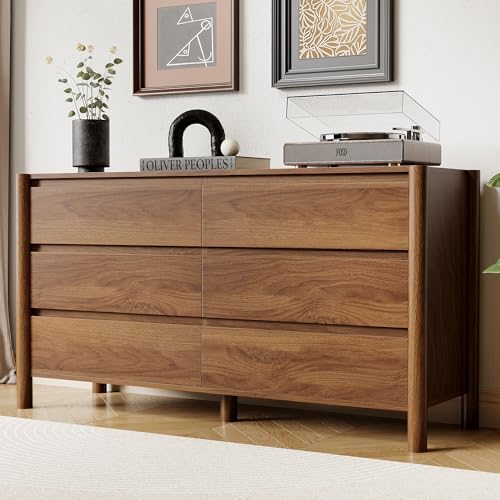
Six Drawer Dresser: The Complete Buyer's Handbook
A six drawer dresser sits in the sweet spot between compact chests and oversized storage units. Learn how to evaluate drawer layout, footprint, materials, and build quality so you can choose a piece that fits your room and your daily routine.
Start the GuideWhy six drawers? A six drawer dresser typically offers two columns of three drawers or a mix of wide and narrow rows. That arrangement gives you separate zones for folded clothing, delicates, and accessories without the bulky footprint of a nine drawer model. This guide walks you through the decisions that matter most before you buy.
What Makes a Six Drawer Dresser Different?
A six drawer dresser is defined by its drawer count, but the real story is in how those drawers are arranged. Unlike a four drawer dresser with large, deep compartments, a six drawer configuration usually splits storage into more specialized zones. This makes it a strong choice for people who want to separate categories of clothing rather than pile everything into a few deep bins.
The format also sits between two common bedroom storage types. It is more capacious than a standard four drawer model, yet less imposing than a nine drawer chest. If you are comparing layouts, our dresser types guide breaks down the full range of configurations, while this page focuses specifically on the six drawer category.
Most six drawer dressers fall into one of three shapes: a tall, narrow chest with two columns of three drawers; a wide, low dresser with three rows of two drawers; or a mixed layout with a combination of drawer sizes. Each shape changes how the piece fits against a wall, how easy it is to reach the top drawers, and how much floor space it occupies.
Six Drawer Dresser Layouts Compared
The drawer arrangement affects usability more than the raw count. Before you choose a finish or a material, decide which layout matches the way you actually store clothes.
Two Columns of Three
Tall and narrow. This layout works well in smaller bedrooms because it uses vertical space instead of wall width. Top drawers are within easy reach for most adults, and the narrow footprint leaves room for a bed or a walking path. It is a common format for a tall skinny dresser.
Three Rows of Two
Wide and low. This arrangement creates broad drawers that suit folded shirts, linens, and larger items. The lower profile keeps the top surface at a comfortable height for a lamp or mirror. It suits rooms with more wall space and a need for a horizontal anchor piece.
Mixed Drawer Sizes
A blend of wide and narrow drawers. The top row might hold small accessories while the lower rows handle bulkier clothing. This is the most flexible layout, but it requires you to plan storage zones in advance so small items do not get lost in large compartments.
If your room is tight, a tall configuration is usually the better fit. Our guide to tall skinny dressers covers the trade-offs in more detail. If you have horizontal wall space and prefer a lower profile, explore low profile dressers for comparison.
Size and Footprint: Getting the Measurements Right
A six drawer dresser is not a standardized size. Two pieces with the same drawer count can differ significantly in width, depth, and height. Measure your room before you shop, and pay attention to three dimensions in particular.
| Dimension | What to Check | Why It Matters |
|---|---|---|
| Width | Wall space plus clearance for doors and walking paths | A wide dresser can crowd a doorway or block a closet |
| Depth | Distance from wall to front edge, including drawer pull-out | Deep drawers need room to open without hitting a bed frame |
| Height | Top surface height and the reach to the highest drawer | Tall units require comfortable access for daily use |
A common mistake is measuring only the dresser body and forgetting the drawer extension. A drawer that pulls out several inches can turn a narrow gap into an obstacle. Leave at least a few inches of clearance in front of the unit, and check that the top drawer opens without colliding with a light fixture or wall art.
For rooms with limited floor area, a narrow six drawer model may be the only practical option. Our article on narrow sets of drawers for the bedroom explores how to maximize storage in tight spaces. If you need a shallow unit that does not protrude far from the wall, review shallow depth dressers for small spaces.
Materials and Build Quality
The material determines how a six drawer dresser ages, how much it weighs, and how well the drawers glide over time. There is no single best material, but there is a best material for your priorities.
Solid Wood
Solid wood remains the benchmark for durability and repairability. Oak, maple, walnut, and pine are common choices. A solid wood frame can be sanded and refinished if it gets scratched, which extends its useful life. The trade-off is weight and sensitivity to humidity changes. If you want a long-term investment, a high-quality solid wood dresser is worth considering.
Engineered Wood and Composites
Particle board and medium-density fiberboard are common in mid-range and entry-level furniture. They are stable and resist warping, but they are harder to repair and can be damaged by moisture. Look for reinforced drawer bottoms and sturdy joinery if you choose this category.
Finishes and Special Materials
Painted finishes, veneers, and specialty materials change the look but not always the structural quality. A painted finish can hide lower-grade wood, so inspect the drawer boxes and joinery rather than judging by the exterior alone. If you prefer a natural look, our natural oak dresser overview explains how oak behaves over time. For a lighter wood tone, see the light wood chest of drawers guide.
Drawer Glides and Hardware
The drawer mechanism is the part you interact with every day. Entry-level units often use simple wooden runners or basic metal slides. Mid-range models typically add side-mounted ball-bearing glides. Top-tier and premium pieces may include soft-close undermount slides with full extension. Full-extension glides let you see and reach the back of the drawer, which matters more on a six drawer unit because each compartment is likely dedicated to a specific category of clothing.
Hardware is easy to replace later. If the drawer pulls feel flimsy, you can swap them without replacing the furniture. Our guide to pull handles for dresser drawers covers compatibility and installation.
How to Organize a Six Drawer Dresser
Six drawers invite a zone-based approach. Assign each drawer a purpose so you are not rummaging through mixed categories every morning. A simple framework works for most people:
- Top row: small accessories, socks, undergarments, and items you reach for daily.
- Middle rows: folded shirts, tops, and seasonal items you use regularly.
- Bottom rows: bulkier clothing, jeans, linens, or off-season items that need less frequent access.
Drawer dividers and organizers make a bigger difference in a six drawer unit than in a large chest, because each compartment is smaller and needs structure. Our drawer organization ideas collection includes layouts for narrow and wide drawers. For a deeper walkthrough of folding and rotation, read the dresser organization guide.
If you store jewelry or small valuables, a model with a dedicated compartment can simplify your setup. Compare options in our overview of dressers with a hidden jewelry drawer and the companion guide on hidden jewelry storage.
Style and Room Fit
A six drawer dresser is large enough to anchor a bedroom wall, so style matters as much as function. The right piece should feel proportionate to the room, not overpower it.
Modern and Mid-Century
Clean lines, tapered legs, and minimal hardware suit contemporary bedrooms. If that is your direction, browse the mid-century 6 drawer dresser guide for layout and material notes.
Traditional and Shaker
Raised panels, bracket feet, and classic proportions work in traditional settings. The Shaker style dresser overview explains why that restrained aesthetic remains popular.
Painted and Distressed
A painted finish can brighten a small room, while a distressed look adds character. Explore distressed dresser options if you want a lived-in aesthetic.
Small Space Solutions
In a compact bedroom, a tall six drawer unit may be the most efficient choice. Our tall skinny dresser article covers vertical storage strategies.
Consider the height of your bed and the placement of windows when choosing a style. A low, wide dresser can sit beneath a window without blocking light, while a tall chest may work better on a solid wall. If the unit will sit near a closet, check that the doors open fully before you commit to a footprint.
Six Drawer Dresser vs. Other Configurations
The drawer count is only one variable. Use this comparison to see where a six drawer model fits relative to other common bedroom storage pieces.
| Configuration | Best For | Trade-Off |
|---|---|---|
| Four drawer dresser | Smaller rooms and simpler storage needs | Fewer zones; larger drawers can become disorganized |
| Six drawer dresser | Balanced storage with room for categories | Needs more wall or floor space than a four drawer unit |
| Nine drawer dresser | Large households and extensive wardrobes | Visually heavy; may overwhelm a compact bedroom |
| Tall chest | Narrow rooms with limited wall width | Top drawers can be harder to reach for shorter users |
If you are still deciding between formats, the dresser vs chest of drawers comparison clarifies the terminology. For a broader look at storage furniture, the bedroom storage hub covers armoires, benches, and other complementary pieces.
A Practical Buying Checklist
Before you commit to a six drawer dresser, run through these checks. They take a few minutes and prevent most of the common regrets.
- Measure the wall width, the available depth, and the height you can comfortably reach.
- Confirm the drawer extension clearance so drawers do not hit a bed or doorway.
- Inspect the drawer boxes, not just the front panels. Look for sturdy joints and reinforced bottoms.
- Test the glides if possible. Full-extension slides make the back of each drawer accessible.
- Check the anti-tip hardware. Tall units should be secured to the wall, especially in homes with children.
- Decide on a finish that suits your room's lighting and existing furniture.
- Plan your drawer zones before the unit arrives so you can organize immediately.
If you are furnishing a nursery or a child's room, safety hardware and drawer height become even more important. Review children's dressers and the nursery dresser guide for age-appropriate considerations.
Frequently Asked Questions
Is a six drawer dresser big enough for one person?
For most individuals, a six drawer dresser provides ample storage for folded clothing, accessories, and linens. The key is the layout: two columns of three drawers create more separation than four large drawers, which helps keep categories organized. If you have an extensive wardrobe, you may also need a closet or an armoire.
What is the difference between a six drawer dresser and a chest of drawers?
The terms overlap in everyday use. A chest of drawers typically refers to a taller, narrower piece, while a dresser is often wider and lower. A six drawer dresser can take either shape. The dresser vs chest comparison explains the distinctions in more detail.
Should I choose a tall or wide six drawer dresser?
Choose tall if floor space is limited and you have a narrow wall. Choose wide if you have horizontal wall space and prefer a lower top surface. Tall units use vertical space efficiently but require comfortable reach to the top drawers. Wide units offer broader drawers that suit folded shirts and linens.
How do I keep a six drawer dresser organized?
Assign each drawer a category and use dividers to keep small items contained. Rotate seasonal clothing to the bottom drawers. Our drawer organization ideas and dresser organization guide cover specific layouts for narrow and wide drawers.
Do I need to anchor a six drawer dresser to the wall?
Yes, especially for taller units. Anti-tip straps or brackets prevent the dresser from tipping if a drawer is overloaded or a child climbs on it. Check whether the unit includes anti-tip hardware; if not, add a compatible kit during assembly.
Ready to Compare Six Drawer Dressers?
Browse curated options and check availability for the layout and style that fits your bedroom.
Explore OptionsContinue Exploring
If you are still refining your choice, these related guides can help you compare configurations and room setups.
- Compare a six drawer layout with a double chest of drawers for larger storage needs.
- Consider a dresser with large deep drawers if you store bulky items.
- Explore storage dressers that combine drawers with shelving or cabinets.
- Review tall and wide dressers for the bedroom to compare footprint options.
- If you need a compact secondary piece, see the short chest of drawers for closet guide.
- For a complete bedroom setup, browse solid wood bedroom dresser sets.