
Antique Flat File Cabinet for Sale: The Complete Buyer's Guide
Everything you need to know before investing in a vintage flat file cabinet — from identifying authentic wood and drawer mechanisms to restoration, placement, and long-term care.
EXPLORE OPTIONSWhy an antique flat file cabinet? Originally designed to archive maps, blueprints, and large-format documents, antique flat file cabinets have become one of the most versatile statement pieces in modern interiors. Their wide, shallow drawers work beautifully for art supplies, textiles, linen storage, and curated collections — and their solid wood construction often outlasts contemporary alternatives by decades.
What Exactly Is an Antique Flat File Cabinet?
A flat file cabinet is a storage piece defined by its wide, shallow drawers designed to lay documents flat rather than hang or fold them. Antique flat files typically date from the late 19th to mid-20th century and were produced for architects, cartographers, engineers, libraries, and drafting studios. Unlike a conventional antique wood file cabinet built for letter-size folders, a flat file prioritizes horizontal surface area over vertical depth.
The defining characteristics of a genuine antique flat file cabinet include:
- Oversized drawer dimensions — often 30 to 48 inches wide and 24 to 36 inches deep, with drawer heights between 2 and 6 inches.
- Solid wood or heavy-gauge steel construction — early examples favor oak, walnut, and mahogany; later industrial examples use reinforced steel.
- Hand-cut joinery and period hardware — dovetails, mortise-and-tenon joints, cast brass pulls, and label holders.
- Stacked or sectional design — many vintage flat files consist of modular drawer stacks that sit on a separate base.
If you are exploring related antique storage categories, our guide to antique wood file cabinets for sale covers the vertical counterpart in detail, while antique oak file cabinets with four drawers addresses a popular mid-size configuration.
Why Collectors and Designers Seek Out Vintage Flat Files
The appeal of an antique flat file cabinet extends well beyond nostalgia. These pieces solve real storage problems while adding architectural character that new furniture rarely matches.
Exceptional Build Quality
Period flat files were built for daily commercial use. Many feature reinforced drawer bottoms, thick side panels, and joinery techniques that hold up for generations.
Versatile Storage
Shallow drawers are ideal for artwork, maps, textiles, table linens, jewelry trays, craft supplies, and flat-pack collections that do not fit standard dressers.
Statement Aesthetic
The repetitive horizontal drawer lines create strong visual rhythm — a favorite for industrial, library-style, and curated eclectic interiors.
Long-Term Investment
Well-preserved antique flat files hold their desirability over time, and restoration can further extend their working life.
Types of Antique Flat File Cabinets
Flat files appear in several distinct styles and material families. Understanding the categories helps you narrow your search and set realistic expectations about condition and availability.
1. Solid Wood Flat Files
Wood flat files are the most sought-after category among home collectors. Oak, walnut, and mahogany are common, with oak favored for its density and visible grain. If you appreciate period wood craftsmanship, our overview of antique oak dressers for sale illustrates the same construction standards applied to drawer-based furniture. For a broader survey of wooden storage, the antique wooden chests collection is also a useful reference point.
2. Steel and Industrial Flat Files
Early 20th-century steel flat files were produced for drafting rooms and print shops. They are typically heavier, highly durable, and often feature original paint or a patina that industrial-style interiors celebrate. Look for smooth drawer glides and intact label holders — these are strong indicators of a well-maintained example.
3. Modular and Stackable Units
Many antique flat files were sold as individual drawer stacks that could be stacked to a custom height. Modular units offer flexibility: you can start with a two-drawer stack and expand over time. However, verify that the base and stacking hardware are included, since mismatched components can cause alignment issues.
4. Specialty and Map Cabinets
Map and blueprint cabinets are a specialized subset of flat files, often with extremely shallow drawers and wider footprints. The antique flat file cabinet category overlaps with these specialty pieces, so compare drawer dimensions carefully before committing.
What to Inspect Before You Buy
Antique furniture requires a more thorough inspection than new furniture. Use the checklist below to evaluate a flat file cabinet in person or through detailed seller photos and descriptions.
| Inspection Area | What to Check | Why It Matters |
|---|---|---|
| Drawer Glides | Open and close each drawer fully. Check for smooth travel, wobble, and wood-on-wood binding. | Sticking drawers are the most common flat file issue and can be costly to correct. |
| Drawer Bottoms | Look for sagging, splitting, or water staining on the underside of each drawer. | Wide drawers place significant stress on bottom panels; weak bottoms limit usable load. |
| Joinery | Confirm dovetails or mortise-and-tenon joints at corners rather than screws or staples alone. | Quality joinery signals authentic period construction and structural integrity. |
| Hardware | Check pulls, label holders, and locks for originality and function. | Original hardware adds character and preserves collectible authenticity. |
| Finish and Patina | Distinguish intentional patina from water rings, burns, or heavy veneer loss. | Patina is desirable; damage may require refinishing that affects character. |
| Structural Frame | Inspect the carcass for racking, loose corner blocks, and separation at seams. | A square, rigid frame is essential for drawer alignment. |
For related antique storage pieces with similar drawer mechanics, the antique narrow chest of drawers and antique miniature chest of drawers guides discuss inspection techniques that transfer directly to flat files.
Wood Types and Material Considerations
The wood species affects weight, durability, grain character, and restoration difficulty. The most common antique flat file materials are:
- Oak — dense, heavy, and highly durable. Quarter-sawn oak shows dramatic ray fleck and is especially prized. See the antique oak dresser guide for a deeper material profile.
- Walnut — rich, dark grain with excellent stability. Walnut flat files often command attention as premium pieces. The antique mahogany dresser overview offers a useful comparison of dark hardwood characteristics.
- Mahogany — fine, straight grain with a reddish-brown tone; common in early 20th-century office furniture.
- Pine — lighter and softer; less common for commercial flat files but found in provincial workshops. The antique pine dresser guide explains how pine ages and takes finish.
- Steel — industrial flat files use heavy-gauge steel with baked enamel or painted finishes.
Veneered flat files exist as well. Veneer is not inherently inferior — period veneering can be extremely durable — but lifting or missing veneer requires careful repair. If you are comparing solid versus veneered construction across antique furniture, the principles in our antique dresser guide apply to flat files too.
Where to Place a Flat File Cabinet at Home
Flat files are large footprint pieces, so planning placement before purchase prevents frustration. Consider these common placements:
- Home office or studio — ideal for architects, artists, and makers who need accessible flat storage. Pair with a bachelor chest for smaller supplies.
- Living room or library wall — a low stack functions as a console or display surface with storage below.
- Bedroom — shallow drawers work well for folded textiles and accessories. If you prefer a traditional bedroom storage anchor, explore antique lowboy dressers with mirrors or a tall antique dresser for vertical capacity.
- Studio or craft room — deep, wide drawers accommodate paper stock, fabric, and tools.
Measure doorways, stairwells, and turning radii before buying. A flat file that will not fit through your entry is a problem no amount of restoration can solve.
Restoration and Care Basics
Many antique flat files need only light attention to become fully functional. Start with the least invasive approach:
- Clean gently. Use a soft cloth and a mild wood cleaner; avoid soaking the wood or stripping original finish prematurely.
- Lubricate drawer glides. For wood-on-wood glides, a dry lubricant such as paraffin wax is often preferred over oil, which can attract dust.
- Stabilize loose joints. Address minor wobble with furniture-grade glue and clamps; avoid over-tightening original hardware.
- Preserve patina. Refinishing should be a last resort. Well-maintained original finish usually retains more character and desirability.
- Control humidity. Wide drawer panels are sensitive to swings in moisture; keep flat files away from direct heat and damp walls.
If you are restoring multiple antique pieces, the care principles in our guide to antique dressers from the early 1900s and antique-style chest of drawers overview are directly applicable.
Buying an Antique Flat File Online: Practical Tips
Most antique flat files are now purchased through online marketplaces, auction houses, and specialist dealers. Because you cannot inspect the piece in person, rely on these safeguards:
- Request detailed photos of drawer interiors, the back panel, and the underside of the carcass.
- Ask for drawer measurements — interior width, depth, and height per drawer.
- Confirm shipping method — flat files are heavy and often require freight shipping with liftgate service.
- Read the seller's condition notes carefully — distinguish cosmetic wear from structural issues.
- Check return policies before committing, especially for high-end tier pieces.
For adjacent antique buying considerations, our antique dressers for sale guide and antique English chest of drawers overview cover seller vetting and condition terminology in more depth.
Flat File vs. Other Antique Storage Pieces
Understanding how a flat file differs from other antique drawer furniture helps you choose the right piece for your needs.
| Piece | Best For | Typical Tier |
|---|---|---|
| Antique Flat File Cabinet | Flat documents, artwork, textiles, craft supplies, statement storage | Mid-range to premium |
| Antique Chest of Drawers | Folded clothing, linens, general bedroom storage | Entry-level to premium |
| Antique Highboy Dresser | Vertical bedroom storage with tall silhouette | Mid-range to luxury |
| Antique File Cabinet (Vertical) | Hanging folders, letter-size documents, office storage | Entry-level to mid-range |
If you are weighing tall versus low storage, the antique highboy dresser guide and antique lowboy dresser overview provide helpful comparisons. For a closer look at drawer-heavy antique case pieces, see the antique wooden chest of drawers guide.
Frequently Asked Questions
How can I tell if a flat file cabinet is genuinely antique?
Look for period joinery (hand-cut dovetails, mortise-and-tenon joints), hand-forged or cast hardware, and construction details consistent with pre-1950s manufacturing. Original finish wear patterns and label holders from known makers are also strong indicators. When in doubt, ask the seller for provenance or a maker's mark.
Are antique flat file drawers strong enough for everyday use?
Well-built wood and steel flat files were designed for commercial drafting rooms and archives, so they are generally very strong. The weakest point is usually the drawer bottom panel. Inspect for sagging or splitting, and distribute weight evenly across wide drawers.
What is the difference between a flat file and a map cabinet?
The terms overlap. Map cabinets are a specialized type of flat file with very shallow drawers and wide footprints, designed specifically for large-format sheets. Many flat files serve the same purpose, but not every flat file is technically a map cabinet.
Can a flat file cabinet be used outside an office?
Yes — flat files are popular in living rooms, studios, bedrooms, and craft rooms. Their shallow drawers are excellent for textiles, artwork, and curated collections, and the low, wide silhouette works as a console or display surface.
How should I move an antique flat file cabinet?
Empty all drawers, remove modular stacks if possible, and use professional movers or freight shipping for large pieces. Never lift by the drawers or top surface alone — support the carcass from below. Measure doorways and stairs before moving day.
Are steel flat files considered antique?
Early 20th-century steel flat files are collectible and often categorized as antique or vintage industrial pieces. Condition of the original paint, smooth drawer glides, and intact hardware all affect desirability.
Ready to Find Your Antique Flat File?
Explore curated antique flat file cabinets and related vintage storage pieces through the recommendations below. Each listing is selected for construction quality and practical usability in a modern home.
VIEW RECOMMENDATIONSRecommended Antique Flat File Cabinets & Vintage Storage
⚠️ AFFILIATE DISCLOSURE: This website contains affiliate links. As an Amazon Associate, we earn from qualifying purchases. If you make a purchase through these links, we may receive a small commission at no additional cost to you. Read our full affiliate policy.
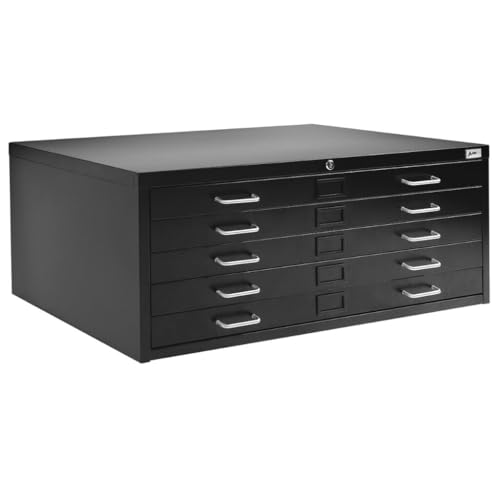
AdirOffice Flat File Cabinet - Heavy Duty 5-Drawer Blueprint Sheets Storage, 29" x 40" Great for Documents Sized 24” x 36”, Ideal for Artists, Art Files, Engineers, Architects, Offices - Black
Check price on Amazon
Metal Lateral File Cabinet with Lock,2 Drawer Steel Wide Filing Organization Storage Cabinets,Filing Cabinet for Legal/Letter/A4/F4 Size with Hanging Files&Key,Lockable Cabinet for Home Office,White
Check price on Amazon
Tribesigns 4 Drawer File Cabinet with Lock, Filing Cabinets for Home Office | Vertical Wooden File Cabinet with Key, Modern Style, Tall Office Storage Cabinet for Legal Size/Letter/A4/Files, Dark Brown
Check price on Amazon
Staples 3-Drawer Vertical File Cabinet, Letter Size, Lockable, Charcoal | Mobile rolling cabinet, 18.9in D x 14.3in W x 26.8in H, for secure storage.
Check price on Amazon
Aobabo 4-Drawer Metal File Cabinet, Anti-Tip Interlock, Letter/Legal | Heavy-duty vertical metal file cabinet for letter and legal folders. Features an anti-tipping interlock and a secure lock.
Check price on Amazon
VASAGLE 2 Drawer File Cabinet with Locks, for A4, Letter Sized Documents | Filing Cabinet for Hanging File Folders, Home Office, Ink Black, CUSTOS Collection UOFC061B16V1S
Check price on Amazon