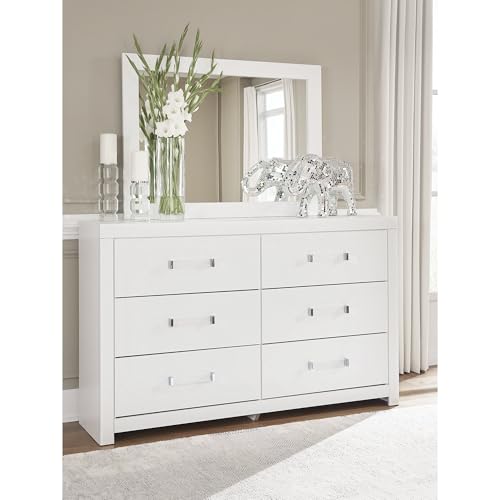
White Dresser with Mirror Attached: The Complete Buying Guide
Everything you need to know about choosing a white dresser with an attached mirror — from styles and sizes to drawer configurations, materials, and room styling. Make a confident, informed decision before you buy.
Explore Recommended OptionsWhy a white dresser with an attached mirror? This combination delivers a bright, cohesive bedroom aesthetic while eliminating the need to mount a separate mirror. The attached design saves wall space, keeps proportions balanced, and creates a ready-to-use vanity or dressing station. This guide walks you through every consideration so you can identify the right model for your space and storage needs.
What Is a White Dresser with Mirror Attached?
A white dresser with mirror attached is a bedroom storage piece where the mirror is permanently or semi-permanently mounted to the top of the dresser, either at the back edge or as part of a raised hutch-style frame. Unlike separate mirrors that require wall mounting, attached mirrors are engineered as part of the dresser's structure, ensuring visual harmony and structural stability.
These pieces typically feature a white finish — ranging from crisp matte white to creamy off-white, high-gloss lacquer, or white-washed wood — and a mirror that is sized proportionally to the dresser's width. The mirror may be framed in matching white wood, metallic trim, or left frameless for a sleek, modern look.
For buyers researching this category, the appeal is clear: a single purchase that delivers storage, a grooming surface, and a design focal point. If you are also considering a standalone option, you can compare it with a white dresser with mirror that may be sold separately, or explore a white vanity dresser with mirror for a more dedicated dressing setup.
Key Benefits of an Attached Mirror Design
Space Efficiency
No separate wall mounting required. The mirror occupies the dresser's footprint, preserving wall space for artwork or windows — especially valuable in compact bedrooms.
Cohesive Aesthetic
The mirror and dresser are designed as one unit, ensuring matched proportions, finish consistency, and a polished, intentional look.
Structural Stability
Attached mirrors are secured to the dresser's frame, reducing the risk of misalignment or accidental tipping that can occur with separately mounted mirrors.
Ready-to-Use Dressing Station
Immediate functionality for grooming, styling, and outfit checks without additional purchases or installation steps.
Styles and Finishes to Consider
The style of your white dresser with mirror attached should align with your bedroom's overall design language. Here are the most common approaches:
- Modern and Minimalist: Clean lines, frameless or thin-framed mirrors, handleless drawers, and a matte or high-gloss white finish. These pair well with contemporary interiors and neutral palettes.
- Farmhouse and Cottage: Beadboard details, framed mirrors with wood trim, and a soft white or white-washed finish. Often paired with white farmhouse dresser styling cues such as shaker drawers and cup pulls.
- Mid-Century Modern: Tapered legs, angled frames, and a mirror that sits within a wood-framed surround. A white mid-century dresser with attached mirror balances retro character with modern storage.
- Glam and Mirrored: A white mirrored dresser with beveled mirror panels and crystal or gold hardware creates a luxe, reflective aesthetic.
- Traditional and Transitional: Molding details, bracket feet, and a framed mirror with crown molding. Often features a white dresser with gold handles for a classic contrast.
Finish choices matter as much as style. A white gloss dresser reflects light and suits modern rooms, while a white wash dresser offers a softer, textured look for coastal or rustic interiors. If you prefer a two-tone effect, a white dresser with natural wood top can add warmth without compromising the white palette.
Size and Proportion: Getting the Fit Right
An attached mirror adds height and visual weight. Before choosing, measure your available wall space, accounting for the mirror's height above the dresser surface. As a general guideline:
- Small bedrooms: A white small dresser for bedroom with a compact mirror works best in tight footprints. Aim for a dresser width that leaves at least 24 inches of clearance on either side of the bed.
- Standard bedrooms: A white double dresser with a wide mirror offers generous drawer space and a balanced focal point.
- Large or primary suites: A white wide dresser or white long dresser for bedroom with a proportionally large mirror can anchor the room.
- Compact or vertical spaces: A white tall dresser with a narrower mirror suits narrow walls and smaller rooms.
Proportion is critical: the mirror's width should generally be 50–80% of the dresser's width. A mirror that is too small looks disconnected; one that is too large can overwhelm the piece. If you are furnishing a nursery, a white dresser with changing table top with an attached mirror may serve dual purposes, though safety anchoring is essential.
Drawer Configuration and Storage Capacity
The dresser's drawer layout determines how well it supports your clothing and accessory organization. Consider these configurations:
| Configuration | Best For | Storage Profile |
|---|---|---|
| 3-drawer | Small rooms, guest bedrooms, entryway use | Essential tier — compact and focused |
| 4- to 6-drawer | Primary bedrooms, shared rooms | Balanced tier — versatile everyday storage |
| 7- to 9-drawer | Large households, extensive wardrobes | Top-tier — maximum capacity with segmentation |
| Deep drawers | Bulky knitwear, bedding, denim | High-capacity tier — fewer but roomier compartments |
If you need generous compartments, a white dresser with deep drawers can handle bulkier items, while a white dresser with jewelry drawer adds a dedicated felt-lined space for accessories. For smoother daily use, a white dresser with soft-close drawers reduces noise and wear on the runners.
Materials and Construction Quality
Construction quality directly affects longevity, stability, and safety — particularly important with an attached mirror, which adds weight and leverage. Key considerations:
- Solid wood vs. engineered wood: Solid wood frames and drawer fronts offer superior durability and repairability. Engineered wood (MDF, particleboard) with quality veneers can be a solid choice in the mid-range tier when joinery is reinforced.
- Drawer runners: Metal ball-bearing slides or undermount soft-close runners outperform basic wood-on-wood guides. Look for rated load capacities and smooth extension.
- Joinery: Dovetail or doweled joints in drawer boxes signal higher-grade construction. Stapled or glued-only boxes are typical of entry-level pieces.
- Mirror attachment: The mirror should be secured with metal brackets or a reinforced back panel — not simply leaned or adhesive-mounted. Check for anti-tip hardware included with the dresser.
- Finish durability: A lacquered or polyurethane-sealed white finish resists yellowing and everyday scuffs better than unfinished or thinly painted surfaces.
For a deeper look at construction standards, explore our white wood dresser guide, which breaks down frame, drawer box, and finish expectations by tier. If you are weighing solid wood against engineered options, the differences become most apparent in the drawer mechanisms and frame rigidity over time.
Hardware and Detail Options
Hardware is where a white dresser gains personality. Popular combinations include:
- White dresser with gold hardware modern — a warm metallic contrast that elevates the white finish.
- White dresser with brass hardware — classic and timeless, especially in traditional and transitional rooms.
- White dresser with black knobs — a crisp, graphic look that suits modern and farmhouse styles.
- White dresser with crystal knobs — a glamorous touch for mirrored or luxe designs.
- White dresser with clear handles — understated and contemporary, ideal for minimalist interiors.
If you prefer a cohesive monochrome look, a white dresser with white handles keeps the silhouette clean and seamless.
Room-by-Room Styling Ideas
Primary Bedroom
Position the dresser opposite or adjacent to the bed, ensuring the mirror reflects light rather than a cluttered area. Pair with a white dresser and matching nightstand for a coordinated suite. If you have space, a white dresser and matching desk combination can create a multi-functional dressing and work zone.
Nursery and Children's Room
Safety is paramount: anchor the dresser to the wall and choose models with rounded edges. A white children's dresser with a securely attached mirror can grow with the child, while a white nursery dresser with changing table adds practical infant care functionality.
Guest Room and Small Spaces
A white small dresser with drawers and compact attached mirror provides guests with storage and a grooming surface without dominating the room. For closet-based storage, a white small dresser for closet can be paired with a slim mirror unit.
Living Room and Multi-Purpose Areas
Beyond the bedroom, a white TV stand dresser for bedroom or a white display cabinet with drawers can incorporate a mirror for a sophisticated, multi-functional piece.
Safety and Installation Checklist
An attached mirror raises the center of gravity, making anti-tip precautions essential:
- Always use the manufacturer-supplied anti-tip strap or bracket to secure the dresser to the wall.
- Verify that the mirror is fastened with metal hardware, not adhesive alone.
- Place the dresser on a level floor; use shims if necessary to prevent wobbling.
- Avoid placing heavy items on the top front edge, which can shift weight forward.
- In households with children, choose models with interlocking drawer stops and rounded corners.
Comparing Related White Dresser Configurations
Buyers often weigh an attached-mirror dresser against related options. Here is a quick comparison to clarify the trade-offs:
| Configuration | Best For | Considerations |
|---|---|---|
| Attached mirror dresser | Unified look, space-saving dressing station | Mirror height adds visual weight; requires wall anchoring |
| White dresser with mirror and shelves | Additional display and storage | More visual complexity; deeper footprint |
| White dressing table and mirror | Dedicated grooming and makeup routines | Usually shallower drawers; less clothing capacity |
| White vanity dresser | Seated grooming with knee space | Requires stool or chair; often lower storage volume |
| White vertical dresser | Narrow walls, tall storage | Smaller mirror footprint; check reach height |
If you are also furnishing a full bedroom set, a coordinated white dresser and nightstand set or white dresser chest and nightstand set can simplify the design process and ensure finish consistency.
Frequently Asked Questions
Ready to Choose Your White Dresser with Mirror?
Browse our curated selection of recommended models below, each evaluated for construction quality, drawer performance, and design coherence. Compare features and find the right fit for your bedroom.
View Recommended Dressers