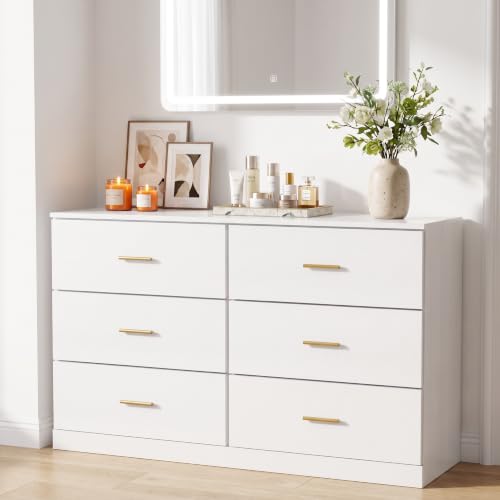
White Dresser With Brass Hardware: The Complete Guide
A white dresser with brass hardware pairs crisp, bright surfaces with warm metallic accents. Learn how to choose the right style, construction, and drawer quality before you buy.
START THE GUIDEWhy this combination works: White furniture opens up a room and reflects light, while brass hardware adds warmth, contrast, and a touch of classic elegance. Together they suit modern, transitional, and farmhouse bedrooms alike. This guide walks you through the key decisions — finish type, metal tone, drawer construction, and room fit — so you can choose with confidence.
What Defines a White Dresser With Brass Hardware?
A white dresser with brass hardware combines a white-painted or white-finished cabinet body with knobs, pulls, or handles in a brass tone. The result is a piece that feels clean and airy but never sterile. The brass detail gives the eye somewhere warm to rest and can shift the character of the dresser depending on the metal's finish.
Two variables matter most: the white finish and the brass tone. A bright, high-gloss white reads as contemporary and glamorous. A matte or chalky white feels softer and more relaxed, which is why it appears often in farmhouse and cottage styles. On the hardware side, polished brass is shiny and formal, while antique or brushed brass is muted and understated.
White Finish Options
- Matte or satin white: The most versatile choice. Hides minor scuffs better than gloss and works across modern, farmhouse, and transitional rooms.
- High-gloss or lacquer white: Reflects light and feels polished. Common in contemporary and mid-century-inspired pieces.
- Whitewash or distressed white: Shows subtle wood grain and texture. A natural fit for coastal and rustic interiors.
- Warm white or cream: Slightly softer than pure white and blends easily with brass, which is inherently warm.
Brass Hardware Finishes
- Polished brass: Bright, reflective, and classic. Best for formal or glamorous bedrooms.
- Antique or aged brass: Darker with a patina. Adds vintage character and pairs naturally with distressed white finishes.
- Brushed or satin brass: Soft sheen without heavy reflection. A balanced, modern option.
- Matte brass: Understated and contemporary. Works well in minimalist and Scandinavian-influenced spaces.
Design tip: Match the brass finish to the room's other metals. If your lighting and faucets are polished chrome, polished brass may clash. Brushed or antique brass sits more comfortably alongside mixed metals.
Styles That Suit White and Brass
Not every dresser style wears white and brass equally well. The following styles are the most reliable matches, each with a distinct character.
Modern and Contemporary
Clean lines, flat drawer fronts, and minimal ornamentation. Brass pulls are often slim bars or recessed handles. This is the most popular pairing and works in almost any bedroom. A modern white dresser with brass hardware typically features a matte or satin finish to keep the look understated.
Mid-Century Modern
Tapered legs, splayed angles, and a horizontal profile. Brass pulls are often round knobs or angled handles. White mid-century dressers with brass details feel retro but remain current. Look for legs in wood or brass-capped wood for authenticity.
Farmhouse and Cottage
Paneled drawer fronts, simple silhouettes, and sometimes distressed edges. Cup pulls and simple round knobs in brass are typical. White farmhouse dressers pair especially well with antique brass, which softens the crispness of the white.
Transitional and Classic
Balanced proportions with subtle molding and curved or shaped fronts. Brass hardware is often ornate — bail pulls, decorative backplates, or ring pulls. This style works in traditional bedrooms and can anchor a formal space.
Glam and Hollywood Regency
High-gloss white, mirrored accents, and shiny polished brass. This is a statement pairing suited to bedrooms where the dresser is a focal point rather than a background piece.
Related reading: If you are weighing drawer layouts, see our guide to white dressers with gold hardware in modern designs for a comparison of warm metal tones and how they read in different rooms.
Quality Tiers: What to Expect at Each Level
Dressers in this category span a wide range of construction quality. Rather than quoting figures, it is more useful to understand what each tier delivers. The tiers below describe relative market position, not specific figures.
Entry-Level Construction
- Engineered wood or particleboard body
- Paper or vinyl laminate white finish
- Plastic or plated brass-look pulls
- Drawers on basic side glides
- Suited to light use and guest rooms
Mid-Range Construction
- Engineered wood with solid wood trim
- Painted or lacquered white finish
- Solid metal brass pulls with proper plating
- Drawers on metal ball-bearing glides
- Good value for its tier for daily use
Premium Construction
- Solid wood or high-grade plywood body
- Hand-applied painted or sprayed finish
- Solid brass hardware, often with lacquer coating
- Dovetail drawer joints and soft-close glides
- Long-term investment built for daily use
Luxury Construction
- Kiln-dried solid hardwood throughout
- Multi-layer hand-finished white lacquer
- Solid unlacquered or aged brass hardware
- Hand-cut dovetails, soft-close, full-extension
- Professional-grade piece intended to be inherited
For most buyers, the balanced tier offers the strongest combination of durability and finish quality. The biggest visible differences between tiers are the drawer action and the feel of the hardware — both of which you can assess before buying.
How to Evaluate Drawer Construction
The drawers are where a dresser succeeds or fails in daily use. A beautiful white finish with brass pulls cannot compensate for drawers that stick, sag, or wobble. Check these points:
- Joints: Dovetail joints are the strongest and signal higher-grade construction. Stapled or glued butt joints are common in entry-level pieces.
- Glides: Metal ball-bearing or undermount soft-close glides are smooth and quiet. Basic side-mounted rollers are less durable.
- Drawer bottoms: A thicker bottom panel with center support resists sagging under heavy clothing.
- Extension: Full-extension glides let you reach the back of the drawer. Three-quarter extension leaves a dead zone at the rear.
- Hardware attachment: Brass pulls should be attached with machine screws and metal inserts, not driven directly into soft material.
Try before you buy: If you can visit a showroom, open and close every drawer. Listen for scraping, check for side-to-side play, and confirm the pull feels secure. If shopping online, read reviews that specifically mention drawer smoothness and hardware durability.
Brass Hardware: Practical Care and Durability
Brass is a durable, corrosion-resistant metal, but its appearance changes with handling and time. Lacquered brass keeps a bright, consistent tone and needs only a soft cloth. Unlacquered brass develops a patina — some buyers love the character, others prefer a uniform shine.
Keeping Brass Looking Its Best
- Wipe pulls with a dry or slightly damp soft cloth. Avoid abrasive cleaners.
- Lacquered brass should not be polished with metal polish, which can strip the coating.
- Unlacquered brass can be polished occasionally to restore shine or left to age deliberately.
- Keep brass away from prolonged moisture, especially in humid rooms.
Choosing the Right Size and Layout
White dressers with brass hardware come in several footprints. The right choice depends on your room dimensions and how much you need to store.
| Configuration | Typical Character | Best For |
|---|---|---|
| Small / narrow (3–4 drawers) | Compact footprint, often taller than wide | Small bedrooms, closets, guest rooms |
| Standard double (6 drawers) | Wider than tall, broad top surface | Primary bedrooms, spaces for a mirror or lamp |
| Tall chest (5–6 stacked drawers) | Vertical profile, saves floor width | Narrow walls, apartments, shared rooms |
| Wide / long (8–9 drawers) | Extended width, generous storage | Large bedrooms, couples, dressing areas |
As a rule, allow at least 30 inches of clear space in front of the dresser so drawers can open fully. If the piece sits on a wall with a door or closet, confirm the swing clearance before committing.
Styling a White Dresser With Brass Hardware
Because white and brass are both relatively high-contrast against dark tones, the surrounding decor determines the mood. A few approaches work consistently well.
Warm and Inviting
Pair the dresser with warm wood tones, woven textures, and soft cream bedding. Brass reads as a natural extension of the warm palette, and the white keeps the room from feeling heavy.
Modern and Crisp
Keep the palette tight: white dresser, brass pulls, charcoal or navy accents, and a single sculptural lamp. The brass becomes a deliberate metallic punctuation rather than a decorative theme.
Soft and Romantic
Layer in blush, sage, or dusty blue textiles. Antique or brushed brass prevents the combination from feeling overly sweet, while a matte white finish keeps it calm.
What to Place on Top
- A table lamp with a warm shade to complement the brass
- A small tray for jewelry or everyday items
- A mirror above, especially in a room with limited natural light
- One or two framed pieces rather than a crowded arrangement
Matching set options: If you want a coordinated bedroom, explore white dresser and nightstand pairings to keep finishes and hardware consistent across the room.
Common Mistakes to Avoid
- Ignoring the metal tone in your room. Polished brass can clash with cool chrome fixtures; choose brushed or antique brass for mixed-metal rooms.
- Underestimating drawer depth. Shallow drawers are fine for folded shirts but not for sweaters or linens. Check the interior depth.
- Buying a finish you cannot maintain. High-gloss white shows fingerprints and scuffs more than satin. Choose based on how much upkeep you want.
- Skipping the safety check. Tall chests should include anti-tip hardware. Always anchor a tall dresser to the wall.
- Overlooking scale. A small dresser on a large empty wall looks lost, and an oversized one crowds a doorway. Measure the wall first.
Frequently Asked Questions
Is a white dresser with brass hardware suitable for a small bedroom?
Yes. White reflects light and visually expands a small space, while brass adds warmth without bulk. A tall, narrow chest is often the most space-efficient option for small rooms.
Will brass hardware tarnish over time?
Lacquered brass holds its finish with minimal care. Unlacquered brass naturally develops a patina, which many people find attractive. Both are durable; the difference is appearance and maintenance preference.
Can I change the hardware on an existing white dresser?
Usually yes. Measure the spacing of the existing holes and choose brass pulls or knobs with matching spacing. If the holes differ, wood filler and a drill can adapt most painted wood or engineered wood fronts.
What is the best white finish for a farmhouse look?
A matte or slightly distressed white finish pairs best with antique brass cup pulls and simple round knobs. Glossy white tends to read as more contemporary than farmhouse.
How many drawers do I need?
For one adult, a 6-drawer double dresser is usually sufficient. Couples often prefer 8 to 9 drawers. A 3 to 4 drawer piece works well for guests or a closet.
How do I protect the white finish?
Use coasters under lamps and plants, wipe spills promptly, and avoid abrasive cleaners. A soft microfiber cloth is enough for routine dusting.
Final Checklist Before You Buy
- Confirm the white finish type (matte, gloss, whitewash) suits your room
- Decide on brass tone (polished, brushed, antique, matte)
- Check drawer construction: dovetails, glides, and bottom support
- Measure your wall space and drawer clearance
- Verify anti-tip hardware is included for tall pieces
- Read reviews for drawer smoothness and hardware durability
- Plan the styling around your existing room palette