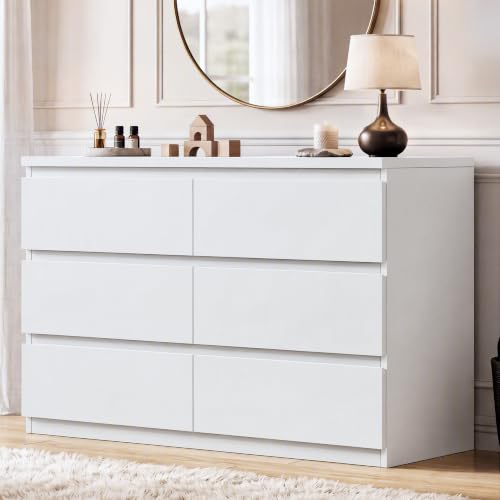
White Double Dresser: The Complete Buying Guide
A white double dresser combines generous storage capacity with a bright, versatile finish that works across bedroom styles. This guide covers everything you need to know — dimensions, drawer layouts, materials, and organization tips — so you can choose with confidence.
Explore Recommended ModelsWhy choose a white double dresser? The double-width format gives you two columns of drawers, meaning more storage without the height of a tall chest. A white finish reflects light, making bedrooms feel larger and airier — a smart choice for compact rooms and neutral palettes alike. Whether you are outfitting a master bedroom, a guest room, or a nursery, a white double dresser is one of the most adaptable pieces of bedroom furniture you can own.
What Exactly Is a White Double Dresser?
A white double dresser is a wide, low-profile storage piece featuring two side-by-side columns of drawers, finished in white or a white-toned paint. Unlike a tall double dresser that stacks drawers vertically, the classic double dresser keeps its height modest — usually between 30 and 38 inches — while stretching horizontally across 50 to 72 inches of wall space.
This horizontal orientation delivers two practical advantages. First, the wide top surface doubles as a display or vanity area, ideal for a mirror, lamp, or decorative tray. Second, having two columns means you can separate belongings logically — one side for tops and knitwear, the other for bottoms and accessories — without digging through a single deep stack.
Because the white finish is so adaptable, this style appears across nearly every design language: modern, farmhouse, coastal, Scandinavian, and transitional. If you are comparing formats, our guide to the wide dresser format explains how double-width models differ from single-column chests in both form and function.
Key Dimensions to Measure Before You Buy
Fit is the single most common reason buyers regret a dresser purchase. Before selecting a model, measure your available wall space, the clearance to any door swing, and the path from your entryway to the bedroom. Use this reference table as a starting point:
| Measurement | Typical Range | What to Check |
|---|---|---|
| Width | 50–72 inches | Leave 12–24 inches on at least one side for drawer clearance |
| Depth | 18–20 inches | Ensure walkways remain at least 30 inches wide |
| Height | 30–38 inches | Top surface should sit near hip height for comfortable use |
| Drawer Extension | 12–16 inches | Full-extension glides need full clearance in front |
If your room is on the smaller side, consider a small white dresser or a white wide dresser with a slimmer profile. For rooms where wall space is tight but vertical space is available, a white tall dresser with deep drawers may be a better trade-off.
Drawer Configurations: Six, Eight, or More
Most white double dressers fall into three common configurations. Each suits a different storage pattern:
6-Drawer Layout
Two columns of three drawers each. This is the most common double dresser format, balancing generous capacity with a clean, symmetrical look. Ideal for couples who split storage evenly. See our white 6 drawer chest overview for typical configurations.
8-Drawer Layout
Two columns of four drawers, or a mix of larger lower drawers and smaller upper drawers. The extra row adds meaningful capacity without increasing width. A strong choice for households with children or extensive wardrobes. Explore white 8 drawer dresser options for sizing details.
9+ Drawer Layout
Usually three columns or a combination of drawers and a cabinet door. These models maximize storage per inch of wall space but can feel visually busier. If you need maximum capacity, a white 9 drawer dresser delivers it — just confirm the footprint suits your room.
Beyond count, pay attention to drawer depth and glide quality. Shallow top drawers (4–6 inches) suit accessories and folded tops; deeper lower drawers (8–10 inches) handle jeans, linens, or bulky knitwear. Full-extension metal glides are a meaningful upgrade over partial-extension or wooden runners — they let you reach the back of the drawer without straining.
Materials and Quality Tiers Explained
Two dressers can look identical in a product photo yet differ enormously in construction. The table below maps common construction approaches to market tiers, so you can set realistic expectations for durability and finish quality:
| Tier | Typical Construction | Best For |
|---|---|---|
| Entry-Level | Engineered wood panels, paper or low-pressure laminate finish, stapled or cam-lock assembly, partial-extension glides | Guest rooms, first apartments, temporary setups |
| Mid-Range | Engineered wood with painted or lacquered finish, some solid wood trim, cam-lock or dowel assembly, full-extension glides on main drawers | Primary bedrooms, family homes, daily use |
| Premium | Solid wood frame and drawer fronts, dovetail or dowel joinery, smooth ball-bearing glides, hand-finished paint or lacquer | Long-term ownership, heirloom potential, design-led rooms |
| Luxury | Kiln-dried hardwood throughout, hand-cut dovetails, soft-close undermount glides, multi-coat finish, furniture-grade hardware | Statement bedrooms, collectors, those seeking a lifelong piece |
If you are weighing solid timber against composite construction, our comparison of solid wood vs engineered furniture breaks down the trade-offs in durability, weight, and refinishability. For buyers leaning toward natural timber, a white wood dresser or a solid wood white 6 drawer dresser offers the best of both — a bright finish over a durable frame.
Style Variations That Work in Real Bedrooms
White is a chameleon finish, and the surrounding details determine whether a dresser reads modern, rustic, or classic. Consider these popular directions:
Modern & Minimal
Clean slab fronts, recessed or hidden handles, and a matte white lacquer. Pairs well with a white modern dresser for bedroom layout where visual calm matters.
Gold & Metallic Accents
White with brass or gold pulls adds warmth without sacrificing brightness. Browse white dresser with gold accents ideas for a refined, transitional look.
Farmhouse & Coastal
Beadboard panels, turned legs, and brushed nickel or wooden knobs. A white farmhouse chest of drawers anchors a relaxed, textured room.
Mixed Materials
White bodies with light wood tops or rattan panels soften the finish. See white dresser with light wood top and white and rattan dresser styles for texture-forward rooms.
Hardware is the easiest way to shift a dresser's personality. Our guides to dresser knobs and drawer pulls explain how a simple swap can take a white double dresser from builder-grade to boutique.
How to Organize a Double Dresser Efficiently
A double dresser rewards a deliberate layout. Because you have two columns, you can assign one to each person in a couple's bedroom, or divide by garment type. Here is a practical system:
- Top row: Underwear, socks, and accessories in shallow drawers. Use dividers to keep small items from drifting.
- Middle rows: Folded tops — t-shirts, knitwear, and loungewear. Fold in thirds rather than halves so items stand upright and remain visible.
- Bottom row: Jeans, trousers, and bulky items. Deep drawers handle stacks best; consider rolling rather than folding to save vertical space.
- One column for daily wear, one for occasional: If you share the dresser, split by person. If you do not, dedicate one column to seasonal or occasional items.
For a deeper walkthrough, read our dresser organization guide, and add stackable drawer organizers to keep smaller items contained. If you are outfitting a closet-adjacent space, a white small dresser for closet can supplement the main dresser's capacity.
Pre-Purchase Checklist for a White Double Dresser
- Measure wall width, depth clearance, and door swings before ordering
- Confirm the drawer count and layout match your storage habits
- Check whether glides are full-extension and rated for daily use
- Review the finish type — lacquer resists yellowing better than basic paint
- Verify the dresser includes an anti-tip kit, and plan to anchor it to the wall
- Check drawer interior dimensions, not just exterior width
- Consider whether a matching white dresser with nightstand set would simplify your room planning
- Read assembly requirements — some models arrive flat-packed and require two people
Safety and Anti-Tip Essentials
Any wide dresser should be anchored to the wall, especially in homes with young children. Double dressers are inherently stable in normal use, but an open drawer can shift weight forward. Always install the included anti-tip strap or bracket into a wall stud. If you are furnishing a nursery, our guide to white chest of drawers for nursery spaces covers additional safety and layout considerations.
Coordinating Your White Double Dresser with the Room
A double dresser rarely stands alone. If you want a cohesive bedroom, matching sets remove the guesswork of color and proportion. Options range from a compact white dresser chest and nightstand set to a full two nightstands and dresser set for a symmetrical primary suite.
For rooms with a mirror-focused layout, a white and gold dresser with mirror adds a focal point above the double-width top. If you prefer a lighter footprint, a small dresser with mirror can work as a secondary vanity station.
Thinking about versatility beyond the bedroom? Our guides to a small chest of drawers for living room and a small rolling cabinet with drawers explore how white storage pieces travel between rooms.
Common Buying Mistakes to Avoid
- Ignoring drawer extension: Partial-extension glides make rear corners hard to reach. Prioritize full-extension on the drawers you will use most.
- Underestimating the top surface: The wide top of a double dresser invites clutter. Plan a tray or basket for daily items so the surface stays intentional.
- Overlooking finish durability: Basic paint can chip around handle edges. A lacquered or catalyzed finish resists wear better over years of use.
- Skipping the anti-tip kit: This is non-negotiable in households with children or pets.
- Buying before measuring the delivery path: A 64-inch-wide dresser still needs to fit through doorways and stair turns.
If you are comparing this format against other storage types, our guides to dresser vs chest and dresser vs armoire clarify when a double dresser is the right call versus a taller or enclosed alternative.
Frequently Asked Questions
What is a white double dresser?
A white double dresser is a wide, low-profile dresser with two side-by-side columns of drawers, typically offering six to eight drawers. The double-width design provides generous storage while keeping the height comfortable for daily use and creating a broad top surface for display or a mirror.
How wide is a standard double dresser?
Most double dressers range from 50 to 72 inches wide, with the majority between 58 and 64 inches. Depth is usually 18 to 20 inches and height 30 to 38 inches. Always measure your wall and walkway clearances before ordering.
What is the difference between a double dresser and a chest of drawers?
A double dresser is wide with two drawer columns, while a chest of drawers is taller and narrower with a single stacked column. Double dressers offer more top surface and easier side-by-side access; chests save floor space and suit narrow walls.
How many drawers should a white double dresser have?
Six to eight drawers is the norm. Six-drawer models use three rows of two drawers; eight-drawer models add a fourth row or mix drawer sizes. Choose based on whether you need many shallow drawers for folded tops or fewer deep drawers for bulky items.
What materials are best for a white double dresser?
Solid wood offers the most durable construction and can be refinished. Engineered wood with a white lacquer finish provides a smooth, consistent look at a more accessible tier. Premium and luxury models typically use solid wood frames with dovetail joinery and metal drawer glides.