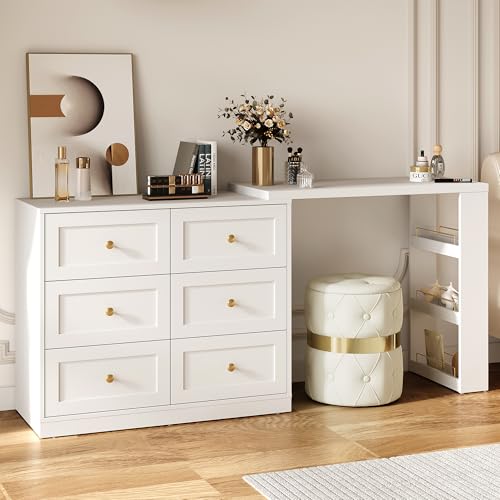
White Vanity Dresser: The Complete Buying & Styling Guide
A white vanity dresser blends generous drawer storage with a dedicated grooming station, making it one of the most practical and visually refreshing pieces for any bedroom. This guide walks you through every decision point — from size and drawer configuration to materials, hardware, and placement — so you can choose with confidence before you buy.
1. What Exactly Is a White Vanity Dresser?
A white vanity dresser is a hybrid furniture piece. Like a conventional dresser, it provides multiple drawers for clothing and accessories. Unlike a standard dresser, it includes a flat grooming surface and, in most designs, an integrated or attachable mirror — turning the top into a functional vanity station.
This combination is especially valuable in bedrooms where floor space is limited. Instead of purchasing a separate dresser and vanity table, a single unit handles both roles. The white finish adds a bright, airy quality that makes small or dimly lit rooms feel larger and cleaner.
Buyers typically encounter three broad configurations:
- Integrated vanity dresser — the mirror is permanently attached to the dresser top, often with a tri-fold or single-panel design.
- Detachable mirror dresser — the mirror ships separately and can be mounted on the dresser or on the wall.
- Vanity-style dresser without mirror — a dresser with a deeper top surface and knee space, designed for a freestanding mirror or stool setup.
If you are working with a compact footprint, a small white dresser can deliver the same vanity function without dominating the room. For broader coverage of the category, see our full white dressers for bedroom guide.
2. Why Choose a White Finish?
White furniture is not simply a color preference — it is a practical design decision with measurable effects on how a room feels and functions.
Light Reflection and Perceived Space
White surfaces reflect more ambient light than darker finishes. In a bedroom with a single window or warm artificial lighting, a white vanity dresser bounces light back into the room, reducing shadow pockets and making the space feel more open. This is particularly noticeable in rooms under 120 square feet.
Design Versatility
White pairs cleanly with nearly every palette: warm wood floors, cool gray walls, pastel accents, or bold jewel tones. A white dresser does not fight with your existing bedding or artwork, which makes it a low-risk choice if you plan to redecorate later.
Finish Variations Worth Knowing
- Matte white — soft, modern, hides minor scuffs well; ideal for farmhouse and Scandinavian interiors.
- Satin or semi-gloss white — easier to wipe clean, slightly more reflective; suits transitional and contemporary rooms.
- Distressed or antiqued white — textured finish with visible grain or rub-through; fits cottage and French provincial styles.
- High-gloss lacquer white — premium finish with strong light reflection; common in luxury and modern collections.
For a closer look at how white finishes interact with gold and brass hardware, see the white and gold dresser styling reference.
3. Sizing Your Vanity Dresser Correctly
Size is the single most common source of buyer regret with vanity dressers. A unit that looks proportionate in a showroom can overwhelm a narrow bedroom or leave no room for a stool and walking clearance.
Standard Size Categories
Vanity dressers generally fall into four footprint categories. Use these as a starting framework, then confirm with your own measurements:
- Compact / narrow — roughly 30 to 40 inches wide. Best for small bedrooms, guest rooms, or as a secondary storage piece. A tall narrow dresser with drawers maximizes vertical storage in this class.
- Standard single-wide — roughly 40 to 55 inches wide. The most common vanity dresser size; accommodates a stool and a moderate mirror.
- Wide / double — roughly 55 to 70 inches wide. Provides a generous grooming surface plus substantial drawer capacity. See the white wide dresser category for examples.
- Extra-wide / long — 70 inches and above. Suited to primary bedrooms with generous wall space; often paired with a bench rather than a stool.
Clearance Rules That Prevent Costly Mistakes
Measurement Checklist Before You Buy
Wall space: Measure the full available wall run, not just the space you think the dresser needs. Leave at least 2 inches on each side for airflow and cleaning access.
Seating clearance: Allow 24 to 30 inches in front of the dresser for a stool or chair, plus room to pull it out.
Door and drawer swing: Confirm that drawers can open fully without hitting a bed frame, closet door, or wall. This is critical in narrow rooms.
Mirror height: If the mirror is attached, verify that the top of the mirror sits at or slightly above eye level when you are seated.
If your room is genuinely tight, a small space dresser or a wall-mounted dresser can free up floor area while still delivering vanity function.
4. Drawer Configuration and Storage Capacity
Drawer count and drawer depth determine how usable a vanity dresser actually is. A six-drawer unit with shallow drawers is not equivalent to a six-drawer unit with deep, reinforced drawers — and your clothing inventory should drive the choice.
Matching Drawer Count to Your Wardrobe
- 3 to 4 drawers — suitable for a guest room, a child's room, or someone who stores most clothing in a closet. Often paired with a mirror in compact designs.
- 5 to 6 drawers — the balanced middle ground. Enough capacity for folded tops, undergarments, and accessories without becoming a bulky piece.
- 7 to 9 drawers — high-capacity configurations for primary bedrooms. A white 9 drawer dresser is a strong option when two people share storage.
Drawer Depth and Interior Quality
Shallow drawers (roughly 4 to 6 inches deep) work well for jewelry, accessories, and folded delicates. Deep drawers (8 inches and above) suit sweaters, denim, and linens. A mix of both is ideal. Pay attention to these construction details:
- Drawer box material — solid wood or high-grade plywood boxes resist sagging better than thin composite panels.
- Joinery — dovetail joints indicate a sturdier drawer than stapled or nailed construction.
- Glides — side-mounted roller glides are common at entry level; under-mount soft-close slides with full extension are typical of mid-range and premium tiers.
- Weight rating — reinforced drawer bottoms matter if you plan to store heavy items like denim or books.
For a deeper comparison of construction methods, read solid wood vs engineered wood.
5. Materials and Finish Quality Tiers
The material core and finish system determine how a white vanity dresser ages. White finishes are unforgiving: poor paint adhesion, thin lacquer, or unstable composite cores show wear quickly through yellowing, chipping, or swelling near humid areas.
Quality Tier Overview
| Tier | Typical Core & Finish | Best For |
|---|---|---|
| Entry-level | Engineered wood core, printed or thin painted finish, basic roller glides | Guest rooms, temporary setups, light daily use |
| Mid-range | Engineered core with thicker paint or veneer, some solid wood elements, soft-close glides | Primary bedrooms, daily use, balanced durability |
| Premium | Solid wood frame and drawer fronts, multi-coat lacquer, under-mount full-extension slides | Long-term use, humid climates, heavy storage loads |
| Luxury | Kiln-dried hardwood, hand-finished lacquer, dovetail joinery, premium hardware | Design-focused interiors, heirloom expectations |
What to Inspect in Person or in Product Photos
- Edge sealing — painted edges should be fully sealed; exposed composite edges absorb moisture and swell.
- Interior drawer finish — quality units finish or at least seal drawer interiors to prevent snagging and odor absorption.
- Hardware mounting — knobs and pulls should be attached with machine screws into metal inserts, not driven directly into soft composite.
- Back panel — a rigid back panel adds structural stability and prevents racking over time.
For solid-wood construction examples, explore the solid wood white 6 drawer dresser category. If you prefer a wood-toned top paired with a white body, the white dresser with light wood top is worth reviewing.
6. Mirror Styles and Vanity Functionality
The mirror is what separates a vanity dresser from a standard dresser. Its size, mounting style, and tilt range directly affect how comfortable the unit is for daily grooming.
Common Mirror Configurations
- Single rectangular mirror — the most common and space-efficient option. Look for a frame that matches the dresser's hardware finish.
- Tri-fold mirror — side panels angle inward to show profile views; useful for hair styling and makeup application.
- Arched or scalloped mirror — decorative shapes that soften the dresser's silhouette; common in cottage and French provincial styles.
- Freestanding table mirror — no permanent attachment; allows you to reposition or remove the mirror entirely.
Mirror Quality Checks
Mirror glass quality is often overlooked. A low-grade mirror with a thin silver backing can develop dark edge spots within a few years, especially in humid bedrooms. Prefer mirrors with sealed backs and beveled edges, which resist moisture ingress. If the mirror tilts, test the hinge tension — a mirror that drifts downward under its own weight becomes frustrating quickly.
For a matching look, browse white 9 drawer dresser with mirror and white and gold dresser with mirror collections.
7. Placement and Room Layout Tips
Where you place a white vanity dresser affects both usability and the visual balance of the room. A few placement principles consistently produce better results:
Lighting First
Position the vanity so that natural light falls on your face rather than behind you. Side lighting from a window is ideal for grooming tasks. If the dresser must sit opposite a window, add a pair of adjustable task lamps at roughly eye level on either side of the mirror.
Traffic Flow
Avoid placing the dresser in the direct path between the bedroom door and the closet. Drawers left open during dressing become a tripping hazard in high-traffic zones. A white tall dresser with deep drawers uses less floor width and can fit into tighter wall segments.
Anchoring and Safety
Tall or narrow vanity dressers should always be anchored to the wall with the supplied anti-tip kit. This is non-negotiable in households with children or pets. Check that the anchoring hardware is included before purchase — some entry-level units omit it.
Coordinating with Existing Furniture
If you already own a bed frame or nightstands, consider a matching set. A white dresser with nightstand set or a white dresser chest and nightstand set creates a cohesive look without the guesswork of mixing finishes.
8. Organizing Your Vanity Dresser
Even a well-chosen vanity dresser becomes cluttered without a system. The dual-purpose nature of the piece — clothing storage below, grooming supplies above — requires a deliberate organization plan.
Drawer Zoning Strategy
- Top drawers: jewelry, accessories, and small grooming items. Use felt-lined dividers to prevent scratching.
- Middle drawers: folded tops, activewear, and delicates. Consider drawer dividers to keep stacks upright.
- Bottom drawers: heavier items such as denim, sweaters, and off-season clothing.
Vanity Top Discipline
Keep the grooming surface as clear as practical. A small tray for daily items, a covered container for cotton rounds, and one decorative object is usually sufficient. Store less-frequent items in a drawer rather than on the counter. If your collection of cosmetics and tools is substantial, a stackable dresser drawer organizer adds modular storage without occupying the top surface.
Seasonal Rotation
Rotate clothing at the start of each season. Store off-season items in labeled bins under the bed or in a closet, freeing vanity dresser drawers for in-season clothing that you actually wear. This single habit dramatically reduces drawer congestion.
9. Frequently Asked Questions
Is a white vanity dresser suitable for a small bedroom?
Yes, provided you choose a compact footprint. A narrow unit under 40 inches wide, paired with a slim stool, fits most small bedrooms. Leave 24 inches of clearance in front for seating. A white small dresser for closet can also serve as a secondary vanity in a dressing area.
Does a white finish yellow over time?
Quality multi-coat lacquer finishes resist yellowing far better than thin painted or printed finishes. Yellowing is most common on older solvent-based paints and on units exposed to direct sunlight. Rotating the dresser away from direct sun and choosing a premium finish tier reduces the risk substantially.
Should the mirror be attached or detachable?
Attached mirrors are more stable and easier to position for grooming. Detachable mirrors offer flexibility — you can wall-mount the mirror and use the dresser top as a writing or display surface. If you plan to move furniture frequently, a detachable design is more practical.
How many drawers do I need in a vanity dresser?
Most buyers find five to six drawers sufficient for a primary bedroom when a closet handles hanging clothing. If the dresser is the sole clothing storage in the room, a seven- to nine-drawer configuration is more appropriate. Match the drawer count to your actual wardrobe, not to the maximum available.
Can a white vanity dresser be used as a desk?
In a pinch, yes — the flat top and knee space of a vanity-style dresser work as a compact desk. However, drawer clearance and chair height should be verified. A dedicated vanity dresser configuration with a wider top is more comfortable for extended seated work than a standard dresser.
Ready to Choose Your White Vanity Dresser?
You now have the framework: confirm your wall measurements, match drawer count to your wardrobe, choose a construction tier that fits your climate and usage, and plan the mirror style around your grooming routine. Browse the curated recommendations below to compare options side by side.
View Recommended Options