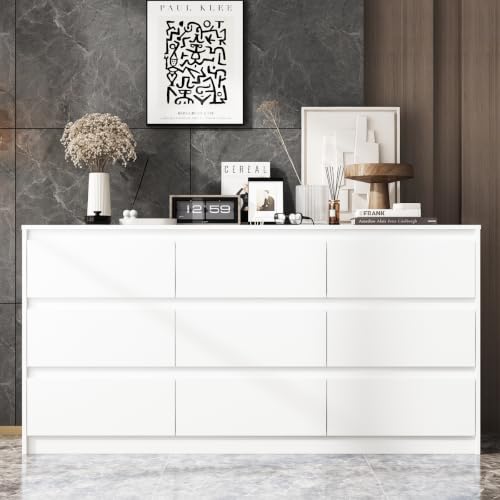
White Dresser with Deep Drawers: A Complete Guide
Deep drawers transform a white dresser from a simple furniture piece into a high-capacity storage solution. This guide explains drawer depth, materials, styles, and organization strategies so you can choose a white dresser with deep drawers that fits your bedroom and your daily routine.
Explore Buying FactorsWhy deep drawers matter: A standard dresser drawer is often around 5 to 6 inches deep, which suits folded shirts and smaller items. A deep drawer typically offers 8 to 12 inches of usable depth, making it suitable for bulky sweaters, bedding, denim, and off-season clothing. A white dresser with deep drawers combines a bright, versatile finish with genuinely practical storage capacity.
What Makes a Drawer “Deep”?
Drawer depth refers to the internal height between the drawer bottom and the underside of the drawer front or the top edge of the drawer box. The measurement that matters most is the usable interior height, not the exterior face height. A drawer face may look tall while the actual box inside is shallow.
In practice, deep drawers on a white dresser usually fall into three broad categories:
- Shallow drawers (under 6 inches): Best for socks, underwear, accessories, and folded tops.
- Medium drawers (6 to 8 inches): A balanced option for shirts, jeans, and light knitwear.
- Deep drawers (8 to 12 inches or more): Ideal for sweaters, bedding, towels, and bulky items that need vertical space.
Many white dressers with deep drawers combine drawer types in a single unit, pairing a few deep drawers at the bottom with shallower drawers near the top. This mixed configuration is often the most practical for a bedroom because it accommodates both small and large items without wasting space.
Benefits of Choosing a White Dresser with Deep Drawers
A white finish is one of the most versatile choices in bedroom furniture. It reflects light, pairs easily with wood tones and colored accents, and helps a room feel more open. Combining that finish with deep drawers delivers several practical advantages:
- Higher storage capacity: Deep drawers hold more volume per drawer, reducing the number of drawers needed for bulky clothing.
- Better for seasonal items: Sweaters, blankets, and off-season clothing fit without compressing or stacking awkwardly.
- Cleaner visual lines: Fewer, larger drawers can create a calmer, more streamlined look than a grid of small drawers.
- Flexible organization: Deep drawers accept dividers, bins, and vertical folding methods more easily.
- Versatile styling: White works with modern, farmhouse, coastal, and Scandinavian bedroom designs.
If your bedroom also needs matching pieces, a coordinated set can simplify the design process. Browse options like a white dresser and matching nightstand or a broader white dresser and nightstand set to create a unified look.
Key Buying Factors to Evaluate
Before choosing a white dresser with deep drawers, evaluate the following factors. They determine how well the dresser will perform over years of daily use.
Drawer Box Construction
Look for dovetail or reinforced corner joints on mid-range and premium models. Stapled or glued boxes are common on entry-level pieces and may loosen over time, especially when drawers are loaded with heavy items.
Glide Mechanism
Metal ball-bearing slides offer smoother, quieter operation than basic nylon or wood-on-wood runners. Soft-close mechanisms are increasingly common on mid-tier and high-end tier dressers.
Weight Capacity
Deep drawers carry more weight. Check that the drawer bottom is supported and that the slides are rated for the load. Reinforced bottoms reduce sagging over time.
Finish Durability
Painted or lacquered white finishes vary in quality. A well-sealed finish resists chipping and yellowing. Matte and satin finishes hide minor scuffs better than high-gloss surfaces.
Safety Features
Tall dressers with deep drawers should include anti-tip hardware. Wall anchoring is strongly recommended, particularly in households with children.
Overall Dimensions
Measure your space carefully. Deep drawers increase the internal capacity but do not necessarily increase the footprint. Confirm height, width, and depth before purchase.
For a broader walkthrough of drawer mechanisms and materials, explore the complete dresser buying guide. If you are specifically comparing drawer types, the soft-close drawer guide explains how glide mechanisms affect daily use.
Materials and White Finishes
The material affects durability, weight, and how the white finish ages. Three categories are common:
| Material Category | Typical Tier | Best For |
|---|---|---|
| Engineered wood with laminate or veneer | Entry-level to mid-range | Light daily use, guest rooms, temporary setups |
| Solid wood with painted or lacquered finish | Mid-range to premium | Long-term daily use, heavy clothing storage |
| Hardwood with hand-finished white lacquer | Premium to luxury | High-traffic bedrooms, design-focused interiors |
Solid wood dressers generally tolerate heavy loads in deep drawers better than engineered wood. However, well-built engineered wood pieces with reinforced drawer boxes can perform reliably for years. The finish quality matters as much as the core material — a properly sealed white finish resists moisture and stains, which is important in bedrooms with varying humidity.
If you prefer a natural contrast, consider a white dresser with a natural wood top, which combines a bright body with a warm wood surface. A light wood top offers a similar effect with a softer tone.
Styles That Work Well with Deep Drawers
Deep drawers suit several design directions. The most common styles for white dressers with deep drawers include:
- Modern and minimalist: Clean lines, handleless fronts, and a matte white finish. Deep drawers keep the front profile uncluttered. Explore modern white dressers for this look.
- Farmhouse: Shaker-style drawer fronts, beadboard details, and hardware with a vintage feel. A white farmhouse dresser with deep lower drawers is a practical farmhouse choice.
- Mid-century: Tapered legs, angled fronts, and a warm white tone. See mid-century white dressers for examples.
- Coastal and rattan: Textured fronts and a light, airy finish. A white rattan dresser adds texture while keeping the palette bright.
- Gloss and lacquer: Reflective surfaces that suit contemporary interiors. Browse white gloss dressers if you want a polished finish.
Hardware also shapes the style. Gold or brass pulls warm up a white finish, while black hardware creates contrast. Options like a white dresser with gold handles or a white dresser with black knobs show how hardware changes the overall character.
Size and Layout Considerations
Deep drawers affect how you organize but do not automatically make a dresser larger on the outside. Consider these layout points:
- Tall dressers: A white tall dresser with deep drawers offers a small footprint with substantial vertical storage. It suits compact bedrooms but must be anchored to the wall.
- Wide dressers: A white wide dresser provides more surface area and can work as a focal point. Deep drawers in a wide format are useful for shared bedrooms.
- Small bedrooms: If floor space is limited, a white small dresser for the bedroom with deep drawers can still hold a meaningful amount of clothing.
- Closets: A white small dresser for the closet uses deep drawers to store items that do not hang well.
- Bedroom sets: Coordinating pieces such as a white dresser and nightstand keep the room visually consistent.
Measure the available wall space, account for door swing and walkways, and confirm the dresser height relative to your bed. Deep drawers need clearance to open fully, especially in narrow rooms.
Organizing Deep Drawers Effectively
Deep drawers can become disorganized quickly if items are simply stacked. A few habits keep them functional:
- Use vertical folding: Fold clothing so items stand upright and are visible at a glance. This works especially well in medium and deep drawers.
- Add dividers: Drawer dividers separate categories such as socks, activewear, and accessories.
- Assign categories: Reserve the deepest drawers for bulky items like sweaters, denim, or bedding. Keep shallow drawers for small accessories.
- Rotate seasonally: Store off-season clothing in the deep drawers and move current-season items to more accessible drawers.
- Limit stacking: Avoid piling items too high; excessive stacking compresses clothing and makes the drawer harder to close.
For a detailed method, see the dresser organization guide. If your dresser includes a jewelry-specific drawer, the guide on a white dresser with a jewelry drawer explains how to use that feature efficiently.
Safety and Durability Checks
Deep drawers hold more weight, which places additional stress on the dresser frame and glides. Before purchasing, check:
- Anti-tip hardware: Confirm the dresser includes a wall-anchoring kit. Tall models with deep drawers should always be anchored.
- Drawer stops: Drawer stops prevent drawers from pulling out completely and reduce the risk of tipping.
- Slide ratings: Verify that the glides are rated for the loaded weight of the drawer.
- Corner joints: Dovetail joints and reinforced corners are more resistant to loosening than stapled construction.
- Finish durability: A sealed white finish resists staining and is easier to clean.
If the dresser will be used in a child's room, review the children's white dresser options and confirm compliance with current safety standards.
Quick Comparison by Tier
The table below summarizes how white dressers with deep drawers differ across market tiers. It focuses on construction and features rather than any specific figure.
| Tier | Typical Construction | Best For |
|---|---|---|
| Entry-level | Engineered wood, basic slides, stapled or glued boxes | Guest rooms, light use, first apartments |
| Mid-range | Solid wood or reinforced engineered wood, ball-bearing slides, dovetail joints on higher models | Primary bedrooms with regular daily use |
| Premium | Hardwood construction, soft-close slides, fully finished drawer boxes | Long-term use, heavy clothing storage |
| Luxury | Hand-finished hardwood, precision joinery, premium hardware | Design-focused interiors, high-traffic bedrooms |
Within each tier, compare the actual drawer depth and weight capacity rather than relying on the product name. A well-specified entry-level model can outperform a poorly built mid-range piece for light use.
Find the Right White Dresser with Deep Drawers
Use the sections above to narrow down material, style, and drawer configuration. When you are ready to compare options, review the recommended dressers below and check availability for the configuration that fits your bedroom.
Frequently Asked Questions
How deep should a “deep drawer” actually be?
Deep drawers typically offer 8 to 12 inches of usable interior height. Anything under 6 inches is generally considered shallow, while 6 to 8 inches is medium depth. Confirm the internal measurement rather than the exterior drawer face height.
Is a white dresser with deep drawers suitable for a small bedroom?
Yes, provided the overall footprint fits your space. A tall, narrow white dresser with deep drawers can provide substantial storage without occupying much floor area. Measure the wall and confirm drawer clearance before purchase.
Do deep drawers require stronger glides?
They benefit from them. Deep drawers carry more weight, so metal ball-bearing slides and reinforced drawer bottoms are worth prioritizing. Soft-close mechanisms add convenience but are not essential for durability.
How do I keep deep drawers organized?
Use vertical folding, drawer dividers, and category assignments. Reserve the deepest drawers for bulky items and rotate seasonal clothing. The dresser organization guide covers the method in detail.
Should a white dresser with deep drawers be anchored to the wall?
Yes. Any dresser taller than 30 inches should be anchored, and deep drawers increase the risk of tipping when open. Use the included anti-tip hardware or a wall-anchoring kit.