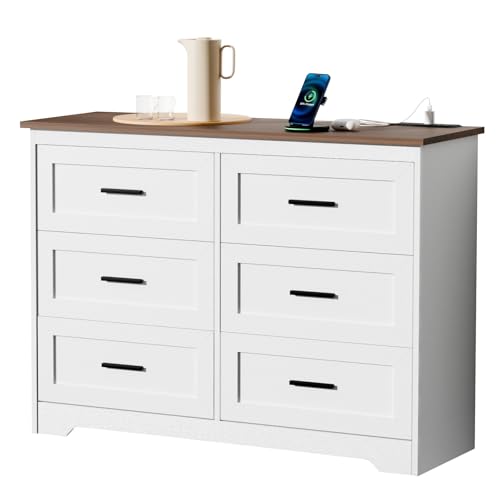
White Dresser with Natural Wood Top
The perfect blend of bright, airy design and warm, organic texture. Our complete guide helps you understand materials, styles, drawer configurations, and room pairings so you can choose with total confidence.
Explore the GuideWhy this combination works: A white dresser with a natural wood top delivers two design benefits in one piece — the white body keeps a bedroom feeling open, clean, and light-reflective, while the wood top adds warmth, visual grounding, and a subtle organic contrast. It bridges modern and farmhouse aesthetics effortlessly, making it one of the most versatile storage choices for bedrooms of any size.
What Is a White Dresser with Natural Wood Top?
A white dresser with a natural wood top is a two-tone storage piece where the main body — drawer fronts, frame, and legs — is finished in white, while the top surface is left in a natural wood finish such as oak, walnut, maple, or acacia. This contrast creates a deliberate visual break that draws the eye upward and gives the piece a crafted, intentional look.
Unlike a fully painted dresser, the exposed wood top shows real grain patterns, knots, and color variation. That means no two pieces are identical, and the surface ages with character. The white body, meanwhile, reflects light and pairs easily with almost any wall color, bedding, or rug. Together, they form a balanced design that feels neither too cold nor too heavy.
This style sits at the intersection of several popular interior trends: Scandinavian simplicity, modern farmhouse warmth, and mid-century contrast. It works equally well in a primary bedroom, a guest room, a nursery, or even a living area used for extra storage.
Materials and Construction to Look For
The quality of a white dresser with natural wood top depends heavily on what sits beneath the finish. Understanding materials helps you judge durability, longevity, and how the piece will hold up over years of daily use.
The Dresser Body
White bodies are typically built from one of three material families:
- Solid wood: The most durable option. Look for kiln-dried hardwood such as poplar, oak, or maple. Solid wood resists warping and can be refinished or repainted in the future.
- Engineered wood (MDF or particleboard): Common in mid-range and entry-level pieces. Quality varies widely — denser MDF holds screws better and resists moisture more effectively than basic particleboard.
- Wood veneer over engineered core: A thin layer of real wood over a stable core. This offers a genuine wood look with good dimensional stability, and is common in premium-tier pieces.
The Natural Wood Top
The top is the focal point, so its construction matters. Solid wood tops — oak, walnut, acacia, and maple are the most common — offer the most authentic grain and the best long-term durability. Veneered tops can look convincing but are thinner and more vulnerable to moisture damage at the edges. A well-sealed top with a matte or satin finish resists rings from glasses and everyday wear better than an unsealed surface.
Drawer Mechanics
Drawer glides are the most-touched part of any dresser. Entry-level pieces often use basic side-mounted roller glides, while mid-range and premium models step up to ball-bearing side glides or under-mount soft-close slides. Soft-close drawers are a worthwhile feature — they prevent slamming and reduce wear on the drawer box over time. Also check that drawer boxes are joined with dovetail or dowel construction rather than staples, and that the drawer bottoms are supported rather than floating.
Entry-Level Tier
Engineered wood body with a veneered or laminate top. Basic side glides without soft-close. Best for guest rooms or temporary setups where the piece sees lighter use.
Mid-Range Tier
Denser engineered core or mixed construction with a solid wood top. Ball-bearing glides, some soft-close options. A balanced choice for everyday bedroom use.
Premium Tier
Solid hardwood body with a thick solid wood top, dovetail drawer boxes, and under-mount soft-close slides. Built as a long-term investment piece.
Luxury Tier
Hand-selected hardwood, book-matched grain tops, custom hardware, and furniture-grade finishing. A flagship piece intended to anchor a room for decades.
Popular Styles of White Dressers with Wood Tops
The two-tone formula adapts to nearly every design language. The style you choose should match the rest of your bedroom furniture, but it can also serve as a deliberate accent that ties mixed pieces together.
Modern and Minimalist
Clean lines, handle-free or slim bar pulls, and a flat matte white finish. A natural oak or ash top adds just enough warmth to prevent the piece from feeling clinical. These designs pair beautifully with neutral bedding and low-profile platform beds.
Farmhouse and Rustic
Distressed or slightly textured white finishes combined with a chunky, rustic wood top. Think reclaimed-look oak or pine with visible knots. Cup pulls, ring pulls, or simple wooden knobs complete the look. This style works especially well in rooms with shiplap, beadboard, or vintage accents.
Mid-Century Modern
Tapered legs, a lower profile, and a crisp white body contrasted with a warm walnut or teak top. Slim brass or black hardware is common. This style suits smaller bedrooms because the raised legs create visual space beneath the piece.
Scandinavian
Pale white or soft off-white bodies paired with light natural wood tops such as birch, ash, or pale oak. Minimal hardware, rounded corners, and a focus on function over ornamentation. This is one of the most versatile interpretations and blends easily with existing furniture.
Coastal and Cottage
A brighter, softer white with a weathered or whitewashed wood top. Often features beadboard drawer fronts, bun feet, or lattice detailing. Pairs naturally with light blue, sage, and sandy neutral palettes.
Choosing the Right Drawer Configuration
Drawer count and layout affect how usable a dresser actually is. A white dresser with natural wood top is available in nearly every configuration, so match the layout to what you actually store.
| Configuration | Best For | Considerations |
|---|---|---|
| 3 Drawer | Guest rooms, nurseries, small bedrooms | Deep drawers work best for folded clothing; limited separation for small items |
| 4 Drawer | Primary bedrooms with moderate wardrobes | Good balance of capacity and footprint; often includes one shallow top drawer |
| 5–6 Drawer | Couples, larger bedrooms, full clothing storage | More sorting flexibility; check that drawer heights vary for versatility |
| 7+ Drawer / Tall | Small footprints needing maximum capacity | Vertical layout saves floor space; anchor to the wall for safety |
| Wide / Horizontal | Rooms with long walls; doubling as a TV or display surface | Provides a generous wood top area; ensure the wall length suits the width |
Also consider drawer depth. Deeper drawers are efficient for bulky items like sweaters and linens, while shallow top drawers are ideal for accessories, socks, and small folded items. If you plan to store jewelry or delicate items, look for a model with a felt-lined or divided top drawer — some designs include a dedicated jewelry drawer built into the top row.
Size and Placement Guide
Measure before you commit. The right size depends on your room dimensions, your bed size, and the walking clearance you need around the piece.
- Small bedrooms: A small dresser for the bedroom in the 30–44 inch width range keeps floor space open. A narrow profile is ideal for tight walls beside a doorway.
- Standard primary bedrooms: A 50–64 inch wide dresser offers generous storage without overwhelming the room.
- Large bedrooms: A wide dresser of 65 inches or more can anchor a wall and provide a substantial display surface.
- Vertical spaces: A tall dresser uses height instead of width, which suits narrow rooms or closets.
Leave at least 30 inches of clearance in front of drawers so they can open fully. If the dresser will sit opposite the foot of the bed, keep a minimum of 36 inches for comfortable walking. For placement beside the bed, a dresser and nightstand set creates a coordinated look and simplifies matching finishes.
Room-by-Room Styling Ideas
Primary Bedroom
Let the dresser be the warm counterpoint in a mostly neutral room. A white body with a natural oak top pairs beautifully with linen bedding, a textured rug, and a single large mirror above. Keep the top surface curated — a small tray, a lamp, and one or two books. For a cohesive look, match with a matching nightstand in the same two-tone finish.
Nursery and Kids' Room
The white body is easy to wipe clean, and the wood top adds warmth without introducing heavy color. If you need a changing surface, a dresser with a changing table top keeps function and style in one piece. Always anchor any dresser in a child's room to the wall, and choose soft-close drawers where possible to avoid pinched fingers.
Guest Room
Guest rooms often need storage that doubles as a surface. A mid-width dresser with a natural wood top works as both a clothing store and a landing spot for a lamp, a carafe, and fresh towels. Pair it with a dresser and nightstand set for a pulled-together look that guests notice.
Closet or Dressing Area
In a walk-in closet, a small dresser for the closet adds folded-garment storage and a place to set accessories. The white finish keeps the space feeling bright, while the wood top brings a furniture-like warmth that built-in shelving often lacks.
Living Room or Multipurpose Space
A wide, low dresser can serve as a media console or sideboard. The natural wood top is a natural home for a record player, books, or decorative objects. Choose a model with cable management or open shelving if electronics are involved, and keep drawer contents organized for easy access.
Hardware and Finish Pairings
Hardware is the quickest way to shift the personality of a two-tone dresser. The natural wood top already introduces warmth, so hardware choices can either reinforce that warmth or create a crisp contrast.
- Brass and gold: Adds a warm, elevated feel. A white dresser with brass hardware pairs especially well with oak and walnut tops. Works in modern, transitional, and glam settings.
- Black: Creates graphic contrast and suits modern, industrial, and minimalist rooms. Matte black bar pulls feel especially clean against a white body.
- Wooden knobs: Reinforces the natural theme and feels at home in farmhouse, cottage, and Scandinavian spaces. Round wooden knobs in a tone that echoes the top create visual unity.
- Silver and chrome: A cooler, more contemporary option. Best in modern or minimalist rooms where the wood top is a lighter tone.
- Leather pulls: A softer, more tactile choice that suits rustic and coastal interiors.
If you prefer a bolder look, a modern dresser with gold hardware can turn a simple two-tone piece into a statement. Just keep the rest of the room relatively restrained so the hardware remains an accent rather than a distraction.
Buying Checklist: What to Verify Before You Commit
Use this checklist to evaluate any white dresser with natural wood top you are considering. It covers the details that separate a piece that lasts from one that disappoints after a year.
- Wood top thickness: Thicker tops (1 inch or more) resist warping better and feel more substantial.
- Finish on the top: A sealed, matte or satin finish protects against moisture and everyday marks. Avoid raw or oiled-only tops unless you plan to maintain them.
- Drawer joinery: Dovetail or dowel joints indicate better construction than stapled boxes.
- Glide type: Ball-bearing or under-mount slides with soft-close are the most durable and quietest options.
- Anti-tip hardware: Essential for any dresser, especially in homes with children or pets. Confirm it is included.
- Back panel: A solid or reinforced back panel adds rigidity and prevents racking over time.
- Leg design: Tapered or splayed legs raise the piece and make cleaning underneath easier; plinth bases feel more grounded and traditional.
- Assembly: Some models ship fully assembled; others require significant assembly. Check what tools and time are needed.
- Smell and off-gassing: Engineered wood can off-gas. Look for low-emission or CARB-compliant materials if indoor air quality is a concern.
Ready to Compare Your Options?
Browse our curated selection of white dressers with natural wood tops across style tiers, drawer configurations, and sizes. Each listing is chosen for build quality and design balance.
View Recommended PicksFrequently Asked Questions
Is a white dresser with a natural wood top durable?
Durability depends on construction, not color. A solid hardwood body with a thick solid wood top and quality drawer glides will last for decades. Entry-level engineered wood versions are less durable but can still serve well in low-traffic rooms. Always check joinery, glide type, and whether anti-tip hardware is included.
What wood top pairs best with a white dresser body?
Oak and ash offer a light, warm grain that suits Scandinavian and modern rooms. Walnut provides a richer, darker contrast that works well in mid-century and transitional spaces. Pine and reclaimed wood suit farmhouse and rustic styles. Maple gives a clean, even tone for minimalist interiors.
How do I protect the natural wood top?
Use coasters under drinks and a felt pad under lamps or decorative objects. Wipe spills promptly with a soft, slightly damp cloth and dry immediately. Avoid harsh chemical cleaners; a mild wood-safe cleaner or a lightly damp cloth is sufficient. Reapply a wood-safe finish every few years if the surface begins to look dry.
Can this style work in a small bedroom?
Yes. The white body reflects light and makes a small room feel more open, while the wood top adds warmth without visual weight. Choose a narrow or tall configuration to conserve floor space, and consider a raised-leg design so the floor remains visible beneath the piece.
What hardware suits a white and wood two-tone dresser?
Brass and gold reinforce the warmth of the wood and feel elevated. Black creates crisp contrast and suits modern rooms. Wooden knobs tie the hardware back to the top for a cohesive natural look. Silver and chrome feel cooler and work best with pale wood tones in minimalist spaces.
Should I anchor the dresser to the wall?
Yes, always. Dresser tip-over is a well-documented safety risk, particularly for children. Most quality dressers include anti-tip hardware. If yours does not, purchase a furniture anchoring kit and install it according to the manufacturer's instructions.