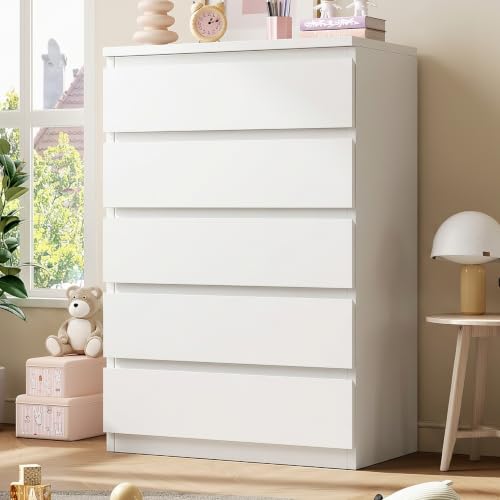
White Small Dresser With Drawers: The Complete Compact Storage Guide
A white small dresser with drawers is one of the most versatile pieces of bedroom furniture you can own. It blends into almost any decor style, keeps a compact footprint, and delivers the drawer storage that small rooms genuinely need. This guide walks you through everything worth knowing before you choose one.
Explore Recommended PicksWhy this guide matters: If you have found this page through a search engine, you likely already know you want a white small dresser with drawers. What you still need is clarity — on dimensions, drawer counts, materials, and how the piece will behave in your actual room. Everything below is written to answer those questions so you can move from research to a confident decision.
What Counts as a White Small Dresser With Drawers?
"Small" is a relative term in furniture, so it helps to anchor it with practical numbers. In most bedroom layouts, a small dresser is one that stays under roughly 40 inches in width, sits between 28 and 36 inches tall, and holds a depth of around 15 to 18 inches. That footprint fits comfortably along a short wall, beside a doorway, or inside a reach-in closet without crowding the walking path.
The white finish is not just a style choice. Lighter finishes visually recede, which makes a compact room feel more open. A white small dresser with drawers also pairs easily with wood tones, neutrals, and bolder accent colors, so it works whether your bedroom leans modern, farmhouse, or somewhere in between. If you want a deeper comparison of styles, the white dressers for bedroom guide covers the broader category.
Drawer count matters just as much as width. A three-drawer unit is the classic starter configuration, while four- and five-drawer versions add vertical storage without adding floor space. For a more detailed breakdown of drawer-first layouts, the white chest of drawers overview is a useful companion read.
Sizing and Footprint: Matching the Dresser to Your Room
Before you fall for a specific style, measure the space. Two numbers decide whether a white small dresser with drawers will actually work: the available wall run and the clearance you want to keep around it. A dresser placed against a wall should leave at least 24 to 30 inches of open floor in front of the drawers so you can pull them out fully.
| Configuration | Typical Width Range | Best For | Storage Tier |
|---|---|---|---|
| 2–3 drawer compact dresser | Under 30 inches | Tight corners, closets, dorm rooms | Entry-level tier |
| 4 drawer small dresser | 30–36 inches | Standard small bedrooms | Balanced tier |
| 5 drawer small dresser | 32–40 inches | Bedrooms needing extra vertical storage | Mid-tier |
| Wide low dresser | 40–48 inches | Rooms with long, low wall space | Mid-range |
If floor space is truly limited, a narrow vertical design can be the smarter pick than a wider horizontal one. The white vertical dresser guide explains how tall, slim silhouettes maximize storage in a minimal footprint. For bedrooms where the dresser doubles as a surface for a lamp or decor, a white wide dresser may suit better despite the larger footprint.
Drawer Configurations and Internal Layout
A white small dresser with drawers succeeds or fails on how its drawers are divided. Look beyond the front profile and consider what each drawer is meant to hold.
Shallow Top Drawers
Usually 4 to 6 inches deep, these are ideal for folded t-shirts, socks, and accessories. Many compact dressers place two or three shallow drawers at the top for this reason.
Deep Lower Drawers
Ranging from 8 to 10 inches deep, these handle jeans, sweaters, and bulky items. A white dresser with deep drawers is worth considering if you store heavy clothing.
Mixed Layouts
Combining two shallow drawers with two deep ones is the most practical arrangement for most households, covering daily essentials and seasonal items in one piece.
Specialty Inserts
Some small dressers include a felt-lined jewelry tray or a divided top drawer. A white dresser with jewelry drawer keeps small valuables organized without a separate box.
Drawer glide quality separates tiers more than any other component. Entry-level models often use basic side-mounted rollers, which are functional but can feel loose over time. Mid-range and premium options typically move to metal ball-bearing slides with smoother travel and better weight tolerance. If quiet operation matters to you, look for models described as having soft-close drawers — a feature that also protects little fingers in a nursery or shared room.
Materials, Construction, and the White Finish
The term "white" covers a wide range of finishes, and each behaves differently over years of use. Understanding the construction helps you judge how a dresser will age.
Solid Wood vs. Engineered Wood
Solid wood dressers — particularly in oak, pine, or maple — offer the most durable construction and can be refinished if the surface wears. Engineered wood with a laminate or veneer finish is common in the small dresser category; it is more stable in humid rooms and typically delivers good value for its tier. Neither option is inherently better, but solid builds generally justify their position as a long-term investment.
Painted, Lacquered, and Gloss Finishes
A painted white finish is the most common and forgives minor scuffs with a touch-up. A lacquered surface adds a protective layer that resists moisture and stains, making it a practical choice for humid climates. A high-gloss finish reflects light and can make a small room feel brighter, though it shows fingerprints more readily. The white gloss dresser guide explores that trade-off in more depth.
Wood Tops and Contrast Details
Many popular small dressers combine a white body with a contrasting top. A white dresser with natural wood top warms up the piece and adds visual interest without darkening the room. Darker options like a white dresser with dark wood top create a stronger contrast and suit modern or industrial-leaning rooms.
Hardware: The Detail That Sets the Tone
Hardware is where a white small dresser with drawers gains personality. Because the white body is neutral, knobs and pulls carry a disproportionate share of the visual weight.
- Gold and brass: A white dresser with gold handles reads as warm and slightly glamorous. Brass hardware pairs especially well with traditional and transitional styles.
- Black: A white dresser with black knobs creates a crisp, high-contrast look that suits modern and Scandinavian rooms.
- Silver and chrome: A white dresser with silver hardware feels clean and contemporary, and it tends to hide smudges better than polished brass.
- Crystal and glass: For a softer, more decorative feel, a white dresser with crystal knobs adds a subtle sparkle that works well in traditional or feminine bedrooms.
- White-on-white: A white dresser with white knobs keeps the silhouette minimal and lets the room's other elements lead.
Hardware is also the easiest element to change later. If you like a dresser's proportions but not its knobs, swapping them is a low-effort way to refresh the piece without replacing it.
Room-by-Room: Where a Small White Dresser Works Best
In the Bedroom
The most common placement is a bedroom wall opposite or beside the bed. A white small dresser for bedroom use should sit at a height that feels comfortable to reach — typically between 30 and 34 inches. If you want the dresser to double as a nightstand substitute, a white small dresser for closet arrangement or a paired set with a nightstand can solve two storage needs at once. Matching sets are covered in the white dresser and nightstand set guide.
In the Nursery and Kids' Room
A white small dresser with drawers is a natural fit for a nursery because the finish is neutral and easy to clean. Safety is the priority here: anchor the unit to the wall with the included anti-tip kit, and choose models with drawer stops so drawers cannot be pulled fully free. The white children's dresser guide and the white chest of drawers for nursery page both cover child-safety considerations in detail. If you need a changing surface, a white changing table dresser combines both functions in a single footprint.
In a Closet or Entryway
A compact white dresser can turn a walk-in closet into a fully functional dressing area, holding folded clothing, accessories, and off-season items. In an entryway, the same piece works as a catch-all for keys, mail, and gloves, provided the top surface is kept clear enough to be useful.
Styling a Small White Dresser
A white dresser with a small top surface needs restraint. A few well-chosen items — a table lamp, a small plant, a framed print, or a shallow tray for daily essentials — are usually enough. Keep the top about two-thirds clear so the piece does not feel cluttered in an already compact room.
If you want the dresser to serve additional functions, an open-shelf dresser adds display space without a separate bookcase, while a white dresser with LED lights can act as ambient lighting in a room with limited outlets. For rooms where the dresser faces the bed, a white TV stand dresser for bedroom configuration is a common dual-purpose solution.
A Practical Buying Checklist
Before you commit, run through these points. They are the questions that most often cause returns or regret after delivery.
- Measure twice: Confirm width, depth, and height against your wall run, doorway, and stairwell. A dresser that cannot fit through the door is not a bargain.
- Check the drawer action: Look for metal slides rather than plastic rollers if you expect daily use. Ball-bearing glides are a marker of a higher tier.
- Confirm the anti-tip kit: Any dresser over 30 inches tall should be wall-anchored, especially in homes with children or pets.
- Read the finish description: Painted, lacquered, and veneer finishes have different maintenance needs. Match the finish to your room's humidity and your tolerance for upkeep.
- Consider assembly: Many compact dressers ship flat-packed. Check whether the listing mentions pre-assembled drawer boxes or full assembly, and plan accordingly.
- Plan the interior: If you store mostly folded shirts, prioritize shallow drawers. If you store jeans and sweaters, prioritize depth.
Frequently Asked Questions
How small can a white dresser with drawers be and still be useful?
A two- or three-drawer dresser under 30 inches wide can still hold a meaningful amount of folded clothing, especially if the drawers are deep. The key is matching the drawer layout to what you actually store. A compact dresser with two shallow and one deep drawer often outperforms a wider unit with three uniformly shallow drawers.
Is a white small dresser with drawers suitable for a nursery?
Yes, provided it is anchored to the wall and has drawer stops. White finishes are easy to wipe clean, and the neutral color works with most nursery themes. If you need a changing surface, a dedicated dresser and changing table combo is a practical option.
How do I keep a white dresser looking clean over time?
Dust regularly with a soft cloth, wipe spills promptly with a damp cloth and mild soap, and avoid abrasive cleaners on painted or lacquered surfaces. For scuffs on painted finishes, a touch-up pen matched to the finish usually blends the mark away. Avoid placing hot objects directly on the top surface.
What is the difference between a small dresser and a chest of drawers?
Traditionally, a dresser is wider than it is tall and is designed for folded clothing, while a chest of drawers is taller than it is wide. In the small-furniture category the lines blur, and many compact units are sold under both names. The white chest of drawers with wooden top is a good example of a piece that fits either description depending on how it is used.
Should I choose a horizontal or vertical small dresser?
Choose horizontal if you have a long, low wall and want a surface you can use for display or a lamp. Choose vertical if floor space is tight and you can build storage upward. A white horizontal dresser and a white vertical dresser can hold similar volumes, but they suit different room shapes.