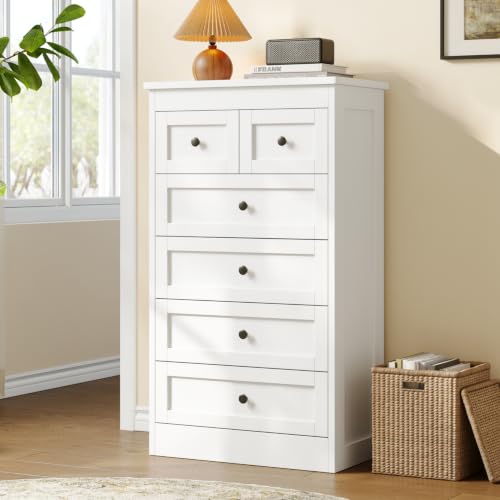
White Small Dresser for Bedroom: Your Complete Buyer's Guide
Everything you need to know about choosing a compact white dresser that fits your space, matches your style, and keeps your bedroom organized for years.
Why a small white dresser works: White finishes reflect light and make compact rooms feel more open, while small footprints preserve walking clearance and keep the layout uncluttered. This guide walks you through dimensions, materials, drawer configurations, safety, and styling so you can choose with confidence.
Why Choose a White Small Dresser for Your Bedroom?
A white dresser is one of the most versatile storage pieces you can place in a bedroom. The light finish bounces natural and artificial light around the room, which is particularly valuable in smaller spaces where darker furniture can make the walls feel closer. White also pairs easily with nearly every color palette, from warm wood tones and neutral linens to bolder accent walls.
Beyond aesthetics, a small white dresser solves a practical problem: it delivers functional storage without dominating the floor plan. In compact bedrooms, apartments, guest rooms, and shared children's rooms, the difference between a wide dresser and a compact one often determines whether closet doors open fully and whether there is comfortable clearance beside the bed.
If you are still deciding between a small dresser and a larger statement piece, our white dressers for bedroom overview covers the full range of sizes and configurations. For a deeper look at compact dimensions specifically, the white small dresser with drawers guide breaks down drawer counts against storage needs.
How to Size a Small White Dresser for Your Bedroom
Getting the dimensions right is the single most important step. A dresser that is too large crowds the room; one that is too small leaves you short on storage. Start by measuring the available wall space, then subtract clearance for doors, nightstands, and walking paths. As a general rule, leave at least 24 to 30 inches of clear floor space in front of the drawers so they can open fully.
| Category | Typical Width | Best For |
|---|---|---|
| Ultra-compact | Under 30 inches | Tiny bedrooms, dorm rooms, closet nooks, bedside storage |
| Compact | 30 to 40 inches | Standard small bedrooms, guest rooms, shared children's rooms |
| Mid-size | 40 to 50 inches | Bedrooms with a bit more wall space and higher storage demand |
Height matters too. A dresser top around 30 to 36 inches is comfortable for most adults to use as a folding surface or display area. Tall, narrow designs — sometimes called vertical or tall dressers — can be a smart choice when wall width is limited but vertical space is available. Our white vertical dresser guide explains when a taller footprint makes more sense than a wide one, while the white horizontal dresser page covers wide-and-low layouts.
For closets and very tight corners, a white small dresser for closet can free up bedroom floor space entirely and keep clothing organized in a dedicated zone.
Choosing the Right Drawer Configuration
The number of drawers matters as much as the overall size. A small dresser typically offers three or four drawers, and each configuration suits a different storage pattern:
- Three drawers: A good fit for a single occupant or a guest room. One deep drawer for bulky items, one medium drawer for folded clothing, and one shallow drawer for accessories or delicates.
- Four drawers: Better separation for couples or for dividing clothing categories. Look for a mix of drawer depths so you can store bulky items and small accessories efficiently.
- Five or more drawers: Less common in compact footprints, but available in taller designs. These work well when you want a dedicated drawer for each category without a wider footprint.
Drawer glides deserve attention. Entry-level models often use basic side-mounted runners, while mid-range and premium designs typically feature smoother metal ball-bearing glides. Soft-close mechanisms are increasingly common in the mid-tier and above and help prevent slamming — a real benefit in shared or children's rooms. The white dresser with soft-close drawers guide explains what to look for in the mechanism.
If you need extra capacity for linens or seasonal clothing, a white dresser with deep drawers can be a practical compromise between a compact footprint and generous interior volume.
Materials and Build Quality
The material determines how the dresser ages, how much it weighs, and how well the white finish holds up. Here is how the main categories compare:
| Tier | Typical Construction | Best For |
|---|---|---|
| Entry-level | Particleboard or MDF with laminate or melamine finish | Guest rooms, temporary setups, light-duty use |
| Mid-range | Engineered wood with reinforced joints and quality hardware | Primary bedrooms, everyday use, balanced durability |
| Premium | Solid wood frames with veneered panels and metal glides | Long-term use, heavier clothing storage, heirloom potential |
| Luxury | Solid hardwood construction with hand-finished white lacquer or paint | Design-focused bedrooms, long-term investment pieces |
Solid wood and high-grade engineered wood are the most durable options. Entry-level laminate finishes are lighter and more prone to edge wear, especially on drawers that are opened frequently. If you want a painted or lacquered look, a white lacquer chest of drawers offers a smoother, more reflective finish that is easier to wipe clean. For a more natural grain appearance, consider a white wood dresser or the white oak dresser option.
Construction details to inspect include corner blocks, drawer box joinery, and whether the back panel is stapled or screwed. Reinforced corner blocks and screwed back panels are markers of a more durable build, even in smaller furniture.
Matching White Small Dressers to Bedroom Style
White is a neutral base, but the design language of the dresser still shapes the room. A few directions to consider:
- Modern and minimalist: Clean lines, flat fronts, and integrated handles. A white modern dresser keeps a compact room feeling calm and uncluttered.
- Farmhouse and cottage: Beadboard details, bracket feet, and cup pulls. A white farmhouse dresser adds warmth without darkening the space.
- Mid-century: Tapered legs, angled fronts, and subtle wood accents. The white mid-century dresser style works well in smaller rooms because the legs create visual breathing room.
- Textured and natural: Rattan and wicker fronts add texture while keeping the palette light. A white rattan dresser brings a relaxed, coastal feel to compact bedrooms.
Hardware is the easiest way to shift the look. Gold and brass pulls warm up a white finish, while black hardware adds contrast. If you prefer a softer, more cohesive look, a white dresser with white knobs keeps the visual weight low. For a bit of contrast, explore a white dresser with black knobs or the white dresser with gold hardware modern look.
Safety Considerations for Small Bedrooms and Nurseries
Small dressers are often placed in tight spaces, sometimes near beds or in children's rooms. Tip-over safety is a serious concern for any dresser, and it becomes more important in compact layouts where the furniture may be climbed or leaned against.
- Always use the anti-tip kit supplied with the dresser, and anchor it to a wall stud where possible.
- Check that the dresser meets current tip-over safety standards for the market it is sold in.
- Avoid placing heavy items in the top drawers of a small dresser, as this raises the center of gravity.
- In nurseries, choose a model with a changing-table top only if it is specifically designed and rated for that use. The white changing table dresser guide covers the safety features to look for.
If the dresser will serve a child's room, the white children's dresser page discusses height, drawer resistance, and finish safety in more detail.
Organizing a Small White Dresser Efficiently
A compact dresser rewards thoughtful organization. Because drawer space is limited, every inch should be used deliberately:
- Assign drawers by frequency: Put everyday clothing in the easiest-to-reach drawers and seasonal or occasional items in the top or bottom drawers.
- Use dividers: Drawer dividers keep folded stacks upright and make it easier to see what you have. They are especially useful in shallow drawers.
- Fold vertically where possible: Filing folded clothing upright, rather than stacking it flat, lets you see every item at a glance.
- Rotate seasonally: Store off-season clothing elsewhere and use the dresser for the current season's wardrobe.
- Keep the top surface intentional: A small dresser top can quickly become a catch-all. Limit it to a lamp, a small tray, and one or two decorative pieces.
If you need a dedicated spot for small valuables, a white dresser with jewelry drawer adds a lined compartment without increasing the footprint. For a more open storage mix, a white dresser with open shelves combines drawers with display or book storage.
Pairing a Small White Dresser with Other Bedroom Furniture
A small dresser rarely stands alone. Matching it with complementary pieces keeps the room cohesive:
- Nightstand sets: A white dresser and nightstand set creates a coordinated look without guesswork. For a slightly different pairing, see the white dresser and matching nightstand options.
- Mirrors: A mirror above or attached to the dresser adds function and light. The white dresser with mirror guide covers both attached and detached styles.
- Desks: In a multi-use bedroom, a white dresser and matching desk pairing can turn a compact room into a combined sleep-and-work space.
- Bedside tables: If you need a small companion piece, a white beside table and dresser combination keeps the palette consistent.
For rooms where the dresser also needs to support a television, a white TV stand dresser for bedroom offers a dual-purpose solution that saves floor space.
Shopping Checklist Before You Buy
Use this checklist to evaluate any white small dresser you are considering:
- Measured width, depth, and height against your available wall space and clearance needs
- Drawer count and depth suited to your clothing categories
- Glide type (basic runners vs. ball-bearing vs. soft-close)
- Material and finish quality, including edge banding and back panel construction
- Anti-tip hardware included and compatible with your wall type
- Hardware style that matches your room's palette
- Assembly requirements and whether tools are included
- Return policy and warranty terms
If you are comparing multiple compact options, our white modern dresser for bedroom guide and the white dresser with small drawers on top page offer additional configuration ideas. For rooms that need a slightly longer surface, a white long dresser for bedroom may fit better than a tall model. And if you prefer a classic chest silhouette in a compact size, the white chest of drawers overview is a useful comparison point.
Frequently Asked Questions
What is the ideal width for a white small dresser in a compact bedroom?
For compact bedrooms, a width between 28 and 40 inches works well for most layouts. This range leaves enough clearance for walking paths and closet doors while still offering functional drawer depth for folded clothing.
How many drawers should a small white dresser have?
A three- or four-drawer configuration is typical for small dressers. Three drawers suit single occupants, while four drawers offer better separation for couples or for organizing different clothing categories.
Is a white small dresser suitable for a nursery?
Yes, provided it is anchored to the wall and meets current tip-over safety standards. White finishes hide minor marks well, and compact dimensions fit nursery layouts without crowding the crib or changing area.
What materials are best for a small white bedroom dresser?
Solid wood and high-grade engineered wood with a quality white finish are the most durable options. Entry-level models often use particleboard with laminate, which is lighter but less resistant to wear over time.
Final Thoughts
A white small dresser is a practical, versatile choice for bedrooms where space is at a premium. By measuring carefully, choosing a drawer configuration that matches your storage habits, and prioritizing build quality and safety, you can select a piece that serves you well for years. Use the sizing tables and checklist above as a framework, and explore the linked guides for deeper dives into specific styles, materials, and configurations.
Ready to compare options? Browse the recommended models below and use the feature details to narrow your shortlist.