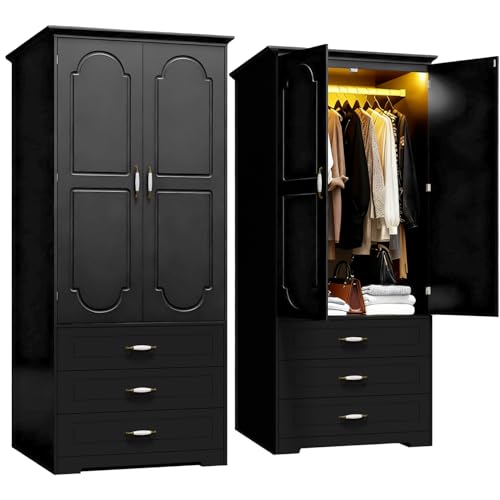
Dark Wood Wardrobe with Drawers: The Complete Buying Guide
A dark wood wardrobe with drawers combines the generous hanging space of a traditional wardrobe with the everyday convenience of built-in drawer storage. This guide walks you through styles, materials, drawer configurations, and practical buying considerations so you can choose with confidence.
Explore Buying CriteriaWhat Is a Dark Wood Wardrobe with Drawers?
A dark wood wardrobe with drawers is a storage cabinet that pairs a full-height hanging section—often behind one or two doors—with a stack of drawers built into the base, side, or interior. It sits at the intersection of a wardrobe and a chest of drawers, offering two storage modes in one footprint.
Unlike a standalone wardrobe that relies entirely on hanging space, this hybrid design suits households that need a place for folded knitwear, denim, undergarments, and linens alongside hanging dresses, coats, and shirts. For readers comparing storage formats, our guide to dresser vs chest of drawers explains how drawer-centric pieces differ from hanging-focused ones.
Dark wood—think walnut, mahogany, dark oak, or espresso-finished hardwood—adds warmth and depth. It reads as formal yet versatile, fitting traditional, transitional, and modern bedrooms alike. If you are weighing dark versus lighter finishes across the room, our dark wood dresser overview covers complementary pieces that share the same tone.
Why Choose a Dark Wood Wardrobe with Drawers?
The appeal goes beyond aesthetics. A combined unit reduces furniture clutter, which matters in smaller bedrooms where every square foot counts. Instead of placing a wardrobe and a separate chest side by side, one piece delivers both functions.
Key Benefits at a Glance
- Dual storage in one footprint: hanging space plus drawer storage without adding a second cabinet.
- Concealed organization: drawers hide everyday items, keeping the room visually calm.
- Visual weight and warmth: dark wood grounds the room and pairs well with light walls and soft textiles.
- Long-term durability: solid hardwood construction in higher tiers resists wear and holds its finish.
- Flexible placement: works as a standalone bedroom anchor or alongside complementary pieces like a dark wood dresser and nightstand set.
Buyers researching storage furniture often discover that a wardrobe-with-drawers configuration is the most efficient single piece for a primary bedroom. If you are furnishing a walk-in closet instead, a closet dresser with drawers may be a better fit alongside hanging rails.
Types and Configurations
Wardrobes with drawers come in several layouts. Understanding the options helps you match the piece to your room shape and daily routine.
1. Two-Door Wardrobe with Base Drawers
The most common layout: two full-height doors open to a hanging rail, and two or three drawers sit beneath the hanging section. This works well in medium bedrooms and keeps frequently folded items at waist height.
2. Combination Wardrobe with Side Drawer Column
Here, drawers occupy a vertical column beside the hanging area. This layout offers more drawer depth and is useful when you need extra folded storage without adding a separate chest. It pairs naturally with a chest of drawers with shelves if you later want open display space.
3. Three-Door Wardrobe with Drawer Bank
A wider configuration that suits larger bedrooms or shared spaces. The extra door often reveals shelving, while a drawer bank handles folded clothing. This is a strong choice for couples who need distinct storage zones.
4. Armoire-Style Wardrobe with Drawers
An armoire silhouette—taller, often with decorative cornices—paired with lower drawers reads as classic and formal. If this style appeals to you, our closet armoire wardrobe guide explores how armoires function as closet alternatives.
5. Corner and Compact Configurations
For tight rooms, a corner wardrobe with drawers maximizes awkward angles. Compact versions may reduce hanging width but preserve drawer capacity. Readers in smaller spaces may also consider a compact dresser as a supplementary piece.
Dark Wood Materials and Finishes
The term "dark wood" spans several species and finishes, each with different characteristics. Understanding the material helps you judge durability and match existing furniture.
| Material / Finish | Character | Best For | Tier Positioning |
|---|---|---|---|
| Walnut | Rich brown with subtle grain; dense and stable | Premium bedrooms, mid-century and modern interiors | Premium to luxury tier |
| Mahogany | Deep reddish-brown; traditional and formal | Classic and transitional rooms | Premium tier |
| Dark Oak | Strong grain, warm brown; very durable | Family homes, rustic and farmhouse styles | Mid-range to premium tier |
| Espresso / Dark Stain Hardwood | Near-black brown; contemporary and clean | Modern and minimalist bedrooms | Mid-range tier |
| Engineered Wood with Dark Veneer | Consistent finish; lighter build | Starter and mid-tier setups | Entry-level to mid-range tier |
Solid hardwood construction in the upper tiers offers better resistance to dents and holds hardware more securely over time. Engineered options in the entry-level and mid-range tiers can still be solid choices when the drawer boxes and joinery are well-specified. If you are comparing construction methods, our solid wood vs engineered guide breaks down the trade-offs.
Dark finishes show dust more readily than pale ones, so a matte or satin finish tends to be more forgiving than high gloss. Matching the finish to an existing dark oak furniture collection keeps the room cohesive.
Drawer Configuration and Storage Capacity
Drawer layout is where most buyers either love or regret their purchase. Consider what you fold and how often you access it.
Drawer Depth and Height
- Shallow drawers (for accessories, undergarments, folded shirts): easier to see contents at a glance.
- Deep drawers (for knitwear, denim, linens): maximize volume but require dividers to stay organized.
- Mixed stacks: a shallow top drawer with deeper drawers below is the most versatile arrangement.
Interior drawer organizers make a real difference in deep drawers. Our guide to clothes drawer dividers covers practical divider options, while clothing drawer organizer ideas help you plan zones inside each drawer.
Hanging Space vs. Drawer Space
Aim for a balance that matches your wardrobe. If most of your clothing hangs, prioritize a wider hanging section with fewer drawers. If you fold most items, a drawer-heavy configuration is more efficient. Couples often benefit from a wider unit with distinct zones—our couples dresser guide discusses shared storage strategies.
Drawer Glides and Hardware
Drawer glides are a strong quality indicator. Entry-level tiers often use basic side-mounted slides; mid-range models typically upgrade to smoother ball-bearing glides; premium and luxury tiers frequently feature soft-close undermount runners. Heavy-duty slides matter for deep drawers that hold dense items. Hardware finish—brass, bronze, matte black—also shapes the look, and dark wood pairs especially well with warm metallics, as seen in dark wood dresser with gold hardware designs.
Style Directions for Dark Wood Wardrobes
Dark wood is a neutral canvas. The styling details—door fronts, trim, hardware, and feet—determine whether the piece reads traditional, modern, or somewhere in between.
- Traditional and classic: raised panel doors, crown molding, and antique brass pulls. Pairs with classic dresser silhouettes.
- Mid-century modern: clean lines, tapered legs, and recessed pulls. Walnut is the signature material here.
- Modern and minimalist: flat slab doors, handleless or linear pulls, and a low-profile base.
- Rustic and farmhouse: visible grain, distressed edges, and dark oak tones.
- Transitional: shaker-style doors with subtle molding—versatile and easy to mix.
If your room leans contemporary, a contemporary dresser and nightstand set can harmonize with a modern dark wardrobe. For softer, coastal-adjacent interiors, dark wood still works as an anchor when balanced with light textiles.
Advantages and Trade-Offs
Advantages
- Combines hanging and folded storage in one unit
- Reduces the number of separate furniture pieces needed
- Dark wood hides minor scuffs better than pale finishes
- Concealed drawers keep everyday clutter out of sight
- Solid hardwood tiers offer decades of service
Trade-Offs to Consider
- Heavier than lighter-wood or engineered alternatives
- Dark finishes can make small rooms feel enclosed without adequate lighting
- Dust and fingerprints are more visible on dark surfaces
- Drawer banks reduce available hanging width
- Quality varies widely across tiers—joinery inspection is essential
Matching the Wardrobe to Your Room
Measure first, then choose. A wardrobe with drawers needs clearance for doors to swing and drawers to pull out fully.
- Door swing clearance: allow at least 24–30 inches in front of hinged doors.
- Drawer extension: confirm the drawer depth plus a few inches of clearance.
- Ceiling height: tall wardrobes look best with a small gap or a fitted top panel.
- Traffic flow: avoid blocking walkways between the bed and closet.
In small bedrooms, a corner or compact configuration preserves floor space. Readers planning a full bedroom refresh may find our small bedroom storage ideas and bedroom storage hubs useful for sequencing purchases.
Dark wood can make a room feel intimate. Balance it with lighter walls, mirrors, and layered lighting. A mirror above or beside the wardrobe reflects light and softens the visual weight—our dresser mirror ideas apply equally well to wardrobes.
Buying Criteria: What to Check Before You Commit
Use this checklist to evaluate any dark wood wardrobe with drawers you are considering.
- Construction: solid hardwood frames and drawer fronts in premium tiers; well-finished engineered panels acceptable in mid-range tiers.
- Joinery: dovetail or doweled drawer boxes outlast stapled or glued-only boxes.
- Drawer glides: soft-close undermount runners signal higher tiers; ball-bearing side slides are common in mid-range models.
- Back panel: a sturdy back panel adds rigidity and prevents racking.
- Finish: a consistent, sealed finish resists moisture and wear; inspect for overspray and rough edges.
- Hardware: solid metal pulls and hinges; avoid thin, flexible hardware.
- Stability: anti-tip hardware is essential, especially in households with children.
- Dimensions: verify interior hanging height, drawer interior dimensions, and overall footprint against your room.
- Assembly: flat-pack models in entry-level tiers require careful assembly; pre-assembled units save time.
- Delivery access: confirm doorways and stairwells can accommodate the packaged dimensions.
For a broader framework, our dresser quality guide and dresser size guide translate these checks into practical measurements.
Tier Expectations at a Glance
- Entry-level: engineered panels, basic glides, flat-pack assembly—functional for starter setups.
- Mid-range: mixed solid and engineered construction, smoother glides, better hardware.
- Premium: solid hardwood, dovetail drawers, soft-close runners, refined finishes.
- Luxury: premium species, hand-finished details, bespoke sizing options.
Higher tiers generally deliver smoother operation and longer service life; the right tier depends on how long you intend to keep the piece.
Organizing a Wardrobe with Drawers
A well-organized wardrobe-with-drawers becomes dramatically more useful. A simple zoning system works for most households.
- Top shelf: out-of-season items, spare bedding, luggage.
- Hanging rail: long garments at one end, shorter items at the other, with a lower rail or shelf beneath short items.
- Top drawer: accessories, undergarments, socks—pair with dividers.
- Middle drawers: folded shirts, knitwear, and denim.
- Bottom drawer: bulky items such as linens or seasonal layers.
For deeper drawer planning, our dresser organization guide and closet organization ideas expand on folding techniques and zone planning. If you are refining a full closet, clothes drawer storage covers volume-maximizing approaches.
Care and Maintenance for Dark Wood
- Dust regularly with a soft, dry microfiber cloth—dark finishes show dust quickly.
- Avoid silicone-based polishes; a mild wood cleaner applied sparingly is safer.
- Keep the wardrobe out of direct sunlight to prevent uneven fading.
- Maintain indoor humidity within a moderate range to reduce seasonal movement in solid wood.
- Wipe spills promptly to protect the finish.
- Lubricate drawer glides occasionally if they begin to feel stiff.
- Check and re-tighten hardware periodically.
For a deeper routine, our how to clean a dresser guide covers products and techniques that apply to dark wood cabinetry.
Pairing with Other Bedroom Furniture
A dark wood wardrobe rarely stands alone. Coordinating the surrounding pieces keeps the room intentional rather than crowded.
- Bedroom sets: a dark wood dresser and nightstand set creates a unified look.
- Dressers: a dark dresser complements the wardrobe's drawer storage when you need more folded space.
- Changing tables: in a nursery, a dark wood changing table with drawers echoes the same finish family.
- Storage chests: a dark brown chest of drawers adds depth to a room anchored by a dark wardrobe.
- Nightstands: a matching dark brown dresser and nightstand pairing keeps bedside surfaces consistent.
If your room needs a mirrored focal point, a dark brown dresser with mirror or a dark walnut dresser with mirror can amplify light without competing with the wardrobe.
Frequently Asked Questions
What is the difference between a wardrobe with drawers and a dresser?
A dresser is primarily a drawer-only piece, while a wardrobe with drawers combines a full-height hanging section with drawer storage. The hybrid piece suits rooms that need both hanging and folded storage in one footprint. For a detailed comparison, see our dresser vs wardrobe guide.
Is dark wood a good choice for a small bedroom?
It can work well if the room has adequate light and the piece is scaled appropriately. A compact or corner configuration prevents the wardrobe from dominating the space, and lighter walls plus a mirror help balance the visual weight.
Which dark wood is most durable?
Walnut, mahogany, and dark oak are all dense, durable hardwoods that hold up well over time. Solid hardwood construction matters more than species alone—a well-built mid-range oak piece can outlast a poorly constructed premium-labeled one.
How many drawers should a wardrobe have?
Most buyers find two to four drawers sufficient when the wardrobe also has generous hanging space. Choose more drawers if you fold most of your clothing; choose fewer if you mostly hang garments and already own a separate chest of drawers.
Can a dark wood wardrobe with drawers be used in a closet?
Yes. It works well in walk-in closets as a central island or against a wall. For closet-specific layouts, our closet dresser guide and closet island dresser with drawers on both sides overview may help.
What should I check before buying online?
Confirm interior dimensions, drawer construction, glide type, assembly requirements, and delivery access. Read the product's care instructions and verify anti-tip hardware is included. Our complete dresser buying guide provides a full pre-purchase checklist.
Final Thoughts
A dark wood wardrobe with drawers is a long-term investment in bedroom organization. It solves the hanging-versus-folding dilemma in a single footprint, adds warmth and visual weight, and—when chosen in the right tier for your needs—delivers years of dependable service.
Focus your decision on construction quality, drawer glide smoothness, and accurate room measurements rather than surface styling alone. Pair the wardrobe with complementary dark wood pieces to create a cohesive room, and use interior organizers to keep the drawer bank working as hard as the hanging section.
If you are still narrowing down the category, our dresser types and buying guides hubs connect you to deeper comparisons across storage furniture formats.