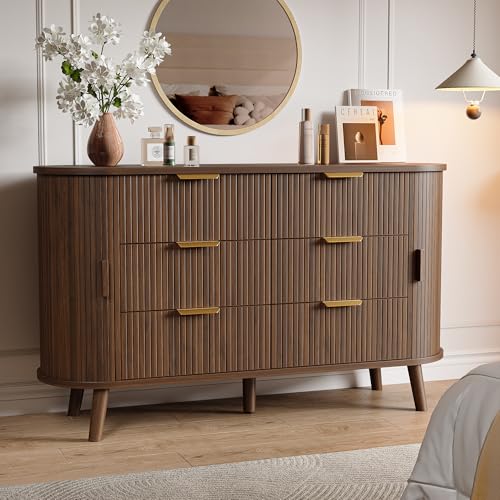
Dark Dresser: The Complete Buying & Styling Guide
From espresso and walnut to matte black and deep forest green — learn how to choose a dark dresser that anchors your bedroom, matches your hardware, and fits your space without overwhelming it.
Start the GuideWhy a dark dresser? A dark finish gives a dresser visual weight and a sense of permanence that lighter pieces often lack. It hides everyday wear better, pairs effortlessly with gold or brass hardware, and works as a grounding anchor in bedrooms styled around neutral linens and warm woods. This guide walks through finishes, materials, sizing, hardware, and styling so you can decide with confidence before you buy.
What Counts as a Dark Dresser?
A dark dresser is any chest of drawers finished in a deep, low-value tone. That includes solid dark woods like walnut and mahogany, stained oak and pine, and painted or lacquered finishes in black, charcoal, navy, and deep green. The category is defined by the finish rather than the drawer count or silhouette, so a compact dark brown dresser and a wide dark gray dresser both belong here.
Buyers usually search for a dark dresser for one of three reasons: they want a moody, grounded bedroom aesthetic; they need a piece that resists visible marks in a high-use room; or they are matching an existing dark bed frame or nightstand set. Understanding which reason applies to you shapes the rest of the decision.
Dark Dresser Finishes Compared
Finish drives both the look and the maintenance routine. The table below compares the most common dark finishes by character and best use case.
| Finish | Character | Best For | Maintenance Note |
|---|---|---|---|
| Espresso / Dark Brown Stain | Warm, classic, wood grain visible | Traditional and transitional bedrooms | Dust regularly; avoid silicone polishes |
| Matte Black Paint | Bold, modern, graphic | Contemporary and industrial rooms | Touch-up pen for scuffs |
| Charcoal / Dark Gray | Soft, versatile, neutral | Scandinavian and minimalist spaces | Low-contrast; hides dust well |
| Deep Forest Green | Rich, trend-forward, warm | Moody and eclectic bedrooms | Keep away from direct sunlight |
| Dark Walnut | Premium grain, natural depth | Mid-century and luxury setups | Oil or wax finish needs reapplication |
| Navy / Deep Blue | Calm, unexpected, coastal-modern | Coastal and transitional rooms | Matte finishes resist fingerprints |
Choosing the Right Material for a Dark Dresser
The material determines how the dark finish ages. Solid hardwood takes stain unevenly in a way that reads as character; engineered wood with veneer holds a uniform dark tone and is more stable in humid rooms. The main options break down as follows.
Solid Walnut & Mahogany
Naturally deep grain that looks rich even under a dark stain. Heavier, quieter drawers, and strong long-term durability. Best for buyers who treat the dresser as a long-term investment.
Stained Oak & Pine
Accepts dark stains and paint well, and is more forgiving if you plan to refinish later. Oak offers a bolder grain; pine is softer and dents more easily in high-traffic rooms.
Engineered Wood with Veneer
Uniform dark finish, lighter weight, and stable in humid climates. Check that edges are sealed and drawer bottoms are reinforced, since these are the first points of failure in this tier.
If you are comparing construction types in detail, the guide on choosing a dresser for the long term covers joinery and drawer mechanics beyond the surface finish.
Sizing a Dark Dresser for Your Bedroom
Dark finishes carry visual weight, so proportion matters more than it does with light pieces. A short, wide dark dresser can make a small room feel cramped, while a tall, narrow silhouette uses vertical space and leaves floor visible. Use these guidelines as a starting point.
| Room Situation | Recommended Silhouette | Best For |
|---|---|---|
| Small bedroom, limited floor space | Compact or tall narrow chest | Vertical storage without crowding walkways |
| Standard primary bedroom | Wide 6–9 drawer dresser | Shared storage and a display surface |
| Room with a dark bed frame | Matching dark dresser and nightstand set | Cohesive, anchored bedroom look |
| Closet or dressing area | Deep drawer or closet dresser | Folded clothing and accessory storage |
| Multi-use or guest room | Mid-height dresser that doubles as a console | Storage plus surface for decor or a TV |
Measure the wall first, then leave at least 24 inches of clearance in front of the drawers for full extension. If floor space is tight, a compact dresser or a tall dresser keeps the footprint small while adding drawer capacity.
Hardware Pairings That Work With Dark Finishes
Hardware is the fastest way to shift a dark dresser from traditional to modern. The contrast between the finish and the metal does most of the work.
- Gold and brass: the warmest pairing for espresso, walnut, and black. Creates a classic, slightly glamorous look and works especially well on dark brown dressers with gold hardware.
- Matte black: nearly invisible against black and charcoal finishes, giving a clean, monolithic look suited to modern and minimalist rooms.
- Nickel and chrome: best with cool dark tones such as charcoal and navy, where the cool metal reinforces the finish rather than fighting it.
- Leather or wood pulls: softens a dark piece and suits rustic and cottage styling; a good match for stained oak and pine.
If you plan to change hardware after purchase, confirm the drawer pull spacing first — swapping a three-inch center-to-center pull for a wider bar usually requires drilling new holes.
Styling a Dark Dresser in the Bedroom
Balance the weight
A dark dresser absorbs light, so offset it with lighter bedding, a pale rug, or a light-toned wall behind it. The goal is contrast, not competition.
Add a mirror
A mirror above or beside a dark dresser reflects light and visually lightens the piece. A dark brown dresser with mirror is a traditional option that also serves as a dressing station.
Keep the top restrained
Two or three objects at most — a lamp, a tray, one decorative piece. A crowded top makes a dark piece feel heavier than it is.
Match the room's temperature
Warm dark woods suit rooms with warm neutrals; charcoal and navy suit cooler palettes. Mixing temperatures can work, but it needs a deliberate bridge such as brass or natural linen.
For broader bedroom styling directions, see the room idea collections on bedroom dresser ideas and the storage layout guidance in dresser organization.
Common Mistakes When Buying a Dark Dresser
- Buying for looks before measuring. Dark finishes read larger than light ones at the same dimension. Tape out the footprint on the floor before ordering.
- Ignoring drawer glide quality. A heavy dark hardwood drawer needs a sturdier glide than a light veneer drawer. Test the drawer with weight in it if you can.
- Skipping the anchor. Tall dark chests are top-heavy. Anti-tip anchoring is essential, especially in households with children — see children's dressers for safety-focused options.
- Choosing a finish that shows dust. High-gloss black shows every fingerprint; matte and stained finishes are more forgiving in daily use.
- Mismatching undertones. A red-toned dark brown next to a cool gray bed frame will look accidental. Compare swatches in the room's actual lighting.
Dark Dresser Sets and Room Combinations
A dark dresser rarely lives alone. Matching it to adjacent pieces is the difference between a designed room and a collection of furniture. Consider these pairings:
- Dark dresser and nightstand set — the most cohesive option for a primary bedroom, with consistent finish and hardware across pieces.
- Dark wood dresser and nightstand set — warmer alternative if you want visible grain rather than a painted look.
- Dark gray dresser and nightstand — a softer pairing for modern and minimalist bedrooms.
- Dark wood dresser — the standalone option if you are matching an existing bed frame rather than buying a full set.
If you need extra hanging space alongside drawer storage, a dark wood wardrobe with drawers or a closet dresser extends the same finish into the closet.
Frequently Asked Questions
What is a dark dresser?
A dark dresser is a chest of drawers finished in a deep tone such as black, dark brown, espresso, dark gray, navy, or forest green. These finishes create a grounded, sophisticated look and pair well with both neutral and bold bedroom palettes.
Does a dark dresser make a bedroom look smaller?
A dark dresser can feel heavy in a cramped room, but placement and styling matter more than color. Choosing a low or tall compact profile, keeping the top uncluttered, and balancing the piece with lighter walls and textiles keeps the room feeling open.
What wood is best for a dark dresser?
Oak, walnut, mahogany, and pine all accept dark stains well. Walnut and mahogany have naturally deep grain that looks rich when finished dark, while oak and pine are more forgiving for painted or stained black finishes.
How do I match hardware to a dark dresser?
Gold and brass hardware add warmth and contrast to dark wood and black finishes. Matte black hardware creates a seamless, modern look. Nickel and chrome suit cooler dark gray and navy tones.
Can a dark dresser work in a small bedroom?
Yes. Choose a compact or tall silhouette, place it against a light wall, and add a mirror above or beside it to bounce light around the room. Avoid bulky overhangs and keep the surrounding floor visible.
Ready to Compare Dark Dressers?
Browse recommended dark dressers and storage pieces below, then check dimensions, drawer glide quality, and anchoring requirements before you commit.