Clothes Drawer Dividers: The Complete Organization Guide
Turn chaotic dresser drawers into a tidy, easy-to-navigate wardrobe system. Learn how to choose, measure, and use clothes drawer dividers that actually fit your storage and your lifestyle.
Start Your Drawer UpgradeWhy drawer dividers matter: Most people don't have a storage problem — they have a visibility problem. A drawer packed with loose, folded clothing hides half of what it holds, which leads to duplicates, wrinkles, and daily frustration. Clothes drawer dividers create structure inside the drawer so every item has a home. This guide covers divider types, material quality tiers, sizing methods, and organization strategies so you can choose the right system the first time.
What Are Clothes Drawer Dividers and Why Do They Work?
Clothes drawer dividers are insert systems that segment the interior of a drawer into smaller compartments. Rather than stacking folded garments in one deep pile, dividers keep items upright, separated, and easy to grab. The result is a drawer that behaves more like a filing system than a storage bin.
The benefits are practical and immediate:
- Visibility: Every garment is seen at a glance, so you stop digging for a specific item.
- Space efficiency: Upright folding combined with compartments often fits more usable items than loose stacking.
- Wrinkle reduction: Less compression and fewer shifting piles mean clothing stays smoother.
- Faster routines: A predictable compartment layout speeds up morning decisions and evening tidy-ups.
- Longevity: Better airflow and less friction reduce wear on fabrics and drawer interiors.
Dividers are especially effective in standard clothes drawers and work hand-in-hand with a broader clothing drawer organizer plan. If you're still choosing the furniture itself, our guide to the right clothes dresser pairs naturally with this storage approach.
Types of Clothes Drawer Dividers
There is no single best divider — the right choice depends on drawer dimensions, garment types, and how often you reconfigure your storage. These are the main categories worth comparing.
1. Spring-Loaded Tension Dividers
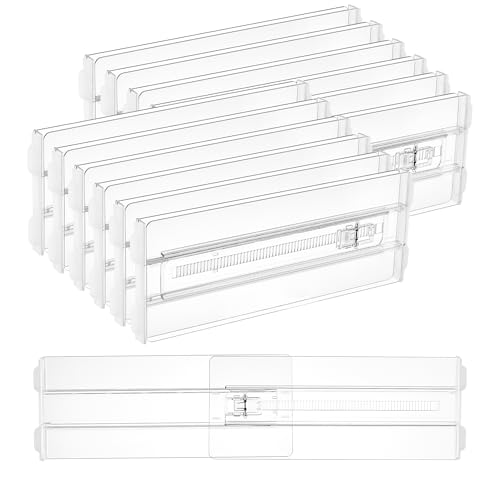
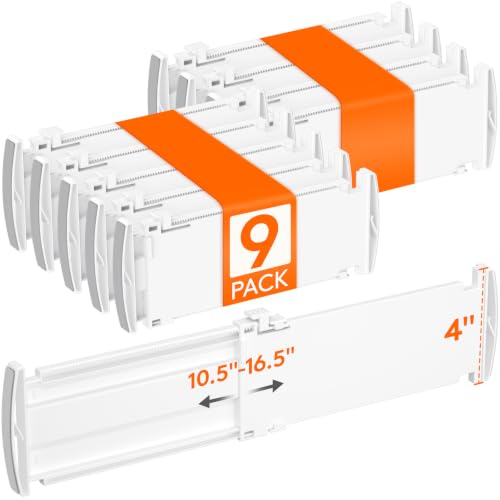
These dividers press against the drawer walls using internal springs, so they stay in place without hardware. They are simple to install, easy to reposition, and forgiving of slightly uneven drawer interiors. Look for reinforced spring housings and non-slip end caps; mid-range and premium models hold tension more consistently over time.
2. Interlocking Grid Systems
Interlocking dividers snap together into a custom grid of cells. They are ideal for socks, underwear, activewear, and accessories because each cell holds one rolled or folded item. Modular systems let you reshape the grid as your wardrobe changes, and they typically offer the most precise compartment control.
3. Fixed Compartment Inserts
Pre-built inserts with fixed slots drop into a drawer as a single unit. They are fast to set up and visually clean, but they require accurate drawer measurements. Entry-level inserts often use thinner walls; premium versions use solid wood or high-grade composite frames that resist bowing.
4. Adjustable Rail-and-Divider Kits
A frame or rail system anchors the divider positions, and individual panels slide or clip into place. These kits are excellent for deep drawers and for households that reorganize seasonally. The best versions use metal rails with smooth glides rather than friction-fit plastic.
5. Fabric and Soft-Sided Organizers
Collapsible fabric organizers with sewn-in dividers are lightweight and gentle on delicate garments. They suit dressers with shallow drawers and travel or seasonal storage. Choose models with reinforced stitching and rigid base panels; these hold their shape far better than basic fabric bins.
6. Tiered and Stackable Inserts
For deep drawers, two-tier inserts double the usable surface area by creating an upper and lower layer. They are a smart choice for accessories, sleepwear, and small folded items, and they work well alongside a clothes drawer storage plan that separates daily items from seasonal pieces.
Materials and Quality Tiers
Divider quality affects how long the system stays aligned, how smoothly it slides, and whether it damages fabrics. Use these universal tiers to evaluate options without relying on numeric comparisons.
Entry-Level Tier
Lightweight plastic or basic fabric. Suitable for light garments and occasional use. Check for smooth edges and reasonable wall thickness.
Mid-Range Tier
Reinforced plastic, bamboo, or composite frames. Better spring tension and more stable grids. A solid choice for everyday family drawers.
Premium Tier
Solid wood, high-grade bamboo, or metal rail systems. Precise fit, smooth movement, and durable joints built for frequent reconfiguration.
Luxury / Professional-Grade
Custom-fitted hardwood systems with felt lining and precision hardware. A long-term investment for high-end dressers and tailored storage.
| Material | Durability | Best For | Maintenance |
|---|---|---|---|
| Bamboo | High — naturally rigid and renewable | Everyday clothing drawers; warm visual finish | Wipe with a damp cloth; avoid soaking |
| Solid Wood | Very high — resists bowing under load | Deep drawers, heavy garments, premium setups | Dust regularly; occasional light polish |
| High-Grade Plastic | Moderate to high — depends on wall thickness | Modular grids, children's drawers, easy cleaning | Rinse and air-dry; avoid harsh solvents |
| Fabric / Soft-Sided | Moderate — reinforced stitching extends life | Delicates, travel storage, shallow drawers | Spot clean; fully air-dry before use |
| Metal Rail Systems | Very high — smooth and stable over years | Adjustable layouts, seasonal reconfiguration | Wipe rails; check fasteners occasionally |
How to Measure Your Drawer for Dividers
Accurate measurements prevent bowing, jamming, and wasted compartments. Follow this sequence:
- Measure interior width, depth, and height — not the exterior of the drawer front.
- Check for obstructions: drawer slides, interior hardware, and tapered side walls all reduce usable space.
- Allow clearance: leave a small margin so dividers don't press against moving parts.
- Plan compartment sizes: narrow cells for socks and underwear, medium cells for folded shirts, wider zones for bulky knitwear.
- Test the fit: dividers should sit snug without force. If your drawer is non-standard, adjustable or spring-loaded systems are the safer choice.
Quick Sizing Tip
Measure once, then measure again after removing everything from the drawer. Dust, liners, and old organizers can hide the true interior dimensions and cause a mis-sized insert.
What to Look For When Choosing Drawer Dividers
Beyond material, these features separate a divider system that lasts from one that frustrates within a month:
- Smooth, snag-free edges — critical for knitwear and delicate fabrics.
- Reinforced joints and end caps — the first failure points in tension and grid systems.
- Adjustability — valuable if you reorganize seasonally or share a dresser.
- Breathability — open-frame designs allow airflow and reduce musty odors.
- Easy cleaning — removable components make maintenance far simpler.
- Compatibility with drawer liners — non-slip liners improve grip and protect the drawer base.
If your dresser is part of a larger bedroom system, coordinate dividers with your broader closet organization ideas so the whole storage plan feels consistent rather than piecemeal.
How to Organize Clothes Inside Divided Drawers
The divider is the structure; the folding method is what makes it work. The upright file-fold approach is the foundation of nearly every effective drawer system.
- Fold to the compartment width: fold garments so they stand upright, like files in a cabinet.
- Assign zones: dedicate compartments to categories — socks, underwear, activewear, sleepwear, accessories.
- Put daily items at the front: the most-used compartments should face the drawer opening.
- Keep one compartment flexible: a spare cell handles new purchases or seasonal rotation.
- Rotate seasonally: move heavy knitwear forward in cooler months and lighter layers forward in warmer months.
For a deeper walkthrough of folding and zone planning, pair this guide with our clothing drawer organizer resource. If you're also planning a closet refresh, the connection between drawer structure and closet dresser drawers is worth reviewing.
Common Mistakes to Avoid
- Buying before measuring: a divider that doesn't fit is worse than no divider at all.
- Over-comparting: too many narrow cells can make the drawer harder to use than a simpler layout.
- Ignoring drawer height: tall stacks of dividers can block the drawer from closing smoothly.
- Using rough-edged inserts: these snag knits and shorten garment life.
- Skipping a test fit: always place dividers and open/close the drawer several times before committing to a layout.