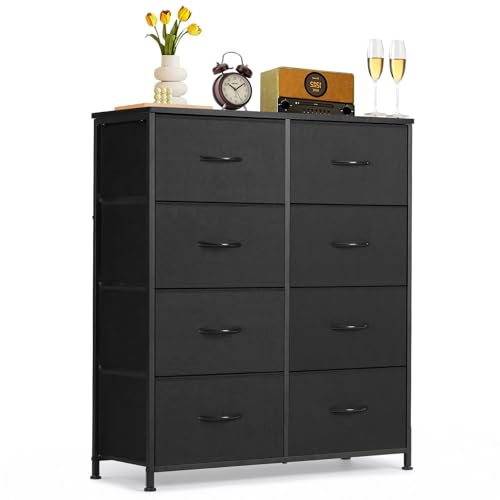
Compact Dresser: Space-Saving Storage for Small Rooms
Everything you need to know about choosing a compact dresser that fits tight spaces without sacrificing organization. Size guides, layout strategies, and feature checklists for apartment dwellers and small-bedroom owners.
Explore the GuideWhy compact dressers matter: In small bedrooms, apartments, dorm rooms, and closets, every square foot counts. A full-size dresser can crowd a room and block traffic flow. A compact dresser delivers essential drawer storage in a footprint that respects your available floor space — keeping your room functional, open, and visually calm.
What Defines a Compact Dresser?
A compact dresser is a drawer-based storage piece specifically scaled down to fit rooms where a standard-width dresser would feel intrusive. While there is no universal industry standard, most furniture retailers and interior designers classify a dresser as compact when its dimensions fall within these general ranges:
- Width: under 40 inches (often 24–38 inches)
- Height: between 26 and 36 inches (so it doubles as a usable surface)
- Depth: 15 to 20 inches (shallower than full-size dressers to preserve walkway space)
The exact boundaries matter less than the practical outcome: a compact dresser lets you store folded clothing, accessories, and small essentials without forcing you to rearrange your room layout. If your dresser must sit between a bed and a wall, alongside a closet door, or inside a narrow alcove, you are shopping in compact territory.
Compactness is not only about raw dimensions. Drawer count, drawer depth, and the type of hardware all influence how much usable storage you actually get. A 3-drawer compact model with deep, well-built drawers can often outperform a 5-drawer unit with shallow or poorly sliding compartments. If you are comparing drawer formats, our guide to closet dresser drawers breaks down how drawer layout affects everyday usability.
Who Benefits Most from a Compact Dresser?
Compact dressers are not a compromise — they are a deliberate choice for specific living situations. The following groups consistently find that downsizing their dresser footprint improves daily life:
- Apartment and studio dwellers: Limited floor area means every piece of furniture must justify its footprint. A compact dresser can tuck into a bedroom corner or function as a multi-purpose surface.
- Small-bedroom owners: When the bed dominates the room, a narrow dresser along the wall preserves walking paths and creates visual balance. Our guide to the corner dresser covers placement strategies for awkward layouts.
- Closet organizers: Fitting a compact dresser inside a walk-in or reach-in closet separates folded items from hanging garments. Learn more in our closet dresser overview.
- Guest rooms and dorm rooms: These spaces need functional storage without permanent bulk. A compact chest of drawers works well because it can be repositioned easily.
- Couples with split storage: Two compact dressers — one per person — can outperform a single oversized unit. Explore the couples dresser approach for shared bedrooms.
If your room is genuinely tight, the decision is often not whether to downsize but which compact configuration matches your wardrobe volume. The guidance below helps you answer that.
Compact Dresser Size & Configuration Guide
Use this table to match a compact dresser format to your room constraints and storage needs. The tier descriptors reflect build quality and market positioning relative to other compact dressers, not any specific numeric benchmark.
| Configuration | Typical Footprint | Best For | Storage Capacity | Build Tier |
|---|---|---|---|---|
| 3-Drawer Compact | 24–32 in. wide, 15–18 in. deep | Minimal wardrobes, guest rooms, closets | Essential — folded tops, socks, basics | Entry-Level |
| 4-Drawer Narrow | 28–34 in. wide, 16–19 in. deep | Small bedrooms, single adults | Balanced — tops, bottoms, accessories | Mid-Range |
| 5-Drawer Compact Chest | 30–38 in. wide, 17–20 in. deep | Couples, year-round wardrobes | Generous — full outfit rotation | Mid-Range |
| Tall Narrow Chest | 18–28 in. wide, 16–18 in. deep | Very tight corners, vertical storage | Vertical — maximizes height, not width | Premium |
| Premium Compact Dresser | 30–38 in. wide, 18–20 in. deep | Design-conscious small bedrooms | Refined — solid wood, soft-close hardware | Luxury |
Across tiers, the practical differences show up in drawer glide smoothness, joinery quality, and material density. Entry-level compact dressers often use engineered wood with basic metal glides. Mid-range models typically upgrade to smoother ball-bearing slides and thicker panels. Premium and luxury compact dressers favor solid wood construction, dovetail joints, and soft-close mechanisms that hold up over years of daily use.
Key Features to Evaluate Before You Buy
When a dresser occupies a small footprint, each feature carries more weight. A poorly designed compact dresser can feel cramped and frustrating; a well-designed one feels surprisingly roomy. Prioritize these elements:
Drawer Glides and Mechanisms
Smooth glides are the single most important usability factor in a compact dresser. Entry-level units may use simple roller glides that wobble under load. Mid-range dressers usually offer ball-bearing side-mount or under-mount slides. Premium compact dressers include soft-close under-mount hardware that prevents slamming and feels refined. Test glides in person whenever possible, or read owner reviews that specifically mention drawer movement over time.
Drawer Depth vs. Drawer Count
In tight spaces, deep drawers often beat extra drawers. Two deep drawers can store more bulky clothing than four shallow ones. For folded tops and bottoms, a depth of 5–7 inches per drawer is generally comfortable. If you need to organize smaller items, consider adding clothes drawer dividers to keep contents accessible without adding furniture.
Material and Construction
Solid wood frames resist warping and support heavier drawer loads. Engineered wood with quality veneers can be perfectly durable if joinery is sound. Look for dovetail or reinforced corner joints, a stable back panel, and a finish that resists moisture. For lighter, airier aesthetics in small rooms, a cream dresser or a white dresser can make a compact piece feel visually lighter.
Height and Surface Usability
A compact dresser between 28 and 34 inches tall doubles as a practical surface for a lamp, mirror, or small tray. Lower units (under 28 inches) work well under windows or sloped ceilings but offer less storage. Tall narrow chests maximize vertical space but require wall anchoring for safety.
Safety and Stability
Any dresser — especially a tall, narrow one — should include an anti-tip kit or be anchor-ready. Small bedrooms often double as play spaces, so stability matters. Check that drawer stops prevent drawers from pulling completely free, and confirm the unit meets applicable safety standards for tip-over resistance.
Placement Strategies for Small Spaces
Where you place a compact dresser matters as much as which one you choose. The right position can make a tight room feel intentional and open.
Along a Wall Between Furniture
A slim dresser (24–32 inches wide) can sit between a bed and a window or between a doorway and a closet. This placement keeps the center of the room clear and creates a natural surface for daily items.
In a Corner
Corner placement uses space that would otherwise be dead. A corner-fit dresser or a standard compact unit rotated at an angle can work, though drawer access requires care. Our guide to the corner chest of drawers explores drawer clearance and door-swing considerations.
Inside or Beside a Closet
If your closet has floor space, a compact dresser inside the closet frees up bedroom square footage entirely. This works best in walk-in closets and reach-in closets with at least 24 inches of depth. For closets without floor space, a freestanding compact dresser just outside the closet door keeps folded items within arm's reach.
As a Nightstand Alternative
A very small compact dresser (under 26 inches wide, under 30 inches tall) can serve as a nightstand with extra storage. This dual-purpose approach saves the footprint of a separate nightstand. If you prefer coordinated furniture, a dresser and nightstand set in compact proportions keeps the room visually consistent.
Common Mistakes When Choosing a Compact Dresser
Buyers in the research phase often make predictable errors that lead to regret. Avoid these:
- Ignoring depth: A narrow dresser that is too deep still blocks walkways. Measure available depth before shopping — 15–18 inches is usually safe for small rooms.
- Overestimating drawer capacity: Compact dressers store less than full-size units. Assess your wardrobe honestly; if you need more space, consider a two-dresser split or a taller narrow chest.
- Skipping the anti-tip anchor: Tall narrow chests can tip if drawers are overloaded. Always install the included anchor kit.
- Choosing style before function: A beautiful compact dresser with stiff glides or shallow drawers will frustrate you daily. Test usability first, then refine aesthetics.
- Forgetting door swing clearance: In tight rooms, a dresser placed too close to a door or closet blocks access. Leave at least 24 inches of clearance in front of drawers.
Frequently Asked Questions
What is considered a compact dresser?
A compact dresser typically measures under 40 inches in width and 36 inches in height, designed to fit into small bedrooms, apartments, or tight corners while still offering functional drawer storage.
How many drawers should a compact dresser have?
Most compact dressers feature 3 to 5 drawers. A 3-drawer design suits minimal wardrobes, while 5-drawer models offer more organizational flexibility without significantly increasing the footprint.
Can a compact dresser be used in a closet?
Yes, compact dressers are excellent closet organizers. Their slim profiles fit into walk-in closets and reach-in closets, helping you separate folded clothing from hanging garments.
Should I choose a tall narrow chest or a wide compact dresser?
Choose based on your room's limiting dimension. If floor width is the constraint, a tall narrow chest maximizes vertical storage. If ceiling height or visual weight is the concern, a wide compact dresser keeps storage at eye level and avoids a towering look.
Are compact dressers stable enough for daily use?
Yes, provided you anchor tall units to the wall and avoid overloading drawers. Premium compact dressers with solid construction and anti-tip hardware are especially stable. Always follow the manufacturer's anchoring instructions.
Ready to Choose Your Compact Dresser?
You now have the size ranges, feature priorities, and placement strategies to shop confidently. Browse our curated compact dresser recommendations below and compare options that match your room and storage needs.
View Recommended Compact Dressers