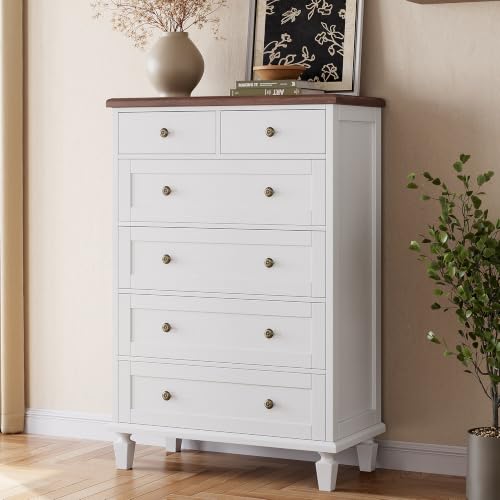
White Dresser with Dark Wood Top: The Complete Buying Guide
Discover how a two-tone dresser combining a crisp white body with a rich dark wood surface can transform your bedroom. Learn about styles, materials, drawer configurations, and expert design tips to make the right choice.
EXPLORE RECOMMENDATIONSWhy choose a white dresser with a dark wood top? This two-tone design balances brightness and warmth. The white body keeps the room feeling open and airy, while the dark wood top adds depth, natural texture, and a premium focal point. It is a versatile choice that pairs well with modern, farmhouse, Scandinavian, and transitional interiors.
What Exactly Is a White Dresser with a Dark Wood Top?
A white dresser with a dark wood top is a furniture piece where the main body — drawers, frame, and sides — is finished in white paint, lacquer, or laminate, while the top surface features a dark wood veneer or solid wood. This contrast creates a visually striking effect that reads as both contemporary and timeless.
Unlike a fully painted dresser, the dark wood top introduces natural grain patterns and a tactile warmth that white finishes alone cannot provide. The result is a piece that feels grounded and organic while still maintaining the light, spacious quality that white furniture is known for.
This style often appears in collections described as two-tone, contrast, or mixed-material dressers. It is closely related to other hybrid designs such as a white dresser with natural wood top and a white dresser with light wood top, each offering a different level of contrast and warmth.
Why the White and Dark Wood Combination Works
The appeal of this pairing goes beyond aesthetics. Here are the practical and design benefits that make it a smart choice for many bedrooms:
- Visual balance: White brightens a room while dark wood anchors it. The combination prevents the space from feeling either too sterile or too heavy.
- Versatile styling: It works with a wide range of color palettes, from all-white minimalism to warm earth tones and bold accents.
- Durability where it matters: The top surface receives the most wear from lamps, accessories, and daily use. A dark wood top is often more forgiving and easier to maintain than a painted white surface.
- Design flexibility: The contrast allows you to mix metals and hardware finishes more freely. For example, gold or brass pulls pop against both white and dark wood.
- Perceived quality: The combination of painted and natural materials often reads as more considered and premium than a single-finish piece.
If you are exploring other contrast-based designs, you might also consider a white dresser with black accents for a more dramatic look, or a white dresser with brown drawers for a reversed contrast effect.
Popular Styles and Design Interpretations
Modern and Contemporary
Clean lines, flat drawer fronts, and minimal hardware define the modern interpretation. The dark wood top is often a deep walnut or espresso finish that contrasts sharply with a matte or gloss white body. This style suits minimalist and urban bedrooms, and pairs well with metal legs or recessed bases.
Farmhouse and Rustic
Farmhouse versions feature beadboard detailing, framed drawer fronts, and distressed or reclaimed-looking dark wood tops. The white finish may be slightly textured or antiqued. This style works beautifully in cozy, country-inspired bedrooms and pairs well with wrought-iron hardware and natural textiles. Explore the broader white farmhouse dresser category for more inspiration.
Scandinavian and Mid-Century
Scandinavian designs emphasize simplicity and functionality, often with tapered legs and a dark wood top that adds warmth to an otherwise light palette. Mid-century interpretations may feature angled legs and a more geometric drawer layout. A white mid-century dresser with a dark top is a striking example of this approach.
Transitional
Transitional styles blend traditional and contemporary elements, often featuring subtle molding, classic hardware, and a refined dark wood top. This is a safe and elegant choice for primary bedrooms and guest rooms alike.
Materials and Construction: What to Look For
The quality of a white dresser with a dark wood top depends heavily on the materials used for both the body and the top surface.
The White Body
- Solid wood: The most durable option, though less common for painted white finishes due to movement and cracking. When available, it offers long-term structural integrity.
- Engineered wood with veneer: A common and practical choice. MDF or particleboard core with a white veneer or lacquer finish provides a smooth, consistent surface.
- Laminate: Entry-level and mid-range dressers often use laminate for the white body. It is easy to clean but less resistant to chipping than veneer or solid wood.
The Dark Wood Top
- Solid dark wood: Walnut, mahogany, or stained oak. Offers natural grain, warmth, and longevity. A solid top can be sanded and refinished if damaged.
- Wood veneer over engineered core: Provides the look of solid wood at a lower tier. Quality veneers are durable and visually convincing.
- Laminate with wood-grain print: An entry-level option. Look for realistic grain patterns and edge banding that matches the top surface.
Joinery and Hardware
Check for dovetail or French dovetail joints on drawer boxes, metal drawer glides with smooth extension, and hardware that feels solid in the hand. Soft-close mechanisms are a hallmark of mid-range and premium tiers. For more on drawer quality, see our guide to white dressers with soft-close drawers.
Quality Tiers: Setting Realistic Expectations
To help you navigate the market, here is how white dressers with dark wood tops typically fall into quality tiers. These descriptors reflect relative positioning within the category, not absolute figures.
Essential Tier
Laminate white body with a printed wood-grain top. Basic drawer glides, standard hardware. Suitable for guest rooms, rentals, or short-term use. May require careful handling to avoid chips.
Balanced Tier
Engineered wood with veneer white finish and a real wood veneer top. Metal glides with smooth action, solid hardware, and consistent edge detailing. A solid choice for daily use.
Top-Tier
Solid or high-grade veneer construction, dovetail joints, soft-close glides, and a thick solid dark wood top. Built as a long-term investment with refinishable surfaces and tight tolerances.
Quick Comparison by Category
| Category | Body Material | Top Material | Best For |
|---|---|---|---|
| Entry-Level | Laminate / basic MDF | Printed wood-grain laminate | Guest rooms, temporary setups |
| Mid-Range | Engineered wood with veneer | Wood veneer | Primary bedrooms, daily use |
| Premium | Solid wood or high-grade veneer | Solid dark wood | Long-term investment, heirloom use |
Size and Drawer Configuration Guide
The right size depends on your room dimensions and storage needs. Here are the most common configurations:
- Small (3-4 drawers): Ideal for compact bedrooms, closets, or as a secondary storage piece. A white small dresser for bedroom often fits neatly beside a bed or in a narrow alcove.
- Standard (5-6 drawers): The most versatile choice for primary bedrooms. Provides balanced storage for clothing, accessories, and linens.
- Tall (5-6 drawers, vertical): A white tall dresser maximizes vertical space and suits smaller rooms where floor area is limited.
- Wide (6-9 drawers, horizontal): A white wide dresser offers ample surface area and storage, ideal for larger bedrooms or shared spaces.
- Lingerie chest (5-7 narrow drawers): A white lingerie dresser is designed for smaller items and works well in closets or dressing areas.
Consider the depth of drawers as well. Deeper drawers suit bulky items like sweaters, while shallower drawers work better for folded shirts and accessories. A white dresser with deep drawers is a practical choice for families or seasonal storage.
Hardware and Accent Options
The hardware you choose can dramatically shift the look of a white dresser with a dark wood top. Here are some popular pairings:
- Gold and brass: Adds warmth and a touch of luxury. A white dresser with gold handles or white dresser with brass hardware creates an elegant contrast against both white and dark wood.
- Black: Provides a modern, graphic edge. A white dresser with black knobs is a classic choice for contemporary and industrial-inspired rooms.
- Silver and chrome: A white dresser with silver hardware leans cool and modern, working well in minimalist spaces.
- Crystal and clear: For a glamorous touch, a white dresser with crystal knobs or white dresser with clear handles adds sparkle without overpowering the two-tone design.
- White: A white dresser with white handles creates a seamless, monochromatic body that lets the dark top stand out even more.
Placement and Styling Tips
How you place and style your dresser affects both its function and its visual impact. Consider these expert tips:
- Anchor a neutral room: In an all-white or light-neutral bedroom, the dark wood top becomes a grounding element. Add a mirror above to bounce light and balance the contrast.
- Pair with a nightstand: A coordinated set creates cohesion. Explore white dresser and nightstand sets or a white dresser and matching nightstand for a pulled-together look.
- Use the top surface wisely: The dark wood top is a natural display area. Style it with a lamp, a small plant, and a decorative tray. Avoid clutter to let the wood grain show.
- Add lighting: A white dresser with LED lights can highlight the two-tone effect and add ambiance to the bedroom.
- Consider a mirror: A white dresser with mirror or a white dresser with mirror attached adds function and vertical interest.
Care and Maintenance
To keep your white dresser with dark wood top looking its best:
- Dust weekly with a soft, dry microfiber cloth. For the dark wood top, use a wood-safe cleaner and avoid silicone-based polishes.
- Clean the white body with a mild soap and water solution. Avoid abrasive cleaners that can dull or scratch the finish.
- Use coasters and felt pads under lamps and accessories to protect the wood top from scratches and moisture rings.
- Keep the dresser out of direct sunlight to prevent the white finish from yellowing and the dark wood from fading unevenly.
- Address spills immediately, especially on the wood top, to prevent staining.
- Check and tighten hardware periodically to maintain a solid feel.
Frequently Asked Questions
What is a white dresser with a dark wood top?
A white dresser with a dark wood top is a two-tone furniture piece featuring a white-painted or white-lacquered body with a contrasting dark wood surface on top. This design combines the bright, airy feel of white with the warmth and richness of dark wood.
What room styles suit a white dresser with dark wood top?
This two-tone design works beautifully in modern, farmhouse, Scandinavian, transitional, and coastal bedrooms. The contrast adds visual interest and works as a focal point in neutral or color-accented spaces.
How do I maintain a white dresser with dark wood top?
Dust regularly with a soft cloth, use a mild wood-safe cleaner for the dark top, and avoid harsh chemicals on the white finish. Keep the dresser away from direct sunlight and moisture to preserve both finishes.
Is a white dresser with a dark wood top suitable for a nursery?
Yes, provided the dresser is stable and meets safety standards. Many parents choose a white nursery dresser with changing table or a white changing table dresser for added functionality. Always anchor dressers to the wall.
Can I pair it with other white furniture?
Absolutely. The dark wood top provides contrast that keeps an all-white room from feeling flat. Pair it with a white dresser and matching desk or other white pieces for a cohesive but layered look.
Ready to Find Your Perfect White Dresser with Dark Wood Top?
Browse our curated selection of recommended dressers and storage pieces below. Compare features, explore options, and make an informed decision for your bedroom.
VIEW RECOMMENDATIONS