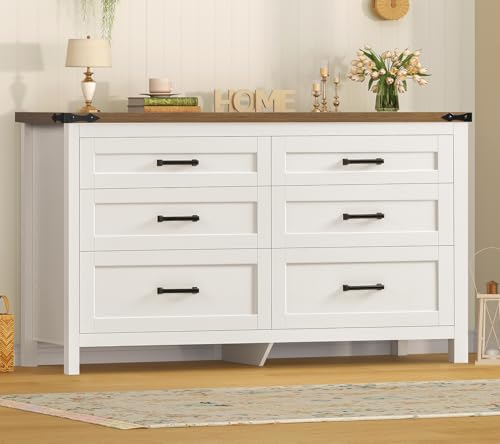
White Dresser With Light Wood Top: A Complete Buyer's Guide
A white dresser with a light wood top is one of the most versatile two-tone furniture pieces you can add to a bedroom. The crisp white body keeps a room feeling open and clean, while the natural wood surface brings organic warmth and a tactile focal point. This guide explains how these dressers are built, which layouts suit different rooms, how to evaluate construction quality, and how to style the piece so it earns its place for years.
What Defines a White Dresser With a Light Wood Top?
A white dresser with a light wood top is a two-tone storage piece. The carcass, drawer fronts, and often the legs are finished in white—ranging from a warm chalk white to a cooler bright white—while the top panel is left in a natural light wood tone. Common top species include oak, maple, birch, ash, and light walnut. The result is a piece that reads as bright and airy from the front but grounded and natural from above.
This style sits at the intersection of several design languages. It fits neatly into Scandinavian and modern farmhouse bedrooms, works as a soft contrast in coastal and cottage interiors, and can hold its own in a transitional room where painted furniture and wood tones are mixed deliberately. Because the top is the element you see when standing beside the bed, the wood grain becomes a subtle decorative feature rather than a dominant one.
Why Choose a Two-Tone White and Wood Dresser
The appeal of this combination goes beyond appearance. It solves several practical design problems at once.
Visual balance in small and mid-size bedrooms
All-white furniture can feel flat in a room with white walls, and all-wood furniture can feel heavy in a compact space. A white body with a light wood top splits the difference: the white surfaces reflect light and keep the room from closing in, while the wood top introduces enough contrast to prevent the piece from disappearing into the wall.
A natural landing surface
The top of a dresser is one of the most-used surfaces in a bedroom. A light wood top is more forgiving of daily contact than a painted white top, where rings from a water glass or scuffs from a lamp base show up quickly. Wood develops a patina, and minor marks blend into the grain rather than standing out.
Flexibility across decor changes
Because the piece contains both a neutral painted finish and a natural wood tone, it bridges palettes. If you later repaint the walls, change bedding, or introduce rattan or leather accents, the dresser still has a reference point in the room. This makes it a sensible long-term choice for renters and homeowners alike.
Warmer than an all-white chest
An all-white chest of drawers can feel clinical in a nursery or guest room. The wood top softens the overall impression without sacrificing the clean look that made white appealing in the first place. If you are furnishing a nursery, a white chest of drawers for a nursery with a wood top is a practical middle path between playful color and stark white.
Materials and Light Wood Top Finishes
The quality and character of the piece depend heavily on what the top is made of and how the white body is constructed. Understanding the difference between solid wood, veneer, and engineered panels will help you judge whether a dresser is built to last.
Solid wood tops
A solid wood top is a single thickness of timber or several boards joined edge to edge. Oak and maple are the most common light species, followed by birch and ash. Solid tops can be sanded and refinished if they become scratched, which extends the usable life of the piece. They are also heavier and more stable when supported by a proper frame. Expect solid wood tops mainly in the premium and luxury tiers.
Veneer over a stable core
Many mid-range dressers use a wood veneer over plywood or medium-density fiberboard. A well-applied veneer can look indistinguishable from solid wood and resists seasonal movement better than a wide solid panel. The key is the substrate: a quality plywood core holds screws and stays flat, while a low-grade particleboard core is more vulnerable to moisture and edge damage. Veneer tops cannot usually be sanded aggressively, so they need a protective finish and careful daily use.
White body finishes
The white portion is typically a painted or lacquered finish over wood, veneer, or engineered board. Look for a finish described as water-based lacquer or catalyzed lacquer, which resists yellowing better than older oil-based paints. On entry-level pieces, the white may be a printed foil or melamine wrap; these are easy to clean but can chip at edges and cannot be touched up invisibly.
| Top Construction | Tier | Best For | Notes |
|---|---|---|---|
| Printed or melamine top with white foil body | Entry-level | Guest rooms, dorm spaces, short-term setups | Easy to wipe clean; edges can chip; not refinishable |
| Wood veneer top over plywood; painted body | Mid-range | Primary bedrooms, nurseries, apartments | Good visual match to solid wood; protect from standing water |
| Solid oak or maple top; lacquered white body | Premium | Long-term family use, high-traffic bedrooms | Refinishable top; sturdier frame and drawer boxes |
| Solid hardwood top; hand-finished body; dovetail drawers | Luxury | Statement bedrooms, heirloom-quality furnishing | Heavy, stable, and designed for decades of use |
If you want a deeper explanation of how these categories differ in practice, our guide on solid wood versus engineered furniture breaks down the trade-offs in strength, weight, and repairability.
Drawer Layouts and Sizes That Work
The right drawer count depends on who uses the dresser and what it stores. A white dresser with a light wood top is available in nearly every common configuration, from compact three-drawer chests to wide nine-drawer dressers. The following guide uses relative tier language rather than any specific figures.
Three to four drawers
Best for a single adult with a streamlined wardrobe, a guest room, or a nursery where the dresser doubles as a changing surface. A three-drawer chest is typically the most compact option and fits easily beside a bed or in a closet. If floor space is tight, a small white dresser with a wood top keeps the two-tone look without dominating the room.
Five to six drawers
The most balanced choice for a primary bedroom. Five-drawer chests usually combine three wider drawers with two smaller ones, which suits folded clothing, knitwear, and accessories. Six-drawer dressers often split into two columns of three, making it easier to separate clothing by person or category. A white six-drawer chest is a reliable middle ground for couples who share storage.
Seven to nine drawers
Wide dressers with seven to nine drawers suit larger bedrooms, shared guest rooms, or anyone who stores bedding and seasonal clothing in the same piece. These layouts work best when the dresser is treated as a long, low surface under a window or along a wall. Our overview of white eight-drawer dressers covers how the extra width affects room flow.
Tall versus wide
A tall chest saves floor space and puts frequently used drawers at eye level, while a wide dresser provides a longer top surface for lamps, mirrors, and decor. The choice often comes down to wall availability. In narrow rooms, a white tall dresser with deep drawers can replace both a chest and a side table. In rooms with a long empty wall, a wide unit reads as more intentional.
Construction Quality Checklist
Two dressers can look identical in a showroom and behave very differently after a year of use. Use this checklist to separate durable construction from surface-level styling.
What to Inspect Before You Commit
- Drawer joints: Dovetail joints at the front and back corners of each drawer box indicate sturdier construction than stapled or glued butt joints.
- Drawer glides: Metal side-mounted or under-mounted glides with a smooth, full extension are preferable to plastic runners or wood-on-wood tracks.
- Top attachment: The wood top should be attached with figure-eight fasteners or slotted screws that allow the wood to move with seasonal humidity changes.
- Back panel: A rigid back panel, ideally set into a groove rather than stapled flat, keeps the carcass square and prevents racking.
- Finish continuity: The white finish should be even at edges, inside drawer openings, and on the sides. Thin or missing finish in hidden areas often signals a lower tier.
- Stability: A properly built dresser should not wobble when a drawer is fully extended. Anti-tip hardware should be included or available.
- Wood grain match: On veneer tops, check that grain patterns on adjacent panels are aligned and that edges are banded rather than raw.
Dressers in the mid-tier and above generally include anti-tip straps as standard. If you are placing the dresser in a child's room, treat the anti-tip kit as mandatory and anchor the unit to a wall stud. Our white chest of drawers with a wooden top overview covers additional safety considerations for family homes.
Room-by-Room Fit
The same white and light wood dresser can serve very different functions depending on where it lives. Below are the most common placements and what to prioritize in each.
Primary bedroom
In a primary bedroom, the dresser usually needs to hold folded clothing, knitwear, and occasionally bedding. A five- or six-drawer unit in a mid-range or premium tier is the most balanced choice. If the room has a dedicated closet, a slightly smaller dresser frees wall space for a reading chair or a mirror. For a cohesive look, pair it with a matching nightstand set—our guide to a white dresser with nightstand set explains how to coordinate without becoming overly matched.
Nursery and child's room
White is a popular nursery finish because it stays neutral as the child grows, and a light wood top adds warmth without introducing a strong color. Choose a unit with drawers that open smoothly and close fully, and anchor it to the wall. A three- or four-drawer chest is often enough, especially if a changing pad is used on top during the first year. For safety-specific guidance, see our notes on a white chest of drawers for nursery use.
Guest room
Guest rooms benefit from a dresser that offers some empty drawers so visitors can unpack. A four- or five-drawer unit in the entry-level or mid-range tier is usually sufficient. Because guest rooms are used intermittently, surface durability matters less than stability and a clean look. A compact white small dresser for a closet can also work inside a walk-in closet, leaving the bedroom floor clear.
Dressing area or closet
If the dresser sits inside a closet or dressing room, prioritize drawer depth and glide quality over top surface area. A white dresser chest and nightstand set can be split between the closet and the bedroom, giving both spaces a consistent finish.
Living room or hallway
Not every dresser has to live in a bedroom. A wide white dresser with a wood top can function as a console in a hallway or a media surface in a living room. In that context, look for a model with cord management or a lower shelf. A white long dresser can work as a multi-purpose surface if the proportions suit the room.
Styling the White Body and Wood Top
The two-tone construction gives you two surfaces to style against. The goal is to let the wood top read as a material, not a platform for clutter.
Keep the wood top mostly clear
One of the strengths of a light wood top is its grain. Covering it with a runner, a large tray, and multiple objects hides the feature you selected. Choose one or two functional items—a lamp, a small tray for keys and glasses, or a single vase—and leave the rest of the surface visible.
Repeat the wood tone elsewhere
The dresser looks most intentional when the top's wood tone appears at least once more in the room. A wood-framed mirror above the dresser, a light oak bed frame, or a woven rattan chair can echo the finish without matching it exactly. If you prefer a white-dominant room, a single wood accent is enough.
Choose a mirror that frames, not covers
A mirror hung above the dresser should leave a margin of wall visible around it so the white body and wood top remain part of the composition. Our guide to a small dresser with a mirror discusses proportions for compact rooms.
Use texture to bridge white and wood
Linen lampshades, ceramic trays, and a small plant soften the contrast between the painted body and the natural top. Avoid adding a third strong finish—such as high-gloss metal or heavily distressed paint—unless the rest of the room already supports it.
Coordinate hardware
Most white dressers with wood tops use simple metal hardware in black, brass, or brushed nickel. If you plan to change the knobs, choose a finish that relates to other metals in the room. A white dresser with clear handles is a different look but follows the same principle: one hardware family, used consistently.
Care and Maintenance
A white dresser with a light wood top needs two different care routines: one for the painted surfaces and one for the wood top.
Caring for the white finish
Dust the white body with a soft microfiber cloth. For fingerprints or light smudges, use a damp cloth with a small amount of mild dish soap, then dry immediately. Avoid abrasive cleaners, melamine sponges, and solvent-based products, which can dull or wear through the finish at edges. Touch-up paint is rarely a perfect match, so prevention matters more than repair.
Caring for the light wood top
Wipe spills promptly. Water left standing on a wood top can raise the grain or leave a ring, especially on veneer. Use coasters under lamps, plants, and drinks. Depending on the finish, apply a furniture wax every few months or refresh with a hardwax oil if the manufacturer recommends it. Keep the dresser out of prolonged direct sunlight, which can lighten or darken the wood unevenly over time.
Humidity and seasonal movement
Wood expands and contracts with humidity. In very dry climates, a room humidifier can reduce the risk of small cracks in solid tops. In humid climates, avoid placing the dresser directly against an exterior wall where condensation may form. The attachment method of the top—slotted screws or figure-eight fasteners—should allow for this movement.
Frequently Asked Questions
Is a white dresser with a light wood top suitable for a small bedroom?
Yes, provided the footprint matches the wall space. A three- or four-drawer unit in a narrow or tall configuration keeps floor area clear while the white body helps the room feel more open. Measure the available wall length and leave at least a few inches on each side for drawers to open without obstruction.
Will the white finish yellow over time?
Modern water-based and catalyzed lacquer finishes are formulated to resist yellowing better than older oil-based paints. However, all painted finishes can change slightly with age and sun exposure. Keeping the dresser out of direct sunlight and cleaning with mild products reduces the risk.
Can I repaint a two-tone dresser to make it all white?
It is possible, but it removes the feature that makes the piece distinctive. If the wood top is solid, you could sand and refinish it; if it is veneer, sanding carries risk. If you want an all-white look, start with an all-white dresser rather than altering a two-tone piece.
What is the best way to clean the wood top?
Use a soft damp cloth with a small amount of mild soap for everyday marks, then dry immediately. Avoid soaking the surface. For deeper cleaning, follow the finish manufacturer's recommendation—often a wax-based cleaner for oiled finishes or a damp cloth only for lacquered finishes.
Should I anchor the dresser to the wall?
Yes, especially in homes with children or pets. Anti-tip hardware is straightforward to install and prevents the dresser from tipping if a drawer is overloaded or climbed on. Check that the anchor is fixed into a wall stud or a suitable masonry anchor.
How do I choose between a five-drawer and a six-drawer model?
A five-drawer chest is often slightly narrower and suits a single user or a compact room. A six-drawer dresser usually offers more total storage and is easier to divide between two people. If you store bulky knitwear or bedding, prioritize drawer depth over drawer count.
Ready to Compare Options?
Browse recommended white dressers with light wood tops and filter by drawer count, tier, and room size.
Explore Recommended Models