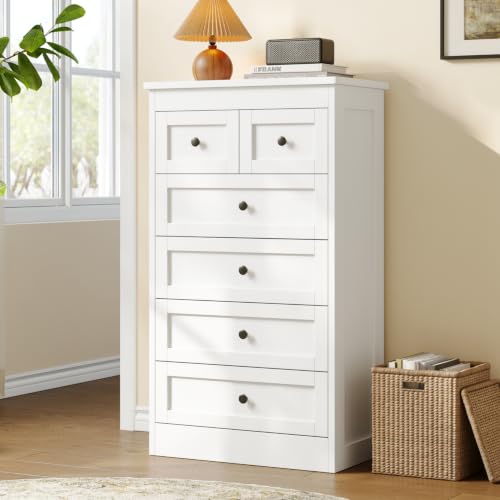
Tall Narrow Chest of Drawers: The Smart Solution for Tight Bedrooms
When floor space is limited but your storage needs keep growing, a tall narrow chest of drawers turns an awkward sliver of wall into a fully functional wardrobe companion. This guide explains dimensions, drawer layouts, materials, and safety so you can choose with confidence.
Jump to Buying GuideWhy this piece deserves attention: A tall narrow chest of drawers offers the same storage volume as a wide dresser while occupying a fraction of the floor footprint. For renters, apartment dwellers, and anyone navigating a compact bedroom, it is often the difference between a cluttered room and a calm, organized one. The trade-off is that vertical storage demands careful planning around height, stability, and drawer depth — all of which we cover below.
What Exactly Is a Tall Narrow Chest of Drawers?
A tall narrow chest of drawers is a vertical storage piece defined by its proportions rather than a single fixed size. Instead of spreading four or five drawers across a wide horizontal span, it stacks them in a slim column that rises higher than a conventional dresser. Most models stand between 40 and 60 inches tall, measure 18 to 30 inches wide, and sit 15 to 20 inches deep.
This silhouette is closely related to the traditional tall chest of drawers and the tall chest, but the narrow width is what sets it apart. It is also frequently grouped with tall skinny dresser designs, which prioritize an even slimmer profile for closets and narrow alcoves. If you are working with a genuinely cramped footprint, the thin chest of drawers for bedroom category overlaps heavily with this one.
The key distinction from a standard dresser is ergonomic: you interact with the upper drawers at eye level and the lower drawers near the floor, so the vertical arrangement suits folded clothing far better than long hanging garments. It is a dedicated drawer-storage unit, not a wardrobe replacement.
Six Practical Benefits of Going Vertical
1. Footprint Efficiency
A narrow column frees up wall length for a bed, desk, or doorway. In rooms under 100 square feet, this single change often resolves the layout entirely.
2. Corner and Alcove Friendly
Narrow chests slot into spaces a wide dresser cannot reach, including beside a door frame, between a bed and wall, or inside a recessed niche.
3. Generous Drawer Count
Vertical stacking allows five, six, or even seven drawers in the same floor area a three-drawer wide dresser would occupy.
4. Clear Visual Line
A slim vertical silhouette reads as intentional and uncluttered, which helps small rooms feel taller and better organized.
5. Flexible Placement
The same piece works in a bedroom, nursery, closet, hallway, or bathroom, making it one of the most adaptable storage purchases you can make.
6. Easier Relocation
Narrow units navigate stairwells, tight hallways, and apartment elevators far more easily than wide dressers of equivalent capacity.
Dimensions and Drawer Layouts Compared
Width is the make-or-break measurement, but height and depth determine comfort and safety. The table below summarizes the common configurations you will encounter. Use it to shortlist the proportion that matches your room rather than chasing a single ideal size.
| Configuration | Typical Width | Typical Height | Best For |
|---|---|---|---|
| Ultra-slim vertical chest | 15–20 inches | 45–55 inches | Closets, hallways, spaces beside a door |
| Standard narrow chest | 22–28 inches | 42–52 inches | Small bedrooms, guest rooms, nurseries |
| Wide-narrow hybrid | 28–32 inches | 40–48 inches | Bedrooms with slightly more wall length |
| Lingerie-style tall narrow chest | 18–24 inches | 48–60 inches | Accessories, undergarments, jewelry |
Drawer count typically ranges from four to seven. Shallow top drawers suit accessories, mid drawers handle folded shirts and sleepwear, and deeper bottom drawers accommodate jeans and knitwear. If you want additional variety in drawer sizing, explore the tall dresser with lots of drawers category. For models that emphasize generous internal depth, see tall chest of drawers with deep drawers. Buyers who want the slim profile with full-width storage should also review tall narrow dresser with drawers.
Materials and Build Quality: What to Prioritize
Because a tall narrow chest carries more weight per square inch of floor contact than a low dresser, construction quality matters more here than in almost any other furniture category. The material hierarchy below uses relative market positioning rather than absolute figures.
- Entry-level tier: Engineered wood with paper or foil laminate. Acceptable for guest rooms and light use, but drawer bottoms and back panels are usually thinner and more prone to sagging over time.
- Mid-tier: Engineered wood with reinforced joinery and metal drawer glides. This is the sweet spot for most bedrooms, offering a solid build and smoother operation than starter models.
- Premium tier: Solid wood frames, dovetailed drawer boxes, and full-extension ball-bearing slides. Expect noticeably better longevity and heavier, more reassuring drawer action.
- High-end tier: Hardwood construction such as oak or walnut with hand-finished detailing and premium hardware. These are long-term investments intended to move with you across homes.
If solid timber is a priority, the tall narrow chest of drawers solid wood selection narrows the field considerably, and tall narrow dresser solid wood offers closely related options. A well-built sturdy dresser should feel heavy for its size and show no flex when you press on the top corners. Check whether the drawer slides are rated for repeated daily use; the difference between generic slides and super heavy-duty drawer slides becomes obvious within a year of regular opening and closing.
Safety First: Stability and Anti-Tip Measures
Height is the defining feature of this furniture category, and it is also the primary safety consideration. A tall narrow chest has a higher center of gravity than a low dresser, so the following practices are non-negotiable:
- Always secure the chest to the wall using the manufacturer's anti-tip strap or bracket. Do not skip this step even in a low-traffic room.
- Place heavier folded items in the lower drawers and lighter items above to keep the center of mass low.
- Never place a television or heavy decor directly on top of an unanchored tall narrow chest.
- Verify that the chest sits level on all four feet; wobble is an early warning sign of poor stability.
- Keep the unit away from the edge of a bed or a frequently used pathway where it could be bumped.
- Check that drawer stops or interlock mechanisms are present to prevent multiple drawers from opening at once.
For households with young children, look for models tested to recognized furniture stability standards and confirm that replacement anti-tip kits are available from the manufacturer. Safety documentation is a better predictor of quality than marketing language.
Where a Narrow Chest Works Best
Placement is where this piece earns its reputation. The most effective positions include the wall segment beside a doorway, the gap between a bed frame and the window wall, the inside of a reach-in closet, and the space next to a vanity in a primary bedroom. In each case, the narrow width is what makes the placement possible.
For rooms that are short on floor area, the tall narrow dressers for small spaces guide expands on these scenarios with layout diagrams in mind, while thin dressers for small spaces covers the ultra-slim end of the spectrum. Closet-based solutions are detailed in tall skinny dresser for closet and tall closet dresser. If the chest will live in a bedroom rather than a closet, see tall skinny dressers for bedroom and tall bedroom dressers for sale for further ideas.
Styling a narrow surface requires restraint. A single lamp, a small tray, and one meaningful object are usually enough. A wall-mounted mirror above the chest adds function without consuming depth, and the mirror visually doubles the perceived width of the column. Keep the top surface at least two-thirds clear so the piece reads as furniture rather than clutter.
Buying Checklist: Five Questions Before You Order
- What is the exact wall width available? Measure with a tape, not by eye, and leave two inches of clearance on each side for door swing and airflow.
- Does it clear your doorway and stairwell? Compare the shipping box dimensions to your tightest access point; a narrow chest that cannot reach the room is no bargain.
- Is the drawer layout practical for your wardrobe? Count how many shallow, medium, and deep drawers you actually need before choosing a drawer count.
- Does it arrive assembled? If assembly is required, check whether the instructions are clear and whether the anti-tip hardware is included. The tall dresser no assembly required category is worth reviewing if you want to skip the build.
- Does the finish match the room? A dark finish in a dim corner will disappear, while a light finish can visually expand a narrow wall. The solid wood narrow dresser options typically offer the most durable finishes.
Buyers who want a comparable silhouette with a more traditional proportion should also consider the tall boy dresser and the general tall dresser collection. For a variant that adds open display space, the tall dresser with open shelves and tall dresser with shelves and drawers designs combine vertical storage with a small styling ledge.
Ready to Compare Tall Narrow Chests?
Review the shortlisted models below, filter by tier and layout, and check current availability. Each listing links to the retailer so you can confirm dimensions and shipping details directly.
Explore Recommended ModelsFrequently Asked Questions
What is the difference between a tall narrow chest of drawers and a standard dresser?
A tall narrow chest uses vertical height rather than horizontal width to provide storage. A standard dresser spreads drawers across a wide footprint, while a tall narrow chest stacks them in a slim column, making it ideal for tight corners, narrow walls, and small bedrooms.
How wide is a typical tall narrow chest of drawers?
Most models measure between 18 and 30 inches in width. Ultra-slim designs can be as narrow as 15 inches, while broader narrow designs reach up to 32 inches. Width is the most important dimension to verify against your wall space and doorway clearance before ordering.
Is a tall narrow chest of drawers safe for a bedroom?
Yes, when properly anchored. Because the center of gravity is higher than on a low dresser, the unit should always be secured to the wall with the included anti-tip strap. Look for models tested to recognized furniture stability standards and avoid overloading the upper drawers.
What should I store in a tall narrow chest of drawers?
The vertical layout works best for folded clothing, undergarments, socks, sleepwear, and accessories. Assign lighter items to upper drawers and heavier items such as jeans or sweaters to lower drawers. Shallow top drawers suit jewelry and small accessories, while deep lower drawers handle bulkier garments.
Does a tall narrow chest of drawers need assembly?
Many models ship flat-packed and require assembly, while some arrive fully assembled. Assembly typically involves attaching legs, handles, and drawer glides. If you prefer a no-assembly option, look for chests described as fully assembled or ready to use out of the box.