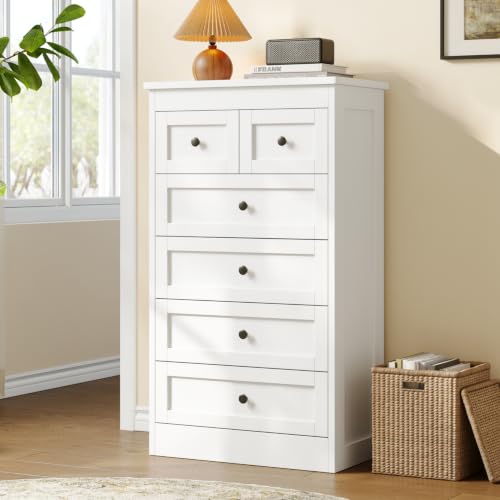
Thin Dressers for Small Spaces
Maximize your bedroom storage without sacrificing floor space. Our complete guide covers slim dresser dimensions, drawer configurations, materials, and practical buying advice for compact rooms.
Why thin dressers matter: In compact bedrooms, every inch counts. A standard dresser can consume a walkway or block a closet door. Thin dressers — typically 12 to 16 inches deep — deliver the drawer capacity you need while preserving circulation, light, and visual openness. This guide helps you choose the right slim dresser for your space.
What Makes a Dresser "Thin"?
A thin dresser is defined primarily by its depth — the measurement from the front of the drawer face to the back panel. While a standard dresser typically measures 18 to 20 inches deep, a thin chest of drawers for bedroom use generally falls in the 12 to 16 inch range. This reduced depth translates directly into more usable floor space without cutting into the drawer count.
Thin dressers also tend to be narrower in width, often ranging from 24 to 36 inches wide. Combined with a taller profile, these pieces concentrate storage vertically — a smart strategy for small rooms where horizontal spread is limited. If you are exploring broader options, our thin dressers for small spaces collection covers a range of configurations.
It is worth noting that a thin dresser is not simply a scaled-down standard dresser. Manufacturers redesign the internal drawer boxes, slide mechanisms, and structural bracing to maintain durability at reduced depth. This is why depth alone is not enough — build quality matters just as much as dimensions.
Key Dimensions to Measure Before Buying
Before selecting a thin dresser, measure your room with precision. The following table summarizes the critical dimensions and recommended ranges for small-space dressers:
| Dimension | Recommended Range | Why It Matters |
|---|---|---|
| Depth | 12–16 inches | Keeps walkways clear and allows doors to open fully |
| Width | 24–36 inches | Fits between doorways and beside the bed without crowding |
| Height | 36–56 inches | Taller profiles add vertical storage without extra floor footprint |
| Drawer interior depth | 10–14 inches | Ensures folded clothing fits comfortably without overstuffing |
| Clearance from bed | 24 inches minimum | Provides comfortable passage and access to drawers |
For rooms with particularly tight layouts, consider a tall skinny dresser that pairs a narrow width with a taller height. This configuration is especially effective in narrow alcoves or beside a doorway where a wider piece would obstruct movement. If your closet is the target location, a tall skinny dresser for closet use is designed with reduced depth to fit standard closet cavities.
Types of Thin Dressers for Small Spaces
Not all thin dressers serve the same purpose. Understanding the common configurations helps you match the piece to your storage habits and room layout.
1. Tall Narrow Chest of Drawers
The most common thin dresser design, a tall narrow chest of drawers stacks four to six drawers in a compact footprint. The vertical emphasis suits rooms with limited wall width, and the taller height keeps frequently used items within easy reach. Models in solid wood — such as a tall narrow chest of drawers solid wood — offer long-term durability and a premium feel.
2. Skinny Dresser for Bedroom Corners
A tall skinny dresser for bedroom placement works well in corners or at the end of a bed where depth is constrained. These pieces often feature a depth of 12 to 14 inches, making them ideal for rooms where a standard dresser would protrude into the walking path. Look for models with anti-tip hardware, especially if the dresser stands taller than 40 inches.
3. Thin Dresser with Deep Drawers
Some thin dressers compensate for reduced depth with deeper drawer boxes — though "deep" here is relative. A thin chest of drawers with well-proportioned drawers can hold folded shirts, linens, and accessories without the contents spilling over the sides. Check the drawer interior depth before purchasing; a 12-inch-deep dresser with 10-inch interior drawers is more practical than one with 8-inch interiors.
4. Thin Dresser for Closet Use
Closets present unique constraints. A tall closet dresser must fit within the closet depth while leaving room for hanging garments. Thin dressers designed for closets typically feature a depth of 12 to 15 inches and a height that aligns with shelving systems. Measure your closet's usable depth — including the space taken by the hanging rod — before choosing a model.
Materials and Build Quality
A thin dresser's reduced depth puts additional stress on the drawer slides and frame joints. Choosing the right material and construction method is essential for longevity.
Solid Wood
Solid wood — oak, maple, walnut, or pine — remains the gold standard for durability. A solid wood thin dresser resists warping and holds screws and joinery securely over time. The trade-off is weight: solid wood pieces are heavier and may require two people to position. For a tall narrow dresser solid wood model, expect a long-term investment that can be refinished or repaired.
Engineered Wood
High-grade engineered wood — such as furniture-grade plywood or dense particleboard with reinforced joinery — offers a balanced option for mid-range thin dressers. Quality engineered wood resists humidity changes better than solid wood in some environments, and it keeps the piece lighter for easier maneuvering. Look for drawers with dovetail or reinforced corner joints rather than stapled construction.
Drawer Slides and Hardware
The drawer slides are the most failure-prone component in any dresser, and thin dressers are no exception. Ball-bearing slides with a full-extension travel are preferable to roller slides, especially in a tall dresser with lots of drawers where each drawer carries regular loads. Soft-close mechanisms add convenience but are not essential for durability. For heavy-duty needs, consider models that specify super heavy duty drawer slides — these are rated for frequent use and heavier contents.
Drawer Count and Configuration
The number of drawers affects both storage capacity and usability. In a thin dresser, drawer count is often the primary way manufacturers increase capacity without expanding the footprint.
| Configuration | Best For | Typical Height | Storage Profile |
|---|---|---|---|
| 3-drawer thin dresser | Minimalist bedrooms, guest rooms | 30–36 inches | Essential tier — basic folded clothing |
| 4-drawer thin dresser | Small primary bedrooms | 36–42 inches | Balanced tier — clothing plus linens |
| 5-drawer thin dresser | Rooms needing maximum vertical storage | 42–50 inches | High-capacity tier — full wardrobe staples |
| 6+ drawer thin dresser | Closets, dressing areas | 48–56 inches | Top-tier organization — segmented storage |
When space is extremely limited, a three drawer dresser solid wood offers a compact footprint with enough capacity for a guest room or a minimalist setup. Conversely, if you need to store a full wardrobe in drawers, a tall dresser with large drawers maximizes each drawer's usable volume while maintaining a thin profile.
Consider drawer dividers and internal organizers if your thin dresser has fewer, larger drawers. A 3-drawer thin dresser with deep drawers can be just as organized as a 6-drawer model when paired with dividers — and it often feels less cluttered.
Placement Ideas for Thin Dressers
Where you place a thin dresser matters as much as the dresser itself. The right placement improves flow, accessibility, and visual balance.
Beside the Bed
A thin dresser placed beside the bed can double as a nightstand surface while providing drawer storage for sleepwear and accessories. Keep at least 24 inches of clearance between the dresser and the bed for comfortable passage. If the room is very tight, consider a tall narrow dresser with drawers that rises above the mattress line without encroaching on the sleeping area.
In a Narrow Alcove
Alcoves and recessed wall spaces are ideal for thin dressers. A tall narrow dressers for small spaces model can transform dead wall space into functional storage. Measure the alcove width and depth precisely, and allow a small clearance on each side for drawer operation.
Inside the Closet
Placing a thin dresser inside the closet frees up bedroom floor space entirely. A tall skinny dresser for closet installation works best when the closet is at least 24 inches deep. Leave space above the dresser for a shelf or hanging rod, and ensure the dresser's height does not block access to overhead storage.
At the Foot of the Bed
In rooms where wall space is limited, a thin dresser at the foot of the bed can serve as both storage and a visual anchor. Keep the dresser height below the footboard line to avoid a cramped feeling, and ensure there is at least 30 inches of walking space between the dresser and the nearest wall or door.
Features to Look For in a Thin Dresser
- Anti-tip hardware: Essential for any dresser taller than 40 inches. Thin dressers are often tall, so wall anchoring is non-negotiable, especially in homes with children or pets.
- Full-extension drawer slides: Allow you to access the back of each drawer — critical when the dresser is narrow and you need to reach items at the rear.
- Dust-proof drawer bottoms: Prevent dust from settling on clothing stored in lower drawers.
- Reinforced back panel: A thin dresser relies on its back panel for structural rigidity. Look for screwed or nailed panels rather than stapled.
- Adjustable leveling feet: Older homes often have uneven floors. Leveling feet keep drawers operating smoothly.
- Soft-close drawers: A convenience feature that reduces wear on the drawer slides and prevents slamming.
If the dresser will hold heavier items — denim, tools, or bulk linens — prioritize models with reinforced drawer bottoms and metal-to-metal drawer slide connections. For a tall dresser for bedroom deep drawers configuration, check that the drawer sides are at least 1/2 inch thick.
Space-Saving Tips for Small Bedrooms
Choosing a thin dresser is only half the equation. The way you use the surrounding space determines how open and functional the room feels.
- Go vertical: Use the wall above the dresser for floating shelves or a mirror. This draws the eye upward and reduces the visual weight of the furniture.
- Choose a light finish: White, natural wood, and pale gray finishes reflect light and make small rooms feel larger. A tall white dresser or a tall grey dresser can visually recede into the walls.
- Keep the top clear: Resist the urge to use the dresser top as a catch-all. A single lamp, a small tray, and one decorative object is enough.
- Use under-bed storage: Combine a thin dresser with under bed storage to distribute clothing across the room rather than concentrating everything in one piece of furniture.
- Consider mirrored fronts: A tall mirrored chest of drawers bounces light around the room and reduces the perceived bulk of the furniture.
Ready to Find Your Thin Dresser?
Browse our curated selection of slim dressers and space-saving storage pieces below. Each recommendation is chosen for small-space practicality and durable construction.
Explore Thin Dresser OptionsCommon Mistakes to Avoid
Buying a thin dresser for a small space seems straightforward, but a few common errors can lead to frustration.
- Ignoring the drawer open clearance: A thin dresser still needs space for drawers to open. Allow at least 18 inches of clearance in front of the dresser.
- Choosing style over stability: A tall, narrow dresser can tip if not anchored. Always use the included anti-tip kit, or purchase one separately.
- Overlooking interior drawer height: Thin dressers sometimes sacrifice drawer height to keep the overall profile low. Measure the interior height if you plan to store bulky items.
- Underestimating the weight: Solid wood thin dressers are deceptively heavy. Check the product weight and plan how you will move it into the room.
- Forgetting about door swing: If the dresser sits near a door, make sure the door can open fully without hitting the dresser or its open drawers.
Frequently Asked Questions
What is the ideal depth for a thin dresser in a small bedroom?
A depth of 12 to 16 inches is ideal. This range provides enough interior space for folded clothing while keeping the footprint minimal, allowing for comfortable walkways and easier door clearance.
How many drawers should a thin dresser for small spaces have?
Most thin dressers feature 3 to 5 drawers. A 3-drawer model suits minimalist storage, while a 5-drawer tall thin dresser maximizes vertical capacity without increasing floor footprint.
Can a thin dresser be used in a closet?
Yes. A tall skinny dresser for closet use can fit into narrow alcoves and add drawer storage without consuming hanging space. Measure your closet depth carefully — including the space taken by the hanging rod — before selecting a model.
What materials are best for thin dressers?
Solid wood and high-grade engineered wood are the best choices. Solid wood offers durability and a premium feel, while engineered wood with reinforced joinery provides a balanced option for mid-range thin dressers. In both cases, check the drawer slide quality and joint construction.
Are thin dressers stable?
Thin dressers are stable when properly assembled and anchored. Because they are often taller than they are wide, anti-tip hardware is essential. Secure the dresser to a wall stud using the provided bracket or a furniture strap.
Final Thoughts
A thin dresser is one of the most effective furniture investments for a small bedroom. By prioritizing depth, drawer configuration, and build quality, you can add meaningful storage without turning a compact room into a cluttered one. Measure your space, choose a material that matches your maintenance preferences, and anchor the dresser securely.
Whether you need a tall skinny dresser for a narrow wall, a tall narrow dresser solid wood for long-term durability, or a compact three drawer dresser solid wood for a guest room, the right thin dresser transforms unused wall space into a functional, organized storage solution.