Tall Chest: Vertical Storage That Fits Small Bedrooms
When floor space is limited but your clothing collection keeps growing, a tall chest of drawers turns unused vertical height into serious storage. This guide explains drawer layouts, footprint considerations, materials, and safety so you can choose the right vertical dresser with confidence.
Start the Buying GuideQuick Summary: A tall chest — also called a tallboy, vertical dresser, or highboy — typically stands 45 to 60 inches high with a compact footprint under 40 inches wide. It is the go-to storage solution for narrow bedrooms, apartments, guest rooms, and closets where a wide horizontal dresser simply will not fit. The trade-off is depth and drawer count, so matching the unit to your folding habits and room layout matters more than the label on the box.
What Exactly Counts as a Tall Chest?
The term tall chest describes a chest of drawers that emphasizes height over width. Furniture retailers use several overlapping names for the same idea, and the boundaries are not perfectly standardized. In practice, a piece qualifies as a tall chest when its height clearly exceeds its width and it stacks four to six drawers in a vertical column.
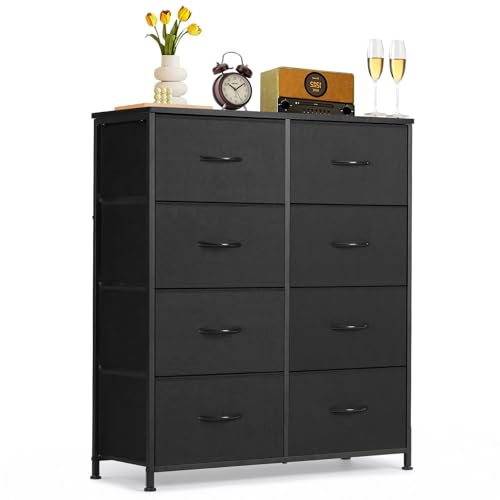
Related forms you will encounter while shopping include the tallboy chest, the highboy, the lingerie chest, and the vertical dresser. A tall dresser with lots of drawers may reach seven or eight tiers, while a tall narrow chest of drawers in solid wood keeps the footprint especially slim for tight corners. If your priority is extra-deep storage for bulky knitwear, a tall black dresser with deep drawers shows how a single column can still swallow thick items.
Where the tall chest differs from a classic wide dresser is in ergonomics. Because the top drawers sit at eye level and the bottom drawers require a slight bend, the most frequently used items should live in the middle zone. Designers often recommend reserving the lowest drawer for seasonal clothing and the highest drawer for items you rarely touch.
Why a Vertical Dresser Beats a Wide Dresser in Tight Rooms
Floor area is the scarcest resource in most modern bedrooms. A standard wide dresser can consume three to four feet of wall length, which often collides with door swings, closet access, or the walking path beside the bed. A tall chest solves that geometry problem by trading width for height.
- Small footprint, full capacity: A well-designed vertical unit can hold a similar volume of folded clothing as a wider dresser while occupying half the floor length.
- Better wall utilization: Tall chests make productive use of narrow wall segments between windows, doors, and closet openings.
- Natural organization by height: The stacked layout encourages a top-to-bottom system — rarely used items high, daily essentials at arm's reach, heavy items low.
- Versatile placement: Because the piece is narrow, it can slot into a closet, a hallway alcove, or beside a bed as a combined nightstand and clothing tower.
The main limitation is depth perception in small rooms: a tall, dark unit can feel visually heavy. Choosing a lighter finish, a white tall dresser with deep drawers, or a model with open shelving breaks up the mass. If your space is genuinely tiny, compare this category against dedicated small space dresser solutions before committing.
Tall Chest Size Guide: Dimensions That Actually Fit
Measure twice before you order. The three numbers that matter are height, width, and depth — and depth is the one buyers most often overlook. A tall chest that is two inches too deep can block a closet door or crowd a bedside walkway.
| Category | Typical Height | Typical Width | Typical Depth | Best For |
|---|---|---|---|---|
| Compact vertical chest | 40–48 in | 24–30 in | 15–18 in | Guest rooms, closets, studio apartments |
| Standard tall chest | 48–56 in | 30–38 in | 18–20 in | Primary bedrooms with limited wall length |
| Tallboy / highboy | 56–64 in | 34–42 in | 18–20 in | Larger bedrooms, traditional interiors |
| Lingerie / accent chest | 44–52 in | 18–24 in | 14–16 in | Accessories, jewelry, folded delicates |
A useful rule of thumb: leave at least 30 inches of clear walking space in front of any drawer that opens fully. If your room cannot spare that, consider a 12-inch deep chest of drawers, which minimizes protrusion into the room. For rooms with very tight corners, a tall narrow dresser with drawers can squeeze into gaps that a standard unit cannot. And if you need to combine clothing storage with display or media use, a tall dresser with shelves and drawers offers a hybrid layout.
Height also has a safety dimension. Any chest taller than 30 inches should be anchored to the wall. Units above 50 inches are the highest risk category for tip-over, especially in households with children or pets. Always use the included anti-tip strap and secure it into a stud where possible.
Drawer Layouts: How Many Tiers Do You Really Need?
Drawer count is the single biggest factor in how a tall chest feels day to day. More drawers mean finer sorting, but also more hardware to open and close. The right number depends on what you fold and how you fold it.
3–4 Drawer Tall Chest
Best for deep drawers that hold bulky sweaters, jeans, or bedding. Fewer, larger drawers suit people who fold in stacks rather than files. Often the sturdiest build in the entry-level to mid-range tier.
5 Drawer Tall Chest
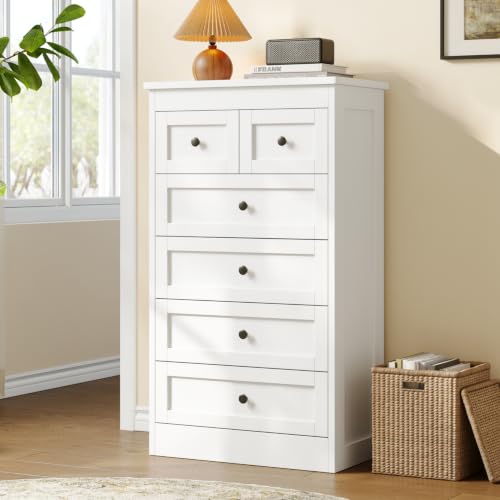
The most popular configuration. A typical arrangement is two shallow drawers up top, three deeper drawers below. A good balance of sorting flexibility and structural simplicity for most bedrooms.
6–8 Drawer Tall Chest
Suited to organized wardrobes where tops, bottoms, and accessories each get a dedicated tier. The extra dividers help, but shallow drawers can feel restrictive for thick clothing unless you fold compactly.
9+ Drawer Tall Chest
Maximum sorting for shared rooms or capsule wardrobes. Expect smaller drawer faces and lighter weight capacity per drawer. Check the slide rating carefully at this tier.
Drawer slides deserve as much attention as drawer count. Entry-level units often use friction or single-extension slides, while mid-range and premium models move to full-extension ball-bearing slides with soft-close dampers. Full-extension slides let you see and reach the back of a deep drawer, which matters much more in a tall chest than in a wide one. If you plan to store heavy denim or tools, look for slide ratings that match the load.
For households that need privacy or child safety, a tall dresser with locking drawers adds a practical security layer without changing the footprint. And for rooms where the chest doubles as a display surface, a tall dresser with doors and drawers hides clutter behind cabinet doors while keeping the drawer stack for clothing.
Materials and Build Quality: Where Tall Chests Earn Their Keep
A tall chest carries more vertical load than a low dresser, so construction quality matters more than it does in a wide, squat design. The frame, the drawer boxes, and the back panel all share the structural burden.
Solid wood
Solid wood frames and drawer fronts are the most durable option and can be refinished or repaired over decades. Oak, walnut, maple, and pine are common in this category. Solid wood is heavier, which actually improves stability in a tall unit. To compare construction types in detail, read our guide on solid wood versus engineered wood.
Engineered and mixed materials
Engineered wood with veneer offers a flatter, more uniform surface and is generally lighter. It can be a sensible choice in mid-tier furniture where the frame is reinforced at the corners. Check that drawer bottoms are at least 3mm thick and that the back panel is attached, not stapled cardboard.
Hardware and joinery
Dovetail joints signal a higher build tier; stapled or glued-and-nailed boxes signal a starter tier. Metal drawer pulls and knobs are easy to upgrade later, so treat them as a styling decision rather than a durability one. If you want a natural finish that shows the grain, a solid wood chest is the reference point for long-term quality.
Finish matters too. A tall chest placed near a window or radiator will see temperature swings, so a sealed, water-resistant top coat protects against warping and ring marks.
Style, Finish, and Placement Ideas
Because a tall chest is a vertical focal point, its finish and silhouette shape the whole room. A dark, ornate tallboy anchors a traditional bedroom; a clean-lined vertical dresser in a pale finish disappears into a modern one.
- Pair with a mirror: A shelved tall dresser or a mirrored top turn a narrow unit into a dressing station. Browse mirror pairing ideas in our small dresser with mirror guide.
- Use as a nightstand substitute: A compact tall chest beside the bed doubles as a nightstand and clothing tower, freeing floor space on both sides.
- Closet conversion: Sliding a tall chest into a walk-in closet creates a dedicated folding station. See small chest of drawers for closet placements.
- Living room storage: A tall chest can serve as a media console or linen cabinet outside the bedroom. Our small chest of drawers for living room guide covers that use case.
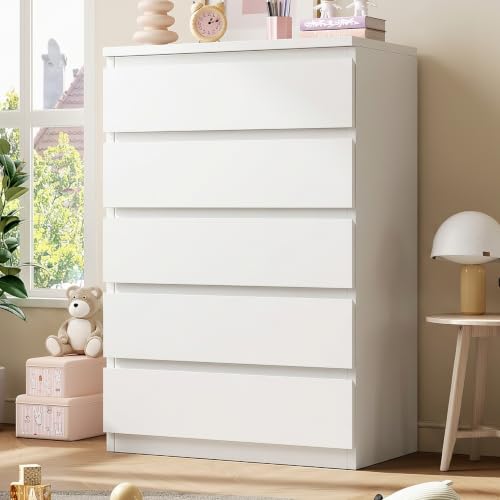
Color choices change the perceived weight of the piece. Whites and pale woods feel lighter in small rooms, while blacks and deep stains add drama and ground a larger space. If you want a soft, airy look, a small white dresser demonstrates how finish alone can shrink visual mass. For a bolder accent, explore statement finishes such as a teal dresser or a textured dresser.
If you are furnishing a guest or kids' room, a small dresser and nightstand set keeps proportions consistent. For a coordinated primary bedroom, a white dresser with nightstand set or a two nightstands and dresser set removes the guesswork of mixing finishes.
Buying Checklist: Six Factors That Decide Satisfaction
Before you commit, run through this checklist in order. Each factor eliminates a large share of unsuitable options, and the remaining shortlist is usually easy to evaluate.
- Measure the wall and the walking path. Width plus a 30-inch clearance zone is the non-negotiable minimum.
- Decide drawer count from your folding style. Stack folders want fewer, deeper drawers; file folders want more shallow tiers.
- Check slide type and load rating. Full-extension slides are worth prioritizing in a deep tall chest.
- Confirm anti-tip hardware is included. It should be, but verify before ordering. Anchor any unit over 30 inches tall.
- Match the finish to room light. Dark finishes absorb light; pale finishes reflect it. Test with a sample if possible.
- Plan the top surface. A tall chest top is prime real estate for a lamp, mirror, or tray — decide the styling before you buy.
Our general dresser buying guides expand each of these points, including how to evaluate drawer boxes and how to compare tier by tier without relying on price signals.
Care, Safety, and Long-Term Use
Tall chests are simple to maintain when you treat the drawers as moving parts rather than fixed boxes. Wipe the finish with a damp cloth and mild soap, avoid silicone polishes on sealed wood, and lubricate metal slides sparingly once a year. Keep the top dry to prevent rings and warping.
The safety rule is absolute: anchor the unit. Children climbing drawers cause the majority of furniture tip-over incidents, and a tall chest is the highest-risk silhouette in the bedroom. Use the anti-tip strap on every tall unit, check it after moving the furniture, and avoid placing heavy items in the top drawer where they raise the center of gravity.
If you are outfitting a nursery or a child's room, compare this category with dedicated tall changing table with drawers designs, which combine clothing storage with a secured changing surface. For shared or small bedrooms, a tall 5-drawer dresser remains the most versatile middle ground.
Frequently Asked Questions About Tall Chests
What is the difference between a tall chest and a tallboy?
How tall should a tall chest be for a small bedroom?
Do tall chests tip over easily?
How many drawers do I need in a tall chest?
Can a tall chest replace a wardrobe?
What is the best depth for a tall chest in a narrow room?
Ready to Compare Tall Chests?
Our recommended selection below highlights vertical dressers and chests across entry-level, mid-range, and premium tiers. Use the checklist above to shortlist two or three, then compare drawer slides, anchoring hardware, and finish before you decide.
Explore Recommended Tall Chests