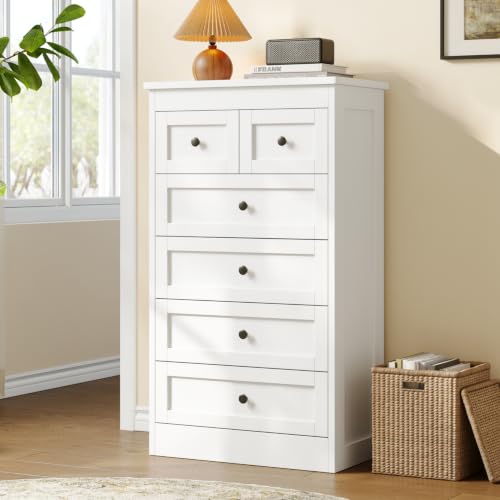
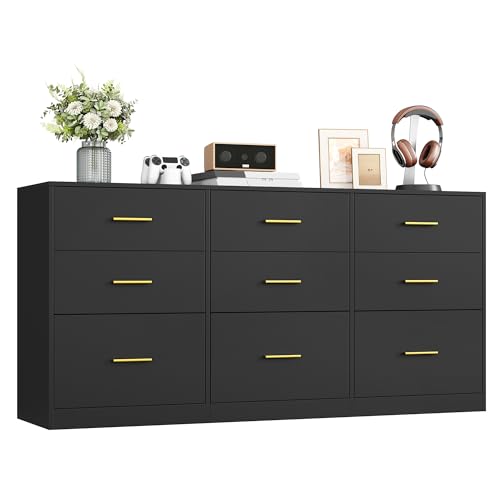
Tall Chest of Drawers with Deep Drawers: The Complete Buyer's Guide
Vertical storage meets serious capacity. Learn how a tall chest with deep drawers can transform a compact bedroom into a fully organized space, and discover exactly what to look for before you buy.
Why this configuration works: A tall chest of drawers with deep drawers combines a small footprint with generous internal volume. Instead of spreading storage across the floor, you build upward — which is ideal for narrow bedrooms, apartments, and shared spaces. This guide explains drawer depth, height ratios, materials, stability, and organization so you can make a confident, informed decision.
What Exactly Is a Tall Chest of Drawers with Deep Drawers?
A tall chest of drawers is a vertically oriented storage unit, typically standing between 45 and 60 inches high with a relatively narrow width. When paired with deep drawers — usually between 15 and 20 inches of usable depth — it becomes a high-capacity storage solution without consuming much floor space. Unlike a standard tall chest of drawers with shallow drawers intended mainly for folded clothing, the deep-drawer variant accommodates bulkier items such as sweaters, bedding, towels, and seasonal layers.
The defining trait is the depth-to-height ratio. A well-designed unit offers drawers deep enough to hold a folded queen comforter, yet the overall chest remains slim enough to fit against a wall in a small room. This combination is what makes the category so popular among people furnishing compact bedrooms, guest rooms, and even closets.
Why Deep Drawers Make a Real Difference
Drawer depth is one of the most overlooked specifications in furniture shopping. Shallow drawers are excellent for socks, accessories, and neatly folded shirts, but they quickly become frustrating when you need to store bulkier items. Deep drawers solve several practical problems at once:
- Bulk storage: Sweaters, hoodies, jeans, and bedding fit without being compressed or stacked awkwardly.
- Fewer drawers needed: Deeper drawers mean you can consolidate categories, reducing the total drawer count while keeping everything accessible.
- Better for seasonal rotation: Off-season clothing can be stored in the deeper bottom drawers while daily items stay in upper drawers.
- Ideal for shared rooms: A tall, deep chest lets two people share one unit without fighting for space.
If your primary need is clothing capacity in a small footprint, a tall dresser with deep drawers is a natural fit. If you need a broader comparison of vertical storage options, review tall and wide dressers for the bedroom to see how depth and width interact.
Key Measurements to Check Before You Buy
Measurements determine whether a tall chest with deep drawers will actually fit your room and your belongings. Before committing, verify the following dimensions:
| Specification | Typical Range | Why It Matters |
|---|---|---|
| Overall height | 45–60 inches | Determines whether top drawers are reachable and whether the unit fits under wall décor. |
| Overall width | 24–40 inches | Affects floor footprint and how much wall space the chest occupies. |
| Overall depth | 16–20 inches | Must clear doorways and walkways; deeper bodies need more clearance. |
| Usable drawer depth | 15–18 inches | Determines whether bulky items fit; internal depth is always less than the exterior. |
| Drawer extension | Full or three-quarter | Full-extension slides let you reach the back of deep drawers comfortably. |
Always compare the exterior depth to the usable interior depth. A chest listed at 18 inches deep may only offer 15 inches of usable space once the drawer box and slides are accounted for. For a broader sizing framework, see the tall dresser with large drawers guide, and if space is especially tight, the tall narrow chest of drawers page covers slim alternatives.
Stability and Safety: Non-Negotiable for Tall Units
The taller a chest of drawers, the more important stability becomes. Deep drawers that are fully loaded add weight and shift the center of gravity forward when opened. A tall unit without proper anchoring is a genuine safety risk, especially in homes with children or pets. Prioritize the following:
- Wall anchoring: Use the anti-tip kit supplied with the unit; if none is included, purchase one separately.
- Weight distribution: Place heavier items in lower drawers and lighter items in upper drawers.
- Drawer stops: Quality slides should prevent drawers from pulling completely out unintentionally.
- Solid base: A wide, level base with adjustable feet keeps the chest from rocking on uneven floors.
If heavy-duty use is expected — for example, storing tools, books, or dense textiles — review our notes on super heavy-duty drawer slides to understand how slide ratings affect long-term performance. A sturdy dresser built with reinforced joinery and quality hardware is worth prioritizing over a lighter build.
Materials and Construction Quality
Deep drawers place more stress on drawer boxes, slides, and the chest frame than shallow drawers do. Construction quality therefore matters more, not less. The main considerations are:
- Drawer box joinery: Dovetail joints are the traditional benchmark for durability; box joints and reinforced stapled joints are common at entry-level and mid-tier.
- Drawer bottoms: A thicker bottom panel resists sagging under the weight of heavy contents.
- Slide type: Ball-bearing metal slides are smoother and more durable than basic nylon roller slides.
- Frame material: Solid wood offers long-term durability, while engineered wood with quality veneers can be a solid choice within its class.
- Finish: A well-sealed finish protects against humidity and everyday wear.
The market generally splits into three tiers. Entry-level units often use stapled drawer boxes and basic slides. Mid-range models typically add dovetail or reinforced joinery and smoother ball-bearing slides. Premium and luxury tiers focus on solid hardwood construction, full-extension soft-close slides, and refined finishing. For a deeper comparison of wood options, the tall wood dresser with deep drawers guide is a useful companion.
Styles and Finishes That Suit Deep-Drawer Chests
Because a tall chest of drawers is a prominent vertical element, its finish and style strongly influence the room's overall look. Popular directions include:
- White finishes: Brighten small rooms and pair easily with most color schemes. See the tall white dresser with deep drawers overview.
- Black finishes: Create a bold, modern statement; explore the tall black dresser with deep drawers guide.
- Grey and neutral tones: Versatile and calming; the tall grey dresser page covers finish options.
- Warm woods: Walnut, oak, and mahogany add character; see the tall dark wood chest of drawers profile.
Match the hardware to the overall aesthetic — slim bar pulls for modern rooms, knobs for traditional settings, and mixed finishes for transitional spaces. Whatever the style, confirm that drawer pulls are mounted securely, since deep drawers are opened with more force.
Organizing Deep Drawers Effectively
Deep drawers can become chaotic without a system. A few practical habits keep them efficient:
- Use vertical dividers: Divide wide drawers into columns so items don't pile into a single mound.
- File-fold clothing: Stand garments upright so you can see everything at a glance.
- Assign zones: Top drawers for accessories and small items, middle drawers for folded clothing, bottom drawers for bulky or seasonal items.
- Use shelf dividers within drawers: Simple inserts prevent deep drawers from becoming bottomless pits.
- Rotate seasonally: Move off-season clothing to the deepest drawers and swap twice a year.
For a full system, see the tall dresser with lots of drawers guide, which covers drawer-count trade-offs. If you are optimizing an entire bedroom, pair this chest with under bed storage to keep bulky items out of the drawers entirely.
Where a Tall, Deep Chest Works Best
The vertical footprint makes this unit especially adaptable:
- Small bedrooms: The narrow base frees floor space for circulation and other furniture.
- Guest rooms: Deep drawers easily hold spare bedding and towels.
- Walk-in closets: A chest inside a closet increases capacity without crowding the bedroom; see tall closet dresser for layout advice.
- Shared rooms: Each person can claim a column of drawers for personal items.
- Bedroom corners: A tall chest fills vertical dead space that shorter furniture leaves empty.
If you are furnishing a bedroom from scratch, cross-reference the tall dresser for bedroom with deep drawers guide to match the chest with bed and nightstand proportions.
A Practical Buying Checklist
Use this checklist to evaluate any tall chest of drawers with deep drawers before purchasing:
- Measure the wall space, doorway width, and walkway clearance in advance.
- Confirm usable interior drawer depth, not just exterior depth.
- Check slide type and rated load capacity.
- Look for dovetail or reinforced drawer-box joinery.
- Verify that an anti-tip anchoring kit is included.
- Confirm the drawer count matches your storage categories.
- Check the return policy and assembly requirements.
- Read reviews focused on drawer sagging and slide performance over time.
For a side-by-side framing of similar configurations, review tall double dresser with deep drawers and the tall 5 drawer dresser pages. If you prefer an all-in-one storage approach, the tall cabinet with doors and drawers option combines concealed storage with open drawer access.
Frequently Asked Questions
How deep should drawers be in a tall chest?
For general clothing storage, 15 to 18 inches of usable interior depth is a practical range. Deeper drawers suit bedding and bulky items; shallower drawers work better for accessories.
Is a tall chest of drawers safe without wall anchoring?
A tall unit with fully loaded deep drawers should always be anchored to the wall. Anti-tip kits are inexpensive and straightforward to install, and they significantly reduce the risk of tipping.
Can deep drawers replace a wardrobe?
In small rooms, a tall chest with deep drawers can handle folded clothing and bulky items, but hanging space for dresses and long garments still requires a wardrobe or closet. For hybrid options, see the tall dresser with doors and drawers guide.
What drawer count is best for a tall deep-drawer chest?
Five to six drawers is a common balance between capacity and organization. Fewer, deeper drawers suit bulky items; more drawers suit category separation. See the tall dresser with large drawers overview for guidance.
Do deep drawers sag over time?
Sagging is primarily a construction issue. Thicker drawer bottoms, quality joinery, and heavy-duty slides dramatically reduce the risk. Check the super heavy-duty drawer slides notes for slide ratings.
Ready to Choose Your Tall Chest with Deep Drawers?
You now have the measurements, construction criteria, and organization strategy to make a confident decision. Browse our curated selection of tall chests and deep-drawer dressers to compare features, drawer configurations, and finishes side by side.
Explore Tall Dressers