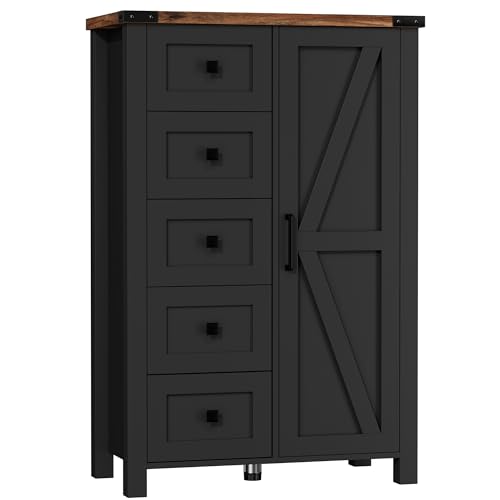
Tall Dresser with Shelves and Drawers
Combine open shelving and closed drawer storage in one vertical footprint. Learn how to choose, place, and organize a tall dresser that fits your bedroom perfectly.
Explore the GuideWhat Is a Tall Dresser with Shelves and Drawers?
A tall dresser with shelves and drawers is a vertical storage piece that pairs open shelving with closed drawer storage in a single, space-efficient footprint. Instead of spreading storage across a wide low dresser and a separate bookcase, this hybrid design stacks both functions into one column. The result is a piece that suits bedrooms where floor space is limited but vertical space is available.
The combination layout is practical for several reasons. Drawers keep clothing, linens, and personal items hidden and dust-free, while open shelves give you quick access to items you reach for often or want to display. Books, baskets, decorative objects, and everyday essentials can live on the shelves, while the drawers handle the items you prefer to keep out of sight.
This format is especially useful in smaller bedrooms, guest rooms, and apartments. It also works well alongside a vertical dresser layout or as a companion to a tall chest when you need extra storage without widening your furniture footprint. If you are comparing formats, our guide to the difference between a dresser and a chest can help clarify which shape fits your room.
Quick tip: Measure your ceiling height and your comfortable reach before shopping. A tall dresser should keep your most-used drawers within easy arm reach, with shelves reserved for display or occasional items.
Why Choose a Tall Dresser with Shelves and Drawers?
Choosing a tall dresser with shelves and drawers is largely a decision about how you want to use your space. The vertical format offers clear advantages, but it also comes with trade-offs worth understanding before you commit.
Space efficiency
By building upward rather than outward, a tall dresser frees up floor area. This is valuable in small bedrooms, apartments, and rooms shared by multiple people.
Dual storage function
Open shelves and closed drawers serve different purposes in one piece. You get display space and concealed storage without buying two separate furniture items.
Visual interest
The mix of open and closed storage breaks up the mass of a tall piece, making it feel less heavy than a solid wall of drawers.
Flexible organization
You can shift between shelf and drawer storage as your needs change, which makes the piece adaptable over time.
The main trade-off is height. A tall unit can feel imposing in a small room and requires secure anchoring. It also puts upper shelves out of easy reach for some users. For rooms with very low ceilings or limited wall space, a tall narrow dresser with drawers may be a better fit than a full shelving unit.
Key Features to Look For
Not all tall dressers with shelves and drawers are built to the same standard. The features below separate a well-specified piece from a basic one, and they matter most if you plan to use the dresser daily.
Drawer construction
Look for solid wood drawer boxes, dovetail or reinforced joinery, and metal drawer glides. Entry-level models often use stapled or glued joints and basic roller glides, while mid-range and premium tiers typically offer smoother, quieter movement and better weight support. Drawer stops are important on a tall unit because they prevent drawers from pulling out too far and shifting the center of gravity.
Shelf configuration
Adjustable shelves give you more flexibility than fixed shelves. Check the shelf thickness and weight rating, especially if you plan to store books or heavier items. Open shelves with a back panel feel more enclosed, while open-back shelves keep the piece visually lighter.
Material and finish
Solid wood offers the most durable construction and can be refinished over time. Engineered wood with quality veneers is a common choice in the mid-range tier. If material durability is a priority, our comparison of solid wood versus engineered wood explains the differences in detail. For a natural look, a solid wood mid-century modern dresser style can bring warmth to the room.
Safety hardware
Anti-tip straps or brackets should be included or available. This is non-negotiable for a tall piece, particularly in homes with children or pets.
Hardware and handles
Drawer pulls should feel solid and be comfortable to grip. On a tall unit, handles that sit flush or semi-flush reduce the chance of snagging clothing as you move past.
Sizes and Dimensions: Finding the Right Fit
Height is the defining dimension of this furniture category, but width and depth matter just as much for usability. A tall dresser that is too deep will crowd a narrow room, and one that is too wide may not leave room for a bed or doorway.
Most tall dressers with shelves and drawers fall into a height range of roughly 40 to 60 inches, with some models going higher. Width typically ranges from about 20 to 40 inches, and depth from about 15 to 20 inches. These are general ranges, not fixed standards, so always confirm the exact measurements of a specific model.
How to measure your space
- Measure the available wall width and leave clearance for doors and drawers to open fully.
- Check ceiling height and account for any wall-mounted lighting or artwork above the unit.
- Confirm that the top shelf is within comfortable reach for the items you plan to store there.
- Leave at least a few inches of clearance around the piece so it does not feel cramped.
If your room is tight, a tall narrow chest of drawers in solid wood can deliver similar vertical storage with a smaller footprint. For rooms where the dresser will sit against a short wall, a small space dresser guide can help you balance storage capacity against available room.
Materials and Finishes
The material affects durability, weight, appearance, and how the piece ages. For a tall dresser that will hold clothing and possibly books or display items, structural integrity matters more than on a low, lightly loaded piece.
Solid wood
Solid wood construction is the most durable option and can be sanded and refinished if it shows wear. Oak, maple, walnut, and pine are common choices, each with a distinct grain and hardness. A solid wood chest of drawers for the bedroom is a long-term investment that can last for decades with proper care.
Engineered wood
Particle board and MDF with veneers or laminates are common in entry-level and mid-range tiers. They can look convincing and offer good value for their tier, but they are less repairable and more vulnerable to moisture damage. Check the edge banding quality, since poor banding is often the first thing to fail.
Finishes
Painted finishes hide minor imperfections and suit modern and farmhouse styles. Stained and natural finishes highlight grain and suit traditional and mid-century looks. A white tall dresser with deep drawers can brighten a small room, while a tall black dresser with deep drawers adds contrast and a more dramatic feel.
How to Organize a Tall Dresser with Shelves and Drawers
Organization is where this hybrid design shines, because you can assign each zone a specific job. A simple approach is to treat drawers as the private zone and shelves as the active zone.
Drawer zones
- Top drawers: delicates, socks, and small accessories that you reach for daily.
- Middle drawers: folded shirts, tops, and items used most often, kept at waist height for easy access.
- Lower drawers: bulkier items such as jeans, sweaters, or extra linens.
Shelf zones
- Upper shelves: display items, decorative objects, or seasonal items you access occasionally.
- Middle shelves: books, baskets, or a small tray for everyday essentials.
- Lower shelves: larger baskets, folded blankets, or items that are heavier and safer to store low.
Drawer dividers and stackable organizers make a noticeable difference in a tall unit, since deep drawers can otherwise become a jumble. Our guide to drawer organization ideas covers folding techniques and divider options in more depth. If you are setting up a closet-adjacent storage piece, a stackable dresser drawer organizer can help you make the most of each drawer.
Placement and Room Fit
Where you place a tall dresser affects both safety and how the room feels. The most common placement is against a solid wall, ideally away from doorways and traffic paths.
Bedroom placement
In a bedroom, a tall dresser often works well opposite the bed or beside a closet. If the room is small, placing it in a corner or alcove can reduce its visual weight. Pairing it with a small dresser and nightstand set can create a coordinated look without overcrowding the room.
Nursery and child's room
In a nursery, safety comes first. Anchor the unit to the wall and keep the top shelves free of heavy items. A tall changing table with drawers can combine changing and storage needs, but the same anchoring rules apply. If you are adapting existing furniture, our guide to turning a dresser into a changing table covers the practical steps.
Living room and multi-use rooms
A tall dresser can work outside the bedroom as a storage piece for media, games, or linens. A TV dresser for the bedroom setup works best with a unit that has a stable top and cable management. For living rooms, a small chest of drawers for the living room can hold everyday items without dominating the space.
Closet use
Tall units are also popular inside walk-in closets and wardrobes. A small chest of drawers for a closet keeps folded items organized and out of sight. If you need more enclosed storage, a wardrobe armoire with drawers combines hanging space and drawers in one footprint.
Safety Considerations
Tall furniture carries a well-documented tip-over risk, and a dresser with shelves and drawers is no exception. The open shelves add visual lightness but do not reduce the need for anchoring.
- Always anchor the unit to a wall stud using the provided anti-tip strap or bracket.
- Keep heavy items in lower drawers and lower shelves.
- Do not place a TV or heavy objects on top of a tall dresser unless the manufacturer states the top is rated for it.
- Check drawer stops and glides regularly to make sure drawers do not slide out on their own.
- Keep the area around the dresser clear so children are not tempted to climb.
If the dresser will be used in a child's room, look for models that explicitly include tip-over restraint hardware and have drawer interlocks or stops. If you need a locking feature for medications or personal items, a tall dresser with locking drawers is a practical option.
Comparison: Tall Dresser Types at a Glance
The table below compares common configurations using quality-tier descriptors rather than numeric values. Use it to match a configuration to your needs.
| Configuration | Tier | Best For | Notes |
|---|---|---|---|
| Basic tall dresser with shelves and drawers | Entry-level | Guest rooms, starter bedrooms | Simple glides, fixed shelves, lighter construction |
| Tall dresser with deep drawers and adjustable shelves | Mid-range | Primary bedrooms, daily use | Smoother glides, better weight support, more flexible shelving |
| Solid wood tall dresser with dovetail drawers | Premium | Long-term use, family homes | Durable construction, refinishable, reinforced joinery |
| Custom or designer tall shelving dresser | High-end tier | Statement pieces, specific room layouts | Bespoke sizing, premium hardware, specialized finishes |
| Tall dresser with doors and drawers | Balanced tier | Mixed storage needs | Concealed storage plus open shelves; see related door-and-drawer formats |
For a closer look at related configurations, see the tall dresser with doors and drawers and the tall dresser with lots of drawers if drawer count is your priority.
Buying Checklist
Before you commit to a tall dresser with shelves and drawers, run through this checklist. It covers the points that most often cause regret after delivery.
- Measure the wall width, ceiling height, and clearance for doors and drawers.
- Confirm the unit includes or supports anti-tip anchoring.
- Check drawer construction: solid wood boxes, reinforced joinery, and quality glides.
- Verify shelf adjustability and weight ratings.
- Decide on a material tier that matches how heavily the piece will be used.
- Plan your organization zones before the unit arrives.
- Check delivery access: tall boxes can be difficult to move through tight hallways and stairwells.
If you are still deciding between formats, a tall 5-drawer dresser is a common starting point for bedroom storage, while a tall double dresser suits rooms that need wider drawer storage. For very compact rooms, a tall cabinet with doors can replace open shelving entirely.
Frequently Asked Questions
What is a tall dresser with shelves and drawers?
It is a vertical storage piece that combines open shelving with closed drawer storage in one footprint. It maximizes vertical space and works well in smaller bedrooms or rooms where floor area is limited.
How tall should a tall dresser with shelves and drawers be?
Most models range from roughly 40 to 60 inches in height, though some go higher. The right height depends on your ceiling, your reach, and whether you plan to anchor the unit to the wall.
Is a tall dresser safe for a nursery or child's room?
Yes, provided it is anchored to the wall with proper anti-tip hardware. Look for included tip-over restraints, drawer stops, and stable construction.
What materials are best for a tall dresser with shelves and drawers?
Solid wood offers the most durable construction and long-term resilience. Engineered wood with quality veneers can be a solid choice in the mid-range tier. For heavy use, look for reinforced joinery and metal drawer glides.
How do I organize a tall dresser with shelves and drawers?
Use drawers for folded clothing and items you want hidden, and open shelves for display pieces, baskets, and frequently accessed items. Keep the most-used drawers at waist height for easy reach.
Final Thoughts
A tall dresser with shelves and drawers is one of the most space-efficient storage solutions for a bedroom, especially when floor area is limited. The combination of open shelving and closed drawers gives you flexibility that a single-format piece cannot match. The key is to match the unit's height and configuration to your room, choose a material tier that fits how heavily you will use it, and anchor it securely.
If you are still exploring options, compare formats carefully and think about how you actually live in the room. The right tall dresser should feel like it was made for the space, not simply placed in it.