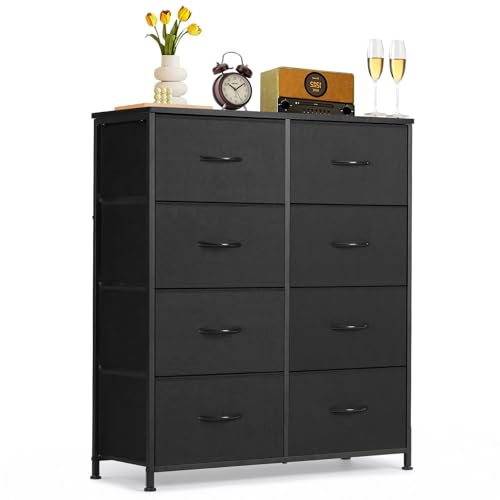
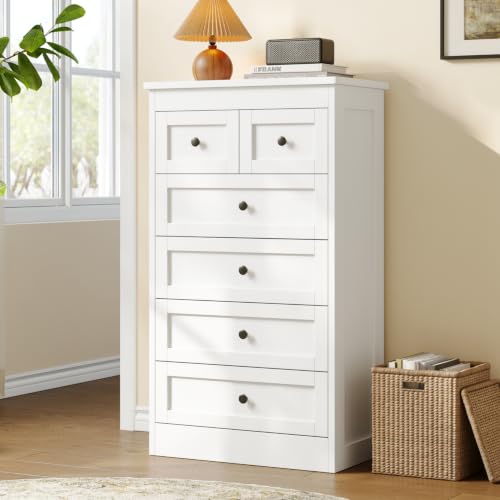
The Complete Tall Dresser Guide
Everything you need to know about tall dressers, tall chests of drawers, and vertical bedroom storage. Compare styles, sizes, drawer configurations, and smart organization tips before you decide.
READ THE BUYING GUIDETall Dressers Explained: A tall dresser — also called a tallboy, highboy, or vertical chest of drawers — is a bedroom storage piece that prioritizes height over width. If your bedroom has limited floor space but plenty of vertical room, a tall dresser can deliver generous drawer capacity without dominating your layout. This guide walks you through the key considerations so you can choose confidently.
What Exactly Is a Tall Dresser?
A tall dresser is a vertical storage piece typically standing between 40 and 60 inches high, with a footprint that is usually narrower than a standard wide dresser. Instead of spreading drawers horizontally, a tall dresser stacks them vertically — often four to six drawers — making it an efficient solution for compact bedrooms, apartments, and guest rooms. The format dates back centuries: the traditional tall boy dresser and tall chest are direct ancestors of today's modern vertical dressers.
Unlike a low, wide dresser, a tall dresser occupies less wall width and can fit into tight corners, alcoves, and alongside a bed without crowding the room. Many shoppers searching for a tall dresser for bedroom use cases are specifically trying to solve a space problem — and this format addresses it directly.
Why Choose a Tall Dresser?
Space Efficiency
A tall dresser uses vertical wall space rather than floor area. This makes it ideal for small bedrooms, studio apartments, and rooms where a wide dresser would block walkways or closet doors.
Generous Drawer Capacity
Because the drawers stack upward, a tall dresser can offer four to six (or more) drawers in a footprint that may be only two to three feet wide. Models like the tall dresser with lots of drawers maximize storage per square foot.
Ergonomic Access
Frequently used drawers can be placed at waist and chest height, reducing bending. For people with back concerns, a tall dresser is often more comfortable to use than a low chest.
Flexible Placement
Tall dressers fit into narrow wall segments, beside doorways, and in corners where a wide dresser simply will not work. A tall narrow dresser for small spaces is a common choice for tight layouts.
Design Versatility
Tall dressers come in nearly every style — from a tall white dresser for a bright, airy look to a tall dark wood chest of drawers for a richer, traditional feel.
Vertical Visual Interest
A tall dresser adds height and presence to a bedroom wall. Paired with a mirror or artwork above, it can become an architectural focal point.
Types of Tall Dressers
The category of "tall dresser" covers several distinct formats. Understanding the differences helps you narrow your search efficiently.
Tallboy / Highboy
The classic tall dresser silhouette: a tall, often narrower chest with stacked drawers, sometimes on legs. A tall boy dresser typically features five to six drawers and works well in traditional and transitional bedrooms.
Tall Chest of Drawers
A straightforward vertical chest, often with four to six drawers of varying depth. Models like the tall chest of drawers are the workhorses of vertical bedroom storage.
Lingerie Chest
A slim, tall dresser with many shallow drawers, traditionally used for smaller items. The tall lingerie dresser is an excellent choice for accessories, folded tops, and delicate items.
Tall Narrow Dresser
Designed for tight spaces, these are often 20–30 inches wide but still 45+ inches tall. Explore tall narrow dressers with drawers for small bedrooms and closets.
Tall Dresser with Shelves
A hybrid design combining drawers and open shelving. A tall dresser with shelves and drawers offers display space alongside concealed storage.
Tall Closet Dresser
Compact vertical dressers intended for closets, walk-ins, or utility spaces. A tall closet dresser can turn an underused closet into a full wardrobe zone.
Tall Dresser Sizes and Dimensions
While exact dimensions vary by manufacturer, tall dressers generally fall into recognizable size bands. Use these as a planning reference rather than a specification.
| Category | Typical Height | Typical Width | Best For |
|---|---|---|---|
| Compact Tall Dresser | 40–45 inches | 24–32 inches | Small bedrooms, guest rooms, apartments |
| Standard Tall Dresser | 45–52 inches | 30–40 inches | Primary bedrooms, teen rooms, shared rooms |
| Extra-Tall Dresser | 52–60 inches | 30–42 inches | Rooms with high ceilings, high-capacity storage needs |
| Slim / Skinny Tall Dresser | 45–55 inches | 18–24 inches | Narrow walls, closets, studio apartments |
Before choosing a size, measure the intended wall section, account for door swing, and confirm that the top drawers are reachable without a step stool. If you are comparing a taller chest against a wider alternative, our guide on tall and wide dressers for bedroom layouts may help.
Drawer Configurations to Consider
The drawer layout matters as much as the outer dimensions. Common configurations include:
- 4-drawer tall dresser: Each drawer is roomier; suits bulky clothing like sweaters and jeans.
- 5-drawer tall dresser: A balanced mix of deep and shallow drawers; a popular all-purpose layout. See the tall 5-drawer dresser category for examples.
- 6-drawer tall dresser: More separation for categories; useful when several people share the piece.
- Deep drawer models: Ideal for bedding and off-season clothing. Compare options in tall chest of drawers with deep drawers.
- Many-drawer designs: Slim, shallow drawers for accessories and folded items — see tall dressers with lots of drawers.
Materials, Finishes, and Construction
Tall dressers are available in a wide range of materials. Solid wood — oak, maple, walnut, mahogany — offers durability and repairability and is often considered a long-term investment. Engineered wood with quality veneers can be a solid choice within its tier, provided the joinery and hardware are well specified. If you prefer natural grain, explore the tall wood dresser category; for painted finishes, a tall grey dresser or tall white dresser with gold hardware can anchor a specific palette.
Pay attention to drawer construction as well. Dovetail joinery, super heavy-duty drawer slides, and reinforced bases signal a sturdy dresser built to last. For very high-capacity needs, a storage dresser with deep lower drawers often outperforms lighter designs.
Quality Tiers: What to Expect at Each Level
Instead of focusing on figures, think in terms of construction quality tiers. The table below uses a consistent classification system for this article.
| Tier | Typical Construction | Best For |
|---|---|---|
| Entry-level tier | Engineered wood panels, basic slides, lighter hardware | Guest rooms, short-term use, occasional storage |
| Mid-range tier | Solid wood frames with quality veneers, smoother slides, sturdier joinery | Primary bedrooms, everyday use, balanced investment |
| Premium tier | Solid hardwood construction, dovetail drawers, heavy-duty slides, refined finishes | Long-term ownership, high daily use, design-focused rooms |
| Luxury tier | Hand-finished solid wood, specialty hardware, artisanal detailing | Statement pieces, heirloom-quality storage |
As a rule of thumb, mid-range models usually offer noticeably smoother drawer operation and better stability than entry-level options, while premium models deliver the most refined fit and finish. Feature-rich models within each tier are often the strongest choice for their class.
How to Choose the Right Tall Dresser
- Measure your space first. Record wall width, available depth, and ceiling height. Leave at least 30 inches of clearance in front of drawers for comfortable opening.
- Decide on drawer count and depth. Match the configuration to what you actually store — bulky items need deep drawers, while accessories need shallow ones. A tall dresser with large drawers suits bedding and knitwear.
- Check stability and safety. Tall furniture should include anti-tip hardware. Anchoring to the wall is essential, especially in homes with children. A tall dresser with no assembly required can also reduce installation risk.
- Consider locking and specialty features. For shared spaces or valuables, a tall dresser with locking drawers or a tall dresser with jewelry storage may be worthwhile.
- Match the finish to your room. Light finishes make small rooms feel airier; dark finishes add grounding and warmth. A tall white dresser for bedroom is a classic space-brightening choice.
- Plan for the future. If you move frequently, check whether the piece is easy to disassemble. If you need extra utility, a tall dresser with open shelves adds display flexibility.
Tall Dresser Organization Tips
A tall dresser works best when organized by frequency of use. Place everyday items in the middle drawers at waist height, reserve the top drawer for accessories you reach for often, and use the lowest drawers for items you access less frequently, such as off-season clothing or spare linens. For deeper storage needs, pair the dresser with under bed storage to keep bulky items out of the way.
If you are setting up a nursery or guest room, consider a tall changing table with drawers or a tall chest of drawers with changing table to combine storage and function in one footprint.
Common Mistakes to Avoid
- Skipping the wall anchor. Tall dressers should always be secured to the wall. Stability is non-negotiable.
- Buying without measuring the top drawer reach. Confirm that the top drawer is accessible for your height.
- Ignoring drawer slide quality. Cheap slides wear quickly; check for smooth, full-extension operation.
- Underestimating depth. A deep tall dresser can protrude into walkways — verify the footprint before ordering.
- Choosing style over proportion. A very tall dresser in a small room can feel overwhelming. Balance height with the room's scale.
Ready to explore options? Browse our curated tall dresser recommendations below, or revisit our tall dressers for sale category for the full range of vertical storage styles.
Frequently Asked Questions
What is the difference between a tall dresser and a chest of drawers?
The terms overlap significantly. A tall dresser is a broad category for any vertical storage piece, while a chest of drawers specifically refers to a stacked drawer unit. In practice, a tall chest of drawers and a tall dresser describe the same type of furniture.
How tall should a tall dresser be?
Most tall dressers are between 40 and 60 inches high. For a primary bedroom, 45–52 inches is a common sweet spot. For rooms with high ceilings, extra-tall models can add visual height, while compact models suit guest rooms and small apartments.
Do I need to anchor a tall dresser to the wall?
Yes. Furniture safety guidance recommends anchoring any tall storage piece to the wall, especially in homes with children or pets. Most tall dressers include anti-tip hardware, but you should install it regardless of the model.
Is a tall dresser good for small bedrooms?
Yes — that is one of its main advantages. Because a tall dresser uses vertical space, it can fit into narrow wall segments and corners where a wide dresser would not. A tall narrow dresser in solid wood is a particularly space-efficient option.
Can a tall dresser be used in a closet?
Absolutely. Compact and slim vertical dressers are popular for walk-in closets and reach-in closets. A tall skinny dresser for closet can turn otherwise wasted closet depth into useful drawer storage.