Wardrobe Armoire with Drawers: The Complete Buying Guide
Learn how to choose a wardrobe armoire with drawers that fits your room, your wardrobe, and the way you live. Compare layouts, materials, and features before you decide.
EXPLORE RECOMMENDATIONSWhy a wardrobe armoire with drawers? It combines hanging space and folded storage in one tall footprint, making it a smart solution for bedrooms that lack a built-in closet. This guide walks you through every decision point so you can buy with confidence.
What Is a Wardrobe Armoire with Drawers?
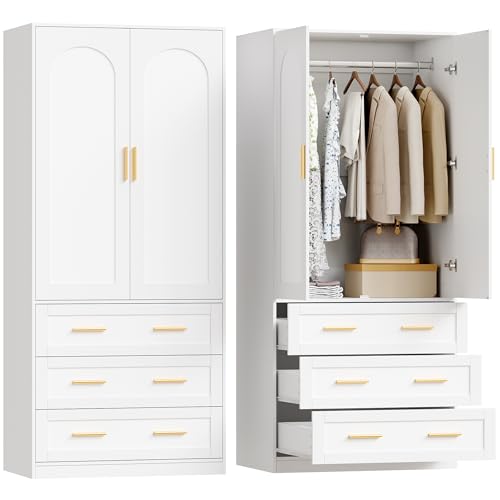
A wardrobe armoire with drawers is a freestanding cabinet that pairs a full-height hanging section with a stack of drawers, usually positioned at the bottom or along one side. The hanging rod handles shirts, dresses, and jackets, while the drawers keep folded clothing, linens, and accessories out of sight.
This hybrid design is especially useful in rooms without a built-in closet, in guest bedrooms, and in apartments where floor space is limited. Instead of buying a separate dresser and wardrobe, a single armoire covers both jobs. For a broader look at stand-alone drawer storage, see our guide to storage chests with drawers.
Common Layouts: Where the Drawers Sit
The placement of the drawer bank determines how the armoire feels in use. Three layouts dominate the market:
- Bottom drawer bank: The classic arrangement, with a hanging rod above and three to five drawers below. This puts folded items at a comfortable height and keeps the hanging section full-length.
- Side drawer column: A narrow stack runs vertically alongside the hanging area. This layout suits taller, slimmer armoires and works well in tight corners.
- Split configuration: A short hanging section sits above a drawer bank, with a second hanging area or shelves beside it. This is the most flexible option for mixed wardrobes.
If your room is short on floor space, a tall dresser with doors and drawers offers a similar mixed-storage approach in a narrower profile.
Sizing Your Armoire: Width, Depth, and Height
Measure the wall first, then measure the swing of the doors. A standard armoire ranges from about 30 to 72 inches wide, 20 to 24 inches deep, and 60 to 85 inches tall. Before ordering, confirm these three numbers:
- Wall width: Leave at least 2 inches of breathing room on each side so doors open without scraping.
- Door clearance: Hinged doors need roughly 24 to 30 inches of open floor in front; sliding doors need none.
- Ceiling height: Tall models often exceed 80 inches. Check for ceiling fans, light fixtures, and sloped ceilings.
For compact rooms, a tall narrow dresser with drawers can supplement an armoire without crowding the floor plan.
Quality Tiers at a Glance
Entry-Level Tier
Engineered wood panels with laminate or paper veneer. Adequate for guest rooms and short-term use; expect basic drawer glides and lighter hardware.
Mid-Range Tier
Solid wood fronts over engineered cores, or full solid wood in lighter species. Smoother drawer mechanisms and sturdier hinges are typical at this level.
Premium Tier
Solid hardwood construction, dovetailed drawer boxes, and soft-close hardware. Built for daily use over many years and often finished by hand.
Luxury Tier
Hardwood frames with premium joinery, full-extension glides, and refined detailing. These pieces are designed as long-term investments for primary bedrooms.
Materials and Finishes That Hold Up
Solid wood remains the benchmark for durability, especially in the frame and drawer boxes. Oak, maple, and walnut resist daily wear, while pine offers a softer, more relaxed look. Engineered wood with quality veneers can be a sound choice when the frame is reinforced and the hardware is solid. Our comparison of solid wood versus engineered materials breaks down the trade-offs in more detail.
Finish matters as much as species. A white armoire brightens small rooms and pairs easily with most palettes; natural wood tones add warmth. For a lighter visual weight, a white armoire wardrobe is a versatile starting point.
Drawer Construction and Hardware
Drawers take the most abuse in any armoire, so inspect them first. Dovetail joinery signals a higher tier than stapled or glued boxes. Metal side-mount glides are common at entry level, while ball-bearing and soft-close undermount glides appear in mid-range and premium pieces. Full-extension glides let you reach the back of the drawer, which matters in deeper cabinets.
Hardware is the other wear point. Solid metal pulls and knobs outlast plated plastic, and adjustable hinges keep doors aligned over time. If you prefer a mixed-storage setup with exposed drawers, a tall dresser with shelves and drawers follows the same construction principles.
Placement and Room Planning
Place the armoire against a solid wall, ideally opposite or adjacent to the bed, so the doors open into open floor rather than into traffic paths. Keep the top clear of clutter and leave a few inches above the unit for air circulation. In shared bedrooms, position the armoire so two people can access it without crossing each other.
Always secure tall units to the wall with the anti-tip strap. This is a standard safety step for any storage piece over about 60 inches tall, and it is especially important in homes with children or pets. Pair the armoire with a storage bed if you need to recover floor space elsewhere in the room.
Who Should Choose a Wardrobe Armoire with Drawers?
This piece suits renters who cannot build in a closet, homeowners with small primary bedrooms, and anyone who wants hanging and folded storage in a single footprint. It is also a strong fit for guest rooms that need to serve multiple purposes. If your main need is folded storage with a mirror, a tall dresser with locking drawers may be a better match.
On the other hand, if you have a large walk-in closet, a standard dresser plus a built-in rod system usually offers more total capacity. The armoire shines when space is tight and versatility matters.
Pre-Purchase Checklist
- Measure wall width, ceiling height, and door swing clearance.
- Confirm the hanging section length suits your longest garments.
- Check drawer box joinery and glide type.
- Verify the unit includes an anti-tip anchoring kit.
- Decide between hinged and sliding doors based on floor clearance.
- Match the finish to your existing bedroom palette.
Frequently Asked Questions
What is a wardrobe armoire with drawers?
It is a tall freestanding cabinet that combines a hanging section for clothes with built-in drawers for folded items and accessories. It merges the functions of a wardrobe and a dresser into one piece.
How much hanging space does a typical armoire provide?
Most armoires offer a full-height hanging section of roughly 40 to 60 inches, enough for shirts, dresses, and jackets. Some models split the hanging area into upper and lower rods for more flexibility.
Where should I place a wardrobe armoire in a bedroom?
Place it against a solid wall where its doors can open fully, ideally opposite or adjacent to the bed. Leave at least 24 to 30 inches of clearance in front of the doors for comfortable access.
Do armoires need to be anchored to the wall?
Yes. Tall armoires should be secured to the wall with the included anti-tip strap, especially in homes with children or pets. Anchoring prevents tipping and is a standard safety recommendation for all tall storage furniture.