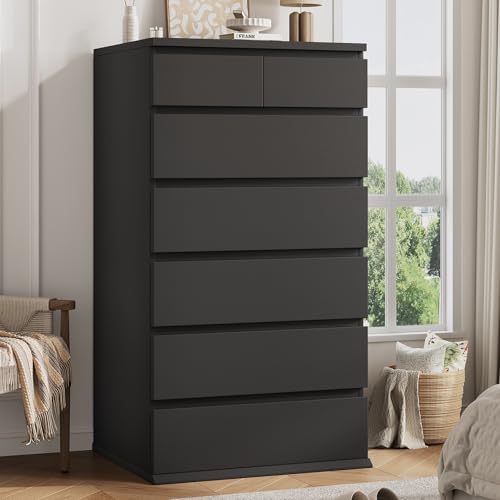
Tall Double Dresser: A Complete Buying Guide
A tall double dresser pairs the wide, two-column layout of a double dresser with the vertical storage of a tall chest. Learn how drawer count, height, materials, and safety features affect your choice so you can pick the right bedroom storage piece with confidence.
Why this guide matters: If you are researching a tall double dresser, you likely already know you want generous bedroom storage without a wide footprint. This guide breaks down what separates a well-built tall double dresser from a compromised one, so you can compare models on the features that actually matter.
What Is a Tall Double Dresser?
A tall double dresser is a storage piece that combines two defining traits. Like a standard double dresser, it uses a wide case with two side-by-side columns of drawers. Like a tall chest, it stacks those drawers several tiers high, creating a vertical profile that reaches well above a conventional dresser height.
The result is a footprint that stays relatively compact on the floor while offering significantly more drawer capacity than a low double dresser of the same width. That combination makes the tall double dresser a strong option for bedrooms where floor space is limited but clothing volume is not.
Buyers often confuse this category with related pieces. A vertical dresser typically uses a single narrow column, while a tall chest is usually narrower and more upright. The tall double dresser sits between them, keeping the two-column layout while pushing the height upward.
Why Choose a Tall Double Dresser?
The main appeal is storage density. A tall double dresser can deliver six, eight, or even ten drawers within a case that takes up roughly the same floor area as a standard six-drawer double dresser. For anyone organizing a full wardrobe of clothing, that extra vertical capacity is often the deciding factor.
There are secondary benefits as well. A taller profile can reduce how often you bend to reach lower drawers, and the increased height creates a more substantial visual anchor in a bedroom. Many models also provide a usable top surface for a mirror, lighting, or decorative styling.
If you are weighing this format against a lower option, the comparison comes down to vertical storage versus visual openness. A low double dresser keeps sightlines clear; a tall double dresser maximizes capacity. For a deeper look at related vertical formats, see our guide to the tall dresser with lots of drawers.
Key Features to Evaluate
Drawer Count and Layout
Most tall double dressers offer six to ten drawers across two columns. Check whether the drawers are equal size or mixed, since a mix of shallow and deep drawers usually organizes clothing better than uniform rows.
Height and Reach
The top drawers should remain comfortably reachable. A unit that exceeds your comfortable reach may force you to use a step stool, which is a practical drawback in daily use.
Frame Construction
Taller cases place more stress on the frame, so joinery quality matters more than on a low unit. Look for reinforced corners, solid drawer boxes, and smooth-gliding hardware.
Material Choice
Solid wood offers the most durable construction and long-term refinishing potential. Engineered wood is common in mid-range models. Our solid wood vs engineered comparison explains the trade-offs.
Safety Anchoring
A tall double dresser should always be anchored to the wall with an anti-tip strap. Taller profiles carry a higher tipping risk, and anchoring is non-negotiable in homes with children or pets.
Finish and Style
Finish affects both longevity and room aesthetics. A durable, well-sealed finish resists wear, while the style should align with the rest of your bedroom furniture for a cohesive look.
Tall Double Dresser vs Related Storage Pieces
The table below compares the tall double dresser with nearby formats so you can see where it fits in the broader storage landscape.
| Format | Typical Layout | Best For |
|---|---|---|
| Tall double dresser | Two drawer columns, several tiers high | High-capacity bedroom storage in a compact footprint |
| Tall 5 drawer dresser | Single column, five drawers | Narrow walls and small bedrooms |
| Tall narrow dresser with drawers | Slim single column, multiple drawers | Tight corners and closet-adjacent placement |
| Standard double dresser | Two columns, lower height | Open sightlines and lower-profile rooms |
| Tall dresser with doors and drawers | Mixed doors and drawers | Display storage plus concealed clothing storage |
Materials and Construction Quality
Because a tall double dresser is, by definition, tall and heavy when loaded, construction quality deserves closer scrutiny than it would on a low unit. The frame must resist racking, the drawers must glide smoothly under load, and the hardware must hold up over years of use.
Solid wood remains the strongest long-term choice, particularly for the frame and drawer fronts. Engineered wood can perform well when the core is dense and the joinery is reinforced, but construction details matter more than the material label alone. For a broader look at wood options, visit our solid wood chests guide.
Hardware is another reliable indicator of overall quality. Metal drawer glides with smooth action and a soft-close mechanism generally signal a more carefully built piece. Thin, flexible glides and loose joinery are warning signs on any tall unit.
Quality tier note: Entry-level tall double dressers often use thinner panels and basic glides, while mid-range models typically add reinforced joinery and smoother hardware. Premium and luxury tiers focus on solid construction, precise drawer alignment, and durable finishes designed to last for years.
Size, Height, and Room Placement
Most tall double dressers measure roughly 40 to 55 inches in height, with some vertical designs reaching 60 inches or more. Width usually falls between 40 and 60 inches, which keeps the footprint similar to a standard double dresser. Depth commonly lands between 16 and 20 inches.
Before purchasing, measure the intended wall space and account for drawer clearance in front of the unit. A tall double dresser needs enough room for drawers to open fully without blocking foot traffic. Also check ceiling height and window placement so the unit does not crowd the room visually.
For very tight bedrooms, a small space dresser or a tall narrow chest of drawers in solid wood may suit the layout better than a full-width tall double dresser. Placement near a closet often works well, and our guide to a small chest of drawers for closet use covers that arrangement in detail.
Safety and Stability
Tall furniture carries a higher tipping risk than low furniture, and that risk increases when drawers are opened and weight shifts forward. Wall anchoring is the single most important safety step for any tall double dresser, regardless of room type.
In a nursery or child's bedroom, anchoring is essential, along with checking that the unit meets current furniture safety standards. If you are outfitting a nursery, see our notes on a white chest of drawers for nursery use. For bedrooms where security matters, a tall dresser with locking drawers adds another layer of protection for sensitive items.
Buyer Checklist Before You Commit
- Confirm the overall height and width against your wall space and ceiling height.
- Count drawers and check whether the shallow-to-deep mix suits your clothing categories.
- Inspect frame joinery and drawer box construction, especially on taller cases.
- Verify that wall-anchoring hardware is included or readily available.
- Test drawer glide smoothness and look for soft-close mechanisms on mid-range and premium models.
- Review the finish quality and confirm it resists everyday wear.
- Check whether the style complements your existing bedroom furniture.
Related Storage Guides
If you are still narrowing down the right format, these related guides may help. For a white finish, see the white tall dresser with deep drawers. For a classic mid-century look, explore the solid wood mid-century modern dresser. To pair storage with a matching set, browse the small dresser and nightstand set and the two nightstands and dresser set options.
For broader bedroom storage planning, our storage chest with drawers guide and the storage beds overview can help you build a complete storage strategy.
Frequently Asked Questions
What is a tall double dresser?
A tall double dresser combines the wide, two-column layout of a double dresser with the vertical profile of a tall chest. It typically features two columns of drawers stacked several tiers high, offering generous storage in a compact floor area.
How tall is a tall double dresser?
Most tall double dressers stand between 40 and 55 inches high, though vertical dressers can reach 60 inches or more. The exact height depends on the drawer count and the manufacturer's design.
Is a tall double dresser safe for a nursery?
A tall double dresser can work in a nursery only if it is properly anchored to the wall with an anti-tip strap and meets current furniture safety standards. Taller profiles carry a higher tipping risk, so wall anchoring is essential.
What is the difference between a tall double dresser and a standard double dresser?
A standard double dresser is wide and relatively low, usually with six to eight drawers in two columns. A tall double dresser keeps the two-column layout but adds more drawer tiers, giving extra capacity without taking up more floor space.
Which material is best for a tall double dresser?
Solid wood offers the most durable construction and can be refinished over time. Engineered wood with quality hardware is a solid choice for mid-range budgets. Compare construction details carefully, since a taller unit places more stress on the frame.