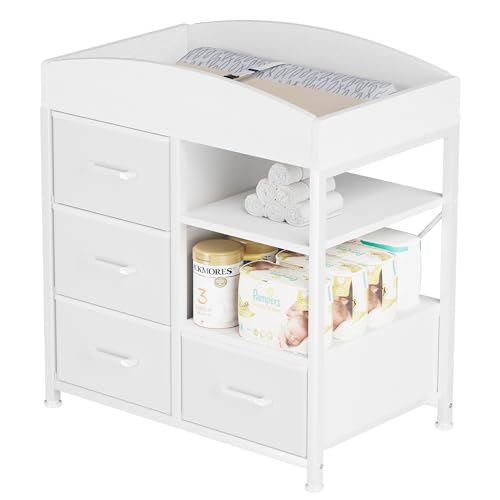
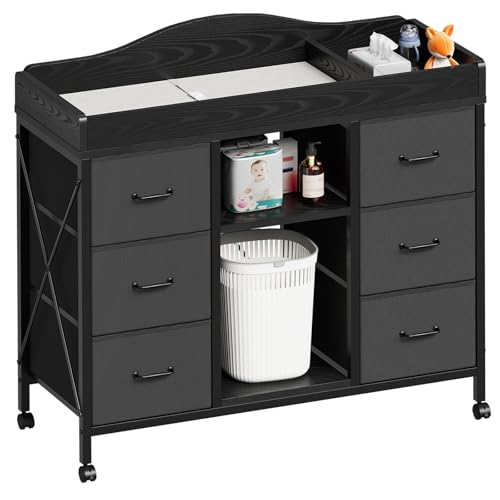
Tall Changing Table with Drawers: The Complete Buying Guide
A tall changing table with drawers combines a dedicated diaper-changing station with generous nursery storage. Learn how to evaluate height, safety, materials, and drawer configuration so you can choose a unit that works for your home and grows with your child.
Why choose a tall changing table with drawers? Standard changing tables often force parents to bend over repeatedly, straining the back during frequent diaper changes. A tall changing table raises the changing surface to a more comfortable working height while the built-in drawers keep diapers, wipes, clothing, and bedding within arm's reach. This guide explains the key specifications, safety considerations, and storage configurations so you can make an informed decision before you buy.
Why a Tall Changing Table with Drawers Makes Sense
New parents quickly discover that the changing station becomes the most-used piece of nursery furniture. It is visited dozens of times each day, and every small inefficiency compounds over months of use. A tall changing table with drawers addresses the two biggest pain points of nursery organization: ergonomic working height and immediate access to supplies.
Ergonomic Working Height
Tall changing tables place the changing surface closer to standing waist height, reducing the forward bending and lower-back strain that comes with low dressers or standard changing tables. Parents who are taller than average benefit most from this configuration.
Integrated Nursery Storage
Built-in drawers eliminate the need for separate storage bins or a second dresser. Diapers, wipes, onesies, sleep sacks, and swaddle blankets can all be organized by drawer for fast, one-handed retrieval during changes.
Small Nursery Footprint
By combining the changing surface and clothing storage into one vertical unit, a tall changing table with drawers frees up floor space in compact nurseries and apartment bedrooms where horizontal dressers would feel cramped.
Long-Term Transition Value
Many tall changing table designs are essentially dressers with a removable changing topper. Once the baby outgrows the changing phase, the unit remains useful as a standard tall dresser for years of bedroom storage.
Key Specifications to Compare
Before comparing individual models, understand the specifications that most directly affect daily usability and long-term safety. The table below summarizes the factors that matter most when evaluating a tall changing table with drawers.
| Specification | What to Look For | Why It Matters |
|---|---|---|
| Overall Height | Choose a changing surface that reaches roughly waist height for the primary caregiver; many tall units measure 36–42 inches to the top of the changing tray. | Reduces bending strain during frequent changes; an awkward height leads to back discomfort over time. |
| Changing Surface Depth | A recessed changing area with raised sides and a safety strap; the pad should sit securely without sliding. | Prevents the baby from rolling off during a change; a contoured tray is safer than a flat top. |
| Drawer Count & Configuration | Typically 3–6 drawers; look for at least one deep drawer for blankets and several shallower drawers for clothing and diapers. | Determines how well supplies can be separated and how quickly items can be retrieved one-handed. |
| Drawer Glides | Metal ball-bearing glides with a smooth, quiet action; full-extension slides are preferable for reaching the back of deep drawers. | Cheaper glides stick and wobble over time; smooth glides make one-handed access realistic. |
| Material & Finish | Solid wood or high-grade engineered wood with a non-toxic, low-VOC finish; avoid strong chemical odors out of the box. | Durability and indoor air quality matter in a room where a baby sleeps and spends many hours. |
| Anti-Tip Hardware | A wall-anchoring kit included or explicitly supported; the unit should be secured to the wall during assembly. | Tall furniture can tip if a child climbs on open drawers; anchoring is a critical safety requirement. |
| Changing Tray Removability | A topper that lifts off or converts so the unit can serve as a standard dresser later. | Extends the useful life of the furniture beyond the diaper-changing years. |
Safety Considerations for Tall Changing Tables
Safety is the single most important factor when selecting nursery furniture. A tall changing table with drawers carries a higher center of gravity than a low dresser, which makes proper anchoring and drawer management essential. Review the following safety checklist before committing to a model.
- Always anchor to the wall. Use the included anti-tip strap or bracket to secure the unit to a wall stud. Never rely on the furniture's weight alone to prevent tipping.
- Use a contoured changing pad with a safety strap. The pad should fit snugly within the recessed tray so it cannot shift during use, and the strap should always be fastened when a baby is on the surface.
- Keep the changing surface clear when not in use. Remove pillows, blankets, and toys that could create a suffocation hazard or encourage climbing.
- Avoid leaving a child unattended. Even with raised sides and a strap, no changing table replaces constant adult supervision. Keep one hand on the baby at all times.
- Check drawer stops and glides. Drawers that pull out too easily can become a climbing hazard. Look for drawers with integrated stops and avoid leaving them open.
- Verify finish safety. Choose finishes labeled low-VOC or water-based, especially in a nursery where the baby spends extended time.
How Many Drawers Do You Actually Need?
Drawer count is one of the most practical decisions in this category. A tall changing table with drawers typically offers between three and six drawers, and the right number depends on how you plan to use the storage.
3–4 Drawers: Starter Tier
An entry-level configuration suited to minimal setups. Usually one deep drawer for blankets, one medium drawer for clothing, and one shallow drawer for diapers and wipes. Best for parents who keep overflow clothing in a closet.
5 Drawers: Balanced Tier
A mid-range configuration that separates diapering supplies, daily clothing, sleepwear, and bedding without feeling crowded. This is the most common layout for tall changing tables and a solid choice for most nurseries.
6+ Drawers: High-End Tier
A top-tier configuration that supports dedicated drawers for burp cloths, toys, and seasonal clothing. Ideal for parents who want a single-piece storage solution and prefer not to add a separate dresser.
Keep in mind that drawer depth matters as much as drawer count. A shallow drawer is excellent for diapers and wipes because it keeps items visible, while a deep drawer is better for folded blankets and larger clothing. If you are comparing a tall changing table against other vertical storage options, our guide to the tall chest explains how vertical dresser layouts differ from changing-table configurations.
Materials and Build Quality
The material of a tall changing table with drawers affects durability, indoor air quality, and how the piece ages. Solid wood and high-grade engineered wood both appear in this category, and the trade-offs are worth understanding.
- Solid wood offers the most durable construction and can be refinished if the finish becomes worn. Solid wood units tend to sit in the premium and luxury tiers and are a long-term investment.
- High-grade engineered wood with a quality veneer or laminate offers a stable, consistent surface at a mid-range position in the market. Look for CARB-compliant panels and sealed edges.
- Drawer box construction should use dovetail or reinforced joints rather than staples alone. A solid drawer box resists racking when loaded with heavier items like blankets.
- Hardware quality is a strong indicator of overall build. Metal glides, sturdy handles, and reinforced mounting points separate well-built units from entry-level ones. For a deeper comparison of construction approaches, see our guide on solid wood vs engineered wood.
Placement and Room Planning
A tall changing table with drawers occupies a small floor footprint but a meaningful amount of wall space. Plan placement carefully so the unit is both practical and safe.
- Position the unit away from windows, blinds, and curtain cords, which are strangulation hazards in a nursery.
- Keep the changing surface within easy reach of a crib or sleep area so night-time changes are quick and low-stress.
- Leave enough clearance in front of open drawers to stand comfortably; full-extension drawers need room to pull out.
- Place the unit against a solid wall where a stud is available for anchoring.
- If floor space is tight, compare this piece with a dedicated small space dresser to see which layout fits your room best.
Related Nursery and Dresser Guides
Ready to Compare Tall Changing Tables?
You now understand the key specifications, safety requirements, drawer configurations, and material considerations for a tall changing table with drawers. Review the recommended models below to compare features, storage layouts, and build quality before making your decision.