DresserAdvisor Buying Guide
Sliding Door Dresser: Smart Storage for Modern Bedrooms
A sliding door dresser blends the convenience of drawer storage with the space-saving elegance of sliding panels. If you are researching this furniture category before you buy, this guide explains everything you need to know — from how the mechanism works to which tier and style fits your room.
Why consider a sliding door dresser? Traditional hinged doors and deep pull-out drawers need clearance to open. Sliding panels glide sideways along a track, so the dresser can sit flush against a wall or in a narrow alcove without blocking foot traffic. For renters, apartment dwellers, and anyone with a compact floor plan, this is one of the most practical storage formats available.
What Is a Sliding Door Dresser?
A sliding door dresser is a bedroom storage unit in which the front panels — whether they cover shelves, cubbies, or internal drawers — slide horizontally along a track instead of swinging open on hinges. The format sits between a classic sliding drawer unit and a cabinet-style piece: you still get the compartmentalized organization of a dresser, but the access method is a smooth lateral glide.
This design is especially popular in rooms where clearance is tight. A standard hinged wardrobe or cabinet door needs roughly half its width in free space in front of it. A sliding panel needs none. That single difference can determine whether a storage piece fits comfortably in a narrow bedroom, a dorm room, or a hallway closet.
Many buyers compare sliding door dressers with a heavy-duty sliding drawer hardware setup, where the drawers themselves slide out on rails. The two approaches solve different problems: sliding drawers give you deep pull-out access, while sliding doors keep the footprint fixed and protect contents from dust. Some premium and luxury tier models combine both — sliding front panels that conceal pull-out trays inside.
Compared with a traditional dresser or chest of drawers, the sliding door version tends to feel more furniture-like and less utilitarian. The closed panels create a clean, uncluttered facade that works well in modern, Scandinavian, and minimalist interiors, while wood-grain finishes suit rustic and farmhouse rooms.
How the Sliding Mechanism Works
Understanding the hardware is the single most important part of evaluating a sliding door dresser. The mechanism consists of a top and bottom track, rollers or glides mounted to the panels, and a guide system that keeps the panels aligned. Quality varies dramatically across tiers, and the mechanism determines how the piece feels day to day.
- Top-hung vs. bottom-rolled tracks. Top-hung systems carry the panel weight on an upper rail, which keeps the floor track shallow and easy to clean. Bottom-rolled systems are simpler and more common on entry-level models.
- Roller quality. Nylon or sealed ball-bearing rollers run more smoothly and quietly than basic plastic wheels. Mid-range and premium tiers typically specify better rollers and reinforced brackets.
- Panel overlap. Two-panel designs overlap in the center; three-panel designs often use a bypass arrangement where the outer panels slide past a fixed center panel. More panels mean more flexibility but also more hardware to maintain.
- Soft-close and damping. High-end tier and luxury models increasingly include dampers that prevent panels from slamming. This is a meaningful comfort upgrade in a bedroom.
If you are handy with furniture hardware, the mechanism is also serviceable. Replacement tracks and rollers are widely available, and a worn glide can often be swapped without replacing the entire unit. Buyers who plan to keep a piece for a decade or more should prioritize models with accessible, standard-format hardware.
Types of Sliding Door Dressers
Sliding door dressers come in several configurations. The right choice depends on how much you need to store, how often you access it, and how much wall space you have.
Two-Panel Bypass Dressers
The most common format. Two panels slide past each other on parallel tracks, revealing one half of the interior at a time. This is the most space-efficient option and the easiest to integrate into a compact bedroom. A two-panel unit works well as a small bedroom dresser idea because it can sit flush in a corner.
Three-Panel and Multi-Panel Units
Wider dressers often use three panels, with the center panel fixed and the outer panels sliding inward. These suit larger rooms and offer more organized interior zones — for example, a hanging section on one side and folded storage on the other. They behave more like a compact wardrobe than a traditional chest.
Sliding Door Dressers with Internal Drawers
Some models pair sliding front panels with pull-out drawers inside. The closed facade keeps the room looking tidy, while the interior drawers provide the familiar organization of a classic dresser. This hybrid format is popular in premium tiers because it combines two storage philosophies in one footprint.
Sliding Door Chests and Tall Units
Tall, narrow versions — sometimes called sliding door chests — are ideal for closets and narrow alcoves. They store vertically and use the same lateral glide. If you are outfitting a walk-in closet, a short chest of drawers for closet may pair well with a taller sliding unit to create a layered storage wall.
Sliding Door Dressers for Specific Rooms
Beyond the bedroom, sliding door dressers appear in nurseries, guest rooms, and even living areas used as sideboards. A side dresser in a hallway or entry can benefit from the no-clearance design, and a sideboard dresser format brings the same mechanism into dining and living spaces.
Materials and Build Quality by Tier
Sliding door dressers span the full quality spectrum. Because the sliding mechanism adds moving parts, material quality matters even more than it does on a static chest. The table below summarizes what to expect at each tier.
| Tier | Typical Construction | Hardware & Mechanism | Best For |
|---|---|---|---|
| Entry-level | Engineered wood with laminate or paper veneer; particleboard core | Basic bottom-rolled tracks, plastic glides | Guest rooms, dorms, first apartments |
| Mid-range | Engineered wood with real wood veneer; some solid wood frames | Improved rollers, metal tracks, better alignment guides | Primary bedrooms, long-term family use |
| Premium | Solid wood construction with veneered panels; dovetailed internal drawers | Sealed ball-bearing rollers, reinforced brackets, soft-close options | Master suites, design-conscious buyers |
| Luxury | Hardwood solids, hand-finished surfaces, premium joinery | Heavy-duty sliding systems, damped soft-close, precision alignment | Statement bedrooms, long-term investment pieces |
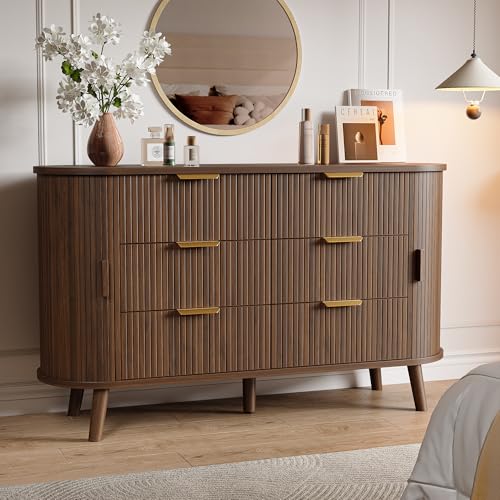
Material choice also affects aesthetics. Natural wood grains such as oak, walnut, and pine bring warmth and pair well with rustic dressers and Scandinavian dresser styling. Painted finishes suit modern and minimalist rooms, while high-gloss and lacquer finishes lean contemporary. If you prefer a textured, on-trend look, ribbed dresser detailing adds visual interest to sliding panels without compromising the glide.
For buyers who want a distinctive finish, options range from a sage dresser for a soft, organic feel to a silver dresser set for a crisp, contemporary look. A rosewood dresser or walnut dresser brings a rich, warm tone that suits traditional and mid-century interiors alike.
Sizing and Layout Planning
Because a sliding door dresser does not need swing clearance, it can often be placed where a hinged unit could not go. That flexibility makes sizing easier, but there are still a few measurements to check before you commit.
- Wall length. Measure the full width you can dedicate to the piece, then leave a small margin on each side so panels can fully retract without scraping adjacent walls or furniture.
- Height and reach. Tall units maximize vertical storage but may require a step stool for top compartments. Confirm the top shelf is within comfortable reach for daily items.
- Depth. Sliding door dressers are often slightly deeper than standard chests because the panels add a front layer. Check the depth against doorways and walkways.
- Floor level. Sliding tracks are sensitive to uneven floors. If your floor is not level, a bottom-rolled system may bind. Top-hung systems handle minor unevenness better.
For tight spaces, consider a slim dresser or a narrow dresser format with sliding panels. A shallow dresser keeps the footprint compact while still offering useful depth for folded clothing. If the room is genuinely small, the broader category of dressers for small spaces covers additional configurations worth comparing.
Placement matters too. A sliding door dresser placed beside a bed functions as a side dresser for bedroom storage, while a unit in a closet can replace a built-in system entirely. In a larger room, pairing a sliding dresser with a rustic dresser and nightstand set creates a coordinated bedroom scheme without requiring swing space for multiple hinged doors.
What to Check Before You Buy
If you have already decided that a sliding door dresser is the right format, the remaining decisions are about mechanism quality, interior layout, and finish. Here is a practical checklist.
1. Test the Glide
If you can see the piece in person, open and close each panel several times. The movement should be smooth and consistent, without wobble at the top or bottom. Listen for rattles — they usually indicate loose brackets or low-grade rollers.
2. Inspect the Track and Rollers
Ask about the track material and roller type. Metal tracks with sealed ball-bearing rollers are the most durable option. Plastic tracks are common on entry-level units but wear faster under heavy use.
3. Plan the Interior Layout
Sliding door dressers vary widely inside. Some use fixed shelves, others include adjustable shelving, and some combine shelves with internal drawers. Match the layout to what you actually store: hanging space for shirts, folded stacks for sweaters, and drawer trays for accessories.
4. Confirm the Finish and Edge Quality
Look closely at panel edges and corners. Well-finished edges resist chipping and moisture. On painted models, check that the paint is even and that panel faces are flat — uneven surfaces can cause alignment issues over time.
5. Consider Future Maintenance
Any sliding mechanism will eventually need adjustment or part replacement. Choose a model where the track and rollers are accessible and where standard replacement parts are available. This is one area where mid-range and premium tiers justify their positioning.
6. Match the Style to the Room
A sliding door dresser is a visual anchor. A modern dresser with flat panels suits contemporary rooms, while a farmhouse dresser with wood tones and simple hardware fits a rustic scheme. If you are refreshing an older room, a retro dresser or vintage dresser with sliding panels can add character without needing a full redesign.
Care and Maintenance
Sliding door dressers are low-maintenance, but a few habits keep the mechanism smooth for years.
- Clean the tracks regularly. Dust and lint accumulate in the lower track and cause binding. Vacuum the track and wipe it with a dry cloth every few months.
- Do not overload. Keep weight within the manufacturer's guidance, especially on shelves behind sliding panels. Excess weight strains the rollers and can cause panels to sag.
- Lubricate sparingly. A small amount of suitable lubricant on the rollers or track — depending on the system — keeps movement smooth. Avoid over-lubricating, which attracts dust.
- Check alignment. If a panel starts rubbing or drifting, adjust the guide brackets before the problem worsens. Early correction prevents track damage.
- Protect the finish. Use coasters or pads on top surfaces and avoid placing the unit in direct, prolonged sunlight, which can fade finishes over time.
If you are restoring an older piece, refinishing the panels is straightforward because they are removable. General guidance on sanding and repainting furniture applies well to sliding panels, and a fresh finish can modernize an older unit significantly.
Frequently Asked Questions
What is a sliding door dresser?
A sliding door dresser is a storage piece that uses sliding panels or doors instead of traditional hinged doors or open drawers. These panels glide along tracks to reveal compartments, combining the convenience of a dresser with the sleek, space-saving functionality of sliding doors.
Are sliding door dressers good for small bedrooms?
Yes. Because the doors do not swing outward, a sliding door dresser can sit flush against a wall or in a tight corner. This makes it one of the most practical formats for compact bedrooms, apartments, and rooms where furniture placement is constrained.
What materials are used in sliding door dressers?
Construction ranges from engineered wood with laminate finishes at the entry level to solid hardwood with premium joinery at the luxury tier. The sliding mechanism itself typically uses metal tracks and nylon or ball-bearing rollers, with quality improving as you move up the tiers.
How do I maintain the sliding mechanism?
Keep the tracks clean, avoid overloading the compartments, and check panel alignment periodically. Lubricate moving parts according to the manufacturer's guidance. High-end tier models with heavy-duty hardware generally require less frequent adjustment.
Can a sliding door dresser replace a wardrobe?
In many small rooms, yes. A wide multi-panel sliding dresser can include hanging space alongside shelving and drawers, effectively functioning as a compact wardrobe. The key is choosing an interior layout that matches your clothing mix.
What style of sliding door dresser suits a modern bedroom?
Flat-panel designs with minimal hardware, natural wood tones, or matte painted finishes work best in modern and minimalist rooms. Textured details such as ribbed panels can add interest while keeping the silhouette clean.
Ready to Choose Your Sliding Door Dresser?
You now have a clear framework: confirm the mechanism quality, match the interior layout to your storage needs, choose a tier that fits your long-term plans, and verify the finish suits your room. The recommended models below are a useful starting point for comparing real options.
Compare Recommended Models