
Slim Dresser Guide: Space-Saving Storage for Small Bedrooms
Narrow walls, tight walkways, and compact apartments no longer mean giving up drawer storage. This guide explains how a slim dresser works, what dimensions to look for, and how to choose a narrow, shallow unit that fits your space without sacrificing organization.
Who this guide is for: If you are furnishing a small bedroom, a studio apartment, a dorm, or a narrow alcove and a standard dresser simply will not fit, you are in the right place. Below you will find clear sizing guidance, construction checkpoints, placement strategies, and a practical tier framework for evaluating slim dressers of different quality levels.
What Counts as a Slim Dresser?
A slim dresser is defined by its footprint rather than its drawer count. In practice, the term covers three related categories: narrow dressers that are short in width, shallow dressers that are short in depth, and skinny dressers that combine both. Most manufacturers treat anything under roughly 16 inches in depth or under 32 inches in width as slim, while a full-size dresser typically measures 18 to 20 inches deep and 50 to 70 inches wide.
The appeal is straightforward. A slim dresser reclaims the floor area that a conventional unit would consume, which matters in rooms where every inch affects door swing, circulation, and the sense of openness. The trade-off is that each drawer holds slightly less, so capacity has to be recovered through height, drawer count, or smart internal organization. If you are still deciding between furniture categories, our overview of skinny dresser options explains how the terminology overlaps and where each type performs best.
Slim Dresser Dimensions Compared
The table below summarizes the typical footprint of slim dresser categories against a standard dresser. Use it as a starting point, then confirm the exact measurements of any specific model before you commit, since published dimensions vary between brands and drawer configurations.
| Category | Typical Width | Typical Depth | Best For |
|---|---|---|---|
| Standard dresser | 50–70 in | 18–20 in | Primary storage in medium and large bedrooms |
| Narrow slim dresser | 24–32 in | 16–18 in | Narrow wall segments beside the bed |
| Shallow slim dresser | 36–48 in | 12–15 in | Hallways, foot-of-bed placement, tight walkways |
| Skinny tall dresser | 18–26 in | 14–16 in | Closets, alcoves, studio apartments |
| Very shallow accent unit | 28–40 in | 10–12 in | Bedside storage, entryways, secondary rooms |
For a closer look at the depth-first approach, see our dedicated guide to shallow dresser designs, which covers how reduced depth affects drawer usability and what to store in a shallower unit.
Narrow vs. Shallow: Which Slim Profile Do You Need?
These two approaches solve different spatial problems, and mixing them up is the most common buying mistake.
Choose a narrow dresser when
- Your available wall run is short, for example between a door frame and a bed.
- You need a taller unit so vertical space compensates for the reduced width.
- You want a full-depth drawer that accommodates folded sweaters or stacked linens.
Choose a shallow dresser when
- Walkway clearance is the limiting factor, such as at the foot of the bed.
- The unit must sit in a hallway, landing, or closet corridor.
- You plan to store lighter items such as shirts, accessories, or sleepwear.
Many shoppers need a combination, which is where a slim dresser for a small bedroom earns its place: it balances moderate width with reduced depth so the unit fits without blocking movement.
Construction Checkpoints for Slim Dressers
A slim dresser carries the same loads as a wider one but with a smaller stabilizing footprint, so build quality matters more, not less. Check the following before purchasing.
- Anti-tip hardware: Non-negotiable. Slim profiles have a higher tipping risk, so wall anchoring should be treated as part of installation, not an optional extra.
- Drawer glide type: Entry-level units often use basic roller glides, while mid-range and premium models move to side-mounted or under-mount ball-bearing slides. Full-extension slides make the rear of a narrow drawer genuinely usable.
- Joinery and back panel: A solid or reinforced back panel resists racking and keeps the frame square over years of use. Dovetail or doweled joints outperform stapled construction.
- Material stability: Solid wood and high-grade engineered panels hold up better than thin particleboard, especially in humid rooms. Our overview of slab dressers is useful if you prefer clean, flat drawer fronts with fewer decorative recesses that collect dust.
- Drawer box depth relative to case depth: On shallow units, confirm the drawer box is not so short that it holds almost nothing. A case depth of 14 inches with a 12-inch drawer box is a reasonable ratio.
If you are weighing materials more broadly, the comparison of solid wood against engineered options is covered in our broader dresser buying resources, and the practical mechanics of drawer movement are explained in the guide to sliding drawers.
Slim Dresser Quality Tiers
To compare models without reference to any specific figure, we use a three-tier framework. The descriptors are relative and consistent across this guide.
| Tier | Typical Construction | Best For |
|---|---|---|
| Entry-level | Engineered panels, roller glides, simple fasteners | Guest rooms, dorms, short-term setups |
| Mid-range | Stabilized panels or mixed solid construction, ball-bearing slides, reinforced back | Primary bedrooms, daily-use family homes |
| Premium | Solid wood or high-grade panels, dovetail or doweled joinery, under-mount soft-close slides | Long-term investment pieces, high-traffic rooms |
As a rule, mid-range models tend to offer smoother drawer action and better long-term stability than entry-level units, while premium construction mainly buys longevity and refinement rather than extra capacity. For a closet-focused setup, the slim chest of drawers for bedroom comparison is a useful next read.
Placement Strategies for Tight Rooms
Where you put a slim dresser matters as much as which one you buy. These placements consistently work in compact bedrooms.
- Beside the bed on a narrow wall: A tall, narrow unit uses vertical space that would otherwise be empty and keeps the walking path clear.
- Inside a reach-in closet: A short, slim dresser can sit under hanging rails and convert dead floor space into drawer storage. See our notes on a short dresser for a closet for clearance guidance.
- At the foot of the bed: Only viable with a shallow unit; measure the gap to the wall and leave at least 24 inches for walking.
- In an alcove or niche: Skinny profiles are purpose-built for recessed spaces between chimney breasts, wardrobes, or structural columns.
- Along a hallway or landing: A shallow dresser doubles as linen storage without narrowing the corridor.
Before ordering, mark the intended footprint on the floor with tape and walk the room for a day. This simple test surfaces conflicts with door swings, radiator clearance, and socket access that dimensions alone will not reveal.
What to Store in a Slim Dresser
Slim dressers reward deliberate organization. Because drawer width or depth is reduced, grouping by category rather than by garment type keeps the unit functional.
- Top drawers: Accessories, socks, underwear, and small folded items that benefit from dividers.
- Middle drawers: Folded shirts, sleepwear, and knitwear, ideally stored vertically so each item is visible.
- Lower drawers: Bulkier items such as jeans, linens, or off-season clothing in vacuum bags.
Drawer dividers and vertical folding are especially valuable in narrow drawers, where horizontal stacking quickly becomes unmanageable. The organization principles in our broader dresser buying resources apply directly here.
Common Mistakes to Avoid
- Buying by width alone: Depth is often the real constraint in tight rooms. Confirm both figures against your measured space.
- Skipping wall anchoring: A slim unit with open drawers has a forward-leaning center of gravity. Anchor it.
- Ignoring drawer extension: Partial-extension slides make the back third of a narrow drawer hard to reach. Prefer full-extension where available.
- Overloading shallow drawers: Heavy stacks in a shallow box strain the base and glides. Distribute weight evenly and keep the heaviest items low.
- Forgetting the mirror or lighting: In small rooms, a slim dresser paired with a wall mirror can double as a dressing station.
Ready to Compare Slim Dresser Options?
Use the recommendations below to explore narrow, shallow, and skinny dressers that match the sizing and construction guidance in this guide. Each listing links to current availability and full specifications.
Frequently Asked Questions
What is a slim dresser?
How deep should a slim dresser be?
Is a slim dresser stable enough for daily use?
Can a slim dresser hold as much as a standard dresser?
Where should a slim dresser be placed in a small bedroom?
Final Checklist Before You Buy
Before you finalize a choice, run through these five points. They resolve the majority of post-purchase regrets reported with slim dressers.
- Measure the intended wall run, the available depth, and the clearance to doors and walkways.
- Confirm the drawer box dimensions, not just the exterior case dimensions.
- Verify that anti-tip hardware is included or available for the specific model.
- Check the drawer glide type and whether extension is full or partial.
- Plan the internal layout in advance so the unit is organized from day one.
For related compact storage approaches, explore the skinny dresser for small spaces guide and the side dresser overview, both of which address narrow-footprint furniture in more detail.
Recommended Slim Dressers and Space-Saving Storage
⚠️ AFFILIATE DISCLOSURE: This website contains affiliate links. As an Amazon Associate, we earn from qualifying purchases. If you make a purchase through these links, we may receive a small commission at no additional cost to you. Read our full affiliate policy.

AODK Small Dresser for Bedroom with 4 Storage Drawers, Black | Dressers Chest of Drawers Fabric Dresser with Sturdy Steel Frame, Dressers for Closet with Wood Top
Check price on Amazon
WLIVE Tall Dresser for Bedroom, 5 Drawer Dresser, Rustic Brown | 5 vertical fabric drawers, Tall vertical design, Bedroom or closet use, Dresser for small spaces, Chest of drawers
Check price on Amazon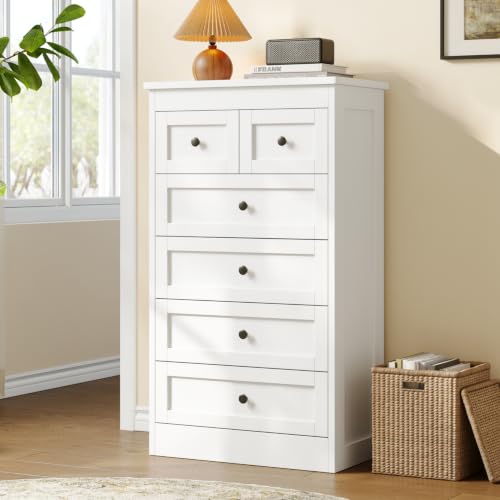
wanan Tall 6 Drawer Dresser for Bedroom, White Modern 43.3'' Tall Wood Chest of Drawers, Storage Organizer with Smooth Metal Rails & Anti-Tip Kit for Closet, Hallway, Living Room
Check price on Amazon
FACBOTALL 44.5" Tall White Dresser, 8 Drawer Dresser with Groove Handles | White Tall Dressers, Modern Chest of Drawers with Large Storage Space for Home Office
Check price on Amazon
Somdot White Tall Dresser for Bedroom with 5 Drawers, Tall Nightstand | Night Stand Bedside Table with Fabric Bins, Metal Frame, Wood Top, Vertical Storage for Dorm, Closet, Entryway
Check price on Amazon
OLIXIS 9 Drawer Black Dresser for Bedroom, Closet Organizer Storage Tower | Easy-Pull Chest of Fabric Drawers, Lightweight Clothes Organizer, Anti-Tip Design, Space-Saving Storage for Dorm, Apartments
Check price on Amazon
Furnulem White Tall Dresser for Bedroom, Chest of Drawer with Fabric Drawer | Tall Skinny Dresser with 7 Drawers, Metal Frame, Wooden Top, Dorm Vertical Closet, Bedside Furniture in Living Room
Check price on Amazon