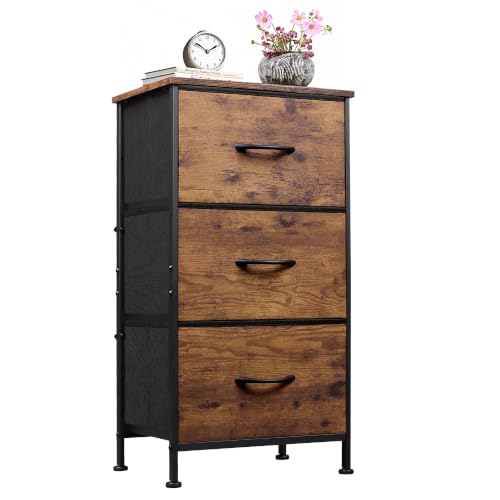
Narrow Chest of Drawers for Small Spaces
Discover how a slim, space-saving chest of drawers can transform a cramped bedroom into an organized, functional retreat. Compare sizes, drawer configurations, materials, and styles to find the right fit for your floor plan.
Start the Buying GuideWhy narrow chests matter: In small bedrooms, every inch counts. A standard dresser can crowd walkways and block closet doors, while a narrow chest of drawers delivers vertical storage without swallowing the floor. This guide walks you through the practical decisions that separate a clever space-saver from a frustrating purchase.
What Counts as a Narrow Chest of Drawers?
There is no universal definition, but furniture retailers and interior designers generally treat a chest of drawers as "narrow" when its width falls under roughly 30 inches. Some slim models go as compact as 18 to 24 inches wide, which is the sweet spot for tight bedrooms, dorm rooms, and apartment layouts where a full-size dresser simply will not fit.
Depth matters just as much as width. A narrow chest that protrudes 20 inches into the room can still block traffic flow, so look for models with a shallow profile — ideally under 18 inches deep — when square footage is limited. If you are comparing different formats, our overview of narrow chest of drawers covers the core categories in more detail.
Height is the third dimension that makes narrow chests so useful. Because the footprint stays small, manufacturers build upward. A tall, slender chest can hold as much as a much wider dresser while occupying a fraction of the floor area. That trade-off is exactly why these pieces are popular in narrow dresser for small bedroom setups.
Standard Narrow Chest Dimensions at a Glance
Use this table as a sizing reference before you measure your room. These are typical ranges, not exact specifications — always confirm the listed dimensions on the product page before ordering.
| Category | Typical Width | Typical Depth | Typical Height | Best For |
|---|---|---|---|---|
| Ultra-slim chest | 18–24 in | 14–16 in | 40–50 in | Dorm rooms, hallway nooks, tiny apartments |
| Compact narrow chest | 24–30 in | 16–18 in | 45–55 in | Small bedrooms, guest rooms, nursery corners |
| Tall narrow chest | 24–32 in | 16–18 in | 55–65 in | Vertical storage in tight floor plans |
| Narrow lingerie chest | 18–22 in | 14–16 in | 50–60 in | Jewelry, accessories, folded delicates |
How Many Drawers Do You Actually Need?
Drawer count is the single biggest factor in how usable a narrow chest feels day to day. A slim footprint forces designers to stack drawers vertically, so the number of drawers usually correlates with height rather than width. Here is a practical breakdown:
- 3-drawer narrow chest: Best for a single person's folded clothing, socks, and basics. Works well as a bedside storage piece or in a guest room. See our modern 3 drawer dresser collection for reference.
- 4-drawer narrow chest: A balanced choice for couples who split a single piece of furniture. Often pairs one deeper bottom drawer with three standard drawers.
- 5-drawer narrow chest: The most popular configuration for small primary bedrooms. Enough capacity for tops, bottoms, and delicates without becoming a towering monolith.
- 6-drawer narrow chest: Ideal when you need to store clothing for two people or want dedicated drawers for linens and off-season items. Our modern 6 drawer dresser guide explains how to plan the layout.
- 7+ drawer narrow chests: These function more like lingerie chests. Each drawer stays shallow, which is excellent for accessories but less useful for bulky sweaters.
A common mistake is choosing too few drawers to save width, then discovering you cannot separate clean clothes from delicates. If space allows even a couple of extra inches, prioritize drawer count over a marginally slimmer body.
Materials and Build Quality
Narrow chests are subject to the same material hierarchy as full-size dressers. The construction you choose affects stability, longevity, and how the piece handles the added height that comes with a compact footprint.
Solid Wood
Solid wood remains the top-tier choice for a narrow chest because tall, slim frames benefit from rigid, heavy materials that resist wobble. Oak, maple, walnut, and pine are common. A natural oak finish hides scratches well and ages gracefully; our natural oak dresser guide covers finish care. Solid wood is typically a long-term investment, and well-joined drawers glide more smoothly for years compared with particleboard construction.
Engineered Wood and MDF
Engineered wood dominates the entry-level and mid-range segments. Modern MDF cores with quality veneers can look excellent and hold up reasonably well in low-traffic rooms. The trade-off is weight and moisture sensitivity — a tall engineered-wood chest should be anchored to the wall, and it is less forgiving if you overstuff heavy drawers.
Metal and Mixed Materials
Metal frames and metal-fronted chests are increasingly common in small-space furniture because they are slim, strong, and visually light. They pair well with industrial and modern interiors. If you prefer a softer look, a narrow wooden chest of drawers offers warmth while keeping the footprint compact.
Quick Quality Check
Look for dovetail or doweled drawer joints, metal drawer glides rated for repeated use, and a finished back panel. On tall narrow chests, a wall-anchoring kit is not optional — it is a safety requirement, especially in homes with children.
Drawer Glides and Hardware: What to Expect by Tier
Drawer mechanisms are where narrow chests differ most in day-to-day feel. Because slim drawers are often used daily, a poor glide system becomes annoying fast.
| Tier | Typical Drawer Glide | What You Can Expect |
|---|---|---|
| Entry-level | Basic side-mounted roller glides | Functional for light use; may feel loose over time and offer no soft-close |
| Mid-range | Ball-bearing side or undermount glides | Smoother operation, better weight support, occasional soft-close options |
| Premium | Full-extension undermount soft-close glides | Quiet, consistent movement; full drawer access and stronger load ratings |
| Luxury | Hand-fitted wooden runners or premium soft-close systems | Heirloom-level smoothness, exceptional durability, refined hardware |
If you want the daily experience of a high-end piece without the full high-end build, look for models marketed with soft-close drawers — a feature that has become common in the mid-tier segment. Our modern dresser with soft close drawers article explains why this matters in shared bedrooms.
Choosing a Style That Fits a Small Room
In compact spaces, visual weight matters as much as physical dimensions. A dark, bulky chest can make a small bedroom feel cramped even if it technically fits. Consider these style directions:
- Modern and minimalist: Clean lines, flush fronts, and slim legs create a lighter footprint. A modern chest of drawers often uses floating or recessed bases to reduce visual mass.
- Scandinavian and natural wood: Light wood tones reflect ambient light. A natural wood chest of drawers pairs beautifully with white walls and small floor plans.
- White and neutral finishes: A narrow white dresser blends into the wall and makes the room feel larger. This is one of the most reliable choices for rental apartments and guest rooms.
- Navy and dark accents: If you want contrast, use a dark chest as the single statement piece. A navy blue chest of drawers can anchor a small room without dominating it, especially when paired with light bedding.
Placement Ideas for Narrow Chests
The right placement can turn an awkward corner into useful storage. Here are proven layouts for tight spaces:
- Bedside wall: Replace a traditional nightstand with a slim 3-drawer chest to gain clothing storage without sacrificing the walking path. This works especially well in rooms where the bed sits against a long wall.
- Closet-adjacent nook: A narrow chest placed beside or inside a reach-in closet can hold folded clothing that would otherwise crowd hanging space. Explore our narrow set of drawers for bedroom ideas for closet-friendly configurations.
- Entry or hallway landing: A shallow chest doubles as a drop zone for scarves, gloves, and accessories. An narrow accent cabinet with drawers can serve this role with a more decorative look.
- Under-window placement: Low-profile narrow chests fit beneath windows where a taller dresser would block light. Pair with a mirror above to bounce daylight around the room.
Before committing, measure the full swing path of doors and drawers. A narrow chest still needs clearance to open fully — plan for at least 18 inches of open-drawer space in front of the piece, and avoid placing it where a closet or bedroom door swings toward it.
Safety and Stability for Tall Narrow Chests
Tall, slim furniture is inherently more prone to tipping than a wide dresser. The risk increases when drawers are overloaded or left open. Take these precautions seriously, especially in homes with toddlers or pets:
- Use the wall-anchoring kit included with most modern chests. If one is not included, purchase an anti-tip strap or bracket separately.
- Load heavier items into lower drawers and keep top drawers for lighter clothing.
- Avoid placing a television or heavy decor on top of a narrow chest unless the manufacturer lists a safe weight limit.
- Close drawers fully after use — an open bottom drawer shifts the center of gravity outward.
For households with young children, our nursery chest of drawers with changing table guide covers specialized safety considerations for nursery furniture.
Narrow Chest vs. Other Small-Space Storage
A narrow chest of drawers is not always the only answer. Compare it against alternative formats before you decide:
| Storage Type | Footprint | Strengths | Trade-offs |
|---|---|---|---|
| Narrow chest of drawers | 18–30 in wide | Tall vertical storage, accessible drawers, easy to integrate | Limited top surface, needs wall anchoring |
| Standard dresser | 36–60 in wide | Large top surface, fewer drawer stacks | May not fit tight rooms or narrow hallways |
| Wardrobe or armoire | 30–48 in wide | Hanging plus shelf storage | Deeper footprint; doors need swing clearance |
| Under-bed storage | Zero floor footprint | Hidden, efficient for seasonal items | Less convenient for daily clothing |
Many small bedrooms benefit from combining a narrow chest with under-bed bins. If you are weighing the two approaches, our narrow dresser with deep drawers guide explores capacity versus accessibility.
Common Mistakes to Avoid
- Buying by width alone. Depth and height determine whether the piece fits the room and holds enough. Always check all three dimensions.
- Skipping the wall anchor. Tall narrow chests need anchoring. No exceptions.
- Ignoring drawer extension. Partial-extension drawers hide the back third of the drawer. Full-extension glides are worth prioritizing in a compact unit.
- Overloading top drawers. Weight distribution affects both glide lifespan and tip risk.
- Forgetting the door swing. A chest that blocks a closet door defeats the purpose of smart storage. Measure clearances before ordering.
Frequently Asked Questions
How narrow can a chest of drawers be?
Ultra-slim models can be as narrow as 18 inches wide. Below that, drawers become too small for folded adult clothing, and the piece shifts toward accent or lingerie storage. For a primary bedroom, 24 to 30 inches is the practical sweet spot.
Is a narrow chest suitable for two people?
Yes, if you choose a tall configuration with at least 5 to 6 drawers and organize by shared categories. Couples in small bedrooms often assign top drawers to one person and lower drawers to the other, or use dividers to split each drawer vertically.
Should I anchor a narrow chest to the wall?
Yes. Tall, slim furniture tips more easily than wide dressers, and anchoring is required for safety in homes with children. Most modern chests include an anti-tip kit; if yours does not, buy a wall strap before use.
What is the best material for a small-space chest of drawers?
Solid wood is the most durable and stable choice for tall narrow frames. Engineered wood with quality veneers is a reasonable entry-level and mid-range option. Metal is strong and slim but suits specific decor styles.
Can a narrow chest replace a nightstand?
Yes — a 3-drawer narrow chest makes an excellent nightstand replacement in small bedrooms. It provides more storage than a standard nightstand while occupying a similar footprint. Pair it with a small lamp or wall sconce rather than a large table lamp.
Ready to Choose Your Narrow Chest?
Use the recommended models below to compare configurations that suit tight bedrooms, guest rooms, and apartment layouts.
Explore Recommended Options