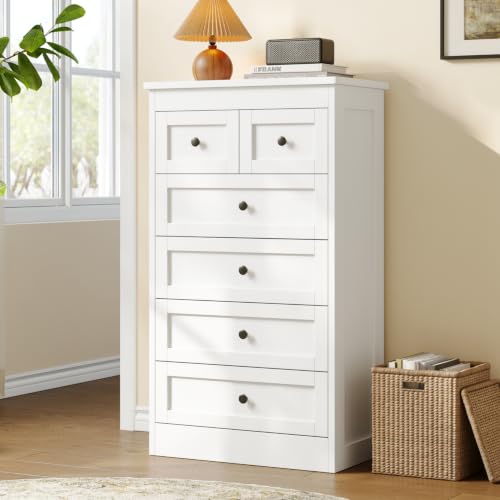
Narrow Chest of Drawers: Smart Storage for Small Spaces
Discover how a slim chest of drawers can transform tight bedrooms, hallways, and alcoves. Compare widths, drawer depths, materials, and safety features before you decide.
START THE GUIDEWhy narrow chests matter: A standard wide dresser often does not fit beside a bed, in a hallway nook, or in a compact apartment bedroom. A narrow chest of drawers solves this by trading width for height, giving you generous drawer volume without crowding the room.
What Is a Narrow Chest of Drawers?
A narrow chest of drawers is a vertical storage piece designed to fit into spaces where a conventional wide dresser cannot go. Instead of spreading drawer storage horizontally, it stacks drawers upward, typically measuring 18 to 30 inches in width. The result is a footprint that slips into gaps beside a bed, at the end of a hallway, or into a closet alcove while still delivering meaningful storage capacity.
This category overlaps with several other furniture types. A tall, slim piece is often called a narrow dresser or a narrow wooden chest of drawers. Shorter compact versions work as accent storage in living rooms and entryways. If you are specifically furnishing a tight bedroom, our guide to a narrow chest of drawers for small spaces covers placement scenarios in more detail.
The key distinction from a standard chest is the width-to-height ratio. A classic chest of drawers might be 40 to 60 inches wide and 30 to 40 inches tall. A narrow chest flips that relationship: it is usually taller than it is wide, which is why anchoring it to the wall becomes especially important.
Narrow Chest Widths and Drawer Configurations
Width is the defining measurement, but drawer count and drawer depth matter just as much for real-world usefulness. The table below summarizes the common configurations you will encounter and what each is best suited for.
| Configuration | Typical Width | Best For | Storage Notes |
|---|---|---|---|
| 3-drawer slim chest | 18–24 in | Bedside, hallway, entryway | Shallow to medium drawers; ideal for accessories, linens, and small folded items |
| 4-drawer narrow chest | 20–26 in | Small bedroom, guest room | Balanced mix of drawer heights; works as a secondary storage piece |
| 5-drawer tall narrow chest | 22–30 in | Primary bedroom storage for one person | Generous vertical capacity; often includes a mix of deep and shallow drawers |
| 6-drawer tall narrow chest | 24–30 in | Small apartment bedroom, closet replacement | Maximum drawer count in a slim footprint; best when anchored to the wall |
| Narrow accent cabinet with drawers | 16–22 in | Living room, dining area, hallway | Often shorter in height; pairs drawers with doors or open shelving |
Beyond width, check drawer depth. A narrow chest with deep drawers can hold sweaters and jeans, while shallow drawers suit socks, jewelry, and scarves. If you need serious capacity in a slim profile, look at a narrow dresser with deep drawers. For bedrooms where floor space is the main constraint, a narrow dresser for small bedroom layout typically pairs a 5 or 6 drawer chest with a bed and a compact nightstand.
Where a Narrow Chest Works Best
Placement drives the buying decision more than any other factor. Before comparing styles, measure the exact gap you intend to fill, then subtract at least two inches of clearance so drawers can open without scraping walls or furniture.
Beside the Bed
A 20 to 24 inch wide chest can replace a nightstand while adding several drawers of clothing storage. Leave enough room for the drawer to pull out fully.
Hallway and Landing
Slim chests turn dead wall space into useful storage for linens, gloves, and household items. Choose a shorter model to keep sightlines open.
Closet Alcove
A narrow chest inside or beside a closet supplements hanging space. A narrow set of drawers for bedroom closets is a common solution for wardrobes with limited shelving.
Entryway
A narrow accent cabinet with drawers provides a drop zone for keys, mail, and small accessories without dominating a compact entry.
Guest Room
Guests need a place to unpack. A 3 or 4 drawer narrow chest gives them dedicated storage without taking over the room.
Dorm and Studio
In shared or multi-use rooms, vertical storage is the priority. A tall narrow chest keeps the floor plan open.
If your room is tight in both directions, a narrow dresser for bedroom placed perpendicular to the bed often works better than pushing furniture against every wall. For even smaller footprints, browse narrow dressers for small spaces and compare which configurations fit your measurements.
Materials and Build Quality
Because a narrow chest is tall relative to its width, build quality directly affects stability, drawer smoothness, and longevity. Material choice is the single biggest predictor of how the piece will feel after a few years of daily use.
Solid Wood
Solid wood frames and drawer fronts resist warping and hold screws and joinery securely. Oak, maple, walnut, and pine are common choices. A narrow wooden chest of drawers in a mid-range or premium tier usually features dovetail or box joints at the drawer corners, which is a strong durability signal. For a lighter natural look, a narrow white dresser or a painted finish over solid wood combines style with structural integrity.
Engineered Wood and Veneer
MDF and particleboard cores with veneer or laminate surfaces are common in entry-level and mid-tier pieces. They can look excellent and offer a stable, uniform surface, but they are more vulnerable to moisture and less forgiving if a drawer runner loosens. Check that the drawer boxes themselves are solid or at least reinforced, since the boxes take the most stress.
Hardware and Runners
Drawer slides are where entry-level and premium tiers diverge most noticeably. Basic friction runners work but feel stiff over time. Ball-bearing side mounts are smoother. Undermount soft-close slides are the benchmark for premium pieces and make a meaningful difference in daily use, especially in a tall chest where you open drawers frequently. A narrow dresser with deep drawers benefits most from high-quality slides because heavier loads put more strain on the mechanism.
Finish
A well-applied finish protects against humidity changes, which matter more for tall narrow pieces because the sides are long and can bow if moisture swings are extreme. Look for sealed edges and consistent coverage, particularly on painted models.
Quality Tiers Explained
To compare narrow chests without relying on numbers, it helps to think in tiers. The classification below is relative: each tier describes where a piece sits in the market and what you can reasonably expect from it.
| Tier | Construction Signals | Drawer Mechanism | Best For |
|---|---|---|---|
| Entry-Level | Engineered wood, laminate or paper veneer, basic joinery | Friction or basic side-mount slides | Guest rooms, temporary setups, light-duty use |
| Mid-Range | Solid wood fronts or reinforced engineered core, decent hardware | Ball-bearing side-mount slides | Daily bedroom use, primary storage for one person |
| High-End | Solid wood frame and drawer boxes, dovetail joints | Undermount soft-close slides | Long-term daily use, primary bedroom furniture |
| Luxury | Hardwood throughout, hand-finished details, premium hardware | Premium undermount soft-close with full extension | Heirloom-quality investment pieces |
A mid-range model usually offers smoother drawer action and better stability than an entry-level piece, while a high-end tier chest adds refinements in joinery and finish that matter over a decade of use. For a narrow chest that will serve as primary bedroom storage, the mid-range and high-end tiers are the most practical targets. For a hallway accent or guest room, an entry-level or mid-tier piece is often a sensible fit.
Safety and Stability Checklist
Tall, narrow furniture has a higher center of gravity than wide dressers, which makes anchoring non-negotiable. Work through this checklist before and during installation:
- Use the anti-tip kit. Every reputable narrow chest ships with a wall anchor or strap. Install it, even in rooms without children.
- Anchor into a stud or use appropriate wall anchors. Drywall anchors alone are not sufficient for a tall chest.
- Check the base width. A chest whose base is nearly as wide as its top is more stable than one that tapers sharply.
- Do not overload top drawers. Keep the heaviest items in lower drawers to lower the center of gravity.
- Test drawer stops. Full-extension slides should not allow a drawer to tip the unit forward when pulled fully open.
- Inspect the back panel. A reinforced back panel adds rigidity, which matters for tall narrow frames.
Safety is especially important in bedrooms where the chest sits beside the bed and may be used to support weight when someone stands up. If you are placing a narrow chest in a child's room, treat anchoring as mandatory rather than optional.
Organizing a Narrow Chest
Limited width changes how you organize. The goal is to use vertical space efficiently without creating piles that make drawers hard to open.
Assign Drawers by Function
In a 5 or 6 drawer narrow chest, dedicate each drawer to a single category: socks and underwear at the top, folded shirts in the middle, heavier items like jeans and sweaters at the bottom. This keeps loads balanced and makes the chest easier to use.
Use Vertical Dividers
Narrow drawers benefit from dividers that create two or three vertical compartments. This is especially useful for accessories, scarves, and folded t-shirts that would otherwise slide into a single deep pile.
Fold Narrow
Folding clothes into narrower, taller stacks suits a slim drawer better than wide horizontal folding. File folding, where items stand upright rather than stack, works particularly well in shallow drawers.
Rotate Seasonally
Because total capacity is smaller than a wide dresser, seasonal rotation matters. Store off-season clothing elsewhere and use the narrow chest for the current season. If you are planning a full bedroom refresh around a narrow chest, our narrow dresser for small bedroom guide includes layout ideas that preserve walking space.
Shopping Checklist
Use this checklist to evaluate any narrow chest of drawers before you commit:
- Measure the gap and add at least two inches of clearance for drawer travel and wall protection.
- Confirm the width falls in the 18 to 30 inch range that defines a narrow chest.
- Check drawer depth against what you plan to store.
- Ask about drawer slides: friction, ball-bearing, or soft-close undermount.
- Verify the anti-tip kit is included and compatible with your wall type.
- Inspect drawer box construction: solid wood or reinforced engineered wood is preferable.
- Consider the finish and how it will handle humidity in your climate.
- Decide on tier based on whether the chest is primary or secondary storage.
Ready to Compare Narrow Chests?
Our recommended list below features slim chests and compact storage pieces selected for small-space bedrooms, hallways, and guest rooms. Compare drawer counts, heights, and construction before choosing the right fit for your room.
Frequently Asked Questions
How wide is a narrow chest of drawers?
A narrow chest of drawers typically measures between 18 and 30 inches in width. Most compact models fall in the 20 to 24 inch range, which fits comfortably into small bedrooms, dorm rooms, hallways, and tight alcoves where a standard wide dresser would not work.
Are narrow chests of drawers stable and safe?
Yes, when properly built and installed. A narrow chest has a smaller footprint, so it is essential to use the anti-tip kit that comes with the unit or purchase one separately. Look for models with a wide base, reinforced back panel, and solid drawer runners. Tall narrow models should always be anchored to the wall, especially in homes with children or pets.
What can I store in a narrow chest of drawers?
Narrow chests are ideal for folded clothing, socks, underwear, accessories, linens, and small household items. Deeper narrow models can hold sweaters and jeans, while shallow drawers work well for jewelry, ties, and scarves. Use drawer dividers to keep small items organized in the limited width.
How many drawers should a narrow chest have?
Most narrow chests offer between 3 and 6 drawers. A 3 or 4 drawer model is a good choice for a bedside or hallway accent, while a 5 or 6 drawer tall narrow chest maximizes vertical storage in a small bedroom. Choose based on what you plan to store and how much vertical clearance you have.
Can a narrow chest of drawers replace a full-size dresser?
For one person with a modest wardrobe, a tall narrow chest with 5 or 6 drawers can absolutely replace a full-size dresser. For couples or larger wardrobes, a narrow chest works best as a supplement, paired with a closet system or a second storage piece. Consider total drawer volume rather than just width when deciding.