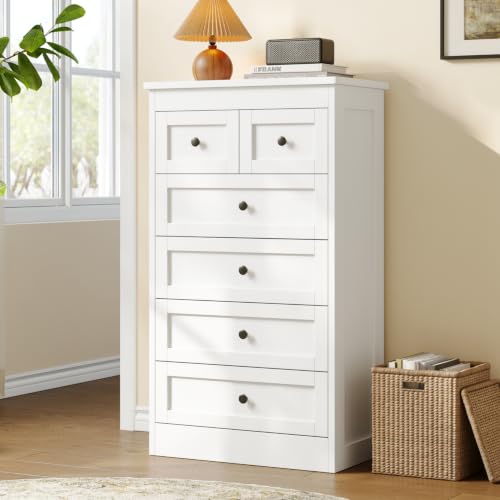
Narrow Dresser with Deep Drawers: The Space-Smart Storage Solution
Maximize every inch of your bedroom with a slim-profile dresser that stores more than it looks. Here is everything you need to know before you choose one.
Why this guide matters: If you are searching for a narrow dresser with deep drawers, you are likely dealing with a compact bedroom, a tight closet, or an apartment where every square foot counts. This guide explains how slim width and deep drawer capacity work together, what to check before buying, and how to organize the drawers so the piece stays useful for years.
What Exactly Is a Narrow Dresser with Deep Drawers?
A narrow dresser with deep drawers is a storage piece built with a slim horizontal footprint, usually somewhere between 20 and 32 inches wide, while its drawers extend deeper than a standard dresser drawer. The combination is deliberate: the narrow width lets the piece slip into gaps beside a bed, along a wall, or inside a closet, while the extra drawer depth recovers the storage capacity lost by the slim profile.
Unlike a tall, vertical chest of drawers, this type of dresser stays low and wide enough to double as a surface for lamps, mirrors, or decorative trays. If you are still weighing the two formats, our comparison of a narrow dresser versus a traditional chest may help clarify the trade-offs before you commit.
The deep drawer element is what separates a genuinely useful slim dresser from a decorative one. Shallow drawers in a narrow frame quickly become frustrating because folded clothing stacks too high and bulky items simply do not fit. Deep drawers, by contrast, let you store sweaters, linens, and off-season clothing without cramming.
Why Choose a Narrow Dresser with Deep Drawers?
Most bedroom storage advice assumes you have generous floor space. In reality, many bedrooms, guest rooms, and apartments do not. A narrow dresser with deep drawers solves a specific problem: it delivers meaningful storage volume without demanding a wide wall or blocking circulation.
Key benefits
- Fits tight footprints: A slim width works in rooms where a standard six-drawer dresser would crowd the bed or block a doorway.
- Recovers capacity through depth: Deep drawers hold more per drawer, so you need fewer of them to store the same volume of clothing.
- Works in closets and alcoves: The narrow profile fits inside walk-in closets, under sloped ceilings, and in alcoves that cannot take a full-width unit.
- Doubles as a surface: The low, wide top remains usable for a lamp, mirror, or decorative display even in a small room.
- Better for shared rooms: Two people can each claim a column of deep drawers without needing a second piece of furniture.
For rooms where the constraint is width rather than depth, a dedicated narrow dresser for a small bedroom is often the most practical starting point. If the constraint is overall floor area, pairing it with ideas from our narrow dressers for small spaces collection gives you more layout options.
Sizing Guide: Width, Depth, and Height Explained
Before you buy, measure the intended wall or gap carefully. A dresser that is one inch too wide will not fit, and a dresser that is too shallow will not deliver the deep-drawer benefit you are paying for.
| Dimension | Typical Range | What to Check |
|---|---|---|
| Width | 20 to 32 inches | Leave at least 2 inches of clearance on each side for drawer pull-out and cleaning. |
| Drawer depth | 15 to 20 inches | Confirm the internal drawer depth, not just the overall cabinet depth. |
| Height | 28 to 40 inches | Choose a height that keeps the top surface comfortable for daily use. |
| Drawer count | 3 to 6 drawers | Fewer, deeper drawers usually store more than many shallow ones. |
When measuring, account for baseboard trim, door swing, and any wall-mounted items. A dresser that fits the wall but blocks a closet door is not a good fit. If you are working with a particularly compact layout, our guide to a narrow dresser for the bedroom walks through clearance planning in more detail.
How Deep Should the Drawers Actually Be?
Drawer depth is the single most important specification on this type of dresser. A narrow dresser with shallow drawers is essentially a display piece; the same frame with deep drawers becomes a genuine storage workhorse.
As a rule of thumb, drawers that are 15 to 18 inches deep handle folded clothing comfortably, while drawers closer to 20 inches are better suited to linens, blankets, and bulky knitwear. Very deep drawers in a narrow frame can become hard to reach at the back, so look for full-extension drawer slides that let you pull the drawer out completely.
Buying tip: check the drawer box, not the cabinet
A dresser may have a 19-inch cabinet depth but only a 14-inch internal drawer box because of the frame and hardware. Always look for the internal drawer dimensions in the product specifications, and favor models that list full-extension glides explicitly.
If you want to compare drawer configurations across styles, our narrow chest of drawers guide breaks down how drawer count and depth interact in practice.
Materials and Construction: What to Look For
Deep drawers carry more weight than shallow ones, so construction quality matters more here than on a decorative piece. A drawer full of sweaters can weigh considerably more than a drawer of folded shirts, and the frame, glides, and drawer bottoms all need to handle that load.
Construction checklist
- Solid wood or high-grade engineered wood: Both can be durable; the key is a stable frame and well-finished edges.
- Dovetail or reinforced drawer joints: These hold up better under the weight of deep, full drawers than stapled joints.
- Full-extension metal glides: Essential for reaching the back of deep drawers without straining the mechanism.
- Sturdy drawer bottoms: A thin bottom will bow under heavy loads; look for a supported base panel.
- Wall-anchoring hardware: Any tall or narrow dresser should be secured to the wall for safety, especially in homes with children.
For a natural finish that suits both traditional and modern rooms, a narrow wooden chest of drawers is a versatile choice. If your room leans toward a cleaner palette, a narrow white dresser keeps a small space feeling bright.
Styles That Work in Narrow Formats
The narrow format suits several design directions well. The right choice depends on the room's existing furniture and how much visual weight you want the piece to carry.
Popular style directions
- Modern and minimalist: Clean lines, flush fronts, and integrated pulls keep a small room feeling uncluttered. A modern dresser for the bedroom in this style often works best in compact layouts.
- Mid-century inspired: Tapered legs and warm wood tones add character without bulk.
- Farmhouse and cottage: Painted finishes and simple hardware soften a narrow piece and suit guest rooms.
- Industrial: Metal accents and darker finishes give a slim dresser a stronger visual presence.
If you prefer a natural wood look, our collection of natural wood dressers includes several slim options. For something with a bit more warmth, explore mustard dresser finishes that add color without requiring extra floor space.
How to Organize Deep Drawers in a Narrow Dresser
Deep drawers are only an advantage if they stay organized. Without a system, the extra depth becomes a place where items disappear. A simple approach is to assign each drawer a category and use dividers to keep it that way.
A practical drawer plan
- Top drawer: Socks, underwear, and small accessories in divided inserts.
- Middle drawers: Folded tops and trousers, stored in vertical file folds so you can see everything at a glance.
- Bottom drawer: Bulky knitwear, linens, or off-season items in breathable storage bags.
Use drawer dividers to create zones, and avoid stacking clothing more than two layers high in deep drawers, since items at the bottom tend to be forgotten. Rotating seasonal clothing out of the bottom drawer twice a year keeps the dresser functional year-round. For a fuller system, see our narrow set of drawers for the bedroom guide.
Where a Narrow Dresser with Deep Drawers Works Best
The versatility of this format is one of its strongest arguments. Common placements include:
- Beside the bed: A slim dresser can replace a nightstand while adding far more storage.
- Inside a walk-in closet: The narrow profile fits between hanging rails or along a short wall.
- In a guest room or nursery: Deep drawers handle linens and baby clothing without taking up much floor area.
- In an entryway or hallway: A narrow dresser can serve as a console with concealed storage.
- Under a sloped ceiling: Low, wide formats fit where taller chests cannot stand.
If your space is very tight, pairing the dresser with a compact narrow accent cabinet with drawers can extend storage along the same wall without adding visual clutter.
Common Mistakes to Avoid
Buyers researching this category often make the same few errors. Avoiding them saves a return and a lot of frustration.
- Measuring the wall but not the doorway: Confirm the dresser will fit through the room's entry and stairwell before ordering.
- Ignoring drawer extension: Deep drawers without full-extension glides are difficult to use.
- Choosing style over construction: A slim dresser with poor joints will not survive the weight of deep, full drawers.
- Skipping wall anchoring: Narrow and tall furniture should always be secured to prevent tipping.
- Overloading the top: A narrow dresser has a smaller top surface, so keep display items light and minimal.
Quick Buying Checklist
Use this checklist before you finalize a purchase:
- Measured width, depth, and height of the intended space, including clearance.
- Confirmed internal drawer depth, not just cabinet depth.
- Checked drawer glide type and weight rating.
- Verified construction quality: joints, drawer bottoms, and finish.
- Confirmed the piece includes wall-anchoring hardware.
- Planned a drawer organization system before the dresser arrives.
For a broader comparison across slim formats, our narrow chest of drawers for small spaces guide covers additional configurations worth considering.
Frequently Asked Questions
How deep should drawers be in a narrow dresser?
Deep drawers in a narrow dresser typically range from 15 to 20 inches in depth, which is enough to store folded clothing, linens, and bulkier items without wasting vertical space. Deeper drawers are especially useful when the dresser footprint is limited.
Can a narrow dresser with deep drawers fit in a small bedroom?
Yes. A narrow dresser with deep drawers is designed specifically for compact bedrooms, closets, and apartments. Its slim width saves floor space while the deep drawers compensate with generous internal storage capacity.
What is the difference between a narrow dresser and a chest of drawers?
A narrow dresser is usually wider than it is tall with a slim profile, while a chest of drawers is taller and more vertical. A narrow dresser with deep drawers blends both ideas, offering a slim footprint with substantial drawer depth.
Are deep drawers harder to keep organized?
They can be if you stack items too high. Use dividers, store clothing in vertical file folds, and assign categories to each drawer so that items at the back remain visible and accessible.
Should I anchor a narrow dresser to the wall?
Yes. Any narrow or tall dresser should be secured to the wall with the supplied anti-tip hardware, especially in households with children or pets. This is a standard safety recommendation for all bedroom furniture.