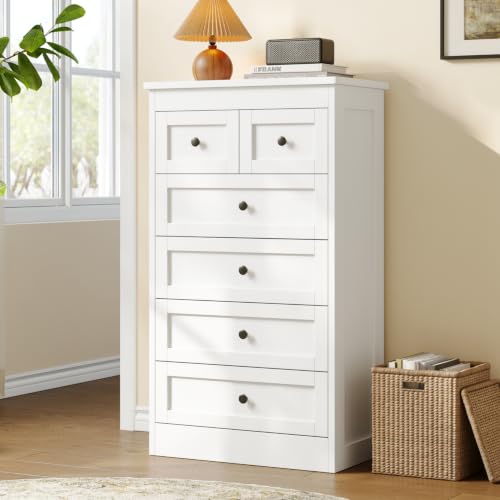
Narrow Dresser for Small Bedroom
Discover how a narrow dresser can transform your compact bedroom into an organized, stylish retreat. Expert guidance on dimensions, drawer configurations, materials, and space-saving strategies.
START YOUR SEARCHWhy a narrow dresser? In a small bedroom, every square foot counts. A narrow dresser delivers maximum storage in a minimal footprint, letting you keep your belongings organized without sacrificing floor space or making the room feel cramped.
What Defines a Narrow Dresser
A narrow dresser is a storage piece designed with a slim profile, typically measuring between 20 and 30 inches in width. Unlike a standard dresser that can span 40 to 60 inches across, a narrow dresser prioritizes vertical storage to compensate for its reduced horizontal footprint.
For small bedrooms, this vertical emphasis is a game-changer. A narrow dresser can tuck into tight corners, fit between windows, or sit alongside a bed without crowding the walking path. Many models reach heights of 40 to 55 inches, offering four to five drawers of usable storage.
The concept overlaps with a narrow chest of drawers, though chests tend to be taller and more vertical, while narrow dressers may include a mix of drawer sizes and occasionally a cabinet door. Both serve the same fundamental purpose: efficient storage in a compact form.
When shopping, look beyond the label. A piece marketed as a narrow dresser may vary significantly in depth as well. Standard dressers are about 18 to 20 inches deep, while some narrow models slim down to 15 or 16 inches — a crucial detail if your bedroom has a tight doorway or narrow walking corridor.
Key Buying Factors for a Small Bedroom
Choosing a narrow dresser for a small bedroom involves more than simply picking the slimmest option. You need to balance storage capacity, durability, and visual weight so the piece feels intentional rather than cramped.
Measure Twice, Buy Once
Record the width, depth, and height of your available wall space. Account for door swings, closet clearance, and at least 24 inches of walking room. A dresser that technically fits but blocks movement will frustrate you daily.
Depth Matters
A shallow depth of 15 to 18 inches saves floor space, but confirm that drawers still hold folded clothing comfortably. Deep drawers on a narrow frame (often called a narrow dresser with deep drawers) offer the best of both worlds.
Height for Vertical Storage
Taller narrow dressers (48 to 55 inches) maximize storage without expanding the footprint. Just ensure the top is reachable and the piece does not overwhelm the room visually.
Drawer Glide Quality
In a small room, you will open drawers frequently. Metal ball-bearing glides with soft-close mechanisms reduce noise and wear. Mid-range and premium models typically offer smoother operation than entry-level options.
Stability and Safety
Tall, narrow furniture can tip if drawers are overloaded. Choose models with anti-tip hardware and secure the unit to the wall — especially important in bedrooms used by children.
Visual Lightness
Light finishes, open legs, and minimal hardware help a narrow dresser blend into a small room rather than dominate it. A narrow white dresser is a classic choice for creating an airy feel.
Drawer Configurations That Work
The drawer layout of a narrow dresser directly affects how much you can store and how easily you can access it. In a compact bedroom, efficiency is everything.
Four-drawer vertical stacks are the most common configuration. The top drawers handle smaller items like socks and accessories, while the bottom drawers accommodate bulkier clothing. This layout suits a single adult or a couple sharing a small space.
Five-drawer models often split the difference with a mix of shallow and deep drawers, giving you flexibility for everything from folded shirts to bedding. If you need extra capacity without adding width, a narrow set of drawers for bedroom with five tiers is a practical upgrade.
Three-drawer narrow dressers work well as secondary storage — perhaps for a guest room or a child's bedroom where clothing volume is lower. Pair one with a narrow accent cabinet with drawers if you need a mix of concealed and open storage.
Consider drawer dividers and organizers to keep narrow drawers from becoming chaotic. Because narrow drawers have less surface area, compartmentalizing is especially valuable for maintaining order.
Materials and Finishes for Small Spaces
The material you choose affects durability, maintenance, and the overall aesthetic of your bedroom. For a narrow dresser in a small room, lighter finishes and quality construction make the biggest difference.
Solid wood — oak, maple, pine, or walnut — represents the top-tier investment. Solid wood resists wear, can be refinished, and ages gracefully. A narrow wooden chest of drawers in a natural finish brings warmth without visual heaviness.
Engineered wood with veneer sits in the mid-range tier. It offers a stable, uniform surface and often comes in crisp painted finishes. Entry-level engineered wood can be serviceable, but check for sturdy joinery and reinforced drawer bottoms.
Metal is a niche option for narrow dressers, but it excels in modern, industrial, or minimalist bedrooms. Metal frames are slim, durable, and easy to clean — an excellent fit for a narrow dresser for bedroom with a contemporary aesthetic.
Finish choice matters as much as material. White, light gray, natural oak, and soft pastels reflect light and make small bedrooms feel larger. Dark finishes can work beautifully in a well-lit room but may visually shrink a cramped space.
Space-Saving Placement Tips
Where you place your narrow dresser is as important as the piece itself. Strategic positioning can make a small bedroom feel organized and open.
- Use the wall beside the bed. A narrow dresser can double as a nightstand, holding a lamp and a few essentials on top while providing clothing storage below.
- Tuck it into a corner. Corner placement removes the need for walking space on two sides, freeing up the center of the room.
- Flank a window. If your window is off-center, a narrow dresser on one side can create visual balance without blocking light.
- Go vertical in a closet. If your bedroom closet is small, a narrow dresser can sit inside or just outside the closet door, acting as an extension of your storage system.
- Pair with a mirror. A mirror above or beside a narrow dresser amplifies light and creates the illusion of depth — a classic small-space trick.
For more ideas on maximizing tight quarters, explore our guide to narrow dressers for small spaces, which covers additional configurations and room layouts.
Narrow Dresser Types Compared
Not all narrow dressers serve the same purpose. The table below outlines common types and their best use cases so you can match a style to your bedroom's specific needs.
| Type | Typical Width | Best For | Tier Positioning |
|---|---|---|---|
| Tall narrow dresser | 20–26 inches | Maximizing vertical storage in tiny rooms | Mid-range to premium |
| Narrow chest of drawers | 22–30 inches | Clothing storage with a classic silhouette | Entry-level to luxury |
| Narrow accent cabinet | 18–24 inches | Mixed storage: drawers plus cabinet doors | Mid-tier |
| Narrow dresser with deep drawers | 24–30 inches | Bulky items like jeans, sweaters, bedding | Balanced tier |
| Narrow white dresser | 20–28 inches | Bright, airy small bedrooms and nurseries | Entry-level to premium |
If your bedroom also serves as a home office or multi-purpose space, consider a narrow dresser for bedroom that pairs well with a compact desk or vanity. A narrow chest of drawers for small spaces can be especially versatile when it includes a flat top surface for display or daily essentials.
Ready to Find Your Perfect Narrow Dresser?
Browse our curated selection of narrow dressers and space-saving storage solutions, hand-picked for small bedrooms and compact living spaces.
VIEW RECOMMENDED OPTIONSFrequently Asked Questions
A narrow dresser typically measures between 20 and 30 inches in width, making it ideal for small bedrooms where floor space is limited. Measure your available wall space and leave at least 24 inches of clearance for walking and opening drawers. If your room is exceptionally tight, consider a model closer to 20 inches wide.
A vertical stack of 4 to 5 drawers works best for narrow dressers. This configuration maximizes storage capacity while keeping the footprint compact. Deep bottom drawers are excellent for bulkier items like jeans and sweaters, while shallower top drawers suit accessories and folded shirts.
For compact living spaces, a tall narrow dresser combined with under-bed storage and hanging solutions can serve as an effective closet alternative. Choose models with deep drawers and a height of at least 50 inches to maximize vertical storage. Pair with a tension rod or wall-mounted hooks for hanging items.
Solid wood construction offers the best durability and longevity, representing a long-term investment. Engineered wood with a quality veneer provides a solid mid-range option. Light-colored finishes such as white, natural oak, or light gray help small bedrooms feel more spacious and airy.
Always use the anti-tip hardware that comes with the dresser to secure it to the wall. Avoid overloading top drawers with heavy items, and distribute weight evenly. In bedrooms used by children, wall anchoring is essential regardless of the dresser's height.