Mirrored Dresser and Nightstand: A Complete Buying Guide
Reflective surfaces bring light, depth, and quiet glamour to the bedroom. Learn how to choose a mirrored dresser and nightstand pairing that fits your space, your storage needs, and your personal style.
Explore Recommended OptionsWhat Defines a Mirrored Dresser and Nightstand Set?
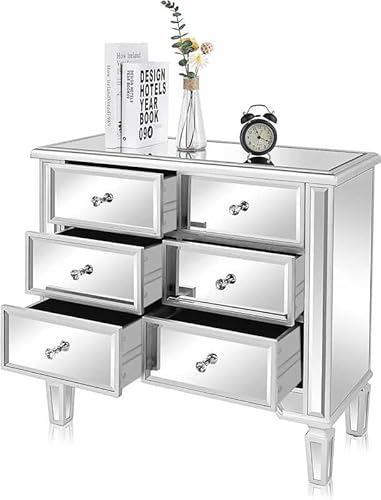
A mirrored dresser and nightstand set is a coordinated bedroom furniture pairing in which both pieces incorporate mirrored glass — usually on the drawer fronts, and sometimes across the full body, top, or side panels. The mirror is typically beveled for a polished edge and mounted over a solid wood or engineered wood carcass. The result is furniture that reads as both storage and décor.
These sets are often associated with glam, art deco, and modern luxe interiors, but the category has broadened. You can now find mirrored dresser and nightstand sets that lean minimalist with slim metal frames, or warmer transitional designs that pair mirror panels with wood trim. If you prefer a standalone piece first, the individual mirrored dresser and nightstand pages break down each component separately.
Functionally, the dresser handles folded clothing, linens, and accessories, while the nightstand keeps bedside essentials within reach. Buying them as a set ensures proportional harmony — matching hardware, mirror tint, and frame finish — which is difficult to replicate when sourcing pieces separately.
Benefits of Reflective Bedroom Furniture
- Light amplification: Mirrored surfaces reflect daylight from windows and lamp light, reducing the need for extra fixtures in dim bedrooms.
- Perceived space: Reflection creates visual depth, which helps small bedrooms feel less cramped without adding furniture footprint.
- Design cohesion: A matched set delivers consistent mirror tint and frame finish, so the room looks intentional rather than assembled.
- Style versatility: Mirror reads as neutral. It pairs with velvet, linen, leather, and wood, making it easy to restyle the room later.
- Dual purpose: The dresser top doubles as a display surface for trays, lamps, and decorative objects, while the mirror behind adds a layer of visual interest.
One practical note: mirror shows fingerprints and dust more readily than painted wood. If you prefer low-maintenance surfaces, consider a design where only the drawer fronts are mirrored and the top is a solid finish. For alternatives with a different visual character, browse distressed dresser styles or a white dresser with white handles for a softer, opaque look.
Popular Styles and Finishes
Mirrored furniture is not a single aesthetic. The frame material and mirror treatment determine whether a set feels glamorous, industrial, or quietly modern.
- Art deco glam: Beveled mirror panels, champagne or antique-brass hardware, and tapered legs. This is the classic mirrored look.
- Modern minimalist: Slim black or brushed-steel frames with plain mirror fronts and recessed pulls. Clean lines, no ornament.
- Transitional: Mirror drawer fronts set into a wood carcass — often walnut or natural oak — softening the reflectivity with warmth.
- Antique-inspired: Distressed or foxed mirror with a subtle patina, paired with ornate pulls. Works well in traditional and cottage interiors.
If you like the reflective look but want a warmer frame, a walnut wood dresser with mirrored inserts offers a middle ground. For a lighter, airier feel, a natural oak dresser paired with a simple mirror nightstand keeps the palette calm.
Sizing Your Dresser and Nightstand Pair
Proportion matters more with a matched set than with standalone pieces, because the two items are read together. Start with the dresser, then size the nightstand to the bed and the available wall space.
Dresser width: A general rule is to leave at least 24 inches of clear floor space in front of the dresser for drawer pull-out. In a primary bedroom, a 60–72 inch wide dresser is a common fit; in a guest room or dorm dresser setting, a narrower 36–48 inch piece is more practical.
Dresser height: Aim for a top surface around 30–36 inches from the floor for comfortable use while standing. A low profile dresser can work as a media surface or under a window, while a tall skinny dresser suits closets and narrow walls.
Nightstand height: The nightstand top should sit within a few inches of the mattress top — usually 24–28 inches from the floor. Width should be proportional to the dresser; a nightstand that is roughly one-third to one-half the dresser width reads as balanced.
For rooms where depth is the constraint, a shallow depth dresser for small spaces preserves walkway clearance. In a narrow bedroom, a narrow set of drawers for bedroom may be the better dresser choice, paired with a compact nightstand.
Construction Quality: What Separates the Tiers
Mirrored furniture spans a wide quality range. The descriptor tiers below help you compare sets on construction rather than on any single specification.
Essential Tier
Engineered wood carcass with mirror laminate or thin glass fronts. Drawers typically run on standard side-mounted glides. Suitable for guest rooms and low-traffic spaces where the reflective look matters more than long-term wear.
Balanced Tier
Solid wood or high-grade plywood frame with beveled mirror panels and metal ball-bearing glides. Dovetail or reinforced drawer joints appear at this tier. A solid choice for daily use in a primary bedroom.
High-End Tier
Kiln-dried hardwood frames, full-extension soft-close glides, and hand-finished mirror edges. Hardware is solid metal rather than plated. These sets are built as long-term investments and often carry multi-year structural coverage.
At every tier, inspect three things: the mirror backing (a sealed back prevents silvering deterioration), the drawer box (thicker sides resist racking), and the frame joinery (corner blocks or dowels signal sturdier assembly). A high quality solid wood dresser frame paired with mirrored fronts is generally the most durable configuration.
Quick Comparison by Category
| Tier | Best For | Frame Material | Drawer Glides |
|---|---|---|---|
| Essential tier | Guest rooms, rentals, low-traffic bedrooms | Engineered wood with mirror laminate | Standard side-mounted |
| Balanced tier | Primary bedrooms with daily use | Solid wood or high-grade plywood | Ball-bearing metal |
| High-end tier | Long-term investment, high-use bedrooms | Kiln-dried hardwood | Full-extension soft-close |
Styling a Mirrored Dresser and Nightstand
Mirror reflects whatever you place near it, so styling choices are amplified. A few principles keep the look intentional:
- Anchor with texture: A velvet stool or a woven bench in front of the dresser softens the hard reflective surface. A dresser bench also adds a practical seating spot.
- Layer lighting: A glass or metallic table lamp on the nightstand plays well with mirror. Avoid oversized shades that block the reflected glow.
- Keep the top curated: A small tray, one or two objects, and a single plant or vase is enough. Mirror doubles the visual count, so less reads as more.
- Mind the wall behind: If the dresser sits against a window, the mirror will reflect the outdoors — a strong effect. Against a solid wall, consider a subtle wallpaper or a large artwork so the reflection has something interesting to show.
For broader styling direction, the dresser with hutch approach shows how vertical layering changes a dresser's presence, and a white beside table and dresser pairing demonstrates how a light palette interacts with reflective finishes.
Care and Maintenance Tip
Dust mirrored fronts weekly with a microfiber cloth. For smudges, use a gentle glass cleaner sprayed onto the cloth — never directly onto the mirror, since liquid can seep behind the glass and damage the backing. Avoid ammonia-based products and abrasive pads. Keep the dresser out of direct, prolonged sunlight to slow silvering deterioration, and use felt pads under objects on the top surface to prevent scratches.
Matching the Set to Your Bedroom
A mirrored set is most effective when it responds to the room's existing light and palette. In a north-facing bedroom with cool, indirect light, mirror amplifies what little daylight arrives. In a bright south-facing room, it can be almost too reflective — in that case, choose a set with wood-framed mirror panels rather than full-mirror sides.
For a coordinated whole-room approach, consider how the set relates to other storage. A double dresser and nightstand set offers a wider dresser surface for shared bedrooms. If closet space is tight, a tall skinny dresser for closet can supplement the main dresser without competing visually. And in a nursery or child's room, a small chest of drawers with mirror delivers the reflective look at a more compact scale.
If you are furnishing a full bedroom from scratch, the solid wood bedroom dresser set guide explains how matching sets are assembled and what to check for consistency across pieces. For a lighter, more contemporary alternative to mirror, a white chest of drawers with gold handles delivers similar glamour with an opaque finish.
Frequently Asked Questions
Is a mirrored dresser and nightstand set suitable for a small bedroom?
Yes. The reflective surfaces bounce light and create visual depth, which makes a compact room feel larger. The key is choosing the right footprint — a narrow dresser and a compact nightstand keep the floor plan open while still delivering the reflective effect.
How do I prevent fingerprints on mirrored drawer fronts?
Use recessed or integrated pulls rather than protruding handles where possible, since hands touch the drawer face less. Wipe the mirror weekly with a microfiber cloth, and keep a small glass-cleaning cloth nearby for quick touch-ups. Avoid paper towels, which can leave lint and micro-scratches.
Can I mix a mirrored dresser with a non-mirrored nightstand?
You can, but the pairing requires deliberate balancing. A wood or painted nightstand can ground the reflective dresser and prevent the room from feeling overly shiny. If you mix, repeat the nightstand's material or finish elsewhere in the room — for example, in a mirror frame or a lamp base — so the combination reads as intentional.
What should I check before buying a mirrored set online?
Confirm the mirror backing is sealed, the drawer glides are metal rather than plastic, and the frame material is specified (solid wood, plywood, or engineered wood). Check the assembled dimensions against your wall space and walkway clearance. Read the return policy, since mirror is fragile in transit, and verify whether the set ships fully assembled or flat-pack.
Does mirrored furniture go out of style?
Mirror has cycled through interior design for centuries, from baroque to art deco to contemporary glam. Because it reads as a neutral reflective surface, it tends to adapt rather than date. Frame style — not the mirror itself — is what signals an era, so choose a frame profile you expect to live with for years.