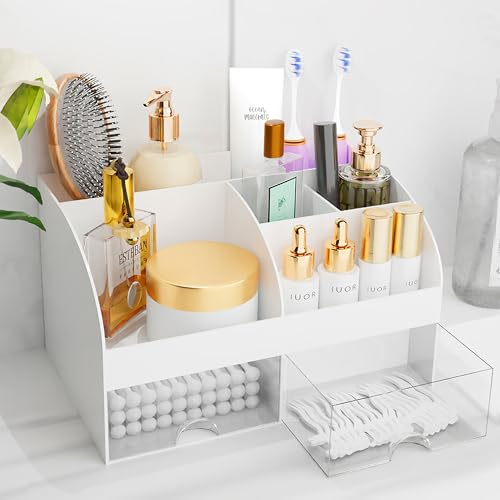
Makeup Organizer for Dresser Top: A Complete Buying Guide
Your dresser top is prime real estate for daily beauty essentials. Learn how to choose a makeup organizer that fits your surface, protects your furniture, and keeps every product visible and within reach.
EXPLORE ORGANIZER OPTIONSWhy a Dedicated Dresser Top Organizer Matters
Most bedrooms have a dresser that doubles as a catch-all surface. Perfume bottles, brushes, foundation, and lip products end up scattered across the top, which makes the room feel untidy even when the rest of the space is clean. A purpose-built makeup organizer for dresser top use solves three problems at once: it contains small items that roll or tip, it lifts products so labels stay visible, and it creates a repeatable place for everything so the surface stays clear.
There is also a practical durability angle. Cosmetics leak, powders spill, and bottles sweat condensation. An organizer with a wipe-clean surface or removable trays means you clean the organizer rather than scrubbing the dresser finish itself. If your dresser has a delicate finish, such as a marble top dresser or a lacquered matte black dresser, that protective layer is worth having.
Finally, a good organizer supports a morning routine. When products sit in fixed, logical positions, you spend less time hunting and more time getting ready. The difference between a crowded tray and a thoughtfully tiered organizer is noticeable within the first week.
Types of Makeup Organizers for Dresser Tops
Organizers generally fall into five formats. Each has a distinct trade-off between visibility, dust protection, and footprint.
1. Tiered Display Trays
These use two or three stepped levels so shorter items sit in front and taller bottles sit behind. They are the most common entry-level format and work well on a low-profile dresser where vertical space is not a constraint. Visibility is excellent, but the open design means dust settles on exposed products.
2. Drawer-Based Organizer Units
A compact unit with two to five shallow pull-out drawers protects contents from dust and hides clutter. Drawer-based units are the strongest choice if visual calm matters to you, but you sacrifice the at-a-glance view that open trays provide. Look for smooth-glide runners; cheap friction slides jam once a drawer is loaded with glass bottles.
3. Stackable Modular Trays
Individual trays that lock or stack let you build a footprint that matches your exact dresser top. They are flexible and easy to reconfigure as your collection changes. The trade-off is that poorly fitting modules can wobble, so check that the stacking mechanism is secure before committing.
4. Rotating Carousel Organizers
A circular carousel uses vertical space efficiently and gives access to every item with a turn. These suit compact dresser tops and are especially useful on a small dresser where depth is limited. They hold fewer large bottles than rectangular units but excel for brushes, liners, and small compacts.
5. Combined Vanity and Organizer Surfaces
Some organizers integrate a small mirror or a raised shelf, effectively turning the dresser top into a compact vanity station. If you are considering this route, compare it against a dedicated makeup dresser or a makeup dresser with mirror before deciding, since a full vanity offers more storage depth than an organizer add-on.
Sizing and Footprint: Matching Your Dresser Top
Measure before you shop. The two numbers that matter are usable depth (front edge to the back edge, minus any wall clearance) and the clear width between items you cannot move, such as a lamp or mirror base.
Typical dresser tops offer 15 to 20 inches of usable depth. An organizer with a footprint around 10 by 14 inches leaves comfortable clearance on all sides. If your dresser is narrower, such as a narrow dresser or a mini dresser, favor a vertical or carousel design that grows upward rather than outward.
Height Considerations
Check the height of the tallest bottle you own before choosing a tiered unit. A common mistake is buying an organizer whose top shelf cannot clear a tall perfume flacon, which forces the bottle to sit on the dresser anyway and defeats the purpose. A unit with at least 8 inches of clearance on the rear tier handles most standard bottles.
Mirror and Lamp Clearance
If your dresser has an attached mirror, confirm the organizer does not block the mirror's lower edge. On a marble top dresser with mirror, the mirror frame often sits close to the surface, which reduces usable depth by an inch or two. Measure to the mirror base, not the back edge of the dresser.
| Dresser Top Width | Recommended Organizer Format | Footprint Guidance | Best For |
|---|---|---|---|
| Under 30 inches | Rotating carousel or vertical stack | Keep footprint under 10 × 10 inches | Compact and mini dressers |
| 30 to 44 inches | Tiered display tray or two-drawer unit | Roughly 10 × 14 inches | Standard single-width dressers |
| 45 to 60 inches | Drawer unit plus stackable side trays | Up to 14 × 18 inches total | Double and wide dressers |
| Over 60 inches | Modular multi-unit layout | Split into two zones to avoid a crowded look | Long lowboy and triple dressers |
Materials and Finishes Compared
Material choice affects cleaning, weight, and how well the organizer blends with your existing furniture. The four common options are acrylic, solid wood or bamboo, metal, and fabric-lined composite.
Acrylic and Clear Plastic
Acrylic is the most popular material for dresser top organizers because it is see-through, easy to wipe clean, and light enough to lift when you need to clean underneath. High-grade acrylic resists yellowing better than basic plastic. The main weakness is scratching; avoid dragging rough objects across the surface and clean with a soft cloth rather than an abrasive pad.
Solid Wood and Bamboo
Wood and bamboo organizers pair naturally with wooden furniture, including a mahogany dresser or a maple wood dresser. They are heavier and more stable, which matters if you open drawers frequently. Bamboo is the lighter and more moisture-tolerant option; solid hardwood offers a more refined finish. Both need occasional dusting and should be kept away from standing water.
Metal Frames
Powder-coated metal frames with wire or mesh shelves bring a modern, industrial look. They are durable and easy to clean, and the open structure keeps products visible. Choose a rust-proof finish if the organizer will sit near a bathroom-adjacent dresser where humidity fluctuates.
Fabric-Lined Composite
Fabric-lined drawer inserts feel softer and protect delicate compacts from scratches. They are less suited to spill-prone products because fabric stains. If you choose this material, look for removable, washable liners.
Capacity, Tier, and Layout Planning
Capacity is best planned by product category rather than by raw item count. Group your collection into four buckets before shopping: tall bottles (perfume, setting spray), flat compacts and palettes, upright tools (brushes, pencils, liners), and small loose items (hair ties, sample sachets).
Matching Tiers to Categories
- Rear tier: tall bottles, grouped by height so the tallest sit at the back edge.
- Middle tier: palettes and compacts laid flat or angled on a riser.
- Front tier: daily-use items you reach for most often, kept shallow for quick access.
- Side compartments: upright brushes and pencils in divided cups or slots.
- Drawers: items you want out of sight, such as backups and rarely used shades.
Quality Tiers and What They Typically Deliver
Organizers can be grouped into four broad quality tiers. The descriptors below describe relative positioning in the market and help you set expectations without reference to any specific figure.
| Tier | Typical Construction | Drawer Mechanism | Best For |
|---|---|---|---|
| Entry-level | Thin acrylic, basic molded plastic | Friction slides or no drawers | Light collections and starter setups |
| Mid-range | Thicker acrylic, bamboo, or powder-coated metal | Smooth-glide runners on larger units | Daily-use collections with mixed product sizes |
| Premium | High-grade acrylic, solid hardwood, reinforced frames | Ball-bearing or soft-close runners | Larger collections and frequent daily access |
| Luxury | Hardwood with fine joinery, glass, or mixed materials | Soft-close with felt-lined interiors | Design-led bedrooms and long-term investment |
A mid-range unit usually offers noticeably smoother drawer action than an entry-level model, which matters once you load drawers with glass bottles. Premium and luxury tiers add refinements such as soft-close mechanisms and felt liners that reduce noise and protect delicate compacts. For most households, the mid-range tier offers the most balanced combination of durability and flexibility.
Protecting Your Dresser Surface
The organizer itself can become a source of wear if it slides or traps moisture. A few simple precautions keep the dresser finish intact.
- Use felt or silicone feet. These prevent scratching and stop the organizer from drifting when you open drawers.
- Add a protective pad. A thin felt or cork pad underneath the entire organizer distributes weight and absorbs minor spills.
- Avoid standing water. Wipe up condensation rings from bottles promptly, especially on wood and marble surfaces.
- Keep heavy units centered. Load the heaviest items toward the center of the dresser top rather than near the front edge.
- Check drawer stops. On drawer-based organizers, confirm the drawers have stops so they do not pull free and tip the unit forward.
If your dresser has a glass or mirrored top, place a non-slip mat under the organizer to prevent both sliding and impact marks. On a mirrored chest of drawers, a mat also reduces the chance of chips along the edge.
Organization Strategies That Actually Stick
An organizer only works if the system inside it is maintainable. These habits keep a dresser top tidy over months rather than days.
Sort by Frequency, Not by Category
Place the five products you use every morning in the most accessible positions, regardless of whether they are skincare, makeup, or tools. Rarely used items go into drawers or the rear tier. This frequency-first approach survives contact with real routines far better than a strict category layout.
Use Dividers Inside Drawers
Shallow organizer drawers quickly become jumbled without dividers. Adjustable dividers let you size compartments to the items you actually store. For deeper dresser drawers beneath the organizer, a full drawer divider system is worth considering.
Rotate Seasonally
Swap heavier foundations and rich shades for lighter formulas as seasons change. A small storage box kept elsewhere in the dresser holds the off-season set, which keeps the dresser top organizer from becoming overcrowded.
Cap the Collection
Decide on a capacity limit and stick to it. If the organizer is full, a new product replaces an old one rather than adding to the pile. This single rule prevents the slow creep that turns a tidy organizer into a cluttered tray.
Clean on a Schedule
Wipe the organizer surfaces and check for leaks once a month. A two-minute routine keeps acrylic clear and prevents sticky residue from building up in drawer corners.
Pre-Purchase Checklist
Run through this list before you commit to a specific organizer.
- Measured usable depth and width of the dresser top, including mirror and lamp clearance.
- Checked the height of your tallest bottle against the rear tier clearance.
- Confirmed the organizer format suits your dust tolerance and visibility preference.
- Verified drawer mechanisms are smooth-glide rather than friction-fit.
- Checked that the base has felt or silicone feet, or planned to add a protective pad.
- Planned a layout by product category and frequency of use.
- Confirmed the material pairs well with the dresser's finish and tone.
- Decided on a capacity limit so the organizer does not become overcrowded.
Frequently Asked Questions
What size makeup organizer fits a standard dresser top?
Most dresser tops offer a usable depth between 15 and 20 inches, so an organizer footprint of roughly 10 by 14 inches leaves breathing room. Measure your dresser top first and leave at least two inches of clearance on each side so the organizer does not crowd the edge.
Should I choose an open tray or a drawer-based makeup organizer?
Open trays suit daily essentials you want to grab quickly, while drawer-based organizers protect items from dust and keep the dresser top visually calm. Many mid-range and premium organizers combine both: a tiered display layer on top and pull-out drawers below.
Which material is best for a dresser top makeup organizer?
Acrylic is the most popular because it is easy to clean and lets you see contents at a glance. Solid wood and bamboo organizers blend better with wooden dressers, while metal frames add a modern look. All three hold up well when cared for properly.
How do I keep a makeup organizer from scratching my dresser top?
Use an organizer with felt or silicone feet, or place a thin felt pad underneath. This protects the finish and also keeps the organizer from sliding when you open drawers or reach for items.
Can a makeup organizer work on a small dresser top?
Yes. Compact vertical organizers and stackable tray sets make the most of limited surface area. A mini dresser or a narrow dresser top benefits from an organizer that grows upward rather than outward, keeping the footprint small.
Do I need a separate vanity if I already use a dresser top organizer?
Not necessarily. A dresser top organizer covers storage and access for most routines. A dedicated vanity becomes worthwhile when you need a seated setup with a mirror at eye level and deeper storage. Compare options such as a makeup vanity table without mirror or a makeup mirror with table if you are weighing the upgrade.
Ready to Reclaim Your Dresser Top?
A well-chosen organizer turns a cluttered surface into a functional, calm part of your morning routine. Browse our curated selection of dresser top makeup organizers and compare formats side by side.
SEE RECOMMENDED ORGANIZERS