MCM Dresser: The Complete Mid-Century Modern Buying Guide
Clean lines, tapered legs, warm wood grain — learn everything about mid-century modern dressers and how to choose the right one for your bedroom.
Start the GuideWhat Is an MCM Dresser?
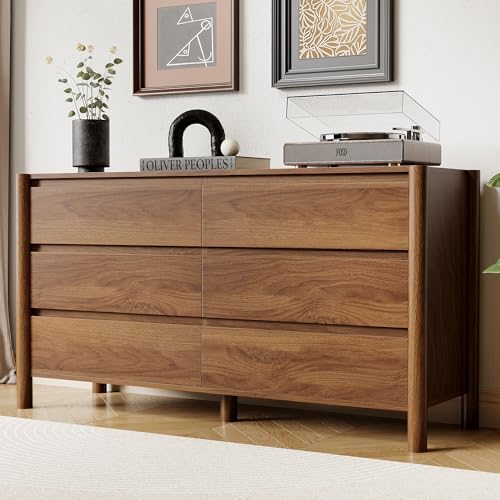
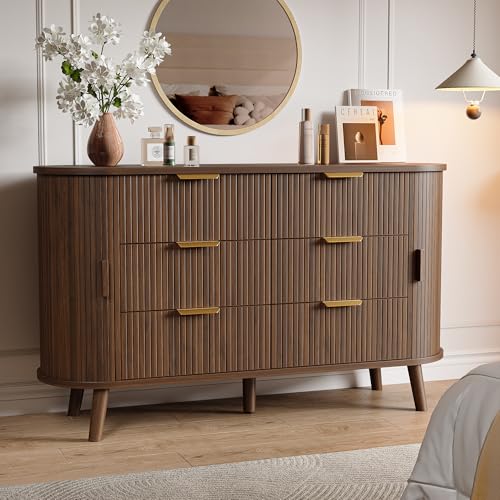
"MCM" stands for mid-century modern, a design movement that flourished from the mid-1940s through the late 1960s. An MCM dresser translates that philosophy into bedroom storage: clean horizontal lines, tapered or splayed legs, integrated drawer pulls, and a celebration of natural wood grain. There is no applied ornament — the form itself is the decoration.
Unlike a traditional chest of drawers with carved details or a heavy mahogany dresser with ornate hardware, an MCM dresser feels lighter and more architectural. It is the storage piece that anchors a mid-century modern bedroom and pairs naturally with low-profile beds, warm lighting, and textured rugs.
Because the style has been continuously reinterpreted, you will find MCM dressers in a wide range of build qualities and drawer counts. Understanding the design vocabulary first will help you judge quality before you look at any product listing.
Key takeaway: An authentic MCM dresser is defined by proportion and restraint — low silhouette, visible legs, uninterrupted drawer fronts, and honest materials. If those four elements are present, the piece will read as mid-century even if it is a modern reproduction.
Design Hallmarks to Recognize
When you are browsing listings, these are the visual cues that separate a true MCM dresser from a generic contemporary piece:
- Tapered or splayed legs. Legs that narrow toward the floor or angle outward lift the piece visually and create the signature floating look.
- Horizontal emphasis. MCM dressers are usually wider than they are tall, emphasizing a calm, grounded profile.
- Integrated hardware. Recessed pulls, routed finger grooves, or slim metal bar pulls instead of decorative knobs. You can also explore mid-century modern drawer pulls if you are upgrading an existing piece.
- Minimal drawer gaps. Tight, even reveals between drawer fronts signal better construction and cleaner lines.
- Natural wood finishes. Walnut, teak, oak, and maple dominate; painted MCM dressers exist but are less canonical.
- Flat or subtly beveled drawer fronts. No raised panels, no carving, no moulding.
Once you can spot these hallmarks, you can evaluate any candidate quickly. A dresser that checks all six will look correct in a mid-century room; one that checks only two or three may read as generic modern instead.
Key Buying Factors for an MCM Dresser
Buying a mid-century dresser is a balance of style, dimensions, storage capacity, and construction quality. Work through these factors in order — size first, then drawers, then materials, then build quality.
1. Measure Your Space Before Anything Else
MCM dressers are typically wide and low, so wall length matters as much as floor area. Measure the wall where the dresser will sit, then confirm the width leaves enough clearance for door swings and nightstands. A wide mid-century dresser can anchor a large wall beautifully, while a tall mid-century dresser suits narrow footprints.
Also check the height relative to your bed. In a mid-century bedroom, the dresser top often sits close to mattress height, which keeps the visual line low and cohesive.
2. Choose the Right Drawer Count
Drawer count determines how the piece actually functions day to day. The right number depends on who is using it and what they are storing. See the drawer configurations section below for a detailed breakdown.
3. Select Your Wood and Finish
Wood choice changes both the visual temperature of the room and the durability profile. Walnut reads rich and formal; teak reads warm and relaxed; oak and maple read light and Scandinavian. The wood and material section covers the trade-offs.
4. Inspect Construction Quality
This is where tiers diverge most. Look for:
- Drawer joinery. Dovetail joints signal a high-end tier; stapled or glued butt joints signal an entry-level tier.
- Drawer bottoms. A solid or plywood bottom set into a groove outperforms a thin stapled hardboard bottom.
- Glides. Wood-on-wood runners are traditional but sticky; side-mounted ball-bearing slides are smoother; undermount soft-close slides are top-tier.
- Leg attachment. Through-bolted legs with cross-bracing are far stronger than legs screwed into a thin base panel.
If smooth, heavy-duty drawer action matters to you, it is worth reading about heavy-duty drawer slides before comparing models.
5. Decide Between Original and Reproduction
Original vintage MCM dressers carry authenticity and often better solid-wood construction, but they may need refinishing and can have worn glides. Modern reproductions offer consistent quality control and new hardware. Both are valid choices — the key is to judge the actual piece, not the label.
Drawer Configurations: Which Layout Fits Your Life?
The drawer layout is the single biggest factor in daily usability. Here is how the common MCM configurations compare:
| Configuration | Best For | Trade-Off |
|---|---|---|
| 3-drawer MCM dresser | Guest rooms, small bedrooms, entryway storage | Limited capacity; deep drawers can become disorganized |
| 4-drawer MCM dresser | Single adults, compact primary bedrooms | Fewer separation options for small items |
| 6-drawer MCM dresser | Couples, most primary bedrooms | Takes more wall width than smaller layouts |
| 7–8 drawer MCM dresser | Shared rooms, people with extensive wardrobes | Taller profile; needs careful height planning |
| 9-drawer MCM dresser | Family storage, multi-user bedrooms | Large footprint; requires a substantial wall |
For a two-person household, a six-drawer mid-century dresser is the most balanced choice — enough separation for two people without dominating the room. If you prefer a taller footprint, a seven-drawer model or an eight-drawer model adds capacity while keeping the horizontal language.
Consider drawer depth as well as count. Deep drawers hold bulky knitwear well but swallow folded shirts; a mix of shallow top drawers and deeper lower drawers is the most practical combination.
Wood and Material Choices for MCM Dressers
Mid-century design is inseparable from its materials. Each wood species produces a different mood and a different maintenance routine.
Walnut
The most iconic MCM wood. Walnut has a rich, chocolate-brown heartwood with flowing grain, and it takes a low-sheen oil finish beautifully. It suits formal and warm interiors alike. A walnut dresser is a long-term investment piece that ages gracefully.
Teak
Teak brings a golden, honeyed tone and a slightly more relaxed character than walnut. It was the dominant wood in Scandinavian-influenced mid-century furniture and remains popular for its warm, inviting look. A mid-century teak dresser is an excellent choice for sunlit bedrooms.
Oak and Maple
If you want a lighter, airier mid-century look, oak and maple are the natural picks. Their paler grain keeps small rooms feeling open and pairs well with whites and soft neutrals. Explore oak dressers and maple dressers for lighter-toned options.
Engineered Wood and Veneer
Many reproductions use MDF or particleboard cores with a wood veneer. Quality veneer over a stable core can look excellent and resist warping, but the edges and drawer interiors reveal the tier. Check that veneer edges are banded, not raw, and that drawer boxes are solid or plywood rather than thin composite.
Painted MCM Dressers
A painted mid-century dresser is a legitimate style choice — matte black, muted green, and warm white all work. Just be aware that paint hides the grain, so the design must carry the piece entirely through proportion and hardware. See our materials and finishes guide for finish comparisons.
MCM Dresser Quality Tiers
Rather than thinking in terms of numbers, categorize MCM dressers by construction tier. This keeps your expectations aligned with what you are actually getting.
Entry-Level Tier
Flat-pack or semi-assembled construction, composite core with veneer, stapled drawer boxes, side-mounted slides. Visually convincing from a distance; best for guest rooms or temporary setups.
Mid-Range Tier
Solid wood frame with veneered panels, glued and reinforced drawer boxes, smoother ball-bearing slides, better leg attachment. A solid choice for daily use in a primary bedroom.
Premium Tier
Solid hardwood throughout, dovetail drawer joinery, undermount soft-close slides, hand-finished surfaces, through-bolted legs. Built to be repaired and passed on.
Luxury / Heirloom Tier
Workshop-made or designer-original pieces with book-matched veneers, custom hardware, and meticulous joinery. A long-term investment in both function and provenance.
A mid-range model usually offers noticeably smoother drawer action and tighter tolerances than an entry-level build, while a premium piece adds joinery that survives decades of use. Judge the tier by what you can inspect: joints, glides, drawer bottoms, and leg attachment.
Styling Your MCM Dresser
The mid-century look depends on restraint. The dresser's clean lines should not be buried under clutter or heavy decor.
- Keep the top sparse. A low-profile lamp, a small ceramic tray, a plant, and a single book or two is enough.
- Respect the legs. Leave visible floor space beneath the dresser — rugs and baskets should not swallow the tapered legs.
- Layer art above, not on, the dresser. One large piece or a tight gallery grid works better than many small frames.
- Match the wood temperature. Warm walnut pairs with amber lighting and terracotta accents; pale oak pairs with linen, white, and soft green.
- Add a mirror if the wall allows. A mid-century dresser with mirror is a classic pairing that also brightens the room.
If you are furnishing a full bedroom, a matching mid-century dresser and nightstand set creates a cohesive line without requiring a full matching suite. For a lighter footprint, a double dresser can replace both a dresser and a chest in one piece.
Frequently Asked Questions About MCM Dressers
What does MCM dresser mean?
MCM stands for mid-century modern, a design movement popular from the mid-1940s to late 1960s. An MCM dresser features clean lines, tapered legs, warm wood tones, and minimal ornamentation.
How many drawers should an MCM dresser have?
Common configurations range from three to nine drawers. A six-drawer MCM dresser is the most versatile for couples, a four-drawer model suits smaller rooms, and a nine-drawer unit works well for shared or family storage.
What wood is used for mid-century modern dressers?
Walnut, teak, oak, and maple are the classic MCM woods. Walnut offers rich dark grain, teak brings warm golden tones, and oak or maple suit lighter Scandinavian-inspired interiors.
How do I style an MCM dresser?
Keep the top minimal: a low-profile lamp, a small tray, a plant, and one piece of art above the dresser. Avoid heavy decor that obscures the clean lines and tapered legs that define the mid-century look.
Is a vintage MCM dresser better than a new one?
Not automatically. Vintage pieces often use solid wood and better joinery, but they may need refinishing and new glides. Modern reproductions offer consistent construction and new hardware. Judge the actual piece — joints, drawer action, and leg attachment — rather than its age.
Ready to Choose Your MCM Dresser?
Compare drawer configurations, wood options, and construction tiers, then explore recommended models below.
Explore Recommended Dressers