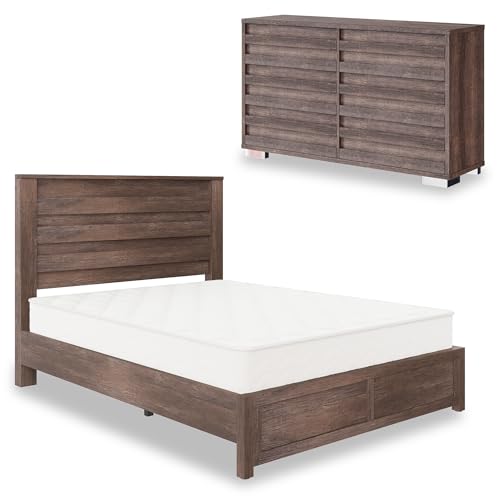
Matching Dresser and Bed Frame
Discover how to pair a dresser with a bed frame for a cohesive, well-balanced bedroom. This complete guide covers style alignment, material matching, proportion rules, finish coordination, and practical shopping advice for every type of bedroom.
Explore Matching OptionsWhy matching matters: A dresser and bed frame are the two largest furniture pieces in most bedrooms. When they are paired thoughtfully, the room feels intentional and calm. When they clash, even a well-decorated bedroom can feel disjointed. This guide explains exactly how to choose a matching dresser and bed frame without sacrificing personality or practical storage.
Why Match a Dresser and Bed Frame?
A bedroom is a functional space, but it is also the room where visual calm matters most. The dresser and bed frame usually occupy the same sightline, and they are often the first pieces a visitor notices. Matching them creates a sense of order that makes the room feel larger, more restful, and more deliberately designed.
Beyond aesthetics, a matched pair offers practical benefits:
- Consistent quality: When you choose a matching set, the construction standards, drawer mechanisms, and finishing details are usually aligned, so you avoid one piece feeling noticeably weaker than the other.
- Easier assembly and maintenance: Matching pieces from the same collection typically share hardware types and care requirements, simplifying long-term upkeep.
- Better resale cohesion: A coordinated bedroom set is easier to present as a complete collection if you later move or resell.
- Fewer decorating decisions: A matched foundation lets you spend your styling energy on bedding, lighting, and artwork instead of second-guessing furniture combinations.
That said, "matching" does not mean identical. Many of the best bedrooms use coordinated pieces that share a wood tone or design language rather than a literal set. This guide covers both approaches so you can choose the level of match that suits your taste and budget tier.
Quick rule of thumb: If the dresser and bed frame share at least two of these three elements — wood species, finish color, and hardware style — the pairing will read as intentional even if the pieces come from different collections.
Matching by Furniture Style
Style is the first filter for most shoppers. A dresser and bed frame that belong to the same design language will always feel more harmonious than two pieces that fight for attention. Below are the most common bedroom styles and how to match within each.
Mid-Century Modern
Mid-century modern furniture is defined by clean lines, tapered legs, and warm wood tones. A matching mid-century dresser and bed frame typically share splayed legs and a low, horizontal profile. If you are building a mid-century bedroom, look for a mid-century dresser and pair it with a bed frame that uses the same tapered leg style. A mid-century modern dresser and nightstand combination can also anchor the room, with the bed frame following the same visual language.
For smaller rooms, a mid-century modern tall dresser pairs well with a low-profile platform bed, creating a pleasing height contrast without breaking stylistic cohesion. If you prefer a bolder look, a mid-century modern dresser in black can be matched with a black metal bed frame for a striking, unified contrast.
Farmhouse and Rustic
Farmhouse bedrooms rely on painted finishes, distressed wood, and simple silhouettes. A farmhouse dresser usually features vertical paneling or beadboard details, and the bed frame should echo that same paneled construction. Matching a white or natural wood farmhouse dresser with a matching panel bed frame creates the cohesive, welcoming look that defines this style.
Rustic bedrooms lean toward heavier timber and visible grain. A rustic dresser paired with a log-style or reclaimed-wood bed frame works best when both pieces share the same rough-hewn texture. Avoid pairing a highly polished dresser with a heavily distressed bed frame — the contrast will feel accidental rather than deliberate.
Modern and Minimalist
Modern bedrooms favor clean geometry, flat fronts, and minimal ornamentation. A minimalist dresser with handleless drawers pairs naturally with a platform bed frame that has a simple, rectangular headboard. If you want a softer modern look, choose a low-profile dresser and match it with a low platform bed so the room reads as horizontally calm.
For a more dramatic modern bedroom, a matte black dresser paired with a black metal or upholstered bed frame creates a sleek, monochromatic foundation that is easy to style with warm textiles.
Traditional and Classic
Traditional bedrooms call for dressers with molded edges, bracket feet, and often a mirror. A classic dresser pairs best with a bed frame that has a shaped headboard and matching footboard detailing. If the dresser includes a mirror, the bed frame should have a similarly formal headboard so the two pieces feel balanced in visual weight.
Luxury and Statement
At the luxury dresser tier, matching becomes an exercise in material consistency. Marble-topped dressers, for example, pair beautifully with upholstered bed frames that use similar tonal palettes. A marble top dresser matched with a neutral upholstered bed frame creates a refined, hotel-like bedroom. For a more opulent look, a marble top dresser bedroom set can provide a pre-coordinated foundation that removes the guesswork entirely.
Matching by Material
Material matching is the most reliable way to create cohesion, because wood species carry distinct grain patterns and color undertones. When the dresser and bed frame use the same species, the room naturally feels unified even if the silhouettes differ.
| Material | Best For | Matching Notes |
|---|---|---|
| Oak | Farmhouse, rustic, and casual bedrooms | Strong grain; match with oak bed frames that share a similar stain depth. |
| Walnut | Mid-century and modern bedrooms | Rich, dark grain; pairs well with walnut bed frames and brass hardware. |
| Maple | Traditional and transitional bedrooms | Fine, even grain; maple dressers pair cleanly with maple bed frames in natural or amber finishes. |
| Mahogany | Formal and traditional bedrooms | Deep reddish tone; a mahogany dresser should be matched with a mahogany bed frame for a cohesive formal set. |
| Mango Wood | Boho and eclectic bedrooms | Visible grain and warm tones; a mango wood dresser pairs well with carved or slatted bed frames. |
| Metal | Industrial and modern bedrooms | A metal dresser matches best with a metal bed frame in the same finish family. |
If you cannot find the exact species in both pieces, choose a dresser and bed frame with the same tone — for example, a warm medium-brown dresser with a warm medium-brown bed frame — even if the species differ. Grain direction and sheen matter as much as species name.
Solid Wood vs. Engineered Wood
At the materials and finishes level, solid wood pieces tend to age more gracefully and can be refinished, while engineered wood offers a more uniform look with less seasonal movement. For a matching pair, it is generally best to choose the same construction category for both pieces. A solid wood dresser paired with an engineered wood bed frame can look mismatched under close inspection because the sheen and edge detailing differ.
Matching by Finish and Color
Finish is where most matching decisions succeed or fail. Two pieces can share the same silhouette and still look wrong if their finishes pull in different directions. Use the following guidelines to keep your pairing cohesive.
Match Undertones, Not Just Colors
A "white" dresser and a "white" bed frame may not actually match if one is warm ivory and the other is cool bright white. Place finish samples side by side under the same lighting before committing. The same rule applies to gray, black, and natural wood finishes.
Use a Dominant and Secondary Finish
If you want visual interest, let one finish dominate (for example, a natural wood dresser) and let the bed frame introduce a secondary finish (for example, a painted headboard with a wood footboard). Keep the secondary finish to no more than 20 percent of the room's furniture surface area so the bedroom still reads as coordinated.
Coordinate With Existing Flooring
Your flooring is a fixed element that affects how the dresser and bed frame read together. Warm wood floors pair naturally with warm wood dressers and bed frames; cool gray floors work better with cool-toned or painted pieces. If your flooring is highly patterned, choose simpler finishes for both furniture pieces to avoid visual competition.
Finish tip: Painted white dressers pair best with painted white bed frames in the same sheen level. Mixing a matte white dresser with a glossy white bed frame creates an accidental contrast that is hard to style around.
Proportion and Size Rules
Even a perfectly matched style and finish can fail if the sizes are wrong. Proportion is the most overlooked part of pairing a dresser and bed frame, and it has the biggest impact on how the room feels.
Height Balance
The dresser should be tall enough to feel substantial next to the bed frame but not so tall that it overwhelms the headboard. A common guideline is to keep the dresser height within 10 to 15 inches of the top of the bed frame's headboard. A lowboy dresser works well with a low platform bed; a tall chest works better with a taller headboard.
Width and Visual Weight
A wide dresser paired with a narrow bed frame can make the bed look undersized. Aim for a dresser width that is roughly 50 to 80 percent of the bed width. A wide dresser paired with a queen or king bed frame creates a balanced visual weight. In a small bedroom, a mini dresser or small dresser paired with a twin or full bed frame keeps the room proportionate.
Clearance and Traffic Flow
Leave at least 24 inches of walking space between the foot of the bed and the dresser. If the dresser is placed beside the bed, leave at least 18 inches between the dresser edge and the side of the bed frame. These clearances keep the room functional and prevent the furniture from feeling crowded.
| Bed Size | Recommended Dresser Width | Recommended Dresser Height |
|---|---|---|
| Twin | 30–50 inches | 28–38 inches |
| Full | 40–60 inches | 30–40 inches |
| Queen | 50–72 inches | 32–42 inches |
| King | 60–84 inches | 32–44 inches |
Coordinating Hardware
Hardware is the small detail that ties a matching dresser and bed frame together. When the drawer pulls, knobs, and bed frame accents share a finish family, the two pieces read as a deliberate pair.
- Brass and gold: Pair brass dresser knobs with brass bed frame accents or a brass-framed headboard for a warm, cohesive look.
- Matte black: Black drawer pulls pair naturally with black metal bed frames and create a crisp, modern contrast against light wood.
- Nickel and chrome: Cool metal hardware works best with cool-toned finishes and upholstered bed frames with metal legs.
- Wood and leather: Leather-wrapped pulls and wood knobs pair well with rustic and organic-modern bed frames.
If you cannot match hardware exactly, match the finish family. For example, a satin nickel dresser pull and a brushed nickel bed frame accent are close enough to read as coordinated, while a polished chrome pull next to a matte black bed frame will look mismatched.
Buying as a Set vs. Individually
There are two main routes to a matching dresser and bed frame: buying a coordinated set, or pairing individual pieces. Both approaches can work, but they suit different shoppers.
Buying a Coordinated Set
A bedroom set removes the guesswork. The manufacturer has already aligned the wood species, finish, and hardware, so the dresser and bed frame are guaranteed to match. Sets are especially helpful for shoppers who want a complete look without spending hours comparing swatches. A matching bed frame and dresser set also tends to hold its visual cohesion over time, since the pieces were designed together.
The trade-off is flexibility. Sets often lock you into a specific style and limit your ability to mix in pieces from other collections later. If you plan to keep the bedroom furniture for many years, a set is a reliable choice; if you like to update your decor frequently, individual pairing may suit you better.
Pairing Individual Pieces
Pairing individual pieces gives you more control over quality, proportion, and personality. You can choose a dresser that fits your storage needs exactly and a bed frame that suits your comfort preferences, then bridge the two with a shared wood tone or hardware finish. This approach requires more effort but often produces a bedroom that feels more personal.
If you go this route, start with the larger piece first — usually the bed frame — and choose the dresser to complement it. A matching dresser and chest of drawers combination can also extend the coordinated look if you need extra storage beyond a single dresser.
Room-by-Room Recommendations
Master Bedroom
For a master bedroom, choose a dresser and bed frame that share a calm, sophisticated finish. A master bedroom dresser paired with a matching upholstered or wood bed frame creates a restful foundation. If space allows, add a master bedroom dresser with mirror to complete the coordinated look.
Guest Bedroom
Guest bedrooms benefit from a simple, durable pairing. A mid-range dresser and a classic bed frame in the same wood tone will look intentional without overcomplicating the space. Keep the finish neutral so the room stays flexible for future decor changes.
Small Bedroom
In a small bedroom, proportion matters more than ever. Choose a low-profile dresser and a low platform bed frame to keep the sightline open. A narrow dresser can fit into tighter floor plans without making the room feel cramped.
Nursery
Nursery furniture should prioritize safety and easy cleaning. Pair a nursery dresser with a crib or bed frame that uses the same painted or natural wood finish. Avoid tall, narrow dressers that could tip; choose a wider, lower dresser and anchor it to the wall.
Matching Checklist
Use this checklist before finalizing your dresser and bed frame pairing:
- Style alignment: Do both pieces belong to the same design language (mid-century, farmhouse, modern, traditional)?
- Material consistency: Do the pieces share a wood species or at least the same tone family?
- Finish undertone: Do the finishes pull warm, cool, or neutral in the same direction?
- Proportion: Is the dresser height within 10–15 inches of the headboard top?
- Width balance: Is the dresser width roughly 50–80 percent of the bed width?
- Hardware family: Do the drawer pulls and bed frame accents share a metal or wood finish?
- Clearance: Is there at least 24 inches between the bed foot and the dresser?
- Storage needs: Does the dresser offer enough drawers for your clothing and accessories?
Final check: Stand at the bedroom doorway and look at the dresser and bed frame together. If they read as a deliberate pair at a glance, the matching is successful. If one piece feels like it belongs to a different room, revisit the finish or proportion before purchasing.
Frequently Asked Questions
Should a dresser and bed frame always match exactly?
No. Exact matching is not required. Coordinating at least two of the three key elements — wood species, finish color, and hardware style — is usually enough to create a cohesive look. Many well-designed bedrooms use pieces from different collections that share a common tone.
Can I match a painted dresser with a wood bed frame?
Yes, if the tones are compatible. A painted white or cream dresser pairs well with a light or medium wood bed frame. Avoid pairing a highly saturated painted dresser with a very dark wood bed frame unless you want a strong contrast as a deliberate design choice.
What if my dresser is taller than my bed frame?
A dresser that is significantly taller than the bed frame can make the bed look undersized. If you already own a tall dresser, choose a bed frame with a taller headboard to balance the visual weight. If you are buying both pieces, aim for a dresser height within 10–15 inches of the headboard top.
How do I match hardware on a dresser and bed frame?
Match the finish family first — brass with brass, black with black, nickel with nickel. Exact shapes do not need to match, but the sheen and tone should be close. If you cannot find matching hardware, choose a neutral finish that does not compete, such as satin nickel or matte black.
Is it better to buy a bedroom set or mix and match?
A set is easier and guarantees visual cohesion. Mixing and matching offers more control over proportion, storage, and quality. If you have the time to compare pieces, mixing can produce a more personalized bedroom; if you want a reliable, coordinated look with less effort, a set is the safer choice.
Ready to Find Your Matching Pair?
Explore our recommended dressers and bed frames below. Every option is selected for quality construction, consistent finishing, and practical storage — so you can build a bedroom that feels cohesive from the first glance.
View Recommended OptionsNote: This guide is for informational purposes. Always measure your room and confirm product dimensions before purchasing.