Low Dresser: Complete Buying Guide & Storage Solutions
Everything you need to know about low dressers — from low-profile designs and drawer layouts to materials, placement ideas, and how to choose the right one for your bedroom or closet.
Why choose a low dresser? A low dresser offers a unique combination of accessible storage, visual openness, and versatile placement. Unlike tall chests that dominate vertical space, low-profile dressers keep sightlines clear and put everything within easy reach — making them ideal for bedrooms with windows, sloped ceilings, or anyone who prefers a calmer, more spacious feel.
What Exactly Is a Low Dresser?
A low dresser — sometimes called a low-profile dresser or a low chest of drawers — is a storage piece designed with a shorter height, typically ranging from about 24 to 36 inches tall. Instead of stacking drawers vertically like a tallboy, a low dresser spreads its storage horizontally across a wider footprint. This horizontal orientation changes how the piece functions in a room and how it interacts with the surrounding furniture.
The term can overlap with related categories. A long low dresser emphasizes width, while a low-profile dresser for bedroom focuses on keeping the top surface at or below mattress height. Understanding these distinctions helps you search more precisely and choose a piece that fits your space and habits.
Key Benefits of Choosing a Low Dresser
Accessible Storage
All drawers sit within easy reach, so you can see and grab what you need without bending or stretching. This is especially helpful for children, older adults, or anyone with mobility concerns.
Visual Openness
A low profile keeps sightlines clear and makes a room feel larger. It works beautifully under windows, beside beds, or in rooms with sloped ceilings where a tall piece would feel cramped.
Versatile Placement
A low dresser can double as a TV stand, a console in a hallway, or a storage piece at the end of the bed. Its compact height makes it adaptable to many rooms beyond the bedroom.
Stable & Safe
With a lower center of gravity, low dressers are inherently more stable than tall chests. When properly anchored, they reduce tip-over risk — an important consideration for families with young children.
Great for Small Spaces
A low dresser for closet or a low-profile dresser for closet fits neatly under hanging rods or shelving, turning awkward closet corners into usable storage.
Design Flexibility
Low dressers pair well with a wide range of styles — from modern and minimalist to farmhouse and mid-century. Their horizontal lines create a grounded, balanced look in any bedroom.
Low Dresser vs. Tall Dresser: Which Should You Choose?
The choice between a low dresser and a tall chest comes down to your room layout, storage habits, and personal preference. The table below compares the two categories across the factors that matter most.
| Factor | Low Dresser | Tall Dresser |
|---|---|---|
| Height Range | Approximately 24–36 inches | Typically 40–60 inches or more |
| Footprint | Wider, horizontal spread | Narrower, vertical stack |
| Best For | Under windows, end of bed, closets, small rooms | Corners, narrow walls, rooms with limited floor space |
| Accessibility | All drawers within easy reach | Top drawers may require stretching |
| Visual Impact | Keeps sightlines open and airy | Makes a vertical statement; can feel imposing |
| Stability | Lower center of gravity; inherently stable | Requires wall anchoring for safety |
| Storage Volume | Comparable total volume if wide enough | Comparable total volume if tall enough |
If you are still weighing the options, a good rule of thumb is to measure your available wall space and consider how you move through the room. A low chest of drawers for bedroom works best when you have a wide wall or a spot under a window. For tighter corners, a tall chest may be more efficient. Many households ultimately use both — a low dresser for daily items and a taller chest for seasonal clothing.
Low Dresser Sizes and Dimensions: What to Expect
Because "low" is a relative term, it helps to know the typical size ranges you will encounter. The following ranges are general guidelines; actual dimensions vary by manufacturer and design.
Typical Height Categories
- Ultra-low (24–30 inches): Often used as a TV stand or a low dresser for end of bed. These pieces sit below mattress height and keep the room visually open.
- Standard low (30–36 inches): The most common low dresser height. Comfortable to use standing up, yet low enough to place under most windows.
- Low-profile with deep drawers (28–34 inches): Prioritizes drawer depth over drawer count. Ideal for bulky items like sweaters and linens.
Width and Depth Considerations
Width is where low dressers shine. A long low dresser can span 60 to 80 inches or more, offering generous storage while maintaining a low profile. Standard depths range from about 16 to 20 inches; deeper drawers hold more but require more floor space. If you are working with a narrow room, measure carefully and consider a low chest of drawers for closet to maximize vertical space without adding bulk to the bedroom.
Matching Scale to Your Room
A low dresser should feel proportionate to the wall it sits against. As a general guideline, aim for a piece that covers roughly two-thirds of the wall width. Leave at least 30 inches of clearance in front of the dresser for comfortable drawer access. If the dresser will sit beside a bed, keep the top surface within a few inches of mattress height for a cohesive look.
Drawer Layouts: How Many and What Kind?
Low dressers typically feature four to eight drawers arranged in two to three rows. The layout you choose affects how you organize your clothing and how the piece functions day to day.
- Four-drawer layout: Usually two wide drawers on top and two deeper drawers below. A balanced choice for folded clothing and bulkier items.
- Six-drawer layout: Often three rows of two drawers. Provides good separation for categories like tops, bottoms, and accessories.
- Eight-drawer layout: Maximizes storage in a wide footprint. Best for shared use or for households with extensive wardrobes.
- Deep vs. shallow drawers: Shallow drawers suit folded shirts and delicates; deep drawers handle sweaters, jeans, and linens. A mix of both is the most flexible.
- Drawer glides: Look for smooth, sturdy glides. Mid-range and high-end tier models typically offer metal ball-bearing slides, while entry-level pieces may use simpler mechanisms.
If you plan to use the dresser for a specific purpose — such as a low dresser for closet organization system — choose a layout with a mix of drawer sizes so you can separate folded clothing, accessories, and seasonal items.
Materials and Finishes for Low Dressers
The material of a low dresser influences its durability, visual weight, and how well it fits your design style. Here are the most common options:
Solid Wood
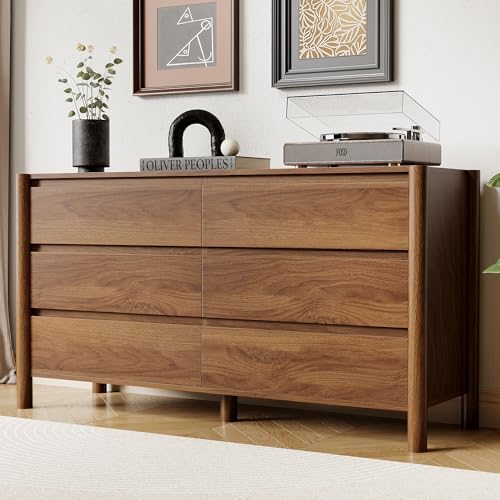
Solid wood dressers — whether oak, maple, walnut, or pine — offer the most durable construction and can last for decades. They can be refinished and repaired over time, making them a long-term investment. Within the solid wood category, premium and luxury tier pieces typically feature dovetail joinery and full-extension glides. Light wood finishes like a light oak dresser or light wood dresser keep a low dresser feeling airy, while darker tones add warmth and grounding.
Engineered Wood
Engineered wood (MDF, particleboard with veneers) is common in entry-level and mid-range dressers. Modern engineered wood can be quite durable, especially when finished with quality veneers. These pieces are lighter and often available in a wide range of finishes. A lacquer dresser or laminate dresser offers a smooth, uniform surface that suits modern interiors.
Specialty Materials
Beyond wood, low dressers may feature metal frames, leather accents, or upholstered panels. A leather dresser adds texture and a luxe feel, while a linen dresser brings softness to a bedroom. For a more contemporary look, an LED dresser with integrated lighting can serve as a statement piece.
Finish Colors
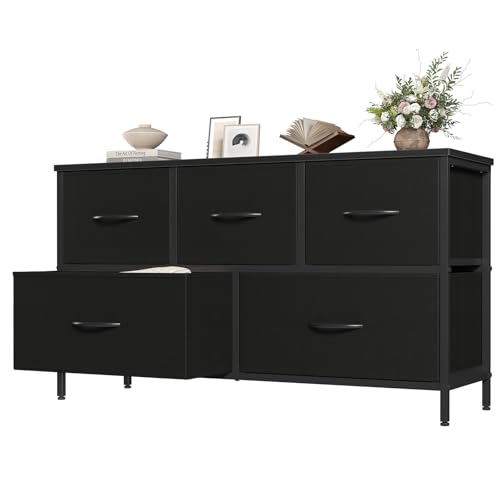
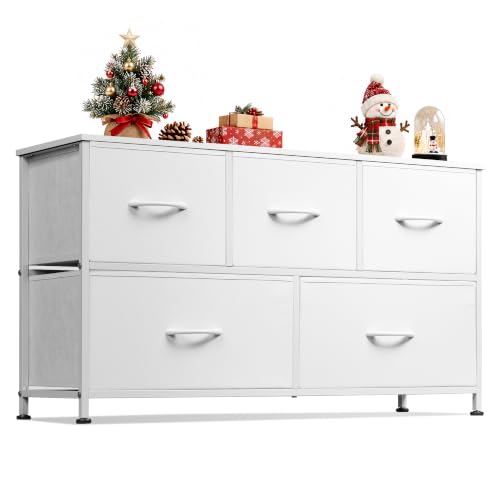
Color choice affects how a low dresser reads in the room. A light gray dresser or light grey dresser provides a neutral backdrop that works with almost any palette. A long white dresser creates a clean, bright look, while a long black dresser adds contrast and drama. Softer shades like a light green dresser or light pink dresser bring personality without overwhelming the space.
Where to Place a Low Dresser: Practical Ideas
One of the biggest advantages of a low dresser is placement flexibility. Here are some proven configurations:
- Under a window: A low dresser is one of the few furniture pieces that can sit comfortably beneath a standard window without blocking light or views.
- At the end of the bed: A low dresser for end of bed adds storage and creates a natural footboard-like anchor. Keep a clearance of at least 24 inches from the bed for comfortable movement.
- Inside a closet: A low dresser for closet or a low-profile dresser for closet fits under hanging rods, turning unused floor space into folded-clothing storage.
- As a TV stand: The wide, low surface of a long low dresser is ideal for a television, with drawers below for media accessories and clothing.
- In a living room: A living room dresser can serve as a console or sideboard, storing table linens, games, and everyday items while looking intentional and styled.
If you are planning a bedroom layout, consider pairing a low dresser with a matching nightstand for a cohesive look. A light wood dresser and nightstand set or a long dresser and nightstand set simplifies coordination and creates a unified visual rhythm.
Low Dresser Buying Checklist
Before you commit to a low dresser, run through this checklist to make sure the piece fits your space, your storage needs, and your safety requirements.
- Measure your space: Confirm wall width, available depth, and clearance for drawer opening. Remember to account for baseboards and trim.
- Check the height: Decide whether you need an ultra-low profile (under 30 inches) or a standard low height (30–36 inches).
- Assess drawer quality: Look for sturdy glides, smooth operation, and — on higher-tier models — dovetail joinery.
- Verify stability: Choose a dresser with a solid base and, if possible, an anti-tip kit. Anchor it to the wall, especially in homes with children.
- Consider the finish: Match or complement your existing furniture. Light finishes feel airy; dark finishes add warmth and contrast.
- Think about future use: A versatile low dresser can move from bedroom to closet to living room as your needs change.
- Read the construction details: Solid wood and high-grade engineered wood offer different benefits. Choose based on your long-term plans.
Ready to Find Your Perfect Low Dresser?
Browse our recommended low dressers and storage pieces below. Each selection is chosen for its build quality, drawer functionality, and design versatility — so you can organize your space with confidence.