
Long Mid Century Modern Dresser: The Complete Buying Guide
Everything you need to choose a wide, low-profile mid century dresser — sizing, wood species, drawer layouts, hardware, safety, and styling — so you can buy with confidence and get a piece that lasts for decades.
Why this guide matters: A long mid century modern dresser is a substantial purchase and a long-term anchor for your bedroom. The wrong width, depth, or drawer layout turns a beautiful piece into a daily frustration. This guide walks you through every specification that actually affects usability, so your decision is based on facts rather than guesswork.
What Defines a Long Mid Century Modern Dresser
A long mid century modern dresser is a wide, low-profile storage piece rooted in the design language of the 1950s and 1960s. The defining traits are a horizontal silhouette, clean unadorned drawer fronts, tapered or splayed legs that lift the body off the floor, and a strong emphasis on wood grain as the primary decoration. Unlike traditional dressers that stack drawers vertically, a long model spreads storage horizontally, which keeps the top surface at a comfortable height and makes the piece feel less visually heavy in a room.
The form originated with designers who wanted furniture that felt open and airy rather than boxy. That is why the legs matter so much: a mid century dresser should appear to float slightly, with visible space beneath the body. If you are still comparing broad furniture categories, our dresser overview explains how this silhouette differs from traditional and contemporary styles.
Typical Dimensions
Width is what separates a long model from a standard one. A conventional bedroom dresser runs roughly 40 to 56 inches wide, while a long mid century modern dresser generally starts around 60 inches and extends to about 72 inches. Height stays deliberately low, usually between 28 and 34 inches, so the top sits below eye level and doubles as a display surface. Depth is commonly 18 to 20 inches — deep enough for folded clothing but shallow enough to keep walkways clear.
| Dimension | Common Range | Why It Matters |
|---|---|---|
| Width | 60–72 inches | Defines the "long" category; must fit the wall run with clearance for doors and nightstands |
| Height | 28–34 inches | Keeps the top usable as a display or vanity surface below eye level |
| Depth | 18–20 inches | Balances drawer capacity against floor space and walkway clearance |
| Leg Height | 6–10 inches | Creates the floating look and allows vacuuming underneath |
If your wall run is tighter than 60 inches, a mid century modern 3 drawer dresser may suit the space better. If you have a generous wall and want maximum capacity, compare against a 72 inch wide dresser to see how the largest widths behave in a room.
Measuring Your Space Before You Commit
The most common mistake buyers make is measuring only the wall and forgetting everything else. A long dresser occupies a wide footprint, and small oversights — a baseboard, a door swing, an outlet — can turn a good fit into a bad one. Work through these measurements before you shop.
- Wall run: Measure the full unobstructed length of the wall, then subtract at least 6 inches on each side so the piece does not look crammed against corners or door frames.
- Door and closet clearance: Confirm that hinged doors, closet doors, and drawer fronts can open fully without colliding with the dresser body.
- Walkway width: Leave a minimum of 30 inches between the dresser front and the bed or opposing wall for comfortable movement.
- Baseboard and trim: Measure the baseboard height; some dressers sit flush against the wall while others need a small gap.
- Delivery path: Measure doorways, stairwells, and hallway turns. A 66-inch-wide piece will not fit through a 30-inch door frame without disassembly.
Height deserves equal attention. A long mid century dresser sits low, which is ideal under a window or beneath wall art, but it may feel short if you plan to use the top as a standing workstation. Pair the measurement with your intended use before finalizing.
Wood Species and Finish Options
Mid century modern design treats wood grain as the ornament, so species selection is the single biggest visual decision. The table below summarizes the most common options and how they behave over time.
| Species | Character | Best For |
|---|---|---|
| Walnut | Rich chocolate-brown tones, straight grain, subtle figuring | The signature mid century look; premium and luxury tier pieces |
| Teak | Golden-amber warmth, oily natural protection, fine texture | Sunlit rooms and Scandinavian-leaning interiors |
| Oak | Pronounced open grain, pale to honey tones, very durable | High-traffic bedrooms and households with children |
| Cherry | Fine grain that deepens with age, reddish undertones | Warmer palettes and heirloom-style collections |
| Ash / Beech | Light, even grain; takes paint and stain predictably | Entry-level and mid-range pieces, painted finishes |
Construction method matters as much as species. Solid wood drawer fronts and frames are the most durable, while high-quality veneers over engineered cores are standard even in premium mid century furniture — the technique allows consistent grain matching across wide drawer fronts that solid lumber cannot easily provide. Avoid particleboard cores with thin paper laminates, which are common in the starter tier and rarely survive a decade of daily use. For a broader comparison of construction types, see our guide to engineered wood dressers.
Finish choice also affects maintenance. Lacquered surfaces resist moisture and clean easily, while oiled finishes feel more natural but require periodic reapplication. Our overview of lacquered dressers covers the trade-offs in detail. Neutral tones such as gray or light gray finishes work well when you want the silhouette without the visual weight of dark wood.
Drawer Layouts and Interior Organization
A long body gives you room for more drawers, but layout quality matters more than raw count. The two dominant configurations are six drawers in two columns and nine drawers in three columns.
- Six-drawer, two-column: Typically three rows of two wide drawers. Each drawer is broad enough for folded shirts, sweaters, and bedding. Best for couples sharing a single dresser.
- Nine-drawer, three-column: Often a mix of shallow top drawers for accessories and deeper lower drawers for clothing. Better for granular organization and single users with varied item types.
- Asymmetric layouts: Some designs pair a bank of small drawers with one or two wide drawers. These suit buyers who want a dedicated accessories zone without losing bulk storage.
Interior depth is the spec most buyers overlook. A 20-inch-deep body typically yields 16 to 18 inches of usable drawer depth, which fits a folded sweater stack comfortably. Shallow top drawers of 4 to 6 inches are excellent for socks, undergarments, and accessories, while lower drawers of 8 to 10 inches handle denim and knitwear. If you want to go further with internal organization, consider adding drawer dividers or a clothes drawer organizer to keep categories separated.
Drawer Mechanics Worth Checking
Wide drawers place more load on their slides, so hardware quality is not a minor detail on a long dresser. Look for these features:
- Full-extension slides: Allow the drawer to open completely so you can reach the back without straining.
- Soft-close mechanisms: Prevent slamming and reduce wear on the drawer box over time.
- Dovetail or box joints: Indicate a sturdier drawer box than stapled or nailed construction.
- Weight rating: Wide drawers holding clothing benefit from slides rated for heavier loads; our guide to heavy-duty full-extension drawer slides explains what to look for.
Quality Tiers: What to Expect at Each Level
Mid century modern dressers span a wide quality spectrum. Rather than comparing figures, it helps to understand what each tier delivers in construction and longevity. The descriptors below are used consistently throughout this guide.
Entry-Level
Engineered wood cores with printed or thin veneer laminates, stapled drawer boxes, and basic side-mount slides. Suitable for guest rooms and short-term setups, but expect visible wear within a few years of daily use.
Mid-Range
Real wood veneers over engineered cores, solid wood drawer fronts, dovetail or reinforced box joints, and soft-close slides. This is the sweet spot for most households — durable construction without the cost of full solid lumber.
Premium
Solid wood frames with book-matched veneers, full-extension soft-close slides, and hand-finished surfaces. Grain matching across drawer fronts is noticeably tighter, and joinery is designed for decades of use.
Luxury
Solid hardwood throughout, hand-cut joinery, and museum-grade finishing. Often produced in limited runs or by heritage workshops. These pieces are long-term investments intended to be passed down.
As a general rule, mid-range models offer noticeably smoother drawer action and better grain consistency than entry-level pieces, while premium tiers add full solid-wood construction and finer joinery. If you want a piece that will survive a move or two, the mid-range and premium tiers are the most sensible targets.
Hardware, Legs, and Signature Details
Hardware is where mid century design makes its personality known. Three families dominate:
- Recessed pulls: Integrated cut-outs or routed grooves that keep the drawer front visually clean. The most minimal option.
- Tapered bar pulls: Slim metal bars, often brass or black, that echo the tapered legs and add a linear accent.
- Round knobs: Small, understated knobs that suit softer, more domestic interpretations of the style.
Our guide to mid century dresser drawer pulls covers sizing, spacing, and material options if you plan to restore or upgrade a piece. For a darker, more graphic look, black hardware pairs well with walnut and teak.
Legs are equally defining. Tapered round or square legs in solid wood, splayed at a slight angle, create the characteristic floating stance. Some designs use metal hairpin legs or a recessed plinth base for a more architectural feel. Check that the legs are attached with proper mounting plates rather than simple screws into thin wood — this is a common failure point on lower-tier pieces.
Safety, Stability, and Placement
Any dresser wider than 50 inches should be anchored to a wall stud using the anti-tip kit supplied with the piece. A long dresser can have several drawers open at once, shifting the center of gravity forward. Anchoring is non-negotiable in homes with children or pets, and it is strongly recommended everywhere else.
- Anchor into a stud, not drywall alone.
- Distribute weight evenly across drawers; avoid loading the top row heavily while the bottom stays empty.
- Keep the top surface clear of heavy objects that could fall during an earthquake or bump.
- Avoid placing the dresser directly in front of a floor vent, which can warp wood over time.
Placement also affects longevity. Direct sunlight will fade and dry wood, so position the piece away from prolonged exposure or use window treatments. Keep at least 2 inches of clearance from the wall to allow air circulation behind the body.
Styling a Long Mid Century Modern Dresser
The wide, low top of a long dresser is a natural display surface, but restraint keeps the mid century look intact. A few principles work reliably:
- Group in odd numbers: Three objects of varying heights — a lamp, a small sculpture, a stack of books — create balance without clutter.
- Leave breathing room: Resist covering the entire surface; empty space is part of the design language.
- Choose one focal point: A single piece of art or a mirror above the dresser should be the visual anchor, with everything else supporting it.
- Keep scale proportional: A 66-inch dresser needs art or a mirror at least 40 inches wide to avoid looking top-light.
- Use warm materials: Brass, ceramic, woven textures, and greenery complement walnut and teak without competing.
A mirror above the dresser is a classic pairing; our guide to mid century modern dresser with mirror covers proportion and mounting height. If you prefer a darker, moodier palette, a modern navy dresser demonstrates how color can modernize the silhouette while keeping the mid century proportions.
Matching Nightstands and Bedroom Sets
A long dresser rarely lives alone. Matching nightstands create visual continuity, and mid century sets are typically designed so the nightstand height aligns with the dresser top or sits slightly lower. If you want a coordinated look without buying a full set, a mid century dresser and nightstand pairing is the most reliable combination.
For rooms where the dresser doubles as a media surface, a dresser with TV stand configuration keeps cables and components organized without adding a second piece of furniture. And if you are furnishing a guest room or rental, a dresser and nightstand combo simplifies the shopping process.
Buying Checklist
Before you add to cart, confirm:
- Width fits the wall run with at least 6 inches of clearance on each side.
- Height sits below eye level for your primary use (display, vanity, or storage only).
- Depth leaves at least 30 inches of walkway clearance.
- Delivery path — doorways, stairs, hallway turns — accommodates the piece.
- Drawer slides are full-extension and soft-close, or at minimum smooth and quiet.
- Drawer boxes use dovetail or reinforced joints, not staples alone.
- Wood species and finish match your room's light and existing furniture.
- Anti-tip kit is included and you have a stud location available.
- Legs are attached with mounting plates, not screws into thin stock.
- Return policy covers damage discovered after delivery.
Frequently Asked Questions
What size is considered a long mid century modern dresser?
A long mid century modern dresser typically measures between 60 and 72 inches wide, with 62 to 66 inches being the most common range. Depth usually falls between 18 and 20 inches, and height ranges from 28 to 34 inches so the top surface sits comfortably below eye level.
Which wood species are most common for mid century modern dressers?
Walnut is the signature species, prized for its rich chocolate tones and straight grain. Teak, oak, and cherry are also common, while premium and luxury tier pieces may use book-matched veneers over solid wood frames for visual consistency.
Do long mid century modern dressers need to be anchored to the wall?
Yes. Any dresser wider than 50 inches should be anchored to a wall stud using the included anti-tip kit. A long dresser invites children to pull open multiple drawers at once, and anchoring prevents tipping accidents.
How many drawers should a long mid century modern dresser have?
Most long models use six drawers arranged in two columns of three, or nine drawers in three columns of three. Six-drawer layouts suit couples, while nine-drawer layouts with a mix of shallow and deep drawers provide more granular organization.
Can a long dresser work in a small bedroom?
Yes, if the wall run allows it. A long, low dresser can actually make a small room feel wider because it spreads storage horizontally rather than stacking it tall. The key is preserving walkway clearance and avoiding a piece that crowds doorways or the bed.
Ready to Choose Your Long Mid Century Modern Dresser?
Use the checklist above to narrow your options, then browse curated picks below. Every recommendation is evaluated on construction, drawer mechanics, and proportion — not on marketing claims.
Explore Recommended ModelsRecommended Long Mid Century Modern Dressers
⚠️ AFFILIATE DISCLOSURE: This website contains affiliate links. As an Amazon Associate, we earn from qualifying purchases. If you make a purchase through these links, we may receive a small commission at no additional cost to you. Read our full affiliate policy.

Walnut 6 Drawer Dresser for Bedroom, 47" Wood Dresser with Gold Handles | Modern Dressers & Chests of Drawers for Hallway, Entryway
Check price on Amazon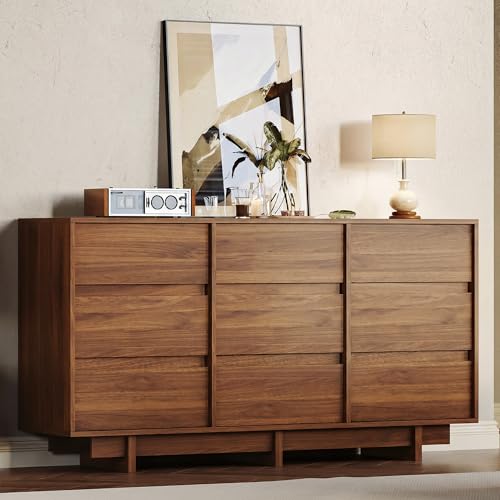
HOUROM 59in 9 Drawer Walnut Dresser for Bedroom, Modern Chest of Drawers | 59 inch wide walnut dresser with 9 spacious drawers, minimalist linear design and sturdy base.storage for bedroom & hallway
Check price on Amazon
Furniway 63" Wide 9 Drawer Wood Dresser for Bedroom with Legs, Walnut | Mid Century Modern Chest of Drawers with Sturdy Wood Legs and Handless Design for Bedroom, Living Room or Hallway
Check price on Amazon
OneBlis 55" Wide 6-Drawer Dresser for Bedroom, Fluted Dresser with Storage, Modern Wood Chest of Drawers, Long Dresser Storage Cabinet for Living Room Entryway Hallway, Walnut
Check price on AmazonDisclaimer
The information provided on DresserAdvisor is for educational and informational purposes only. We are not furniture professionals, and our content should not replace professional advice from qualified furniture makers, interior designers, or safety experts. Some content may use AI assistance. Always check product safety standards and certifications before purchasing. If you do not agree, please do not use this website. Read the full disclaimer.