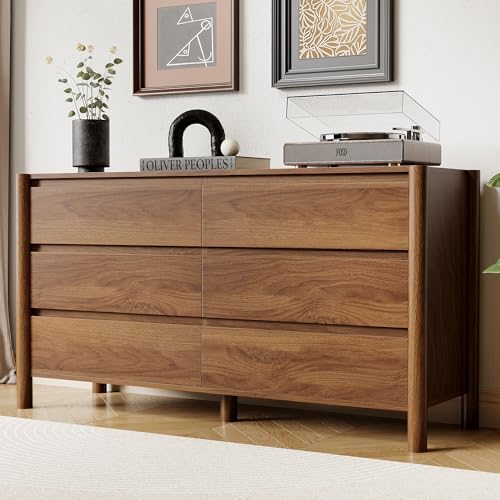
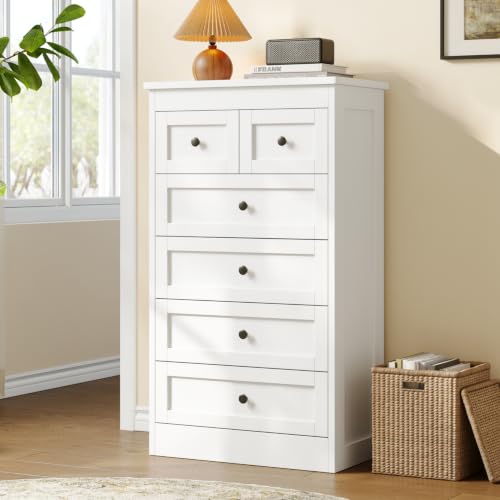
Engineered Wood Dressers: The Complete Buying Guide
Everything you need to know about engineered wood dressers — how they are built, where they excel, how to spot quality construction, and which tier fits your bedroom storage needs.
Explore Recommended OptionsWhy engineered wood dressers deserve a closer look: Engineered wood has transformed bedroom furniture. Modern MDF, particleboard, and plywood cores give dressers a stable, uniform structure that resists warping, holds crisp finishes, and keeps drawer fronts aligned year after year. If you are researching before buying, this guide explains what separates a well-built engineered wood dresser from a weak one — and how to choose confidently.
What Is an Engineered Wood Dresser?
An engineered wood dresser is a chest of drawers constructed from manufactured wood boards rather than solid lumber. The core is typically one of three materials: MDF (medium-density fiberboard), made from fine wood fibers bonded under heat and pressure; particleboard, made from compressed wood chips and resin; or plywood, made from layered wood veneers cross-glued for strength.
That core is then wrapped or topped with a decorative surface — wood veneer, melamine, laminate, or paint — and finished with edge banding to seal the cut sides. The result is a dresser with a smooth, consistent surface, predictable dimensions, and excellent dimensional stability. For a broader overview of dresser categories, see our complete dressers hub.
The three core materials explained
| Core Material | Best For | Key Characteristics |
|---|---|---|
| MDF | Smooth painted and lacquered finishes | Dense, uniform, excellent for routing and shaping; heavier than particleboard |
| Particleboard | Entry-level and mid-range flat-pack dressers | Lightweight, economical core; quality depends heavily on density and edge sealing |
| Plywood | Mid-range to premium dressers needing strength | Layered veneer construction; strong screw-holding power and moisture resistance |
Advantages and Trade-Offs of Engineered Wood
Strengths
- Superior dimensional stability — resists warping and cracking
- Uniform surface takes paint, veneer, and laminate beautifully
- Consistent drawer alignment and tight joinery
- Lighter weight than many solid wood equivalents
- Predictable quality and sizing across units
Trade-Offs
- Less repairable than solid wood if deeply damaged
- Moisture exposure can swell particleboard cores
- Low-grade boards weaken screw joints over time
- Cannot be sanded down and refinished like solid timber
Most of these trade-offs are manageable when the dresser is well built. A reinforced drawer box, sealed edges, and quality slides do more for longevity than the material label alone.
Quality Tiers: How Engineered Wood Dressers Compare
Rather than shopping by surface appearance alone, evaluate engineered wood dressers by construction tier. The classification below is consistent across our dresser guides and focuses on build quality, not numerical pricing.
Entry-Level Tier
Particleboard cores with thinner panels, basic stapled or cam-lock joinery, and standard side-mount slides. Suitable for guest rooms, dorm rooms, and light-duty storage.
Mid-Range Tier
Denser particleboard or MDF cores, reinforced drawer boxes, edge-banded panels, and smoother ball-bearing slides. A solid choice for everyday primary-bedroom use.
Premium Tier
Plywood or high-density MDF construction, dovetail or doweled drawer boxes, soft-close full-extension slides, and durable veneer or lacquer finishes. Built for long-term daily use.
Luxury Tier
Furniture-grade engineered cores paired with premium veneers, precision hardware, and hand-finished details. Competitive within the high-end furniture class for fit and finish.
For a side-by-side look at how engineered materials stack up against solid timber, read our engineered wood dresser overview alongside our 3-drawer solid wood dresser guide.
What to Look For in a Quality Engineered Wood Dresser
Use this checklist when comparing models. These details separate a dresser that lasts from one that loosens within a few seasons.
- Board thickness: Drawer sides of at least 12–15 mm and cabinet panels of 18 mm or more indicate a sturdier build.
- Drawer joinery: Dovetail, doweled, or reinforced corner blocks outperform simple stapled corners. A heavy-duty full-extension slide setup combined with a solid drawer box is a strong quality signal.
- Slide mechanism: Ball-bearing slides with soft-close action reduce wear and protect the drawer front alignment over time. Explore heavy-duty soft-close drawer slides if smooth operation matters to you.
- Edge banding: Sealed edges prevent moisture ingress into the core — a critical detail on particleboard and MDF.
- Finish quality: A consistent, evenly cured laminate or lacquer resists chipping. See our guide to dressers with a painted finish for durability notes.
- Hardware: Metal drawer pulls and knobs that are firmly anchored — our mid-century drawer pull guide shows how hardware choices affect feel and longevity.
- Back panel and bracing: A rigid back panel and corner braces reduce racking, which is especially important on wider units.
Size considerations
Engineered wood dressers come in every standard footprint. Narrow bedrooms often suit a 30-inch wide chest of drawers, while larger rooms benefit from a 48-inch wide chest. Taller storage is covered in our 6-drawer tall chest guide, and deep storage needs are addressed by an extra-deep chest of drawers.
Styles and Finishes That Work with Engineered Wood
Engineered wood takes finishes extremely well, which makes it a versatile base for popular bedroom aesthetics. Consider these directionally relevant styles:
- Espresso dressers — a dark, uniform tone that hides everyday marks and suits modern bedrooms.
- Grey dressers — a neutral, contemporary finish that pairs with most color palettes.
- Black dressers with mirror — a dramatic contrast look for guest and primary bedrooms.
- Lacquered dressers — the smooth surface showcases the precision of MDF cores.
- Modern navy dressers — a bolder color statement with clean lines.
- Brown oak dressers — warm wood-look veneers over engineered cores.
If you are matching a set, browse our dresser and nightstand combo options or a complete black and gold dresser and nightstand set for a coordinated look.
Choosing Engineered Wood Dressers Room by Room
Primary bedroom
Prioritize drawer box strength, slide smoothness, and a finish that resists daily handling. A mid-range or premium tier dresser in a warm finish — such as a brown dresser with mirror — offers balanced everyday performance.
Nursery and children's rooms
Safety, rounded edges, and anti-tip anchoring matter most. Our children's dresser guide and crib dresser overview cover anchoring and height considerations. A 3-drawer changing table dresser combines storage with a practical top surface.
Closets and compact rooms
Engineered wood's lighter weight makes it a practical choice for closets and tight spaces. Consider a chest for closet or a chest of drawers for a walk-in closet to keep clothing organized without bulky furniture.
Care and Maintenance Tips
- Wipe spills promptly — moisture is the main enemy of particleboard and MDF cores.
- Avoid placing the dresser directly against a damp wall or in high-humidity rooms without ventilation.
- Use a slightly damp cloth with mild soap; avoid harsh solvents that can dull laminate or lacquer.
- Keep drawer slides clean and periodically check that screws remain snug.
- Anchor tall dressers to the wall for safety, especially in homes with children.
Frequently Asked Questions
What is an engineered wood dresser?
It is a dresser built from manufactured wood such as MDF, particleboard, or plywood rather than solid lumber. These boards are finished with veneer, laminate, or paint to create a stable, consistent piece of bedroom furniture.
Are engineered wood dressers durable?
Quality engineered wood dressers are very durable. High-grade MDF and plywood cores resist warping and cracking well, especially in variable humidity. Longevity depends more on board density, joinery, and slide quality than on the material category alone.
How do I choose the best engineered wood dresser?
Check board thickness, drawer joinery, slide mechanism, edge banding, finish quality, and the manufacturer's warranty. A reinforced drawer box with soft-close full-extension slides is a reliable indicator of a well-built unit.
Is engineered wood better than solid wood for a dresser?
Neither is universally better. Engineered wood offers superior dimensional stability and a consistent finish, while solid wood offers repairability. For most bedrooms, a well-constructed engineered wood dresser delivers reliable, long-lasting storage.