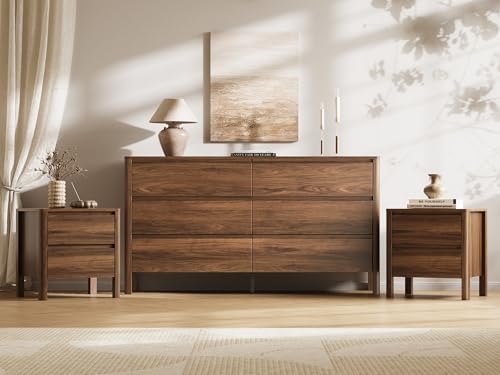
Dresser and Nightstand Combo: A Complete Buyer's Guide
Discover how to choose a coordinated dresser and nightstand set that balances storage, style, and proportions—so your bedroom feels intentional, organized, and comfortable.
A dresser and nightstand combo is one of the most practical furniture pairings you can make for a bedroom. The dresser handles the bulk of your clothing and folded storage, while the nightstand keeps everyday essentials—a lamp, a book, a glass of water—within arm's reach. When the two pieces are selected together, they create visual harmony and a sense of completeness that mismatched furniture rarely achieves.
This guide walks you through the key decisions: sizing the pair to your room, choosing materials and finishes that hold up over time, understanding how drawer configurations affect daily use, and deciding whether a matching set or a deliberately coordinated look is right for you. By the end, you'll have a clear framework for evaluating any dresser and nightstand combination you encounter.
Why a Coordinated Combo Matters
Visual Cohesion
A matched dresser and nightstand share finish, hardware, and proportion language. The result is a bedroom that reads as designed rather than assembled piecemeal. Cohesion reduces visual noise, which matters most in smaller rooms.
Proportional Harmony
Nightstands that are too tall or too short next to the bed feel awkward. A coordinated set is engineered so the nightstand height sits comfortably relative to typical mattress heights, while the dresser anchors the opposite wall.
Simplified Shopping
Buying a set removes the guesswork of matching stain colors and hardware tones. You see the exact pairing before it arrives, which reduces the risk of returns and second-guessing.
Consistent Build Quality
Within a single collection, drawer slides, joinery, and finish standards are usually consistent. That means the nightstand you touch every night is built to the same standard as the dresser you open every morning.
Sizing the Pair to Your Room
Before you fall for a finish, measure your space. The dresser and nightstand combo must fit the room's traffic flow as well as its walls.
| Room Consideration | What to Measure | Practical Guidance |
|---|---|---|
| Dresser wall space | Width of the wall minus doors and windows | Leave at least 24 inches of clearance in front of drawers for comfortable opening. |
| Nightstand footprint | Space between bed and wall or closet | A nightstand should sit flush or slightly inset from the mattress edge; avoid blocking outlet access. |
| Walking paths | Distance from bed to dresser | Keep a minimum 30-inch path so drawers can open without crowding the bed. |
| Height alignment | Mattress top height | Nightstand surface should sit at or slightly below mattress top for easy reach. |
If your bedroom is compact, consider a narrow chest paired with a compact nightstand. A black bedside dresser can double as a small nightstand with extra storage, while a brown tall narrow chest of drawers maximizes vertical space without eating floor area. For larger rooms, a wide dresser paired with full-size nightstands creates a balanced, hotel-like arrangement.
Matching Sets vs. Coordinated Pairings
There are two main approaches to the dresser and nightstand combo, and both are valid depending on your goals.
The Matching Set
Identical finish, hardware, and design language across both pieces. Best for traditional, transitional, and modern bedrooms where a unified look is the priority. Matching sets are especially helpful when you want the room to feel complete without layering in additional decor.
The Coordinated Pairing
Two pieces from the same collection or complementary collections that share a wood tone or hardware finish but differ in size or detail. This approach adds personality while keeping the room coherent. It works well in eclectic and mid-century modern spaces.
If you lean toward a cohesive collection, explore a dark brown dresser and nightstand set or a black and gold dresser and nightstand set for a more dramatic look. If you prefer a lighter, airier feel, a mid-century dresser and nightstand pairing brings warmth without heaviness.
Materials and Finishes That Last
Because the dresser and nightstand are used daily, material choice matters more than it might seem. Drawer slides, joinery, and surface finishes all affect how the pieces age.
Solid Wood
Solid wood dressers and nightstands offer the most durable construction and can be refinished over time. Look for dovetail joinery and full-extension slides in mid-range and premium pieces. Solid wood dressers are a long-term investment that holds up to daily use.
Engineered Wood
Engineered wood with quality veneers can look excellent and keep the pair within reach of more households. Check for reinforced drawer bottoms and smooth-glide hardware; these details separate well-made engineered pieces from entry-level construction.
Finish Durability
Painted finishes hide scratches but can chip at edges; lacquered finishes offer a smooth, wipe-clean surface. Natural wood tones show wear more gracefully over time. Whichever you choose, look for a finish that matches the room's light level.
Hardware Quality
Drawer pulls and knobs take constant contact. Metal hardware with a quality coating resists tarnish, while heavy-duty full-extension slides make deep drawers usable without strain.
Drawer Configuration: Function Over Appearance
The dresser handles folded clothing, linens, and sometimes accessories. The nightstand handles smaller daily items. A good combo assigns each piece a clear job.
| Piece | Typical Drawer Count | Best For | Notes |
|---|---|---|---|
| Dresser | 6–8 drawers | Folded clothing, linens, sweaters | Wide drawers suit folded shirts; deep drawers suit bulky items. |
| Nightstand | 2–3 drawers | Books, chargers, small accessories | Open shelf or drawer combination adds flexibility. |
| Tall chest alternative | 5–6 drawers | Small bedrooms | Pairs well with a compact nightstand to save floor space. |
If you need maximum storage without a wide footprint, an 8 drawer chest of drawers paired with a two-drawer nightstand covers a lot of ground. For a more traditional bedroom, a 6 drawer tall chest of drawers works well alongside standard nightstands.
Styling the Combo in Real Bedrooms
Once the pieces are in place, styling determines whether the room feels finished. Keep the dresser top intentional rather than cluttered, and let the nightstand stay functional.
Dresser Top
Anchor with a mirror or artwork, add one or two decorative objects, and leave breathing room. A brown dresser with mirror creates a natural focal point that ties the combo together.
Nightstand Surface
Limit to a lamp, one book or small tray, and a charging cable. A cluttered nightstand undermines the calm the room is meant to provide.
Lighting Balance
Matching lamps on each nightstand reinforce symmetry. If only one nightstand is present, use a wall sconce to balance the visual weight.
Textiles and Texture
Layered bedding and a soft rug soften the hard lines of the furniture. Keep the palette tied to the wood tone for cohesion.
Common Mistakes to Avoid
Ignoring Scale
A large dresser with undersized nightstands looks unbalanced. Choose the nightstand height relative to the mattress and the dresser's visual weight relative to the wall.
Overlooking Drawer Depth
Deep drawers are great for bulky items but can become disorganized. Match drawer depth to the items you actually store.
Skipping the Measure
Always measure doorways and stairwells before ordering. A dresser that doesn't fit through the door is a preventable headache.
Forgetting the Walls
Consider outlet placement and window light. The combo should work with the room's architecture, not fight it.
Ready to explore specific dresser and nightstand combinations? Browse coordinated options and compare features side by side.
Explore Dresser OptionsFrequently Asked Questions
Should a dresser and nightstand match exactly?
Not necessarily. Matching finish and hardware is enough for most rooms. Exact matching sets are ideal for traditional and transitional styles, while coordinated pairings work well in eclectic and modern spaces.
How tall should a nightstand be next to a bed?
The nightstand surface should sit at or slightly below the top of the mattress—typically within a few inches. This makes items easy to reach without stretching or looking down.
Can I use a small dresser as a nightstand?
Yes, especially in compact bedrooms. A black bedside dresser or a narrow chest can serve double duty, providing drawer storage while functioning as a bedside surface.
What is the best material for a daily-use combo?
Solid wood offers the most durable construction and can be refinished. Quality engineered wood with reinforced drawers is a practical alternative. In both cases, prioritize drawer slide quality and joinery over surface appearance alone.
How many drawers should a dresser have?
Most bedrooms work well with a 6- to 8-drawer dresser. If space is limited, a tall chest with 5 to 6 drawers paired with a compact nightstand is a strong alternative.