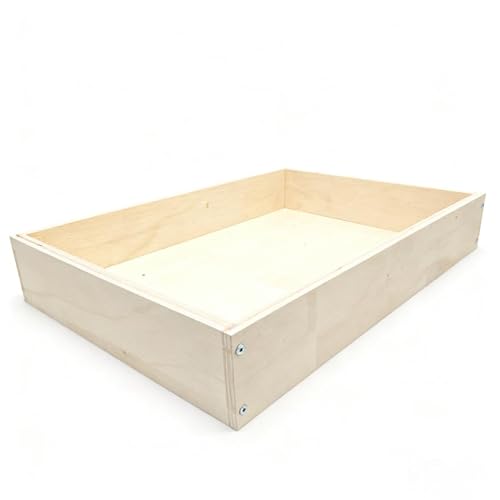
Kitchen Cabinet Replacement Doors and Drawers
Refresh your kitchen without a full remodel. Learn how replacement doors and drawer fronts can transform the look of your cabinets, which materials and styles hold up best, and how to plan a project that fits your existing cabinet boxes.
Start the GuideWhy Replace Doors and Drawers Instead of Full Cabinets
Kitchen cabinets are built around a box, often called the carcass, which is attached to the wall and holds the shelves, slides, and hinges. In most kitchens, the boxes are the sturdiest part of the assembly. The doors and drawer fronts, by contrast, take the daily wear: they are opened, closed, bumped, splashed, and exposed to steam and grease. When the boxes are still square and solid, replacing only the kitchen cabinet replacement doors and drawers is a practical way to modernize the room.
This approach, sometimes called refacing when new veneer is also applied to the visible box faces, keeps the existing layout and plumbing. You avoid the disruption of removing countertops, sinks, and appliances, and you keep the cabinet interior that already fits your dishes and cookware. For a homeowner who is happy with the footprint but tired of the look, a door-and-drawer swap is often the most efficient route to a refreshed kitchen.
The same principle applies to drawer-specific projects. If only the drawer faces are worn, you can plan a kitchen cabinet drawer replacement without touching the doors, which is useful when the doors are still in good condition but the drawer fronts are chipped or dated. Homeowners who want to compare the full range of options can start with our overview of kitchen cabinet doors and drawers before committing to a scope.
Key point: Replacement doors and drawer fronts only make sense when the cabinet boxes are structurally sound, level, and free of water damage. Inspect the boxes before you order anything.
When a Door-and-Drawer Replacement Makes Sense
A door-and-drawer replacement is not the right answer for every kitchen. Use the checklist below to decide whether your project fits this approach.
Good candidates for replacement fronts
- The cabinet boxes are solid, square, and securely attached to the wall.
- There is no swelling, softness, or delamination from water exposure.
- The existing layout works for your cooking and storage habits.
- The countertops, sink, and appliances are staying in place.
- You want a style or finish change rather than more storage capacity.
Signs you should consider full cabinet replacement
- Boxes are sagging, out of square, or pulling away from the wall.
- Water damage, mold, or pest damage has compromised the carcass.
- You need a different layout, more drawers, or taller cabinets.
- The existing boxes use non-standard sizes that make new fronts difficult to fit.
If you are weighing a partial update against a larger project, it helps to understand how doors and fronts are categorized. Our guide to kitchen doors and drawer fronts explains the terminology, and the kitchen replacement doors and drawer fronts overview covers how the pieces are ordered and paired.
Materials and Finishes That Hold Up in a Kitchen
Kitchen fronts face heat, moisture, grease, and frequent handling. The material you choose affects durability, the look of the finish, and how well the doors stay flat over time.
Solid wood
Solid wood doors offer a premium feel and can be sanded and refinished in the future. They are a strong choice for painted and stained finishes, though wood movement means the panels need proper construction to stay stable in a humid kitchen. Hardwoods such as maple and oak are common for painted and natural finishes.
Plywood
Plywood is dimensionally stable and resists warping better than solid wood in wide panels. High-grade plywood with a veneer face gives a consistent grain pattern and a solid build, making it a common choice for mid-range and premium doors.
MDF (medium-density fiberboard)
MDF provides a smooth, uniform surface that takes paint exceptionally well. It is well specified for painted shaker and slab doors, and it does not show grain. The trade-off is that MDF is heavier and less resistant to standing water, so edges must be sealed properly.
Thermofoil and laminate wraps
These are factory-applied finishes over a substrate. They are durable and easy to clean, and they suit entry-level and mid-range projects. The quality varies widely, so check the warranty and the edge sealing before you commit.
| Material | Best For | Durability Notes |
|---|---|---|
| Solid wood | Painted or stained premium doors | Refinishable; needs stable construction for wide panels |
| Plywood | Mid-range to premium painted and veneered fronts | Stable and resistant to warping |
| MDF | Painted shaker and slab doors | Smooth finish; edges must be sealed against moisture |
| Thermofoil / laminate | Entry-level and mid-range fronts | Easy to clean; quality varies by manufacturer |
Door and Drawer Front Styles Explained
The style of the door and drawer front determines the character of the kitchen. The most common options fall into a few families.
Shaker
A flat center panel with a square raised frame. Shaker doors are versatile, work in both traditional and modern kitchens, and are easy to clean. They are one of the most requested styles for replacement projects.
Slab (flat panel)
A single flat panel with no frame. Slab fronts suit modern and minimalist kitchens and are simple to maintain. They show fingerprints more readily on glossy finishes, so matte and textured surfaces are popular.
Raised panel
A traditional style with a center panel that rises above the frame. Raised panel doors suit classic and transitional kitchens and pair well with decorative hardware.
Beadboard and grooved
Vertical grooves give a cottage or farmhouse feel. These fronts add visual texture and work well with painted finishes.
Drawer fronts follow the same style language as the doors. A kitchen with shaker doors and slab drawer fronts is a common hybrid, but matching the profile across doors and drawers creates a more cohesive look. If you are only updating the drawer faces, our guide to kitchen drawer face replacement covers how to keep the new fronts consistent with the existing doors.
How to Measure and Order the Right Fronts
Accurate measurements are the difference between a smooth installation and a set of doors that do not fit. Measure each opening individually, because cabinet boxes are rarely perfectly uniform.
-
Record the opening size
Measure the width and height of each cabinet opening at the frame, not the old door. Measure in at least two places and use the smaller dimension.
-
Identify the overlay
Full-overlay doors cover most of the cabinet face, while partial-overlay doors leave part of the frame visible. The overlay determines the door size relative to the opening.
-
Match the hinge type
Confirm whether the existing hinges are concealed cup hinges, European-style hinges, or face-frame hinges. New doors must be drilled for the correct hinge pattern.
-
Check drawer front sizing
Drawer fronts are sized to the drawer box and the overlay, not the opening alone. Note whether the drawers are standard or deep, because the front proportions change.
-
Order with a measurement guide
Most manufacturers provide a worksheet. Follow their measuring method exactly and keep a copy of every dimension you submit.
Tip: Photograph each opening with a tape measure in frame. If a door arrives the wrong size, the photo record makes the reorder conversation far easier.
Hinges, Slides, and Hardware You Should Upgrade
New fronts deserve new hardware. Reusing worn hinges and slides is the most common reason a fresh replacement project feels underwhelming after a few months.
Hinges
Concealed European-style hinges are the standard for full-overlay doors. Look for soft-close mechanisms, adjustable cam screws, and a finish that matches your kitchen's humidity level. Heavy doors need hinges rated for the door weight.
Drawer slides
Drawer slides carry the load every day. If your drawers hold pots, pans, or heavy pantry items, upgrade to full-extension slides with a solid build. For wide or deep drawers, large heavy-duty drawer slides are the appropriate specification because they resist sagging under load.
Pulls and knobs
Hardware is the fastest way to shift the style of the kitchen. Bar pulls read modern, cup pulls read traditional, and knobs work well on shaker doors. Choose a finish that complements the door material and the appliances.
Installation Walkthrough
Installation is manageable for a confident DIYer, but it rewards patience and the right sequence.
-
Remove the old fronts
Take off the doors and drawer fronts and label each one with its location. Keep the screws and hinges organized by opening.
-
Inspect and clean the boxes
Check the frames for damage, tighten any loose screws, and clean the surfaces. Repair minor dings before the new fronts go on.
-
Install new hinges and slides
Mount the hinges on the new doors according to the manufacturer's template, and fit new slides to the drawer boxes if you are upgrading them.
-
Hang the doors
Start with one door per cabinet to check the alignment, then adjust the hinge screws for reveal and level. Work through the kitchen in sections.
-
Fit the drawer fronts
Attach the drawer fronts with the slides extended, then adjust for even gaps. Check that each drawer closes flush before moving on.
-
Add hardware and final adjustments
Drill for pulls and knobs using a template, then do a final pass on hinge adjustment and drawer alignment.
If your kitchen has a mix of doors and drawers, the sequencing matters. A complete kitchen cabinet with drawers and doors benefits from installing the drawer fronts first in each run, because the doors can then be adjusted to match the drawer reveals.
Quality Tiers and What to Expect at Each Level
Replacement fronts are available across a wide range of quality. Use these tiers to align your expectations with the product category, without relying on any specific figure.
| Tier | Typical Construction | Best For |
|---|---|---|
| Entry-level | Thermofoil or laminate over particleboard; standard hinges | Rental updates and short-term refreshes |
| Mid-range | Painted MDF or plywood; soft-close hinges; better edge sealing | Long-term family kitchens and painted styles |
| Premium | Solid wood or high-grade plywood; reinforced construction; quality hardware | High-use kitchens and refinishable doors |
| Luxury / professional-grade | Custom sizes, premium hardwood, commercial-grade hardware | Design-led kitchens and heavy daily use |
Within any tier, the hardware matters as much as the door itself. A mid-range door with quality soft-close hinges will feel better than a premium door with entry-level hardware. If you are updating a kitchen that also includes dresser-style storage, the same tier logic applies to pieces like a kitchen dresser or a lacquer dresser, where the finish and construction determine how the piece ages.
Ready to Refresh Your Kitchen?
Browse recommended replacement doors, drawer fronts, and hardware to compare materials, styles, and construction quality before you order.
Explore Recommended OptionsFrequently Asked Questions
Can I replace kitchen cabinet doors and drawers without replacing the boxes?
Yes. If your cabinet boxes are structurally sound, you can replace only the doors and drawer fronts. This is commonly called refacing or a door-and-drawer swap, and it is significantly less disruptive than a full cabinet replacement.
How do I measure for replacement cabinet doors and drawer fronts?
Measure each existing door and drawer front individually, width and height, following the manufacturer's measurement guide. Account for the hinge type and overlay style, because a full-overlay door covers more of the cabinet face than a partial-overlay door.
What materials are best for replacement kitchen cabinet doors?
Solid wood, plywood, and high-grade MDF are the most common choices. Solid wood and plywood offer excellent durability and a premium feel, while MDF delivers a smooth, stable surface for painted finishes and is well specified for painted door styles.
How long does a cabinet door and drawer replacement project take?
Most door-and-drawer replacement projects take one to three days once the new fronts arrive, depending on the number of openings and whether new hinges, drawer slides, or hardware are also installed.
Should I replace the drawer slides at the same time?
Yes, if the existing slides are worn, noisy, or partial-extension. New fronts on old slides tend to feel misaligned. Full-extension soft-close slides are a worthwhile upgrade for drawers that carry heavy cookware or pantry items.