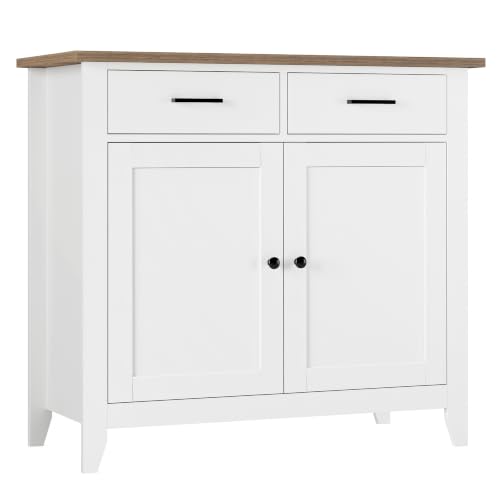
Kitchen Cabinet With Drawers and Doors: The Complete Guide
Everything you need to know about hybrid kitchen cabinets that combine drawer and door storage — layout types, materials, drawer mechanisms, and how to choose the right configuration for your kitchen.
Why read this guide? A kitchen cabinet with drawers and doors is one of the most versatile storage solutions you can install. It gives you the quick access of drawers for everyday items alongside the deep, flexible capacity of doors for larger cookware and pantry goods. This guide walks you through every decision point — from layout and materials to drawer slides and finishing touches — so you can choose with confidence.
What You'll Learn
What Is a Kitchen Cabinet With Drawers and Doors?
A kitchen cabinet with drawers and doors is a hybrid storage unit that combines two distinct storage formats in a single cabinet box. Typically, the upper section features one or more drawers for utensils, cutlery, or small items, while the lower section opens with doors to reveal a larger, open compartment for pots, pans, appliances, or pantry goods. Some configurations reverse this arrangement, placing drawers below and doors above.
This design is popular because it solves a common kitchen dilemma: drawers are excellent for small, frequently used items, but they are less efficient for bulky cookware. Doors provide flexible open space but can become disorganized without internal shelving. By combining both, a single cabinet delivers quick-access storage and deep capacity without requiring two separate units.
If you are exploring broader storage options beyond the kitchen, you might also consider a kitchen dresser, which applies similar hybrid storage principles to freestanding furniture. For a deeper look at the door-and-drawer format itself, see our guide to kitchen cabinet doors and drawers.
Common Layouts and Configurations
The arrangement of drawers and doors within a cabinet affects both usability and visual balance. Here are the most common configurations you will encounter:
1. Top-Drawer, Bottom-Door
This is the classic layout. One or two shallow drawers sit at the top for cutlery, utensils, or small tools, while a full-height door below opens to a deep compartment for pots, pans, or appliances. It is efficient for base cabinets and works well in both residential and commercial-grade kitchens.
2. Side-by-Side Drawer and Door
In wider cabinets, a vertical divider separates a stack of drawers on one side from a door compartment on the other. This layout is useful in islands and peninsula cabinets where you want quick-access storage and deep storage in the same footprint.
3. Drawer Stack With a Door Cabinet Above
Common in tall pantry-style cabinets, this configuration places a bank of drawers at the bottom (for heavy items) and a door with adjustable shelves above (for lighter pantry goods). It is a smart ergonomic choice because heavy items stay low and light items stay at eye level.
4. Three-Drawer Base With Door Cabinet
A three-drawer base cabinet paired with a side door cabinet creates a balanced workstation. The drawers handle daily utensils and prep tools, while the door section stores mixing bowls, small appliances, or cleaning supplies. This is a popular choice for mid-range and premium kitchen designs.
Drawers vs. Doors: Which Storage Wins?
Neither format is universally better. The right choice depends on what you store and how often you access it. The table below compares the two formats across key criteria.
| Criteria | Drawers | Doors |
|---|---|---|
| Accessibility | Full-extension access; everything visible at a glance | Requires reaching into a deep compartment; items at the back can be hard to reach |
| Best For | Cutlery, utensils, small tools, spices, food storage containers | Pots, pans, large appliances, pantry goods, cleaning supplies |
| Organization | Easy to compartmentalize with dividers and inserts | Relies on internal shelving and pull-out bins for organization |
| Space Efficiency | High for small items; less efficient for bulky items | High for bulky items; can waste vertical space without shelving |
| Ergonomics | Excellent; no bending or reaching deep | Requires bending and reaching; harder on the back |
| Hardware Complexity | Requires quality slides (ball-bearing or undermount) | Simple hinges; fewer moving parts |
| Typical Tier | Mid-range to premium cabinets often feature full-extension soft-close drawers | Entry-level to luxury; hinge quality varies widely |
The takeaway: a hybrid cabinet with both drawers and doors gives you the best of both formats. If you are specifically focused on replacing or upgrading the drawer side, see our guide to kitchen cabinet drawer replacement.
Materials and Construction Quality
The material of your cabinet box, drawer boxes, and door fronts determines durability, moisture resistance, and long-term performance. Here is how the common options compare.
Cabinet Box Materials
- Plywood: Excellent strength-to-weight ratio and moisture resistance. A strong choice for mid-range and premium cabinets.
- MDF (medium-density fiberboard): Smooth, uniform, and easy to finish. Common in painted cabinets. Less moisture-resistant than plywood.
- Particleboard: Common in entry-level cabinets. Adequate for dry areas but susceptible to swelling if exposed to moisture.
- Solid wood: Durable and refinishable. Typically found in premium and luxury tiers. Requires stable humidity to prevent warping.
Door and Drawer Front Materials
- Solid wood: Classic look, refinishable, and available in many species.
- MDF with painted or thermofoil finish: Smooth, uniform appearance; good moisture resistance with thermofoil.
- Plywood with wood veneer: Real wood appearance with better dimensional stability than solid wood.
- Laminate: Durable, easy to clean, and available in many colors and patterns. A practical choice for busy kitchens.
For a broader discussion of front styles and finishes, explore our guide to kitchen doors and drawer fronts. If you are considering a full refresh of the visible surfaces, the kitchen replacement doors and drawer fronts guide covers the process in detail.
Drawer Mechanisms and Hardware
The drawer slides are the most frequently used mechanical component in your kitchen. Cheap slides wear out quickly and create annoying wobble; quality slides last for years and make the cabinet feel premium every time you open a drawer.
Types of Drawer Slides
- Roller slides: Common in entry-level cabinets. Simple and functional but less smooth and quieter than alternatives.
- Ball-bearing side-mount slides: A step up in smoothness and load capacity. Common in mid-range cabinets.
- Undermount slides: Hidden beneath the drawer, offering a clean look and smooth operation. Often paired with soft-close mechanisms. Typical in premium tiers.
- Heavy-duty slides: Rated for deep pot drawers and wide drawer formats. Essential for large-capacity drawer banks. See our guide to large heavy-duty drawer slides for load ratings and installation considerations.
Soft-Close vs. Standard Close
Soft-close mechanisms prevent drawers from slamming and reduce wear on the cabinet box. They are standard in mid-range and premium cabinets and can be added as an aftermarket upgrade to many standard-close drawers.
Hinges for Door Sections
For the door portion of a hybrid cabinet, look for adjustable concealed hinges (European-style) with a soft-close feature. Adjustability matters: it allows you to align doors precisely after installation and compensate for seasonal wood movement.
Sizing and Space Planning
Standard base cabinet dimensions vary by region, but common widths are 300mm, 450mm, 600mm, and 900mm (12, 18, 24, and 36 inches). A hybrid cabinet with drawers and doors is typically built in a 600mm or 900mm width to accommodate both formats side by side or stacked.
Key Measurements to Plan
- Cabinet width: Determines whether you can fit a side-by-side drawer-and-door layout or need a stacked configuration.
- Cabinet depth: Standard base cabinets are 600mm (24 inches) deep. Deeper cabinets offer more storage but reduce floor space.
- Counter height: Standard is 900mm (36 inches) from floor to countertop. Adjust for user height and ergonomics.
- Drawer height: Shallow drawers (75–100mm) suit cutlery; deep drawers (200mm+) suit pots and pans.
- Door clearance: Ensure doors can open fully without hitting appliances, walls, or other cabinets.
For a broader look at storage furniture that complements kitchen cabinetry, you might explore large-capacity dresser options or a large dresser for adjacent rooms. If you are also considering a freestanding storage piece that blends drawer and door storage, a large-capacity chest of drawers is a useful comparison point.
Refacing vs. Full Replacement
If your existing cabinet boxes are structurally sound, you may not need a full replacement. Cabinet refacing — replacing only the doors and drawer fronts while keeping the cabinet boxes — is a popular option that updates the look of your kitchen with less disruption and waste.
Our guide to kitchen cabinet replacement doors and drawers walks through the refacing process step by step. If you are focused specifically on the drawer faces, the kitchen drawer face replacement guide covers measurement, ordering, and installation.
Refacing is not the right choice if the cabinet boxes are damaged, water-swollen, or poorly constructed. In those cases, full replacement is the more durable long-term investment.
Buying Checklist
Before you commit to a kitchen cabinet with drawers and doors, run through this checklist to make sure you are comparing options on the right criteria.
- Layout: Does the drawer-and-door arrangement match your storage needs and workflow?
- Drawer slides: Are they full-extension, ball-bearing or undermount, and soft-close?
- Box construction: Is the cabinet box at least 15mm thick with sealed edges?
- Drawer joints: Dovetail or doweled joints are more durable than stapled or nailed construction.
- Hinges: Adjustable concealed hinges with soft-close are ideal for door sections.
- Material: Plywood or solid wood for durability; MDF or laminate for moisture resistance in specific zones.
- Finish: Does the finish resist moisture, stains, and everyday wear?
- Warranty: A longer warranty on slides and hinges signals confidence in hardware quality.
- Tier fit: Match the cabinet tier (entry-level, mid-range, premium, luxury) to your intended use and expected lifespan.
Frequently Asked Questions
What is a kitchen cabinet with drawers and doors?
A kitchen cabinet with drawers and doors combines both storage formats in a single unit: drawers for utensils, cutlery, and small items, and doors for larger cookware, appliances, or pantry goods. This hybrid layout maximizes functionality in a compact footprint.
Are drawers or doors better for kitchen storage?
It depends on what you store. Drawers offer easier access and better visibility for small, frequently used items. Doors are better for bulky cookware, tall appliances, and pantry goods. Combining both in one cabinet gives you the flexibility to store everything efficiently.
What drawer slide mechanism should I look for?
Look for full-extension ball-bearing or undermount soft-close slides. Mid-range and premium cabinets typically offer smoother, quieter operation. Heavy-duty slides are essential for deep pot drawers or wide cabinet formats.
What materials are best for kitchen cabinets with drawers and doors?
Solid wood offers durability and refinishability. Plywood cores provide excellent strength-to-weight ratio. MDF and particleboard are common in entry-level and mid-range options. Laminate and thermofoil finishes are practical for moisture resistance.
Can I replace only the doors and drawers of my kitchen cabinet?
Yes. Cabinet refacing or replacement doors and drawer fronts is a popular option that updates the look of your kitchen without a full remodel. It is often more efficient than a full cabinet replacement and allows you to keep the existing box structure.